
David Tisch's BoxGroup: $750K Seed to $1B Cursor Exit Unconventional VC Strategy
BoxGroup's David Tisch turned a $750K seed in AI startup Cursor into a billion-dollar exit, proving that prioritizing founder vision over immediate product-market fit can generate exponential returns.
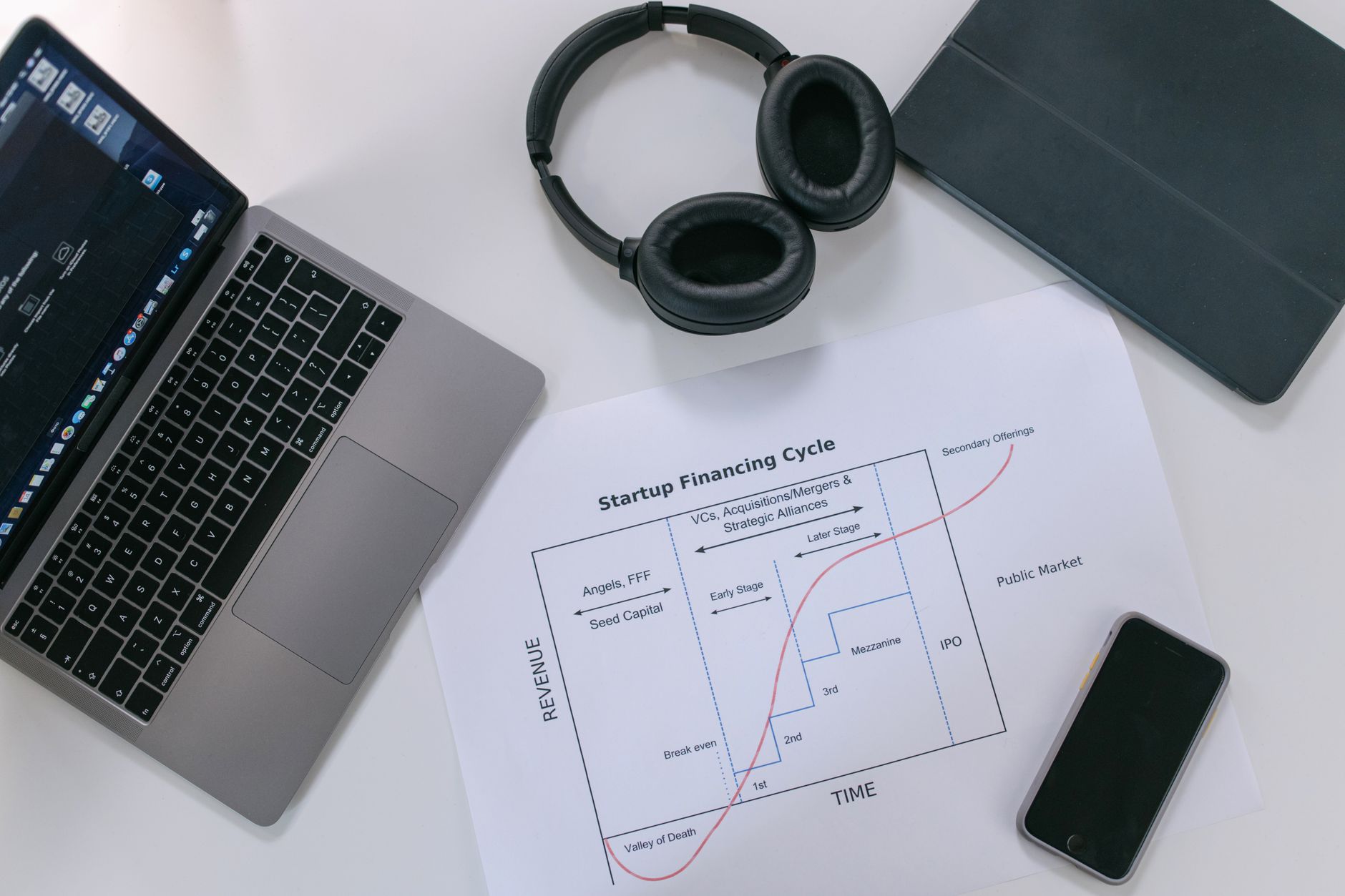
BoxGroup, led by David Tisch, secured an exit valued at over $1 billion from its $750,000 seed investment in AI-powered coding startup Cursor, approximately two years after the initial capital injection TechCrunch, 2024. This outcome provides a stark lesson for founders, illustrating how an early-stage investor partnership, focused on founder vision over immediate product-market fit, can lead to exponential returns and challenge conventional scaling paradigms. For startup operators, this case highlights the potential for lean teams to achieve massive user adoption and attract strategic acquirers even without extensive prior funding rounds.
Quick takeaways
- Vision-First Investment: BoxGroup invested $750,000 in Cursor when it was pre-product, prioritizing the co-founders' vision and expertise over existing traction or product-market fit.
- Lean, Rapid Scaling: Cursor grew to 500,000 active users within 1.5 years with a team of only 8 people, demonstrating extreme capital efficiency and focused execution.
- Strategic Investor Partnership: OpenAI was both an investor in Cursor's seed round and its ultimate acquirer, showcasing the value of aligning with future partners early.
- Challenging VC Norms: David Tisch's BoxGroup defied traditional seed-stage expectations, proving that backing exceptional talent with a bold idea can yield billion-dollar outcomes in nascent markets.
- Outsized Returns: The $750,000 seed investment translated into a $1 billion-plus exit within two years, underscoring the potential for rapid value creation in frontier tech.
BoxGroup's Seed Strategy: Betting on Vision Over Traction
BoxGroup's investment in Cursor exemplifies a venture capital philosophy that prioritizes foundational elements over immediate market signals. The firm deployed $750,000 into Cursor's seed round, which totaled $4 million, at a time when the company had not yet launched a product TechCrunch, 2024. This approach contrasts sharply with many seed-stage investors who typically seek tangible evidence of product-market fit, user engagement, or early revenue before committing capital. BoxGroup's seed rounds generally range from $500,000 to $1 million, positioning them as a significant early backer in Cursor's initial capital raise TechCrunch, 2024.
David Tisch and BoxGroup's decision was rooted in an assessment of Cursor's co-founders, Paul Gauthier and Aman Sanger. Both are MIT graduates with prior experience at major technology companies, specifically Google and Meta TechCrunch, 2024. This background provided a strong signal of technical capability and execution potential, even without a developed product. For founders, this highlights the critical importance of a compelling personal narrative and a demonstrated track record, particularly when pitching a pre-product vision. Investors like BoxGroup are often looking for exceptional talent tackling significant problems, and a strong founding team can de-risk an early-stage bet more effectively than nascent product metrics.
The investment in Cursor also underscores BoxGroup's willingness to engage with nascent, high-potential markets. The rise of AI as a foundational technology presented new opportunities, and Cursor aimed to leverage this for developer tools. By investing pre-product, BoxGroup effectively bet on the future trajectory of AI in software development, rather than the current state of the market. This forward-looking stance is a hallmark of venture capital that seeks to capture outsized returns by identifying and nurturing the next wave of technological innovation before it becomes mainstream. Founders seeking similar early-stage backing should articulate not just their immediate product plan, but also their long-term vision and how their team is uniquely positioned to execute against that future. This requires a deep understanding of the market's evolution and a clear articulation of how their solution will fit into that landscape.
Cursor's Rapid Ascent: A Lean, High-Impact Model
Cursor's journey from a pre-product startup to a $1 billion-plus acquisition by OpenAI within approximately two years is a case study in lean, high-impact scaling TechCrunch, 2024. The company, co-founded by Paul Gauthier and Aman Sanger, both MIT alumni with experience at tech giants like Google and Meta, demonstrated an extraordinary ability to execute and capture market attention TechCrunch, 2024. This rapid growth trajectory challenges conventional wisdom about the need for extensive funding rounds and large teams to achieve significant scale.
After securing its $4 million seed round, with BoxGroup contributing $750,000, Cursor moved swiftly from a waitlist model to acquiring a substantial user base TechCrunch, 2024. Within 1.5 years of its launch, Cursor amassed 500,000 active users TechCrunch, 2024. This explosive adoption rate, achieved with minimal capital relative to its impact, speaks to the acute market need for its AI-powered coding solution and the effectiveness of its product. For founders, this highlights the potential of focusing on a core, high-value problem within a rapidly evolving technological domain. When a solution truly resonates, user adoption can accelerate without the need for extensive marketing budgets.
Perhaps one of the most striking aspects of Cursor's success is its operational efficiency. At the time of its acquisition, the company maintained a lean team of only 8 people TechCrunch, 2024. This small headcount, managing a user base of half a million, demonstrates a mastery of automation, efficient development practices, and a clear product vision that minimized operational overhead. This lean structure allowed Cursor to remain agile, iterate quickly, and focus resources on core product development and user experience. Founders should examine this model for lessons in resource allocation and team building. Building a small, highly skilled team that leverages technology to amplify its output can lead to significant competitive advantages and attractive acquisition profiles. It suggests that in the age of advanced AI tools, small teams can indeed tackle large problems with unprecedented efficiency, making venture capital more accessible and potentially more impactful for focused, high-talent groups.
The Acquisition: OpenAI's Strategic Move
The acquisition of Cursor by OpenAI, valued at over $1 billion, marks a significant moment for both companies and the broader AI ecosystem TechCrunch, 2024. This transaction occurred approximately two years after BoxGroup's initial seed investment, signaling a rapid validation of Cursor's technology and market position TechCrunch, 2024. Notably, OpenAI was not just an acquirer but also an investor and partner in Cursor's seed round TechCrunch, 2024. This dual relationship underscores a strategic alignment that began early in Cursor's lifecycle, providing a crucial lesson for founders on the value of carefully selecting strategic investors.
For OpenAI, the acquisition of Cursor represents a tactical move to deepen its capabilities in the rapidly expanding market for AI-powered developer tools. As a leader in foundational AI models, integrating a popular AI coding assistant like Cursor allows OpenAI to directly influence and enhance the developer experience on its platforms. Cursor's 500,000 active users and its lean operational model made it an attractive target, demonstrating proven user adoption and efficient product delivery TechCrunch, 2024. The acquisition is a clear signal that the race to integrate AI into every facet of software development is intensifying, with major players seeking to acquire talent, technology, and user bases that align with their strategic objectives.
The fact that OpenAI was an early investor provides founders with a blueprint for strategic partnership. Bringing a potential acquirer onto the cap table at the seed stage can create a direct pathway to future collaboration, integration, or even acquisition. This kind of relationship allows both parties to understand each other's technologies, strategies, and cultural fit over time, significantly de-risking a potential M&A event. For Cursor, this early alignment with OpenAI likely facilitated a smoother, faster acquisition process, culminating in a highly favorable outcome for its founders and investors. It suggests that founders should not only seek capital but also strategic value from their investors, looking for partners who can open doors to future growth or exit opportunities. The Cursor-OpenAI dynamic illustrates how an investor can evolve into a strategic partner and eventually an acquirer, providing a clear path to liquidity and impact.
David Tisch's Playbook: Redefining Seed-Stage VC
David Tisch and BoxGroup's investment in Cursor challenges several long-held conventions within the venture capital landscape, particularly at the seed stage. Their playbook emphasizes a focus on exceptional founders and a compelling vision, even when a product is still nascent. BoxGroup's $750,000 seed investment in Cursor occurred when the company was pre-product, a decision that many traditional seed funds might deem too risky TechCrunch, 2024. This approach contrasts with the prevailing trend of seeking early product-market fit, demonstrable user traction, and even initial revenue before committing significant capital.
The strategy hinges on identifying and backing individuals like Paul Gauthier and Aman Sanger, both MIT graduates with experience at Google and Meta TechCrunch, 2024. Tisch's thesis suggests that in rapidly evolving sectors, particularly those driven by fundamental technological shifts like AI, the caliber of the founding team and the ambition of their vision can be more critical indicators of future success than any early product metrics. This is a high-conviction, high-risk, high-reward strategy. By investing so early, BoxGroup was able to secure a significant stake in a company that ultimately achieved a $1 billion-plus valuation within two years, turning a relatively modest seed check into an outsized return TechCrunch, 2024.
This unconventional playbook offers several implications for founders. First, it underscores that not all VCs operate with the same criteria. While many will demand metrics, some are actively seeking bold, pre-product bets on transformative ideas. Second, it highlights the enduring value of a strong founding team. Credentials, past achievements, and a clear, articulate vision can be powerful assets in securing early capital, especially when a product is still in development. Third, it demonstrates the potential for rapid value creation in frontier technologies. When a startup effectively taps into an emerging market with a compelling solution, the path from seed to significant exit can be remarkably short. Tisch's approach, therefore, is not just about making early bets, but about making informed early bets on the confluence of exceptional talent and nascent, high-growth markets, thereby redefining what constitutes a viable seed-stage investment. This model suggests that the best returns often come from being contrarian and having the conviction to back unproven concepts led by proven individuals.
Lessons for Founders: Partnering for Outsized Outcomes
The BoxGroup-Cursor story offers several critical lessons for startup founders navigating the complex world of venture capital and company building. The first is the paramount importance of the founding team. Paul Gauthier and Aman Sanger's backgrounds from MIT, Google, and Meta were crucial in securing BoxGroup's $750,000 seed investment when Cursor was still pre-product TechCrunch, 2024. This demonstrates that a strong pedigree and a track record of execution can outweigh the absence of immediate product metrics for certain investors. Founders should therefore invest in building their personal brand, showcasing their expertise, and clearly articulating why they are the right team to tackle a specific problem.
Second, the case illustrates the power of a vision-first approach to fundraising. Cursor secured capital based on its founders' vision for AI-powered coding, not on existing product-market fit or user traction. This requires founders to be compelling storytellers and to have a deep understanding of the future trajectory of their market. It also means seeking out investors who share this long-term perspective and are comfortable with early-stage risk. For founders in emerging technology sectors, articulating a bold vision for the future, backed by a strong team, can unlock capital that traditional investors might overlook.
Third, Cursor's journey highlights the effectiveness of lean scaling. The company grew to 500,000 active users with a team of only 8 people before its acquisition TechCrunch, 2024. This extreme capital efficiency and focused execution allowed Cursor to maximize the impact of its seed funding. Founders should critically evaluate their resource allocation, prioritizing product development and user acquisition over extensive overhead. In an era of powerful AI tools, small, highly skilled teams can achieve disproportionate results, proving that scale does not always equate to headcount or burn rate. This lean model also makes a company more attractive for acquisition, as it suggests efficient integration and a high return on investment for the acquirer.
Finally, the strategic partnership with OpenAI, which was both an investor and the ultimate acquirer, provides a template for founders seeking an exit. Bringing a potential acquirer onto the cap table at an early stage can create a symbiotic relationship, fostering collaboration and alignment that can lead to a favorable acquisition down the line TechCrunch, 2024. Founders should consider the strategic value, not just the capital, that an investor brings, looking for partners who can also serve as customers, collaborators, or future acquirers. This multifaceted approach to investor relations can significantly influence a startup's growth trajectory and exit potential, demonstrating that the right partners are as crucial as the capital itself.
Market Implications and the Future of Developer AI
The acquisition of Cursor by OpenAI for over $1 billion signals a significant acceleration in the market for AI-powered developer tools and has broader implications for how startups in this space will be valued and scaled TechCrunch, 2024. Cursor's rapid growth to 500,000 active users with a lean team of 8 within 1.5 years demonstrates the immense demand for solutions that augment developer productivity TechCrunch, 2024. This points to a maturing segment of the AI market where practical applications directly impacting professional workflows are achieving rapid adoption and attracting top-tier acquirers.
For the developer tools ecosystem, Cursor's success validates the thesis that AI is not just an additive feature but a transformative core component. Companies building in this domain can expect continued high interest from venture capitalists and strategic acquirers. The focus will likely shift towards solutions that offer deep integration, superior user experience, and demonstrable efficiency gains for engineers. The market is increasingly valuing products that can significantly reduce development cycles, improve code quality, and automate repetitive tasks, thereby freeing up developers for more complex and creative work. Cursor's ability to achieve such widespread adoption with a small team suggests that products with strong AI foundations can leverage network effects and intrinsic utility to scale without massive sales and marketing efforts.
The acquisition also underscores the strategic imperative for major AI players like OpenAI to vertically integrate. By acquiring companies like Cursor, OpenAI can solidify its position not just as a provider of foundational models but also as a dominant force in end-user applications built on those models. This trend suggests that startups building on top of large language models (LLMs) might increasingly find themselves as acquisition targets for the very companies providing the underlying AI infrastructure. This creates a unique dynamic for founders: while building on powerful platforms offers immense leverage, it also means operating in a landscape where your primary technology provider could become your acquirer or even a direct competitor.
Venture capitalists may adapt their strategies based on the Cursor outcome. The success of BoxGroup's early, pre-product investment could encourage more VCs to take calculated risks on exceptional teams tackling ambitious problems in nascent AI sectors. This might lead to an increased willingness to fund companies with strong technical founders and a clear vision, even if traditional metrics like immediate product-market fit are not yet evident. The rapid, high-value exit also reinforces the potential for outsized returns in the AI space, attracting more capital and talent into this transformative sector. The future of developer AI will likely be characterized by continued innovation, strategic acquisitions, and a strong emphasis on efficiency and deep integration, driven by the precedent set by Cursor's remarkable journey.
FAQ
Q1: What was BoxGroup's initial investment in Cursor, and what was the exit value?
A1: BoxGroup made a $750,000 seed investment in Cursor. This investment ultimately led to an acquisition valued at over $1 billion by OpenAI TechCrunch, 2024.
Q2: How long did it take for Cursor to achieve this billion-dollar exit?
A2: The acquisition by OpenAI occurred approximately two years after BoxGroup's initial seed investment in Cursor TechCrunch, 2024.
Q3: What made Cursor an attractive investment for BoxGroup at the seed stage?
A3: BoxGroup invested in Cursor when it was a pre-product company, focusing on the founders' vision rather than existing product-market fit. The co-founders, Paul Gauthier and Aman Sanger, are MIT graduates with prior experience at Google and Meta, which likely signaled strong technical capability and execution potential TechCrunch, 2024.
Q4: How quickly did Cursor grow, and how large was its team at acquisition?
A4: Cursor rapidly grew from a waitlist to 500,000 active users within 1.5 years. At the time of its acquisition, Cursor operated with a lean team of only 8 people TechCrunch, 2024.
Q5: What role did OpenAI play in Cursor's journey beyond the acquisition?
A5: OpenAI was not only the acquirer but also an investor and partner in Cursor's seed round. This early strategic alignment likely facilitated the eventual acquisition TechCrunch, 2024.
Continue reading

The Entrepreneur Story
Is your story worth telling?
We feature founders who are building something real. Apply and we'll be in touch.
Apply to be featured →Stay sharp.
Ideas that move.
Founder stories, emerging ventures, and essays on what's next — straight to your inbox.
Unsubscribe any time.