
VCs Become AI Chip Suppliers: A16z & General Catalyst Reshaping VC-Founder Dynamics
Top VCs like A16z and General Catalyst are directly procuring Nvidia H100 GPUs for their AI startups, transforming venture capital into active supply chain facilitation.
Andreessen Horowitz (A16z) and General Catalyst are directly procuring crucial AI chips, primarily Nvidia H100 GPUs, for their portfolio startups. This shift in venture capital sees top-tier firms move beyond traditional funding to become active supply chain facilitators amidst an acute industry-wide chip shortage projected to last at least through 2024 Business Insider, 2024. For founders, a venture investor's value proposition now extends beyond capital and advice to include direct access to the foundational computing power necessary for AI development, reshaping competitive dynamics and fundraising strategies.
Quick Takeaways
- VCs become supply chain players: Firms like Andreessen Horowitz and General Catalyst directly acquire Nvidia H100 GPUs or invest in providers to secure compute for their AI portfolio companies.
- High cost, critical resource: Nvidia H100 GPUs, costing up to $40,000 each, are indispensable for advanced AI development. A batch of 16 units costs approximately $400,000.
- Strategic investment models: A16z invested in specialized cloud provider CoreWeave for bulk chip access. General Catalyst directly purchased chips and explores a portfolio-wide 'buying collective.'
- Prolonged scarcity: The AI chip crunch is expected to persist through 2024, intensifying competition for resources and favoring startups backed by VCs with direct supply access.
- Reshaped founder-investor dynamic: Access to compute is now a critical differentiator for VCs, influencing startup valuations, fundraising success, and strategic partnerships. Founders now evaluate investors based on their ability to deliver tangible hardware.
The New VC Mandate: Beyond Capital, Into Compute
Venture capital, historically defined by providing financial capital, strategic guidance, and network access, is undergoing a fundamental transformation driven by the intense demands of the artificial intelligence sector. Firms like Andreessen Horowitz and General Catalyst now actively procure physical hardware, specifically Nvidia H100 GPUs, for their AI portfolio companies Business Insider, 2024. This move signals a shift where access to critical computing resources has become as vital as, if not more pressing than, mere financial investment for nascent AI startups. The traditional model, where VCs provide cash and expect founders to independently source operational needs, proves insufficient in an era defined by extreme scarcity of specialized hardware.
The urgency stems from an industry-wide crunch for high-performance AI chips. The Nvidia H100 GPU stands as the primary chip in high demand, recognized for its capabilities in accelerating complex AI workloads, particularly the training and inference of large language models and other generative AI applications Business Insider, 2024. The cost associated with these chips is substantial; a single Nvidia H100 GPU costs up to $40,000 Business Insider, 2024. For startups requiring significant computational power, an order of just 16 Nvidia H100 GPUs can quickly escalate to approximately $400,000 Business Insider, 2024. This price point represents a substantial capital outlay for any early-stage company, often rivaling or exceeding initial seed funding rounds, and significantly impacting burn rates.
The implications for founders are profound. Securing investment from a firm that also provides a pathway to essential AI compute can be a decisive factor in a startup's ability to execute its technical roadmap and achieve product-market fit. Founders without such backing face a dual challenge: they must not only raise capital in a competitive environment but also navigate an opaque and constrained supply chain for the hardware that underpins their entire business. This new dynamic pressures founders to critically evaluate the strategic value proposition of potential investors, extending beyond the term sheet to include tangible resource guarantees. Nvidia's market capitalization has surpassed $2 trillion, reflecting the immense demand for its AI-accelerating hardware, solidifying the H100 as a choke point for AI innovation Business Insider, 2024. The scarcity is not a fleeting issue; the AI chip crunch is projected to last at least through 2024, ensuring this new VC mandate remains a critical element of the AI startup ecosystem for the foreseeable future Business Insider, 2024. This enduring scarcity forces VCs to adapt, transforming them from passive capital providers to active participants in their portfolio companies' operational supply chains.
Andreessen Horowitz's Strategic Play: The CoreWeave Investment
Andreessen Horowitz has adopted a distinct strategy to address the AI chip shortage for its portfolio: a strategic investment in CoreWeave. CoreWeave is a specialized cloud provider that purchases Nvidia GPUs in bulk Business Insider, 2024. This approach allows A16z to secure indirect, yet highly reliable, access to crucial Nvidia H100 GPUs for its AI startups. Rather than directly buying and managing physical chips, A16z leverages CoreWeave's existing infrastructure and procurement capabilities. This investment represents a calculated move to embed a supply chain solution within their investment thesis, ensuring their portfolio companies have a dedicated channel for high-performance compute.
CoreWeave's business model is built around offering GPU-accelerated cloud infrastructure, a niche that has become exceptionally valuable amidst the AI boom. Unlike general-purpose hyperscalers, CoreWeave focuses intensely on specific, compute-intensive workloads that demand thousands of GPUs. This specialization allows CoreWeave to forge direct relationships with Nvidia and make substantial bulk purchases of H100 GPUs, giving them a significant advantage in securing supply that is often unavailable or extremely backlogged through traditional channels. By investing in CoreWeave, A16z effectively buys into this supply advantage, creating a pipeline for its startups to access the hardware they need without the logistical complexities or capital expenditure of direct procurement.
The benefits of this strategy for A16z's portfolio companies are substantial. Startups gain access to cutting-edge Nvidia H100 GPUs without having to allocate significant portions of their seed or Series A funding towards hardware purchases or long-term cloud commitments that might not prioritize their specific needs. This frees up capital for other critical areas like talent acquisition, research and development, and market penetration. Furthermore, it provides a level of certainty in resource availability that is rare in the current market, allowing AI companies to plan their model training and inference roadmaps with greater confidence. The cost of a single Nvidia H100 GPU, up to $40,000, or $400,000 for 16 units, underscores the immense financial burden that A16z's CoreWeave investment helps alleviate for its startups Business Insider, 2024.
A16z's investment in CoreWeave is not an isolated incident. Michael Dell, Chairman & CEO of Dell Technologies, is also an investor in CoreWeave through Dell Technologies Capital Business Insider, 2024. This multi-faceted institutional backing highlights the strategic importance of specialized cloud providers in the current AI landscape and validates the approach of securing compute through targeted investments. The move by A16z demonstrates a proactive, indirect procurement model, contrasting with more direct buying strategies pursued by other firms. This strategy positions A16z not just as a financial partner, but as an integral part of its portfolio companies' operational backbone, ensuring they have the fundamental tools required to compete and innovate in a resource-constrained market. This proactive engagement in the supply chain redefines the concept of "value-add" in venture capital, moving it from abstract advice to concrete, mission-critical resources.
General Catalyst's Direct Procurement and Collective Vision
General Catalyst has taken a more direct approach to the AI chip shortage. Partner Deep Nishar confirmed the firm has "bought a bunch of chips" for its portfolio companies Business Insider, 2024. This strategy involves General Catalyst directly acquiring Nvidia H100 GPUs, a significant departure from the traditional venture capital model of solely providing financial capital. This direct procurement underscores the severity of the chip crunch and General Catalyst's commitment to ensuring its AI startups possess the necessary computational horsepower to develop and scale their products. The decision to purchase chips directly implies a substantial upfront capital allocation from the firm's own funds, mirroring the high cost of these units, where a single H100 can cost up to $40,000, and a modest order of 16 units can reach $400,000 Business Insider, 2024.
Direct chip procurement involves significant operational challenges. Once acquired, these chips need storage, management, and allocation to various portfolio companies. This could involve establishing dedicated data center space, managing cooling and power infrastructure, and developing a system for fair and efficient distribution among multiple startups with varying compute needs. General Catalyst's willingness to engage in these operational complexities highlights the strategic imperative of securing compute in today's AI landscape. This hands-on approach positions General Catalyst as a critical infrastructure provider, not just a financial backer.
Beyond direct purchases, General Catalyst is also exploring forming a 'buying collective' among its portfolio companies to secure chips Business Insider, 2024. This concept offers several potential benefits. A collective purchasing model could enable participating startups to leverage greater buying power, potentially securing bulk discounts or more favorable terms from Nvidia or its distributors. It could also streamline the procurement process, centralizing negotiations and logistics for multiple entities. For individual startups, joining a collective might reduce the administrative burden and financial risk associated with independent chip acquisition, allowing them to focus more intensely on product development.
However, a buying collective also presents its own set of challenges. Establishing clear governance rules for resource allocation, managing shared infrastructure, and resolving potential disputes over access or usage would be critical. Furthermore, the collective would need to address how costs are distributed among members and how new members might join or existing members exit. Despite these complexities, the exploration of such a model underscores the creative problem-solving VCs are employing to navigate the persistent chip shortage. This collective strategy contrasts with A16z's investment in CoreWeave, which relies on an external, specialized cloud provider. General Catalyst's dual approach of direct procurement and exploring a collective demonstrates a flexible and aggressive stance on solving the compute bottleneck for its AI portfolio. Both strategies aim to achieve the same goal—ensuring access to Nvidia H100 GPUs—but through different operational and investment pathways, highlighting the varied responses of top-tier VCs to an unprecedented resource crunch. This active involvement in hardware provision establishes a new benchmark for investor engagement, moving beyond traditional advisory roles to direct operational support.
The Scarcity Economy: Why H100s Are the New Gold
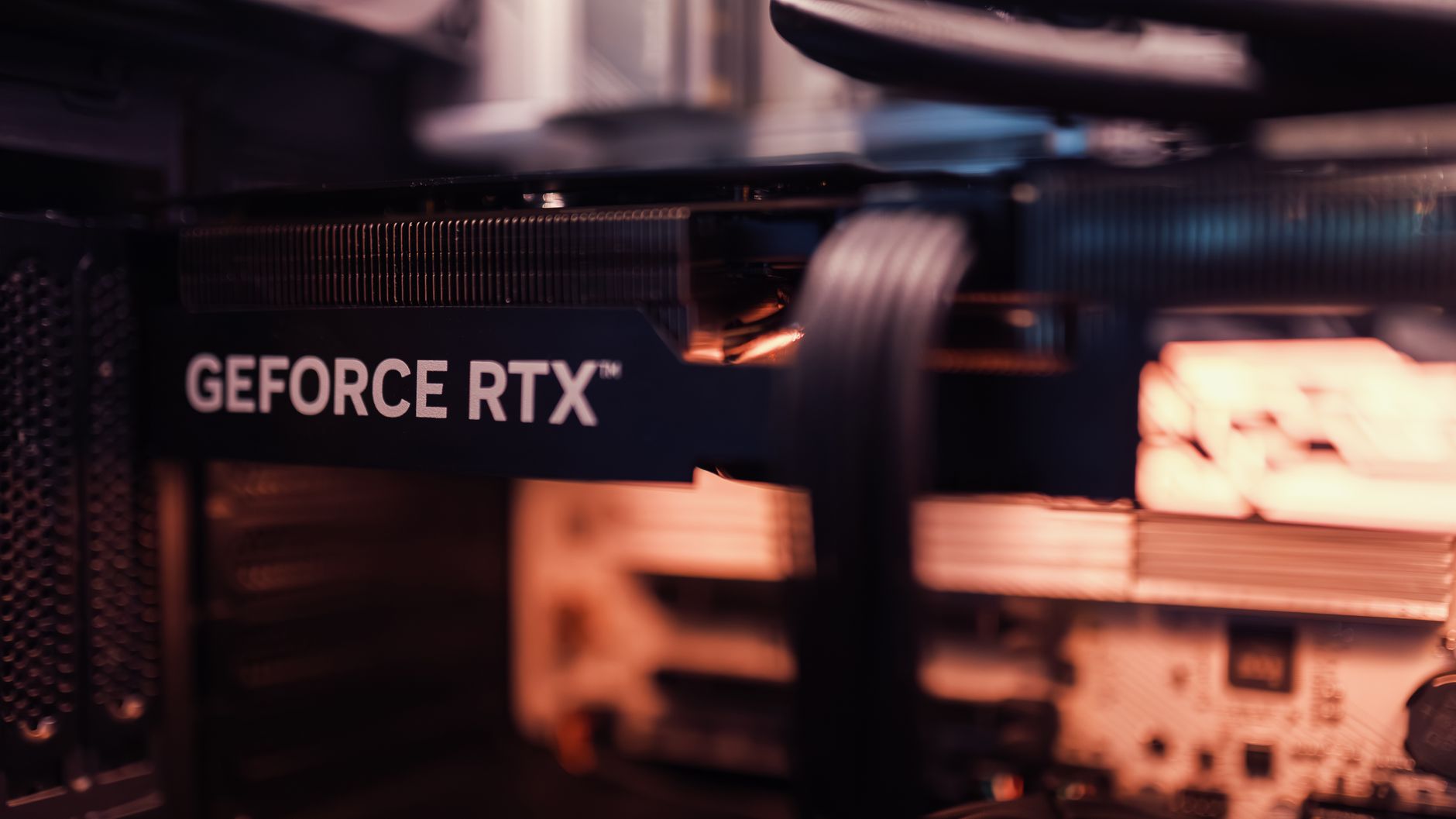
The Nvidia H100 GPU has emerged as the primary and most sought-after resource in the burgeoning artificial intelligence industry, effectively becoming the new gold standard for compute power. Its significance stems from its specialized architecture, designed specifically to accelerate the intensive computational demands of modern AI models. The H100 is engineered for tasks such as training large language models (LLMs), deep learning, and complex data analytics. Its ability to handle massive parallel processing, combined with advanced memory bandwidth and specialized tensor cores, makes it indispensable for startups aiming to develop cutting-edge AI applications and foundational models. Without access to a sufficient number of H100s, an AI startup's ability to innovate, iterate, and compete is severely hampered.
High demand has created an acute scarcity, transforming these chips into a strategic bottleneck for the entire AI ecosystem. A single Nvidia H100 GPU can cost up to $40,000, and a relatively small cluster of 16 units can represent an investment of approximately $400,000 Business Insider, 2024. These figures illustrate the immense capital required to build and scale an AI infrastructure, often exceeding the financial capacity of early-stage startups without significant external funding or direct VC support. Nvidia's market capitalization has surpassed $2 trillion, underscoring the company's pivotal role and the global demand for its AI-accelerating hardware, reflecting a market fundamentally reliant on a single dominant supplier for its most critical resource Business Insider, 2024.
This scarcity is not a short-term blip; the AI chip crunch is projected to last at least through 2024 Business Insider, 2024. A prolonged shortage has significant implications for startups across the industry. It means delayed product roadmaps, slower model training cycles, and increased time-to-market. For companies operating in a rapidly evolving field like AI, these delays can be fatal, allowing competitors with better resource access to gain an insurmountable lead. Startups that cannot secure H100s risk falling behind in the race to develop superior models and applications, potentially impacting their ability to attract future funding or achieve competitive differentiation.
The high cost and limited availability also create a barrier to entry for new founders and smaller teams. Without the backing of VCs who can directly procure or facilitate access to these chips, independent AI ventures face an uphill battle. This dynamic risks concentrating AI innovation within a select group of well-funded startups, potentially stifling broader competition and diversity in the ecosystem. The scarcity economy around H100s forces founders to prioritize compute access as a primary strategic objective, making it as important as talent acquisition or market strategy. This makes the ability of VCs to provide direct compute access a defining feature of their value proposition, fundamentally altering the competitive landscape for both investors and founders in the AI space. The H100 is not merely a component; it is the foundational currency of modern AI development, and its scarcity dictates the pace and direction of innovation.
Reshaping the Founder-Investor Dynamic
Direct involvement of venture capital firms in securing AI chips fundamentally reshapes the founder-investor dynamic. Traditionally, founders sought capital, strategic advice, and network connections from VCs. Now, for AI startups, a VC's ability to provide or facilitate access to critical computing resources, primarily Nvidia H100 GPUs, has become a paramount consideration, often outweighing other factors. This shift redefines the concept of "value-add" from an investor. It is no longer solely about mentorship or introductions; it is about tangible, physical infrastructure that directly impacts a startup's operational capacity and time-to-market.
For founders, this means the criteria for selecting an investor have expanded significantly. A VC firm that can guarantee access to H100s, whether through direct procurement like General Catalyst or strategic investments in specialized cloud providers like A16z with CoreWeave, offers a competitive advantage that can be decisive for an AI startup's survival and growth Business Insider, 2024. Founders must now inquire about a VC's strategy for compute access during fundraising discussions, making it a key due diligence point. The cost of these chips—up to $40,000 per H100, or $400,000 for 16 units—makes independent procurement a significant financial burden for most early-stage companies, further emphasizing the importance of VC intervention Business Insider, 2024.
This new dynamic could lead to increased concentration of talent and innovation within portfolios of VCs that have successfully secured compute access. Startups without such backing might struggle to compete, facing longer development cycles and higher operational costs. This could intensify competition among VC firms themselves, pushing more investors to adopt similar strategies or risk being sidelined in the most promising AI deals. Nvidia's market power, reflected in its market capitalization surpassing $2 trillion, underscores the central role of hardware in the AI revolution and the leverage it grants to those who can secure it Business Insider, 2024.
Furthermore, this shift could alter the power balance in founder-investor relationships. VCs who control access to scarce and essential resources might exert greater influence over their portfolio companies' strategic decisions, potentially guiding product roadmaps to align with available compute. While this could offer stability, it also introduces a new layer of dependency for founders. The exploration of 'buying collectives' by firms like General Catalyst, while offering benefits of scale, also implies a degree of coordinated resource management across a portfolio, further intertwining the fates of founders with their investors' strategic compute initiatives Business Insider, 2024. The projected duration of the chip crunch through 2024 ensures that this altered dynamic will persist, making compute access a structural rather than temporary element of fundraising in AI Business Insider, 2024. For founders, understanding these implications and strategically aligning with VCs who can deliver on compute is no longer a luxury, but a necessity for building a competitive AI company.
Reader questions.
01Why are VCs directly procuring AI chips instead of just funding startups?
VCs are directly procuring AI chips because an acute, industry-wide shortage of crucial hardware like Nvidia H100 GPUs makes them indispensable for AI development. Simply providing capital is no longer sufficient, as startups struggle to acquire these chips independently due to high demand and limited supply. By securing chips directly, VCs ensure their portfolio companies have the foundational computing power to build and scale [Business Insider, 2024](https://www.businessinsider.com/vcs-are-directly-sourcing-nvidia-h100-chips-for-their-ai-startups-an-unprecedented-move-amid-an-unprecedented-crunch-2024-3).02Which specific AI chips are in high demand, and what do they cost?
The Nvidia H100 GPU is the primary chip in high demand among AI startups. A single H100 GPU can cost up to $40,000. For reference, an order of 16 Nvidia H100 GPUs can cost approximately $400,000 [Business Insider, 2024](https://www.businessinsider.com/vcs-are-directly-sourcing-nvidia-h100-chips-for-their-ai-startups-an-unprecedented-move-amid-an-unprecedented-crunch-2024-3).03How are firms like Andreessen Horowitz and General Catalyst approaching this challenge differently?
Andreessen Horowitz (A16z) made a strategic investment in CoreWeave, a specialized cloud provider that buys Nvidia GPUs in bulk, ensuring indirect access for its portfolio. General Catalyst, on the other hand, has directly 'bought a bunch of chips' for its portfolio and is exploring forming a 'buying collective' among its portfolio companies to secure chips [Business Insider, 2024](https://www.businessinsider.com/vcs-are-directly-sourcing-nvidia-h100-chips-for-their-ai-startups-an-unprecedented-move-amid-an-unprecedented-crunch-2024-3).04What does the AI chip crunch mean for startup founders?
For founders, the AI chip crunch means that access to computing power is now a critical factor in fundraising and competitive strategy. VCs that can guarantee chip access offer a significant advantage. The crunch is projected to last at least through 2024, making it a sustained challenge that impacts product development timelines, operational costs, and the ability to attract investment [Business Insider, 2024](https://www.businessinsider.com/vcs-are-directly-sourcing-nvidia-h100-chips-for-their-ai-startups-an-unprecedented-move-amid-an-unprecedented-crunch-2024-3).05What is CoreWeave, and why is it relevant to this trend?
CoreWeave is a specialized cloud provider that focuses on GPU-accelerated infrastructure and buys Nvidia GPUs in bulk. It is relevant because Andreessen Horowitz made a strategic investment in CoreWeave to secure access to these critical chips for its AI portfolio companies. This positions CoreWeave as a key player in the supply chain for AI compute, with investors like Michael Dell also backing the company through Dell Technologies Capital [Business Insider, 2024](https://www.businessinsider.com/vcs-are-directly-sourcing-nvidia-h100-chips-for-their-ai-startups-an-unprecedented-move-amid-an-unprecedented-crunch-2024-3).
Continue reading

The Entrepreneur Story
Is your story worth telling?
We feature founders who are building something real. Apply and we'll be in touch.
Apply to be featured →Stay sharp.
Ideas that move.
Founder stories, emerging ventures, and essays on what's next — straight to your inbox.
Unsubscribe any time.