
Lambda AI Secures $4B Pre-IPO, Signals AI Compute Gold Rush
Lambda AI's $4 billion pre-IPO valuation, fueled by major investors like Sequoia and Nvidia, underscores the intense demand for GPU infrastructure and signals a booming market for AI compute resources.
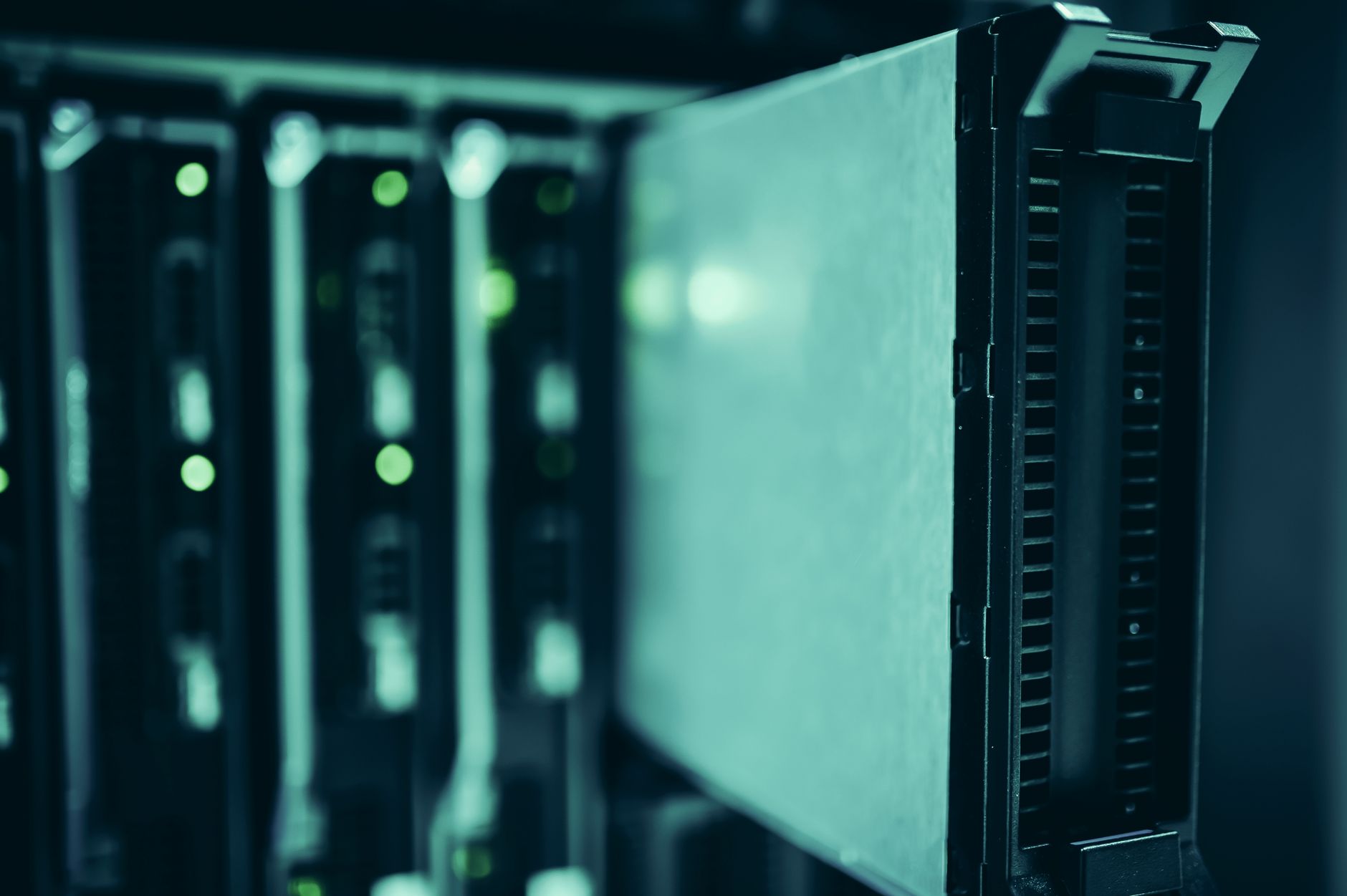
Lambda AI, a provider of GPU infrastructure essential for training advanced AI models, recently achieved a $4 billion valuation in a secondary funding round led by Sequoia Capital. This significant capital injection into AI compute infrastructure underscores the intense demand for foundational resources and signals robust market confidence ahead of a potential public offering for companies in this critical sector. For founders, this valuation jump highlights the immense capital flowing into the underlying infrastructure that powers the AI boom, indicating both opportunity and intense competition for resources.
Quick takeaways
- Massive Capital Influx: Lambda AI's $4 billion valuation, a rapid increase from $1.5 billion in August 2023, reflects strong investor confidence in AI compute infrastructure.
- Strategic Investor Alignment: Nvidia, Google's CapitalG, and Microsoft's M12 are among the investors, signaling deep strategic interest in the AI supply chain.
- Pre-IPO Liquidity: The secondary funding round provided liquidity for existing investors and employees, often a precursor to a public market debut.
- Foundational Market Demand: The deal underscores the "gold rush" for GPU resources, critical for training large language models from companies like OpenAI, Anthropic, and Mistral AI.
- Implications for Founders: Startups building AI models face increasing competition for limited, expensive compute resources, while infrastructure providers attract significant late-stage capital.
The $4 Billion Bet on AI Infrastructure
Lambda AI, founded in 2012 by Stephen Balaban, reached a $4 billion valuation in a recent secondary funding round, positioning it for a potential public offering CNBC, 2024. This valuation marks a substantial increase from its prior $1.5 billion valuation, achieved in a venture round completed in August 2023 Bloomberg, 2024. The rapid escalation in valuation, more than doubling in less than a year, highlights the acute demand and strategic importance of companies providing the foundational compute power for the artificial intelligence industry.
The latest funding round was led by Sequoia Capital, a prominent venture capital firm known for its early investments in technology giants Bloomberg, 2024. This leadership from Sequoia reflects a strong investor interest in the underlying infrastructure that supports the development and deployment of advanced AI models. Beyond Sequoia, a consortium of significant investors participated in the round. These include Nvidia, the dominant designer of graphics processing units (GPUs) essential for AI workloads, and CapitalG, Google's growth fund, indicating a strategic alignment from major tech players CNBC, 2024. M12, Microsoft's venture fund, also participated, further cementing the interest of hyperscale cloud providers in the AI compute ecosystem CNBC, 2024. Additional investors included Crescent Cove, T. Rowe Price, and Balyasny Asset Management, bringing a mix of institutional and asset management capital to the table CNBC, 2024.
It is crucial for founders to note that this $4 billion valuation was achieved through a secondary offering CNBC, 2024. In a secondary offering, existing investors and employees sell their shares to new or existing investors, rather than the company raising new capital directly for its operations. While this type of round does not inject fresh funds into Lambda AI's coffers, it provides liquidity for early backers and employees, often serving as a significant milestone on the path to a public offering. The valuation established in such a round provides a market-driven benchmark for the company's worth, signaling investor appetite for its future prospects. For founders, understanding the distinction between primary and secondary rounds is essential when interpreting funding announcements and assessing market sentiment. A high valuation in a secondary round indicates strong demand for a company's shares, even if it's not directly fueling operational growth with new capital.
Lambda's core business revolves around providing GPU infrastructure that supports the training of sophisticated artificial intelligence models CNBC, 2024. This offering is critical to the AI industry, as the development of large language models and other advanced AI systems requires immense computational power, primarily delivered by high-performance GPUs. By offering these specialized computing resources, Lambda enables AI developers to build, train, and deploy their models without the prohibitive cost and complexity of acquiring and managing their own GPU clusters. This strategic position at the heart of AI development makes Lambda a vital player in the ongoing technological transformation.
The Compute Gold Rush
The significant funding for Lambda AI is part of a broader "gold rush" for AI compute and infrastructure, reflecting the fundamental dependency of advanced AI on powerful processing capabilities CNBC, 2024. This analogy to a gold rush is apt: just as prospectors needed shovels and pans, AI developers critically depend on GPUs to unearth the value from vast datasets and complex algorithms. The scarcity of these high-performance GPUs, particularly Nvidia's leading-edge models, combined with the insatiable demand from AI companies, has created a bottleneck in the AI supply chain and, concurrently, a massive opportunity for infrastructure providers.
Lambda's GPU infrastructure serves prominent AI model developers, including industry leaders like OpenAI, Anthropic, and Mistral AI Bloomberg, 2024. These companies are at the forefront of developing large language models and other generative AI applications that require thousands of GPUs running in parallel for weeks or months to complete training cycles. The ability to provide reliable, scalable access to these resources is not merely a service; it is a strategic partnership that enables the very existence and advancement of cutting-edge AI. For founders building AI models, securing access to such compute resources is often as critical as securing seed funding. The competition for these resources can dictate development timelines, operational costs, and ultimately, market entry and competitiveness.
Competitors in this burgeoning space, such as CoreWeave, are also attracting substantial investment, underscoring the widespread investor belief in the AI infrastructure market CNBC, 2024. CoreWeave, for instance, has secured billions in funding, including debt facilities backed by Nvidia GPUs, highlighting the capital-intensive nature of building and scaling these data centers. These companies differentiate themselves not only by the sheer volume of GPUs they can deploy but also by their specialized software layers, network architectures, and services optimized specifically for AI workloads. Unlike general-purpose cloud providers like Amazon Web Services (AWS), Google Cloud, or Microsoft Azure, which offer a broad spectrum of computing services, dedicated AI compute providers often focus on delivering highly optimized, cost-effective, and readily available GPU clusters.
The demand for AI compute extends beyond just the foundational model developers. Enterprises across various sectors are increasingly adopting AI, requiring significant computational power for fine-tuning models, running inference at scale, and developing custom AI solutions. This broad-based demand ensures a sustained need for GPU infrastructure, fueling the growth of companies like Lambda. For founders in adjacent spaces, such as those developing AI tools, MLOps platforms, or specialized AI hardware, the success of compute providers like Lambda signifies a maturing market where the underlying infrastructure is being solidified. This allows them to focus on their core value proposition, knowing that the heavy lifting of raw compute is being handled by specialized providers. The capital pouring into this sector also indicates that investors are willing to back businesses that solve fundamental bottlenecks in the AI ecosystem, even if they operate several layers removed from the end-user application.
Lambda's Trajectory and Market Position
Lambda AI's journey began in 2012, when co-founder Stephen Balaban started the company CNBC, 2024. This long operational history, predating the mainstream explosion of generative AI, positions Lambda as an experienced player in the specialized computing market. For over a decade, the company has focused on high-performance computing and machine learning infrastructure, allowing it to build deep expertise in managing complex GPU clusters and optimizing them for demanding AI workloads. This foundational experience is a significant differentiator in a rapidly expanding field where many new entrants are racing to catch up. The ability to navigate the complexities of hardware procurement, data center operations, and software optimization for AI is not easily replicated, providing Lambda with a competitive advantage.
The company's core business involves providing GPU infrastructure that supports the training of sophisticated artificial intelligence models CNBC, 2024. This offering extends beyond simply renting out hardware; it encompasses a full stack of services designed to accelerate AI development. This includes specialized software environments, robust networking, and dedicated support that caters to the unique demands of AI researchers and engineers. By focusing exclusively on AI compute, Lambda can tailor its infrastructure and services to a degree that general-purpose cloud providers may find challenging. This specialization often translates into better performance, lower latency, and more cost-effective solutions for specific AI tasks.
Lambda's clientele list underscores its market position: its GPU infrastructure serves prominent AI model developers, including OpenAI, Anthropic, and Mistral AI Bloomberg, 2024. These are some of the most capital-intensive and compute-hungry companies in the world, responsible for developing the foundational models that are reshaping industries. Their reliance on Lambda's infrastructure is a powerful validation of the company's technical capabilities, reliability, and capacity to deliver at scale. For founders, attracting and retaining such high-profile customers is a testament to product-market fit and operational excellence. It signals that Lambda is not just participating in the AI boom but is an integral part of its engine.
The decision for Stephen Balaban to start Lambda in 2012, long before the current AI fervor, reflects a foresight into the eventual need for specialized computing resources for machine learning. This early start allowed Lambda to build relationships with key hardware suppliers, particularly Nvidia, and to develop the operational expertise necessary to manage large-scale GPU deployments. The substantial valuation increase from $1.5 billion in August 2023 to $4 billion recently indicates that this long-term strategy is now paying significant dividends Bloomberg, 2024. For founders, this trajectory offers a lesson in strategic patience and the value of specializing in a critical, albeit initially niche, area that eventually becomes central to a major technological shift. It also highlights the potential for significant valuation growth when a company is positioned to capitalize on a macro trend.
Nvidia's Strategic Play
Nvidia plays a dual role in the AI compute ecosystem: it is both a strategic investor in Lambda AI and the key supplier of the high-demand GPUs that power Lambda's data centers CNBC, 2024. This dual involvement is a calculated strategic move by Nvidia, aiming to solidify its dominance across the entire AI value chain. By investing in companies like Lambda, Nvidia ensures that there are robust, well-funded channels for its GPUs to reach the AI model developers who need them most. This creates a symbiotic relationship: Lambda's growth drives demand for Nvidia's hardware, and Nvidia's investment helps Lambda scale its infrastructure to meet that demand.
This strategic investment from Nvidia is not unique to Lambda. Nvidia has been actively investing in various AI startups, particularly those focused on AI infrastructure, cloud services, and foundational models. This approach allows Nvidia to foster a vibrant ecosystem around its GPU technology, ensuring that its hardware remains the de facto standard for AI development. For founders building AI infrastructure, attracting investment from a dominant player like Nvidia can be a significant validation and provide access to critical resources, including early access to new chip architectures and technical support. However, it also means operating within an ecosystem where the primary hardware supplier has a vested interest in the success of its portfolio companies, potentially influencing competitive dynamics.
The relationship between Nvidia and companies like Lambda is critical due to the current scarcity of high-performance GPUs. Nvidia's advanced GPUs, such as the H100, are in extremely high demand, with lead times often extending for months. By investing in and partnering with key compute providers, Nvidia can strategically allocate its production capacity to ensure that its most important partners have access to the necessary hardware. This arrangement helps to accelerate the development of AI models and applications, which in turn fuels further demand for Nvidia's chips. For founders in the AI space, understanding these strategic alliances is paramount. Access to cutting-edge GPUs is not just a procurement challenge; it is increasingly a strategic one, influenced by investor relationships and ecosystem partnerships.
Nvidia's investment in Lambda also underscores a broader trend: the convergence of hardware manufacturing, software platforms, and cloud services in the AI era. Nvidia is not just a chipmaker; it is building a comprehensive platform for AI development, including its CUDA software stack and various AI frameworks. By investing in companies that deploy and manage its hardware at scale, Nvidia extends its influence beyond the chip level into the operational layers of AI. This ensures that its technology is optimally utilized and that its ecosystem remains robust. For founders, this means that success in the AI sector often requires navigating complex partnerships and understanding how dominant players like Nvidia are shaping the market through both direct investment and supply chain control. The presence of other major tech players like Google's CapitalG and Microsoft's M12 as investors further complicates and legitimizes this strategic landscape, as these giants also seek to secure their positions in the AI compute supply chain CNBC, 2024.
Implications for Founders in the AI Era
Lambda AI's $4 billion valuation and the significant capital inflow into AI compute infrastructure carry several key implications for founders across the artificial intelligence landscape. Firstly, the deal reinforces that the foundational layer of AI – the compute power – is a highly capital-intensive and strategically vital segment of the market. For founders building AI models or applications, this means that the cost and availability of GPU resources will remain a critical constraint and a significant operational expense. Companies like Lambda and CoreWeave are emerging as essential intermediaries, alleviating some of the burden of direct hardware procurement and data center management, but at a cost that reflects the underlying scarcity and demand. Founders must factor these infrastructure costs prominently into their financial models and seek efficient ways to utilize compute, potentially through optimized algorithms or strategic partnerships.
Secondly, the rapid valuation increase for Lambda, from $1.5 billion to $4 billion in less than a year, signals intense investor appetite for businesses that address fundamental bottlenecks in the AI supply chain Bloomberg, 2024. This indicates a clear investment thesis: solve a core problem for AI developers, and capital will follow. Founders looking for opportunities beyond direct AI model development should consider infrastructure, tooling, and optimization layers that enhance efficiency or access to compute. This could include specialized MLOps platforms, data management solutions tailored for large AI workloads, or innovative cooling technologies for data centers. The market is rewarding companies that enable the AI boom, not just those building the end-user applications.
Thirdly, the involvement of strategic investors like Nvidia, CapitalG (Google's growth fund), and M12 (Microsoft's venture fund) highlights the strategic importance of these infrastructure plays CNBC, 2024. For founders, this suggests that securing investment from such corporate venture arms can offer more than just capital; it can provide strategic alignment, access to crucial technologies, and potential customer pipelines. However, it also means navigating potentially complex relationships where investors may have competing interests or exert significant influence. Founders should carefully evaluate the strategic benefits and potential trade-offs of such partnerships.
Finally, Lambda's pre-IPO secondary round indicates a maturation of the AI infrastructure market and a potential path to public liquidity. For founders in late-stage startups, secondary offerings provide a mechanism for early investors and employees to gain liquidity before an IPO, which can be a crucial incentive for talent and a way to manage investor expectations. This trend suggests that the public markets are likely to see more AI infrastructure companies seeking listings in the coming years, offering new investment avenues and further validating the sector. Founders should study the financial structures and valuation metrics of companies like Lambda as they consider their own long-term funding and exit strategies. The successful navigation of these late-stage private rounds provides valuable lessons on market timing, investor relations, and preparing for public scrutiny.
The Secondary Market as an IPO Precursor
The $4 billion valuation achieved by Lambda AI through a secondary offering is a critical point for founders to understand, as this funding mechanism is increasingly common for late-stage private companies nearing a potential public debut CNBC, 2024. Unlike a primary funding round where the company issues new shares to raise capital for its operations, a secondary offering involves existing shareholders – typically early investors and employees – selling their shares to new investors. This process provides liquidity to those who have been with the company for a significant period, allowing them to realize returns on their investment or equity holdings without the company needing to go public immediately.
For founders, a secondary round can serve multiple strategic purposes. Firstly, it offers a mechanism to reward early employees and investors, providing them with an opportunity to cash out a portion of their holdings. This can be crucial for talent retention, especially in highly competitive sectors like AI, where employees often hold significant equity. By offering liquidity, companies can maintain morale and reduce pressure for an immediate IPO, allowing management to focus on long-term growth and market positioning. Secondly, a secondary round helps establish a market-driven valuation for the company. The price at which shares are traded in a secondary market reflects current investor sentiment and demand, providing a fresh benchmark for the company's worth. This valuation, in turn, can inform future primary fundraising efforts or provide a strong foundation for an eventual public offering. Lambda's jump from $1.5 billion to $4 billion in less than a year through this mechanism clearly demonstrates this Bloomberg, 2024.
The participation of major institutional investors and corporate venture funds in a secondary round also sends a powerful signal to the broader market. When entities like Sequoia Capital, CapitalG (Google's growth fund), and M12 (Microsoft's venture fund) are willing to acquire shares from existing holders, it indicates strong confidence in the company's future prospects and validates its market position CNBC, 2024. This institutional backing can lend credibility and reduce perceived risk for potential investors in an eventual IPO. For founders, attracting such high-caliber investors in a secondary transaction can be as strategically valuable as securing a lead investor in a primary round. It demonstrates that the company has reached a stage where its shares are considered a desirable asset by sophisticated market participants.
However, founders should also be aware of the nuances. While a secondary round provides liquidity, it does not inject new capital into the company for growth initiatives like expanding data centers or hiring more engineers. The company still needs to manage its balance sheet carefully and may pursue primary fundraising rounds in the future if significant operational capital is required. The $4 billion valuation in this secondary round for Lambda AI, therefore, primarily reflects the market's perception of its existing assets and future revenue potential, rather than an immediate boost to its operational cash reserves. For founders planning their funding journey, incorporating secondary liquidity events into their long-term strategy can be a sophisticated way to manage stakeholder expectations and prepare the ground for a successful public market transition.
FAQ
Q: What is Lambda AI's core business? A: Lambda AI's core business involves providing GPU infrastructure that supports the training of sophisticated artificial intelligence models, serving prominent AI model developers like OpenAI, Anthropic, and Mistral AI CNBC, 2024, Bloomberg, 2024.
Q: What was Lambda AI's valuation in this latest funding round? A: Lambda AI reached a $4 billion valuation in a recent secondary funding round CNBC, 2024. This is a significant increase from its $1.5 billion valuation in August 2023 Bloomberg, 2024.
Q: Which investors participated in Lambda AI's recent funding round? A: The latest funding round was led by Sequoia Capital. Other significant investors include Nvidia, CapitalG (Google's growth fund), Crescent Cove, M12 (Microsoft's venture fund), T. Rowe Price, and Balyasny Asset Management Bloomberg, 2024, CNBC, 2024.
Q: What is the significance of Nvidia's investment in Lambda AI? A: Nvidia plays a dual role as both a strategic investor in Lambda and a key supplier of the high-demand GPUs that power Lambda's data centers CNBC, 2024. This signifies a strong strategic alignment and Nvidia's interest in bolstering the AI compute ecosystem around its hardware.
Q: What is a secondary funding round, and how does it differ from a primary round? A: A secondary funding round involves existing investors and employees selling their shares to new investors, providing liquidity without injecting new capital into the company itself. In contrast, a primary funding round involves the company issuing new shares to raise capital for its operations and growth CNBC, 2024.
Continue reading


The Entrepreneur Story
Is your story worth telling?
We feature founders who are building something real. Apply and we'll be in touch.
Apply to be featured →Stay sharp.
Ideas that move.
Founder stories, emerging ventures, and essays on what's next — straight to your inbox.
Unsubscribe any time.