
Starcloud Raises $250M for Orbital Data Centers Defying Launch Scarcity
Starcloud secures $250 million in Series A funding to develop orbital data centers, signaling a profound shift in digital infrastructure and challenging traditional cloud computing boundaries.
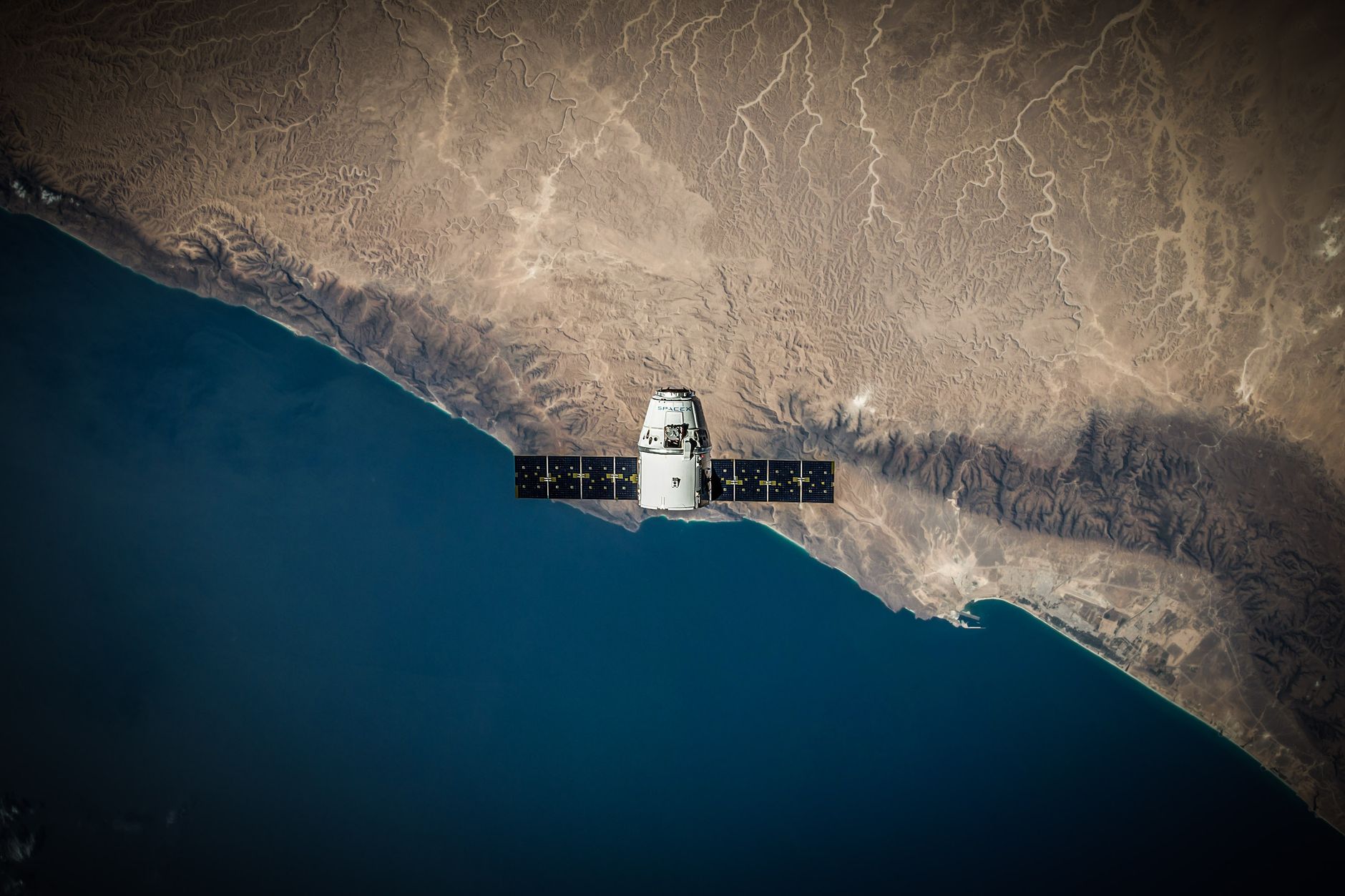
Starcloud, founded in 2022, has secured $250 million in a Series A funding round, led by venture capital firm Coatue, bringing its total capital raised to nearly $300 million to develop and deploy orbital data centers. This significant investment signals a profound shift in the digital infrastructure landscape, challenging founders to re-evaluate the physical boundaries of cloud computing and the strategic implications of space-based services for critical, latency-sensitive applications.
Quick takeaways
- Starcloud raised $250 million in a Series A round, bringing total funding to nearly $300 million.
- The company aims to build and operate orbital data centers, offering cloud computing services from space.
- Its first proof-of-concept mission is planned for 2025, despite a challenging space launch market.
- Daimon, known by a single name, founded Starcloud in 2022 and serves as its CEO.
- The investment highlights a growing venture appetite for long-term, high-capital space infrastructure projects.
The Orbital Bet: Starcloud's Funding and Vision
Starcloud’s recent $250 million Series A funding round represents one of the largest early-stage investments in the nascent space infrastructure sector this year. The round was spearheaded by Coatue, a firm known for its substantial bets on technology companies. Other prominent investors included Eclipse, Founders Fund, Lightspeed, and New Enterprise Associates (NEA) SpaceNews, 2024. This capital infusion pushes Starcloud’s total funding to nearly $300 million since its inception in 2022, a testament to investor confidence in its audacious vision.
The company's primary objective is to construct and operate orbital data centers, fundamentally shifting where and how cloud computing services are delivered TechCrunch, 2024. This isn't merely about putting servers in space; it's about establishing a new frontier for digital infrastructure. The promise lies in offering unprecedented capabilities: reduced latency for specific applications, enhanced processing power away from terrestrial constraints, and potentially a more secure and resilient computing environment. While specific use cases are still being refined, the long-term vision articulated by Starcloud includes establishing orbital infrastructure capable of handling hundreds of petabytes of storage and trillions of operations per second of computing capacity SpaceNews, 2024.
This scale of ambition positions Starcloud not as a niche player but as a potential foundational layer for future digital economies. Terrestrial data centers, while continually advancing, face inherent limitations: geographical latency, susceptibility to localized disasters, and significant energy and real estate demands. By moving computing infrastructure into orbit, Starcloud aims to bypass many of these constraints. For founders in sectors like government, defense, and finance, where data security, low-latency processing, and resilience are paramount, the prospect of orbital data centers presents a compelling alternative to existing ground-based solutions. The investment signals that top-tier VCs are willing to back capital-intensive, long-duration projects that redefine fundamental infrastructure, provided the potential market disruption is significant enough. This approach demands a different kind of entrepreneurial thinking, one that balances cutting-edge engineering with a long-term strategic outlook on global digital needs.
Daimon and the Genesis of Starcloud
Starcloud was founded in 2022 by Daimon, who is known for using a single name TechCrunch, 2024. While details about Daimon's specific prior ventures or background are not publicly available in the key facts, the scale of funding secured for Starcloud suggests a founder with a significant track record or a highly compelling vision capable of attracting major institutional investors. The company is headquartered in Los Angeles, a hub increasingly recognized for its burgeoning aerospace and deep tech startup ecosystem TechCrunch, 2024.
The decision to found Starcloud in 2022, amidst a challenging global economic climate and a highly competitive space industry, underscores a conviction in the untapped potential of orbital infrastructure. The fundamental premise behind orbital data centers addresses several escalating challenges faced by terrestrial cloud providers. Data gravity, the phenomenon where data attracts more data and applications, often leads to increased latency when processing and storing information across vast geographical distances. For applications requiring ultra-low latency—such as real-time financial trading, advanced defense systems, or autonomous vehicle networks—even milliseconds of delay can be critical. Orbital data centers, strategically positioned, could offer a significant advantage by reducing the physical distance data needs to travel.
Furthermore, terrestrial data centers consume vast amounts of land, energy, and water, posing environmental and logistical challenges. While orbital operations introduce their own complexities, the ability to leverage the vacuum of space for passive cooling and potentially solar power generation offers a different paradigm for sustainable computing infrastructure. Daimon's vision for Starcloud is not merely incremental; it represents a foundational shift in how critical data processing is conceived. This kind of "category-defining" ambition is often what attracts top-tier venture capital, even for projects with long development cycles and substantial upfront capital requirements. Founders contemplating similar deep tech ventures should note that a compelling vision, coupled with the ability to articulate a clear market gap and a credible path to execution, is paramount in securing significant early-stage investment. Starcloud’s rapid ascent to nearly $300 million in total funding within two years of its founding exemplifies this principle in action, signaling a willingness by investors to back founders who are thinking decades ahead.
Navigating the Launch Landscape
Starcloud's ambition to launch its first proof-of-concept orbital data center mission in 2025 faces a significant market reality: the scarcity of available space launches SpaceNews, 2024. Despite a surge in launch vehicle development and increased launch cadence from providers like SpaceX, Rocket Lab, and United Launch Alliance, demand for orbital access continues to outpace supply. This bottleneck affects nearly every startup in the New Space economy, from satellite operators to in-orbit servicing companies. Securing a slot on a reliable rocket, often years in advance, can be a major hurdle, impacting development timelines and capital burn rates.
The challenge is multi-faceted. Established launch providers have backlogs stretching into the mid-to-late 2020s, with many slots allocated to government contracts or large commercial constellations. Emerging launch providers, while promising, often face their own development delays and technical risks. The cost of launch, though decreasing on a per-kilogram basis, remains a substantial capital expenditure for any company aiming to deploy significant mass into orbit. For Starcloud, whose long-term vision involves establishing infrastructure capable of hundreds of petabytes of storage and trillions of operations per second SpaceNews, 2024, this implies a need for multiple, potentially heavy-lift launches over time.
Starcloud's ability to raise nearly $300 million in total funding SpaceNews, 2024 offers a critical advantage in this competitive environment. Substantial capital allows the company to engage with launch providers for dedicated missions or bulk purchases, potentially securing more favorable terms or guaranteed slots than smaller, less-funded startups. It also provides the financial runway to absorb potential launch delays without jeopardizing the entire project. For other founders in the space sector, Starcloud's approach underscores the necessity of either securing robust funding to navigate launch market volatility or developing innovative solutions that minimize reliance on frequent, large-scale launches. This might involve miniaturization, in-orbit assembly, or partnerships with launch companies that offer dedicated rideshare programs. The "defying launch scarcity" aspect of Starcloud's narrative is not about overcoming the physical limitations of launch vehicles, but rather about possessing the financial and strategic leverage to secure access in a highly constrained market, ensuring their 2025 proof-of-concept mission remains on track.
Competition and the Space Infrastructure Race
Starcloud is entering a rapidly evolving landscape where the lines between traditional terrestrial infrastructure and nascent space-based capabilities are blurring. While there are no direct, publicly identified competitors currently operating orbital data centers at scale, the company's ambition to offer cloud computing services from space places it in a strategic position relative to several adjacent industries and major players.
On one hand, Starcloud's offering challenges the established terrestrial cloud computing giants: Amazon Web Services (AWS), Microsoft Azure, and Google Cloud Platform (GCP). These companies have invested hundreds of billions into global data center networks, fiber optic cables, and edge computing nodes. Their infrastructure provides the backbone of the modern internet. Starcloud's value proposition of reduced latency and enhanced processing capabilities for critical applications directly addresses areas where terrestrial networks face physical limitations. While orbital data centers are unlikely to replace the vast majority of ground-based cloud services in the near term, they could carve out a significant niche for specialized, high-value use cases that demand extreme performance or unique security postures. AWS, for example, has already established AWS Ground Station, offering satellite communication services, indicating a strategic interest in integrating space assets into its cloud ecosystem. This suggests that future competition might involve partnerships or acquisitions, rather than direct head-to-head battles, as terrestrial giants seek to extend their reach into orbit.
On the other hand, Starcloud operates within the broader "New Space" economy, an ecosystem brimming with innovation in satellite communication, in-orbit manufacturing, and space logistics. Companies like SpaceX (Starlink) and Amazon (Project Kuiper) are deploying vast constellations of low Earth orbit (LEO) satellites to provide global internet access, effectively building a space-based communication backbone. While their primary focus is connectivity, the sheer volume of data flowing through these networks, and the processing required to manage it, creates a potential synergy or competitive overlap with Starcloud's vision. Other companies, such as Axiom Space, are developing commercial space stations, which could theoretically host data processing modules. Startups focused on in-orbit servicing and assembly, like Orbit Fab or Northrop Grumman's Mission Extension Vehicle, are building the foundational capabilities for persistent space infrastructure, which Starcloud would ultimately rely on for maintenance, upgrades, and expansion.
The "space infrastructure race" is characterized by high capital requirements, long development cycles, and significant technological hurdles. Starcloud’s substantial funding positions it as a serious contender in this race, demonstrating that investors are willing to back projects that aim to build fundamental utilities for a future space economy. For founders, this signals that the market is maturing beyond just launch and satellite services, opening opportunities for innovative solutions in power, computing, manufacturing, and logistics in orbit. The strategic play for Starcloud will be to differentiate its computing offering while potentially integrating with or leveraging existing and planned space communication networks, rather than trying to build every component from scratch.
Implications for Founders: Building in a New Frontier
Starcloud's success in securing nearly $300 million in total funding, including a $250 million Series A, offers several critical lessons for founders operating in deep tech, particularly within nascent and capital-intensive sectors like space. This magnitude of early-stage investment for a concept as ambitious as orbital data centers is not typical, and it highlights specific strategic considerations.
First, the investment underscores the enduring appeal of visionary, category-defining ideas. Starcloud is not iterating on an existing product; it is attempting to create an entirely new class of infrastructure. For founders, this means identifying truly disruptive opportunities, not just incremental improvements. The ability to articulate a compelling, long-term vision that fundamentally alters how an industry operates can attract a different caliber of investor, one willing to make substantial, patient capital bets. Daimon’s ability to sell the concept of "cloud computing from space" speaks to the power of a clear, bold narrative.
Second, the funding demonstrates a continued investor appetite for deep tech and hard problems. In an era where many venture dollars chase software-as-a-service (SaaS) or consumer apps, Starcloud's capital raise reaffirms that groundbreaking engineering and scientific challenges, when addressed with a credible plan, can still command significant investment. Founders in areas like biotech, advanced manufacturing, new energy, or space should recognize that while the fundraising path may be longer and more arduous, the potential returns for investors are also perceived as higher due to the fundamental nature of the innovation. This requires founders to build strong technical teams and demonstrate a deep understanding of the underlying scientific and engineering principles.
Third, Starcloud's funding strategy highlights the importance of strategic investor alignment. The participation of firms like Coatue, Founders Fund, Lightspeed, and NEA indicates a blend of growth-stage specialists and those with a track record in backing ambitious, often hardware-heavy, ventures. These investors are not just providing capital; they are likely offering strategic guidance, network access, and a long-term perspective necessary for projects with multi-year development cycles and significant regulatory hurdles. For founders, this means carefully selecting investors whose mandates align with the scale and timeline of their venture, rather than simply optimizing for valuation alone.
Finally, the context of "defying launch scarcity" emphasizes the need for resilience and capital efficiency in the face of external market challenges. While Starcloud's substantial capital allows it to navigate the tight launch market, for other founders in space, it signals the importance of designing systems that are launch-agnostic, modular, or can tolerate delays. It also reinforces the need for robust financial planning to ensure sufficient runway through unforeseen market fluctuations or technical setbacks. Starcloud’s journey, even at this early stage, serves as a case study for building foundational technology in a new frontier, demanding a blend of audacious vision, rigorous engineering, and astute financial and strategic planning.
The Road Ahead: Starcloud's 2025 Milestone and Beyond
Starcloud's immediate objective is the launch of its first proof-of-concept orbital data center mission in 2025 SpaceNews, 2024. This mission will be a critical milestone, moving the company from theoretical design and ground-based prototyping to actual in-orbit validation. A proof-of-concept typically aims to demonstrate the feasibility of core technologies and operational concepts, rather than full commercial deployment. For Starcloud, this likely involves testing key components such as radiation-hardened computing hardware, thermal management systems in vacuum, power generation and storage (likely solar), and most crucially, secure, high-bandwidth data links to Earth. The success of this initial mission will be paramount in de-risking the technology and validating the economic model for future, larger deployments.
The technical challenges inherent in building and operating data centers in space are formidable. Unlike terrestrial data centers that benefit from stable environments, readily available power grids, and a dense network of fiber optics, orbital infrastructure must contend with extreme radiation, vacuum conditions, microgravity, and the constant threat of space debris. Designing hardware that can withstand these conditions for years, while consuming minimal power and generating manageable heat, requires cutting-edge engineering. Data transmission back to Earth also presents a significant hurdle, demanding sophisticated optical or radio frequency communication systems capable of reliably sending petabytes of data across vast distances with minimal latency.
Beyond the 2025 proof-of-concept, Starcloud's long-term vision is ambitious: to establish orbital infrastructure capable of hundreds of petabytes of storage and trillions of operations per second of computing capacity SpaceNews, 2024. Achieving this scale will require multiple launches, potentially involving in-orbit assembly and servicing, and a modular design that allows for upgrades and expansion. This vision extends beyond mere technological development; it encompasses significant regulatory hurdles, including securing orbital slots, managing spectrum licenses, and adhering to international space law and debris mitigation guidelines. The capital intensity of such a venture will also remain high, necessitating further funding rounds and potentially strategic partnerships with governments or large corporations.
The success of Starcloud's orbital data centers could have far-reaching implications for global digital infrastructure. It could enable entirely new applications that are currently constrained by terrestrial latency or processing power. It could also offer a new layer of resilience for critical data, safeguarding it against terrestrial disasters or cyber threats. However, the path is fraught with risk – technological, operational, and financial. The 2025 mission will be the first tangible step in determining whether Starcloud can bridge the gap between an audacious vision and a functioning, scalable reality, setting a precedent for other founders exploring the ultimate frontier of infrastructure.
FAQ
What are orbital data centers?
Orbital data centers are proposed computing facilities deployed in Earth's orbit, designed to offer cloud computing and data storage services from space. The goal is to provide reduced latency for specific applications, enhanced processing capabilities, and potentially greater resilience compared to terrestrial data centers TechCrunch, 2024.
Why build data centers in space?
Building data centers in space aims to overcome limitations of terrestrial infrastructure, such as geographical latency, vulnerability to localized disasters, and significant energy/real estate demands. Orbital data centers could offer ultra-low latency for critical applications (e.g., government, defense, finance) and potentially leverage the space environment for unique thermal management TechCrunch, 2024.
Who is Starcloud's founder?
Starcloud was founded by Daimon, who is known for using a single name TechCrunch, 2024.
What are the main challenges for Starcloud?
Starcloud faces significant challenges, including securing access to a highly competitive launch market for its missions, overcoming the technical hurdles of operating complex computing hardware in the harsh space environment (radiation, vacuum, thermal management), and developing robust data links to Earth. The venture is also highly capital-intensive and requires long-term development SpaceNews, 2024.
When is Starcloud's first mission planned?
Starcloud plans to launch its first proof-of-concept orbital data center mission in 2025 SpaceNews, 2024.
Continue reading


The Entrepreneur Story
Is your story worth telling?
We feature founders who are building something real. Apply and we'll be in touch.
Apply to be featured →Stay sharp.
Ideas that move.
Founder stories, emerging ventures, and essays on what's next — straight to your inbox.
Unsubscribe any time.