
DeepSeek, Moonshot AI Lead $50B+ AI Unicorn IPO Rush
DeepSeek AI and Moonshot AI are leading AI IPOs, targeting over $50 billion in combined valuations to secure immense capital and provide liquidity.
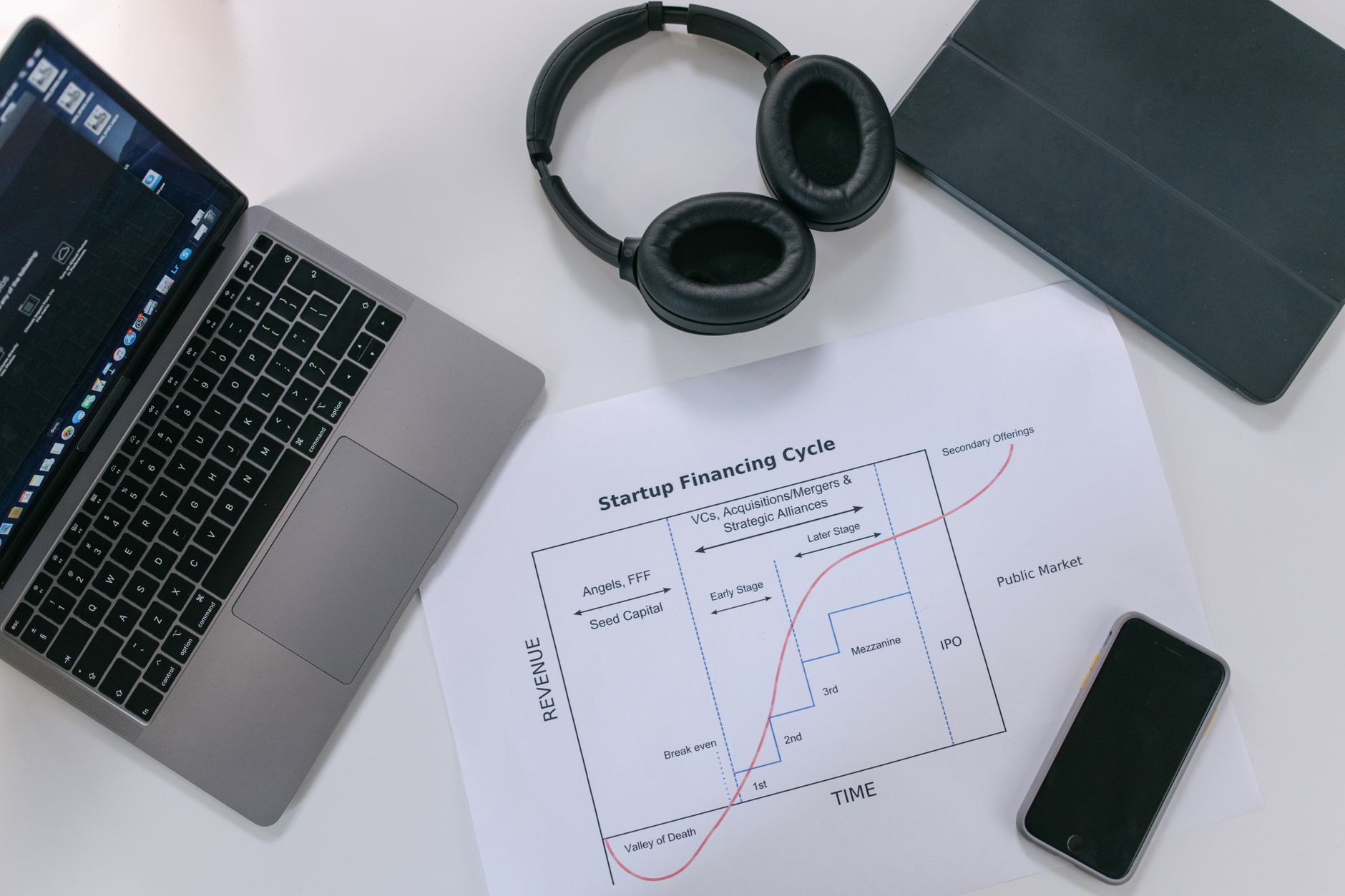
DeepSeek AI and Moonshot AI, two prominent Chinese AI startups, are spearheading a potential surge of public market listings, with aspirations for valuations that could push the combined market capitalization of leading AI startups above $50 billion, potentially reaching up to $75 billion for individual companies Bloomberg, 2024. This pivot signifies a crucial transition for the AI industry, moving from reliance on private mega-funding rounds to seeking substantial capital and providing liquidity through public listings. For founders, this shift sets new precedents for investor expectations and future capital flows, indicating a maturing market where public exits become a viable and necessary path for immense capital requirements.
Quick Takeaways
- DeepSeek AI and Moonshot AI are leading a potential wave of AI IPOs, targeting combined public valuations exceeding $50 billion.
- This move provides critical liquidity for early investors and secures the immense capital required for advanced AI development, including acquiring GPUs and top talent.
- DeepSeek AI is reportedly considering a U.S. IPO, while Moonshot AI explores listing options in either Hong Kong or the U.S.
- Both companies recently secured over $1 billion each in private funding, with major backing from Alibaba and Tencent.
- The anticipated IPOs will establish new benchmarks for AI startup valuations and investor expectations in global public markets.
The Public Market Pivot: A New Era for AI Capital
The AI industry is entering a new phase, characterized by a strategic pivot from private mega-funding rounds to public market listings. This shift is not merely an opportunistic move but a fundamental necessity driven by the escalating costs of advanced AI development and the demand for liquidity from early-stage investors. DeepSeek AI and Moonshot AI exemplify this trend, positioning themselves at the forefront of what could become a significant rush to public markets Bloomberg, 2024. Their combined public market valuation could exceed $50 billion, with some individual AI companies potentially commanding valuations as high as $75 billion. This scale underscores the immense financial stakes involved and the belief in AI's transformative economic impact.
For founders navigating the increasingly competitive AI landscape, this transition holds profound implications. The move to public markets signals a maturation of the sector, where private capital alone may no longer suffice for the sustained, capital-intensive pursuit of AI innovation. Companies like DeepSeek AI and Moonshot AI require vast sums to acquire cutting-edge hardware, particularly high-performance GPUs, and to attract and retain elite AI research talent. These expenses far outstrip the typical capital needs of many other tech startups, pushing even well-funded unicorns towards public offerings as the most effective means of raising the requisite funds Bloomberg, 2024.
Furthermore, public listings offer a critical exit mechanism for early investors who have backed these companies through multiple private rounds. Providing liquidity allows venture capital firms and strategic investors like Alibaba and Tencent to realize returns on their substantial investments, which in turn frees up capital for new investments in the next generation of AI startups. This cycle is essential for the health and continued growth of the broader AI ecosystem. The decisions made by DeepSeek AI and Moonshot AI regarding their listing venues – U.S. or Hong Kong – will also set precedents for other international AI firms considering similar paths, influencing market access, regulatory considerations, and investor appetite globally. Their success or challenges in the public market will serve as a bellwether for the entire industry, shaping investor expectations and capital allocation for years to come.
DeepSeek AI: U.S. Ambitions and $7 Billion Valuation
DeepSeek AI, a prominent Chinese AI startup with CEO Wang Huaiyang at its helm, is reportedly considering an initial public offering (IPO) in the U.S. Bloomberg, 2024. This strategic decision highlights the global ambitions of leading AI firms and their willingness to seek capital in the world's largest financial markets. The move to a U.S. listing, despite geopolitical tensions and increased regulatory scrutiny, signals a strong belief in securing a higher valuation and broader investor base than might be available in domestic markets.
The company recently concluded a funding round that raised more than $1 billion, with Alibaba among the key investors SCMP, 2024. This substantial private capital injection valued DeepSeek AI at approximately $7 billion. The progression from a $7 billion private valuation to potential public market aspirations that could contribute to a combined $50 billion+ market cap for leading AI firms, and even individual valuations up to $75 billion, demonstrates the aggressive growth trajectories and investor confidence in these companies Bloomberg, 2024.
For DeepSeek AI, a U.S. IPO would provide the immense capital necessary to fuel its continued research and development, particularly in the highly competitive field of large language models and generative AI. This capital is crucial for acquiring the vast quantities of advanced graphics processing units (GPUs) essential for training and deploying sophisticated AI models. The cost of these specialized chips, coupled with the need to attract and retain top-tier AI engineering and research talent, represents a significant ongoing expense for companies operating at the cutting edge of artificial intelligence. Securing public market funding would allow DeepSeek AI to scale its operations, expand its product offerings, and compete more effectively with global rivals.
The decision to pursue a U.S. listing also carries strategic weight. It exposes DeepSeek AI to a diverse pool of institutional and retail investors, potentially leading to a more robust valuation and greater liquidity for its shares. However, it also means navigating stringent U.S. regulatory requirements and increased public scrutiny. For other founders, DeepSeek AI's path serves as a case study in balancing market access with regulatory complexities, illustrating the high stakes involved in selecting an international listing venue for a company built on advanced, sensitive technology. The success of DeepSeek AI's public market debut could pave the way for other Chinese AI firms looking beyond domestic markets for capital and growth.
Moonshot AI: Dual-Market Exploration and Alibaba/Tencent Backing
Moonshot AI, founded by CEO Yang Zhilin in March 2023, has rapidly emerged as another significant player in the AI space, and is now exploring listing options in either Hong Kong or the U.S. Bloomberg, 2024. This dual-market exploration reflects a strategic flexibility in navigating global capital markets, weighing the benefits of domestic or regionally familiar exchanges against the broader reach and potentially higher valuations offered by U.S. markets. The company's swift ascent from its founding to considering an IPO in just over a year underscores the accelerated pace of development and investment in the AI sector.
Moonshot AI recently secured over $1 billion in new funding, with prominent Chinese tech giants Alibaba and Tencent among the investors SCMP, 2024. The involvement of both Alibaba and Tencent is particularly noteworthy. These companies are not only financial backers but also strategic players in the broader AI ecosystem, often competing for market share and technological leadership. Their investment in Moonshot AI highlights the intense "AI startup frenzy" in China and the strategic importance placed on nurturing domestic AI champions. Such backing provides Moonshot AI with significant resources and validation, positioning it strongly for future growth and a potential public offering.
The choice between Hong Kong and the U.S. for an IPO involves a complex calculation for Moonshot AI. A Hong Kong listing might offer a more streamlined process given its proximity and familiarity with Chinese companies, potentially attracting investors with a specific focus on the Asian tech market. Conversely, a U.S. listing could provide access to a deeper pool of global capital, higher liquidity, and potentially a more favorable valuation, aligning with the aspirations of some AI companies to reach valuations of up to $75 billion Bloomberg, 2024. This decision will likely hinge on a balance of regulatory environment, investor sentiment, and long-term strategic objectives.
For founders, Moonshot AI's trajectory offers several lessons. Its rapid establishment and subsequent ability to attract over $1 billion from major strategic investors like Alibaba and Tencent demonstrate the significant capital available for AI ventures showing strong potential. The company's exploration of multiple public listing venues also illustrates the strategic considerations founders must make when planning for an exit or for massive capital infusion, emphasizing the need for flexibility and a clear understanding of different market dynamics. Moonshot AI's path will be closely watched as a benchmark for how quickly a nascent AI startup can scale and command significant investor attention, both private and public.
The Cost of AI: Why Public Capital is Essential
The escalating financial demands of advanced AI development are a primary driver behind the current push for public market listings by companies like DeepSeek AI and Moonshot AI. Building and scaling cutting-edge AI models, particularly large language models and sophisticated generative AI, requires an unprecedented level of capital expenditure. This is largely due to three critical areas: hardware acquisition, talent recruitment, and continuous research and development.
First, the acquisition of high-performance Graphics Processing Units (GPUs) is perhaps the most significant capital drain. These specialized processors are the backbone of modern AI training, enabling the parallel computation necessary to process massive datasets and intricate neural networks. The demand for these chips, especially those from leading manufacturers, far outstrips supply, driving up costs significantly. A single cluster of state-of-the-art GPUs can cost hundreds of millions of dollars, and companies like DeepSeek AI and Moonshot AI require multiple such clusters to remain competitive and advance their models Bloomberg, 2024. The capital raised in private rounds, even the $1 billion-plus secured by both DeepSeek AI and Moonshot AI, can quickly be consumed by these hardware investments, necessitating further, larger injections of capital that only public markets can consistently provide.
Second, the talent war for AI researchers and engineers is fierce. Experts in machine learning, natural language processing, and computer vision command extremely high salaries, often accompanied by substantial equity packages. Companies must offer competitive compensation to attract and retain the brightest minds, who are essential for innovation and maintaining a technological edge. The continuous need for specialized talent to refine algorithms, manage infrastructure, and develop new applications represents a substantial ongoing operational cost. Public market capital allows these companies to sustain these high talent costs without diluting existing shareholders excessively in repeated private rounds.
Third, the sheer scale of research and development (R&D) in AI is astronomical. Training a single large language model can cost tens of millions of dollars in compute time alone, not including the personnel costs. Iterative development, experimentation, and the continuous need to stay ahead of rapidly evolving technological frontiers mean that R&D budgets must remain robust. Private funding, while crucial for early stages, often comes with shorter horizons and stricter milestones. Public markets, with their greater depth of capital and longer-term investor perspectives, are better suited to finance the sustained, high-risk R&D efforts characteristic of foundational AI work Bloomberg, 2024.
Beyond these direct costs, public listings also serve to provide liquidity for early investors. Venture capitalists and other private equity firms typically invest with an expectation of an exit within a certain timeframe. IPOs offer a clear path for these investors to realize returns, which is vital for the venture capital ecosystem's ability to recycle capital into new startups. Without public exits, the cycle of innovation and investment can stagnate. This combination of immense capital requirements for development and the need for investor liquidity makes the pivot to public markets an essential strategic move for leading AI unicorns.
Precedent and Competition: Broader Market Implications
The impending public listings of DeepSeek AI and Moonshot AI are poised to set significant precedents for investor expectations and future capital flows across the entire AI industry. As these companies target combined valuations exceeding $50 billion and individual valuations potentially reaching $75 billion, they are establishing new benchmarks for how public markets value cutting-edge AI technology Bloomberg, 2024. This has several far-reaching implications for founders, investors, and the competitive landscape.
Firstly, successful IPOs from these Chinese AI giants could embolden other prominent AI startups globally to accelerate their own public listing plans. Companies like Cohere and Anthropic, both significant players in the generative AI space, are already being closely watched as potential IPO candidates Bloomberg, 2024. Their decisions will likely be influenced by the market reception and valuation multiples achieved by DeepSeek AI and Moonshot AI. A strong public debut would validate the high private market valuations seen in recent years and signal robust investor appetite for AI growth stories. Conversely, any challenges could temper expectations and lead to more conservative approaches.
Secondly, these IPOs will intensify the global competition in AI. With substantial capital raised from public markets, these companies will be better equipped to invest in advanced R&D, expand their talent pools, and aggressively pursue market share. This could put pressure on smaller, privately funded AI startups that may struggle to match the investment capabilities of their publicly traded counterparts. Founders of earlier-stage AI companies will need to demonstrate clear differentiation, strong unit economics, and a viable path to profitability to attract continued private funding or prepare for their own potential public offerings in a more crowded and competitive environment.
Thirdly, the listing venues chosen by DeepSeek AI (U.S.) and Moonshot AI (Hong Kong or U.S.) will provide crucial insights into the attractiveness and viability of different markets for high-growth tech companies, particularly those originating from China. The success of a Chinese AI firm in the U.S. market, for example, could signal a renewed openness from investors despite geopolitical headwinds, while a strong showing in Hong Kong could bolster that market's standing as a tech IPO hub. This will inform other international founders on where to seek liquidity and growth capital.
Finally, the shift to public markets means increased scrutiny on business models, profitability, and governance. While private investors often tolerate longer runways to profitability for disruptive technologies, public market investors typically demand clearer paths to sustainable revenue and earnings. This will force AI companies to mature their commercial strategies, moving beyond pure R&D to focus on productization, market adoption, and revenue generation. For founders, this means that while AI innovation remains paramount, robust business fundamentals will become increasingly critical for public market success, setting a new standard for what it means to be a "successful" AI company.
FAQ
Q: Which Chinese AI startups are leading the potential IPO surge? A: DeepSeek AI and Moonshot AI are the prominent Chinese AI startups reportedly leading a potential surge of public market listings Bloomberg, 2024.
Q: What are the estimated public market valuations for these AI companies? A: The combined public market valuation for leading AI companies like DeepSeek AI and Moonshot AI could exceed $50 billion, with some individual AI companies potentially commanding valuations of as much as $75 billion Bloomberg, 2024.
Q: Why are AI companies moving towards public listings? A: The move to public markets is driven by the need for liquidity for early investors and to secure substantial capital for expensive AI development, including acquiring high-performance GPUs and attracting top talent Bloomberg, 2024.
Q: Where are DeepSeek AI and Moonshot AI considering listing? A: DeepSeek AI is reportedly considering an initial public offering (IPO) in the U.S., while Moonshot AI is exploring listing options in either Hong Kong or the U.S. Bloomberg, 2024.
Q: Who are some of the key investors in these companies? A: Moonshot AI secured over $1 billion in new funding, with Alibaba and Tencent among the investors SCMP, 2024. DeepSeek AI also raised a funding round of more than $1 billion, including capital from Alibaba SCMP, 2024.
Continue reading

The Entrepreneur Story
Is your story worth telling?
We feature founders who are building something real. Apply and we'll be in touch.
Apply to be featured →Stay sharp.
Ideas that move.
Founder stories, emerging ventures, and essays on what's next — straight to your inbox.
Unsubscribe any time.