
Anthropic's IPO Hurdles: Slow Growth, Compute Risks, Exec Departs Lessons for AI Founders
Anthropic's recent S-1 filing reveals significant challenges for its IPO, including decelerating revenue growth, massive compute commitments, and key talent departures, offering critical lessons for AI startups.

Anthropic recently filed an amended S-1 with the U.S. Securities and Exchange Commission (SEC), revealing a projected Q1 2024 revenue of $100 million, a significant deceleration in its growth rate, substantial long-term compute financing commitments, and the departure of co-founder and Vice President of Product, Michael Sellitto. These disclosures signal mounting challenges for the AI giant as it navigates the complex path toward a potential public market debut, offering critical lessons for founders scaling high-cost, high-growth ventures in competitive technology sectors. The financial realities and internal dynamics unveiled underscore the intense pressure on AI companies to demonstrate both rapid innovation and sustainable business models ahead of investor scrutiny.
Quick takeaways
- Anthropic's sequential revenue growth rate slowed to 16% in Q1 2024, down from 60% in Q4 2023, raising questions about its $18 billion valuation.
- The company faces a $7.3 billion commitment for compute infrastructure from Amazon and Google by 2027, highlighting the capital intensity and financing risks in foundational AI.
- Co-founder and VP of Product Michael Sellitto departed in January, coinciding with nearly 20% employee turnover since its 2021 seed round, signaling potential internal instability.
- These challenges – decelerating growth, massive capital expenditure, and key talent departures – present significant hurdles for Anthropic's IPO aspirations and reflect broader pressures on AI startups.
- Founders in the AI space must balance aggressive innovation with sustainable financial planning and robust talent retention strategies to navigate public market expectations.
Decelerating Revenue Growth and Market Expectations
Anthropic's journey towards an initial public offering has brought its financial performance under heightened scrutiny, particularly its revenue growth trajectory. The company's amended S-1 filing projects Q1 2024 revenue at $100 million. While this represents an increase from Q4 2023's $86 million, the sequential growth rate has notably decelerated. Q1 2024's revenue growth over Q4 2023 stands at 16% The Street, 2024. This figure marks a significant drop from the 60% sequential growth Anthropic reported in Q4 2023 over Q3 2023 The Street, 2024. Such a slowdown, even from a high base, can raise concerns among potential public investors accustomed to aggressive, consistent acceleration from high-growth tech companies, especially those valued at $18 billion The Information, 2024.
For founders, this deceleration underscores a critical lesson: the path to public markets demands not just growth, but sustainable and predictable growth. Early-stage startups often experience exponential growth as they capture initial market share. However, maintaining that velocity becomes increasingly difficult as markets mature, competition intensifies, and customer acquisition costs rise. Anthropic's challenge highlights the difficulty of scaling revenue rapidly enough to justify a multi-billion dollar valuation, particularly in a segment as competitive and capital-intensive as foundational AI. Public market investors typically seek clear indicators of future profitability and market dominance, and a slowing growth rate can signal potential saturation or increased competitive pressure. Companies like Anthropic, operating at the forefront of AI innovation, are expected to demonstrate continuous product breakthroughs that translate directly into expanding revenue streams. A 16% sequential growth, while respectable for many businesses, may be viewed as modest for a company positioned as a leader in a transformative technology with such a high private market valuation.
The revenue figures also invite comparison with other major players in the AI space, even without direct financial disclosures for competitors in the public domain. The market's perception of "hypergrowth" in AI has been set by aggressive fundraising and rapid product development cycles across the industry. When a company like Anthropic, which has secured substantial private funding rounds, shows a significant drop in its quarter-over-quarter growth rate, it can prompt questions about its ability to maintain its competitive edge and penetrate broader enterprise markets. This situation forces founders to consider not just if they are growing, but how fast they are growing relative to market expectations and their own valuation. It emphasizes the need for robust sales pipelines, clear monetization strategies, and a strong product-market fit that can sustain rapid customer acquisition beyond early adopters. The challenge for Anthropic, and by extension for many AI startups, is to demonstrate that its cutting-edge research and model capabilities can consistently translate into scalable, high-margin revenue streams that satisfy the demands of public market investors.
The Compute Conundrum: Billions in Commitments
A central and perhaps most daunting challenge revealed in Anthropic's S-1 filing is its staggering commitment to compute infrastructure. The company has pledged to spend $7.3 billion on compute resources from cloud giants Amazon and Google The Information, 2024. This massive expenditure must be fulfilled by 2027 Benzinga, 2024. For any startup, let alone one eyeing an IPO, a multi-billion dollar capital commitment of this scale presents a significant financial hurdle and risk. It underscores the extraordinary capital intensity required to develop and deploy state-of-the-art foundational AI models, particularly large language models (LLMs) like Anthropic's Claude. Training and running these models demand immense processing power, specialized hardware (GPUs), and vast data center resources, which come at a premium.
This $7.3 billion commitment represents a strategic necessity for Anthropic to remain competitive. In the race to build increasingly capable and intelligent AI, access to cutting-edge compute is paramount. Without it, a company risks falling behind rivals who continue to scale their models and improve performance. However, this necessity comes with substantial financial implications. Such long-term, high-value contracts can tie up a significant portion of a company's financial resources and future revenue, potentially impacting its cash flow, profitability, and overall financial flexibility. For founders, this situation highlights the unique economic model of foundational AI. Unlike traditional software companies with relatively low marginal costs once a product is developed, AI companies face ongoing, escalating infrastructure costs directly tied to their product development and usage. This requires a different approach to financial planning, fundraising, and investor relations.
The compute commitments also introduce elements of vendor lock-in. While strategic partnerships with cloud providers like Amazon and Google can offer advantages in terms of technical support and scaling capabilities, they also create a dependency. Anthropic's ability to negotiate favorable terms, ensure service reliability, and potentially pivot to alternative providers in the future could be constrained by these long-term agreements. This adds a layer of operational and strategic risk that public market investors will scrutinize. Furthermore, the pressure to generate revenue to cover these enormous compute costs becomes immense. The $100 million projected Q1 2024 revenue, while significant, pales in comparison to the $7.3 billion compute bill due in less than three years. This disparity puts immense pressure on Anthropic to accelerate its revenue growth dramatically, find new monetization avenues, and optimize its model efficiency to reduce inference costs. This capital intensity impacts not only Anthropic's balance sheet but also its valuation narrative. Investors will need to be convinced that the long-term value generated by its AI models will far outstrip the ongoing, massive infrastructure expenses. For any founder contemplating entry into the foundational AI space, Anthropic's compute conundrum serves as a stark reminder of the unprecedented capital requirements and the critical need for a clear, sustainable path to profitability that accounts for these infrastructure demands.
Leadership Shake-up: Michael Sellitto's Departure
The internal dynamics at Anthropic have also come under the spotlight with the departure of a key executive. Michael Sellitto, a co-founder and the company's Vice President of Product, left Anthropic in January The Information, 2024. The exit of a co-founder, particularly one holding a critical product leadership role, is a significant event for any startup, but it carries magnified implications for a company on the cusp of an IPO. Sellitto's role as VP of Product suggests he was instrumental in shaping Anthropic's product roadmap, user experience, and overall market strategy for its AI models, including Claude. His departure could raise questions among investors about the stability of the leadership team, the continuity of product vision, and the potential for disruption in ongoing development efforts.
The timing of Sellitto's exit, just months before the amended S-1 filing and amid IPO preparations, adds further complexity. Public market investors often look for strong, cohesive leadership teams with a clear, unified vision, especially when evaluating companies in nascent, rapidly evolving sectors like AI. A co-founder's departure can signal internal disagreements, challenges with strategic direction, or broader organizational issues that might not be immediately apparent from external reports. For founders, this situation underscores the critical importance of strong leadership, clear communication, and robust succession planning, particularly as a company scales and approaches major milestones like an IPO. The loss of institutional knowledge and strategic insight from a founding member can be difficult to replace, potentially impacting team morale and investor confidence.
Furthermore, Sellitto's departure is not an isolated incident. The S-1 filing also revealed that nearly 20% of Anthropic's approximately 200 employees have left since its seed funding round in 2021 The Information, 2024. This level of employee turnover, especially for a relatively young company in a high-growth sector, suggests potential challenges with talent retention. In the fiercely competitive AI landscape, attracting and retaining top-tier researchers, engineers, and product leaders is paramount. Companies like Anthropic are in a constant battle for talent against well-funded rivals and established tech giants. High churn rates can indicate issues with company culture, compensation, career progression, or even a lack of faith in the company's long-term trajectory. For founders, this data point emphasizes that while product innovation and financial health are crucial, the human capital aspect is equally vital. A company's ability to execute on its vision is directly tied to the strength and stability of its team. Employee retention strategies, including competitive compensation, clear growth paths, and a compelling mission, become non-negotiable in sustaining long-term growth and investor confidence, particularly as a company prepares for the intense scrutiny of public markets.
The Broader AI Competitive Landscape
Anthropic operates within a fiercely competitive and rapidly evolving AI landscape, where the stakes are extraordinarily high. Its $18 billion valuation positions it as a significant player, but it contends with well-established tech giants and other well-funded startups vying for dominance in foundational AI models The Information, 2024. This competitive pressure exacerbates the challenges revealed in its S-1 filing, particularly the slowing revenue growth, the immense compute financing risks, and the internal talent shifts. The generative AI market is characterized by a rapid pace of innovation, where breakthroughs can quickly shift market dynamics and customer preferences. Companies must continuously invest heavily in research and development to improve model capabilities, reduce latency, and enhance safety features. This constant need for innovation directly links to the massive compute commitments, as cutting-edge models require ever-increasing computational resources to train and refine.
Anthropic's strategy has focused on developing large language models like Claude, often emphasizing safety and ethical AI development. This differentiation is critical in a crowded market. However, the effectiveness of this differentiation in securing market share and driving revenue growth is constantly tested by the offerings of competitors. The deceleration in Anthropic's sequential revenue growth to 16% in Q1 2024, down from 60% in Q4 2023 The Street, 2024, could be interpreted as a signal of intensifying competition or challenges in expanding its customer base beyond early adopters. Every percentage point of growth matters when competing against rivals who are also aggressively pursuing market leadership. The battle extends beyond model performance to encompass developer tools, enterprise integrations, and strategic partnerships that can embed an AI model into a broader ecosystem.
The $7.3 billion compute commitment by 2027 The Information, 2024 is a testament to the "arms race" in AI infrastructure. Access to vast compute resources is a prerequisite for developing next-generation models, but it also creates a significant barrier to entry and ongoing operational expense. For Anthropic, these commitments mean a continuous need to secure substantial funding or generate commensurate revenue to cover these costs. The departure of co-founder Michael Sellitto and the nearly 20% employee turnover since 2021 The Information, 2024 further illustrate the pressures of operating in this environment. The demand for top AI talent far outstrips supply, leading to intense competition for skilled individuals. Losing key leaders or experiencing high churn can disrupt product development, undermine strategic initiatives, and impact the company's ability to stay ahead of rivals. In this landscape, every internal challenge is amplified by the external competitive dynamics, making the path to IPO not just a financial and operational one, but also a strategic battle for talent and market position. Founders in this space must not only innovate but also build highly resilient organizations capable of sustained execution under immense pressure.
Implications for Founders: Scaling in the AI Era
Anthropic's pre-IPO disclosures offer critical insights and cautionary tales for founders across the startup ecosystem, particularly those building in capital-intensive, high-growth sectors like AI. The company's experience highlights that even with a strong product, significant funding, and an $18 billion valuation The Information, 2024, the path to public markets is fraught with complex challenges that demand meticulous planning and execution. The decelerating revenue growth, from 60% in Q4 2023 to 16% in Q1 2024 The Street, 2024, underscores the importance of sustainable growth models. Founders must move beyond initial traction to build scalable sales engines and predictable revenue streams that can withstand market fluctuations and intensifying competition. Public investors prioritize consistent, defensible growth over sporadic spikes. This means focusing early on unit economics, customer lifetime value, and efficient customer acquisition costs, rather than solely on top-line growth at any cost.
The $7.3 billion compute commitment to Amazon and Google by 2027 The Information, 2024 serves as a stark reminder of the immense capital expenditure involved in foundational AI. For founders in this space, this means understanding from day one that infrastructure costs will be a primary driver of burn rate. Strategic partnerships with cloud providers are essential, but the financial implications of long-term commitments must be thoroughly modeled. Companies need robust fundraising strategies that account for these massive outlays, and a clear path to profitability that demonstrates how future revenues will not only cover operational costs but also generate significant returns for investors. This often involves exploring novel business models, optimizing model efficiency, and developing enterprise solutions with high average revenue per user (ARPU) to offset the compute burden. The lesson here is that in AI, innovation must be paired with astute financial engineering and a deep understanding of infrastructure economics.
Furthermore, the departure of co-founder Michael Sellitto and the nearly 20% employee turnover since 2021 The Information, 2024 highlight the critical role of talent retention and leadership stability. For founders, this emphasizes that building a strong company culture, offering competitive compensation, and providing clear career progression paths are not just HR functions but strategic imperatives. In high-demand fields like AI, key talent can make or break a company's ability to execute on its vision. The loss of a co-founder, particularly in a product leadership role, can disrupt strategic direction and investor confidence. This reinforces the need for strong leadership teams, clear communication channels, and a compelling mission that resonates with employees. Ultimately, Anthropic's journey to IPO illuminates the complex interplay between technological innovation, financial prudence, and human capital management. Founders must master all three to navigate the demanding trajectory from startup to public company, especially when operating at the frontier of a transformative and capital-intensive technology like artificial intelligence.
Reader questions.
01What specific financial challenges did Anthropic's amended S-1 filing reveal?
Anthropic's amended S-1 filing revealed a significant deceleration in revenue growth, with Q1 2024 projected at $100 million, representing a 16% sequential increase from Q4 2023's $86 million. This is a slowdown from the 60% growth seen in Q4 2023 over Q3 2023 [The Street, 2024](https://www.thestreet.com/personal-finance/anthropic-ipo-hurdles-decelerating-growth-compute-risks-key-exec-departs). Additionally, the company has committed to spending $7.3 billion on compute infrastructure from Amazon and Google by 2027 [The Information, 2024](https://www.theinformation.com/articles/anthropic-files-s-1-revealing-decelerating-growth-and-compute-risks).02Who is Michael Sellitto and what is the significance of his departure?
Michael Sellitto is a co-founder and former Vice President of Product at Anthropic, who departed the company in January [The Information, 2024](https://www.theinformation.com/articles/anthropic-files-s-1-revealing-decelerating-growth-and-compute-risks). His exit is significant because the departure of a co-founder, especially one in a critical product leadership role, can raise questions about leadership stability, product vision continuity, and overall organizational health as the company prepares for an IPO.03How do Anthropic's compute commitments impact its financial outlook?
Anthropic's commitment of $7.3 billion for compute infrastructure by 2027 to Amazon and Google [The Information, 2024](https://www.theinformation.com/articles/anthropic-files-s-1-revealing-decelerating-growth-and-compute-risks) represents a massive financial obligation. This capital intensity necessitates aggressive revenue growth to cover operational expenses, impacts potential profitability, and creates significant pressure on the company to monetize its AI models effectively. It also highlights the high cost of competing in the foundational AI space.04What does the employee turnover rate at Anthropic suggest?
Nearly 20% of Anthropic's approximately 200 employees have left since its seed funding round in 2021 [The Information, 2024](https://www.theinformation.com/articles/anthropic-files-s-1-revealing-decelerating-growth-and-compute-risks). This turnover rate, alongside Michael Sellitto's departure, can suggest potential challenges with talent retention, company culture, or competitive pressures in the AI talent market. High churn can impact product development, team morale, and investor confidence.05What lessons can other founders learn from Anthropic's IPO challenges?
Founders can learn several lessons: the importance of sustainable, predictable revenue growth beyond initial spikes; the need for robust financial planning to manage massive capital expenditures inherent in AI compute; and the critical role of talent retention and leadership stability, especially as a company scales towards public markets. Balancing innovation with financial prudence and strong team management is essential for long-term success in capital-intensive tech sectors.
Continue reading

What Investors Look for Before Funding an Early-Stage Startup Before Funding an Early-Stage Startup

How Much Does It Cost to Build an MVP in India? Cost to Build an MVP in India?
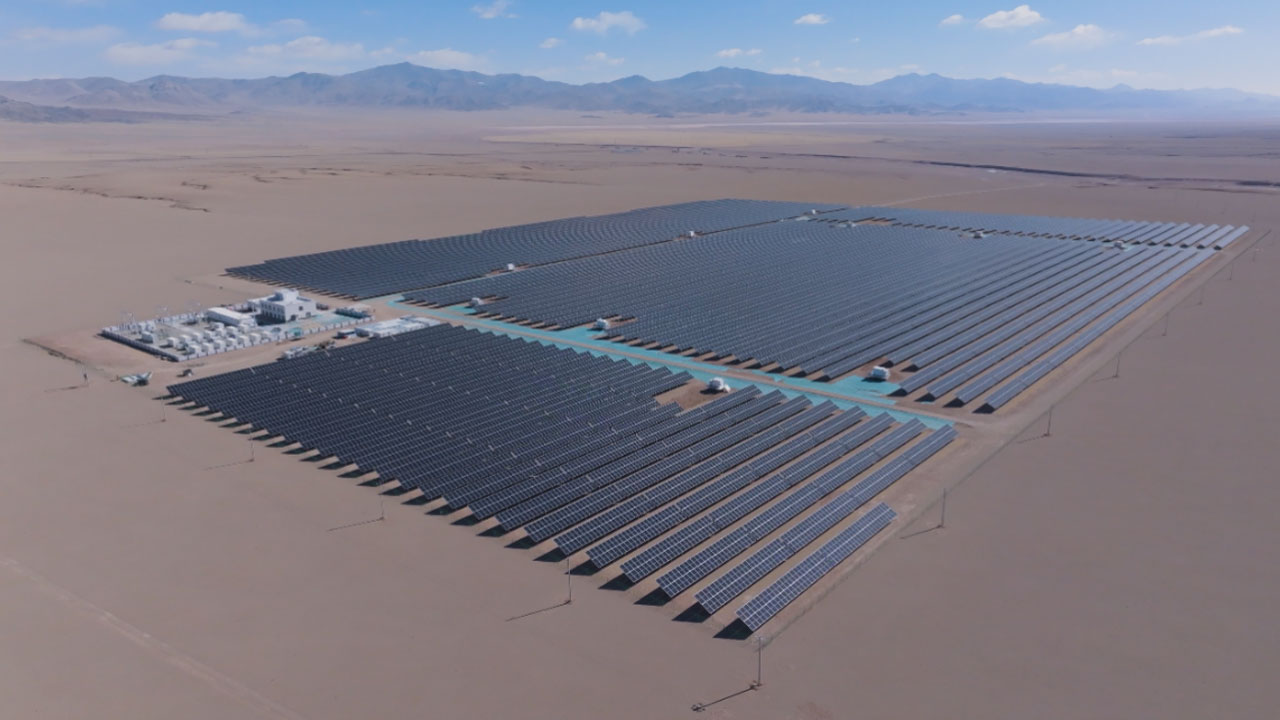
Solar Power System: Key Design Questions for Project Teams Key Design Questions for Project Teams
The Entrepreneur Story
Is your story worth telling?
We feature founders who are building something real. Apply and we'll be in touch.
Apply to be featured →Stay sharp.
Ideas that move.
Founder stories, emerging ventures, and essays on what's next — straight to your inbox.
Unsubscribe any time.