
Starcloud Pivots from Orbital Data to Interstellar Probe *Project Stardust's Audacious Bet*
Starcloud, known for orbital data centers, has launched Project Stardust, an ambitious multi-generational initiative to send a miniaturized probe to Alpha Centauri, redefining deep tech's long-term strategic bets.
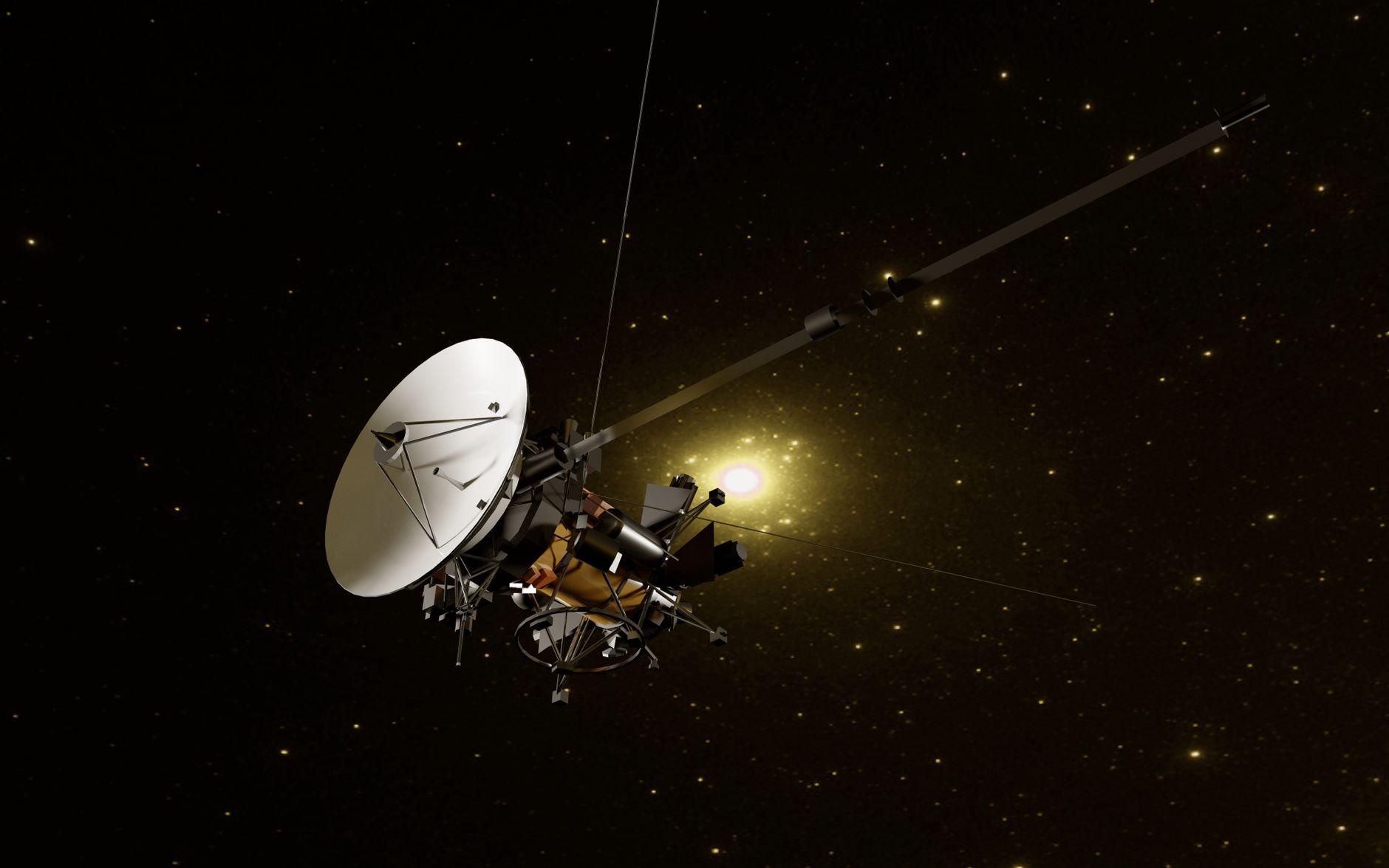
Starcloud, the Palo Alto-headquartered company known for its orbital data centers, has launched "Project Stardust," a multi-generational initiative to send a miniaturized probe to Alpha Centauri, the closest star system to our Sun. This audacious endeavor, estimated to take centuries to reach its destination, is primarily funded by a new $500 million Series D round. For founders, this move signals a profound redefinition of long-term strategic bets in deep tech, challenging conventional timelines and risk assessments in the pursuit of paradigm-shifting innovation.
Quick takeaways
- Starcloud, previously an orbital data center operator, has launched "Project Stardust" to send a miniaturized probe to Alpha Centauri.
- The project is backed by a new $500 million Series D funding round, with total costs projected in the billions over decades.
- Founder Dr. Aris Thorne frames the pivot as "the ultimate long-term bet on humanity's future," driven by increasing competition in orbital data.
- Key technologies for the probe include laser-sail propulsion and Starcloud's proprietary miniaturized AI and autonomous navigation systems.
- This strategic shift highlights a growing trend among deep tech founders to pursue high-risk, multi-generational projects beyond immediate commercial returns.
The Audacious Pivot: From Orbit to Interstellar Space
Starcloud, a company that carved out a niche in the burgeoning space economy, has fundamentally reoriented its mission. Founded by Dr. Aris Thorne, Starcloud has been operating three data centers in low Earth orbit (LEO), establishing a tangible presence in the orbital infrastructure sector TechCrunch, 2026. This initial venture positioned the company at the forefront of a futuristic commercial play, leveraging the unique advantages of space for data processing and storage. However, the recent announcement of "Project Stardust" marks a dramatic shift away from this established, albeit cutting-edge, business model.
Project Stardust is not an incremental upgrade or an adjacent market expansion; it is an initiative to send a miniaturized probe to Alpha Centauri, a journey estimated to span centuries TechCrunch, 2026. This undertaking transcends typical startup horizons and even the ambitious timelines of many deep tech ventures. The sheer scale of time involved positions Starcloud as an entity thinking in terms of generational impact rather than quarterly reports or even decadal returns. The funding structure reflects this ambition: a new $500 million Series D round has been secured, primarily earmarked for Project Stardust, with total projected costs expected to reach "billions over the next few decades" TechCrunch, 2026.
Dr. Aris Thorne, Starcloud's founder and CEO, articulates the vision behind this pivot in stark terms, describing Project Stardust as "the ultimate long-term bet on humanity's future" TechCrunch, 2026. This statement is crucial for understanding the motivations driving such an extreme strategic shift. It suggests a move beyond purely commercial incentives, venturing into the realm of existential endeavors. For other founders, Starcloud's pivot raises profound questions about the limits of entrepreneurial ambition, the definition of success beyond financial metrics, and the potential for private enterprise to tackle challenges historically reserved for national space agencies or large-scale scientific consortia. It signals that certain deep tech ventures may increasingly demand a re-evaluation of what constitutes a viable business model, prioritizing long-term societal impact and scientific advancement over conventional commercialization pathways. This kind of vision demands an unusual alignment between founders and investors, exemplified by early backer Galactic Ventures, known for supporting Starcloud's ambitious endeavors TechCrunch, 2026. The commitment to such a distant goal requires a different kind of investment thesis, one that values the potential for paradigm-shifting technological advancements and the pursuit of knowledge above immediate monetization.
The Strategic Calculus: Why Now?
Starcloud's dramatic pivot from a commercially viable orbital data center business to a multi-century interstellar mission is not a sudden whim, but a calculated strategic response to evolving market dynamics and a pursuit of fundamentally new challenges. The primary driver cited for this shift is the "increasing competition" in the orbital data center space, which has rendered it "less of a differentiator" TechCrunch, 2026. This competitive pressure is a familiar narrative for founders across various tech sectors. As a market matures, early innovators often find their unique advantages eroding as more players enter, driving down margins and commoditizing once-novel services. For Starcloud, despite operating three data centers in LEO, the long-term strategic value of this business line was evidently diminishing.
Dr. Aris Thorne's decision suggests an understanding that merely being in space is no longer enough to maintain a competitive edge. The initial allure of orbital data centers, with their promise of low latency and unique environmental conditions, was powerful. However, as the cost of launch decreases and satellite technology proliferates, the barrier to entry for space-based services has lowered. This trend forces deep tech companies to constantly re-evaluate their core value proposition. For Starcloud, the answer was not to incrementally improve its existing offerings or seek marginal gains in market share, but to leapfrog into an entirely different realm of challenge and potential. The company identified an opportunity to pursue "truly novel challenges" and unlock "unimaginable data potential" from an interstellar journey TechCrunch, 2026. This indicates a strategic decision to move beyond incremental innovation within an increasingly crowded market and instead pursue a frontier where Starcloud could once again define the leading edge.
The allure of interstellar travel, while seemingly abstract, aligns with a deep tech founder's drive for fundamental breakthroughs. Technologies like laser-sail propulsion and Starcloud's proprietary miniaturized AI and autonomous navigation systems are not just components of the probe; they represent the specific, tangible technological bets underpinning this strategic shift TechCrunch, 2026. These are areas where Starcloud believes it can achieve significant, defensible advancements that have far-reaching implications, regardless of the probe's ultimate success or timeline. For founders contemplating their own strategic pivots, Starcloud's move serves as a case study in recognizing when a market has reached a point of diminishing returns for innovation, and when the pursuit of truly groundbreaking, long-term challenges might be the most viable path to sustained relevance and impact. It underscores the idea that sometimes, the boldest strategic move is not to compete harder in an existing arena, but to create an entirely new one, driven by a vision that transcends immediate commercial pressures and embraces the pursuit of the unknown. This requires a unique blend of foresight, courage, and the ability to articulate a vision compelling enough to attract significant, patient capital like the $500 million Series D round.
Engineering the Impossible: Technologies Underpinning Stardust
The ambition of Project Stardust—to send a miniaturized probe to Alpha Centauri on a centuries-long journey—necessitates breakthroughs across multiple engineering and scientific disciplines. Starcloud is not merely embarking on a mission; it is betting on the development and refinement of technologies that push the boundaries of current human capability. The core technological pillars supporting this interstellar endeavor include laser-sail propulsion and Starcloud's proprietary miniaturized AI and autonomous navigation systems TechCrunch, 2026. These are not off-the-shelf solutions but represent years of intensive research and development, likely leveraging the expertise cultivated during the company's orbital data center phase.
Laser-sail propulsion is a concept that has long captivated physicists and engineers as a viable method for interstellar travel. Instead of carrying heavy propellants, a laser sail would be propelled by the pressure of photons from a powerful ground-based or orbital laser array. This continuous, albeit gentle, acceleration over vast distances could theoretically allow a probe to reach significant fractions of the speed of light, drastically reducing travel times compared to conventional rocket propulsion. The engineering challenges are immense: developing sails thin enough to be accelerated effectively yet robust enough to withstand the rigors of space, creating powerful and precise laser arrays, and maintaining beam focus over astronomical distances. Starcloud's commitment to this technology implies significant advancements in materials science, optics, and energy systems, areas that could see terrestrial spin-offs impacting fields from renewable energy to advanced manufacturing.
Equally critical are Starcloud's proprietary miniaturized AI and autonomous navigation systems. For a probe traveling for centuries, real-time control from Earth becomes impossible due to the light-speed delay. The probe must be an intelligent, self-sufficient entity, capable of making decisions, navigating complex environments, and performing scientific observations without human intervention. Miniaturization is paramount; every gram saved on the probe means less mass to accelerate, making the journey more feasible. This requires highly efficient, low-power AI processors and algorithms that can operate reliably for extended periods in harsh radiation environments. The autonomous navigation systems must be capable of precise course corrections, hazard avoidance, and target acquisition over interstellar distances, utilizing star trackers, inertial measurement units, and potentially novel forms of celestial navigation. The development of such advanced, resilient autonomy has profound implications beyond space travel, potentially driving innovation in terrestrial robotics, long-duration remote sensing, and critical infrastructure management.
Starcloud's headquarters in Palo Alto, a hub of technological innovation, suggests a strong foundation in high-tech research and development. The integration of these advanced systems into a single, compact probe represents a staggering feat of systems engineering. A centuries-long mission also demands extreme reliability, self-repair capabilities, and long-duration power sources, likely involving advanced radioisotope thermoelectric generators or even miniature fusion reactors. The successful development and deployment of these technologies could redefine what is possible in deep space exploration, setting new benchmarks for other deep tech companies aiming to tackle similarly ambitious, long-term projects. It’s a testament to the idea that the pursuit of seemingly impossible goals often yields transformative advancements across a spectrum of related fields.
The Long Bet: Implications for Deep Tech and Founder Vision
Starcloud's pivot to "Project Stardust" represents more than a strategic shift for one company; it embodies a new archetype of long-term deep tech investment and founder vision. Dr. Aris Thorne's declaration of the project as "the ultimate long-term bet on humanity's future" TechCrunch, 2026 challenges the conventional venture capital paradigm, which typically seeks returns within a 5-10 year window. A project spanning "centuries" fundamentally redefines the concept of Return on Investment (ROI), shifting it from immediate financial gains to scientific knowledge, technological capability, and potentially existential advancement for humanity.
For investors like Galactic Ventures, noted for supporting Starcloud's ambitious endeavors TechCrunch, 2026, this signals a willingness to engage in patient capital on an unprecedented scale. The $500 million Series D round, primarily for Project Stardust, and the projected "billions over the next few decades" TechCrunch, 2026 illustrate a funding model that resembles national science initiatives or philanthropic endowments more than typical VC. This type of backing requires a profound belief in the founder's vision and the potential for indirect, long-term benefits that may not materialize within any single investor's lifetime. It suggests a growing segment of capital willing to underwrite projects that contribute to foundational human knowledge and technological frontiers, rather than just market share or profit margins.
The implications for other founders in deep tech are significant. First, it highlights the increasing viability of pursuing audacious, multi-generational projects within a private enterprise framework. Starcloud demonstrates that with a compelling vision and the right investor alignment, companies can tackle challenges once exclusively within the domain of governments. This opens up new avenues for innovation in fields like advanced energy, climate geoengineering, and fundamental biology, where timelines for impact are inherently long. Second, Starcloud's move underscores the importance of strategic courage. Faced with increasing competition in its orbital data center business, the company chose not to incrementally optimize but to pivot to a completely new, far more ambitious frontier. This serves as a powerful lesson for founders navigating commoditizing markets: sometimes the most effective strategy is a radical re-imagination of the company's core mission.
Moreover, Project Stardust will require an organizational structure and culture designed for extreme longevity. This includes robust knowledge transfer mechanisms, succession planning for leadership and technical expertise across generations, and the ability to maintain engagement and funding for a goal that will not be realized by its initial architects. Attracting and retaining top talent for such a long-term vision requires a unique value proposition, appealing to those driven by fundamental scientific inquiry and a desire to contribute to humanity's enduring legacy. Starcloud's journey into interstellar travel, therefore, is not just about a probe; it's about pioneering new models for how deep tech companies can operate, fund themselves, and define success in the pursuit of humanity's grandest challenges. It positions the company as a vanguard for a new era of entrepreneurial ambition, where the ultimate frontier is not just the next market, but the future of human exploration itself.
FAQ
Q: What is Project Stardust? A: Project Stardust is Starcloud's initiative to send a miniaturized probe to Alpha Centauri, the star system closest to our Sun, on a journey estimated to take centuries TechCrunch, 2026.
Q: How is Project Stardust being funded? A: The project is primarily funded by a new $500 million Series D funding round, with total projected costs estimated to be "billions over the next few decades" TechCrunch, 2026.
Q: What key technologies are central to the interstellar probe? A: Key technologies include laser-sail propulsion and Starcloud's proprietary miniaturized AI and autonomous navigation systems, essential for the probe's centuries-long, self-sufficient journey TechCrunch, 2026.
Q: Why did Starcloud pivot from its orbital data center business? A: The strategic pivot was partly driven by increasing competition in the orbital data center market, which made it "less of a differentiator." Founder Dr. Aris Thorne also expressed a desire to pursue "truly novel challenges" and unlock "unimaginable data potential" from an interstellar journey TechCrunch, 2026.
Q: How long is the estimated travel time for the probe to Alpha Centauri? A: The interstellar probe project is estimated to take "centuries" to reach its destination at Alpha Centauri TechCrunch, 2026.
Continue reading


The Entrepreneur Story
Is your story worth telling?
We feature founders who are building something real. Apply and we'll be in touch.
Apply to be featured →Stay sharp.
Ideas that move.
Founder stories, emerging ventures, and essays on what's next — straight to your inbox.
Unsubscribe any time.