
a16z Launches $1.1B 'Machine Age' Fund for Physical AI A Strategic VC Shift
Andreessen Horowitz commits $1.1 billion to its new 'Machine Age' fund, signaling a major venture capital pivot towards hardware, robotics, and physical AI infrastructure.
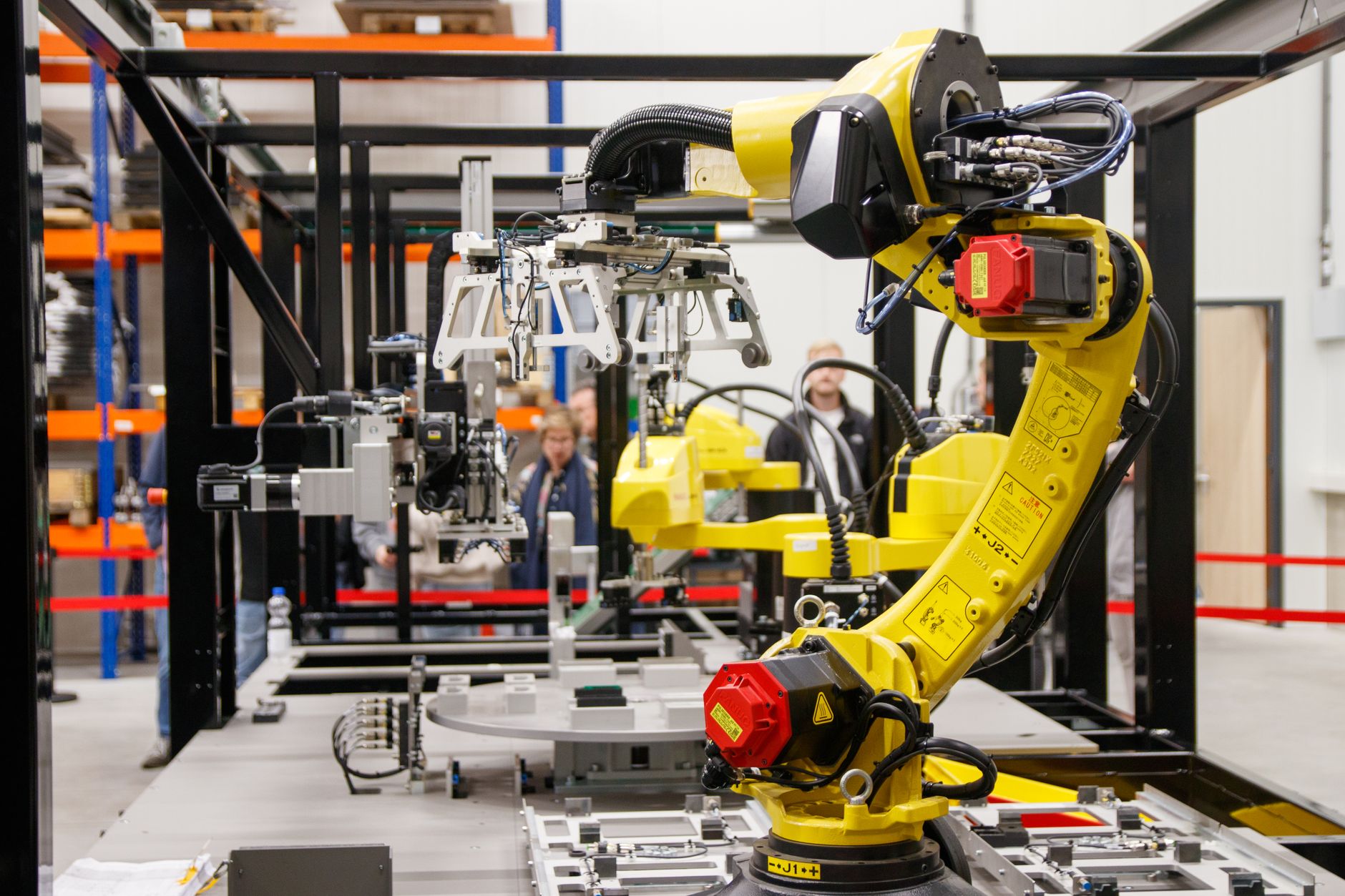
Andreessen Horowitz (a16z) launched a $1.1 billion 'Machine Age' fund on August 28, 2026, marking a significant strategic shift to accelerate the physical buildout of AI. This capital infusion signals a venture capital pivot towards hard tech and physical infrastructure, directly impacting founders building in robotics, advanced manufacturing, and defense tech who require substantial, long-term investment beyond pure software.
Quick Takeaways
- a16z committed $1.1 billion to its new 'Machine Age' fund.
- The fund targets the physical buildout of AI, focusing on hardware, robotics, and industrial applications.
- General Partners Martin Casado and Katherine Boyle lead the initiative.
- This represents a growing trend in venture capital towards capital-intensive, 'deep tech' investments.
- Key investment categories include advanced manufacturing, next-gen robotics, space technology, energy solutions, and defense tech.
The $1.1 Billion Pivot to Physical AI
On August 28, 2026, Andreessen Horowitz (a16z) announced the creation of its new 'Machine Age' fund, a substantial $1.1 billion vehicle dedicated to the physical buildout of AI TechCrunch, 2026. This move signifies a strategic reorientation for the prominent venture capital firm, shifting investment focus beyond pure software plays towards tangible, real-world applications of artificial intelligence. The fund specifically targets hardware, robotics, and industrial applications, acknowledging that the next frontier for AI involves its physical embodiment and interaction with the material world TechCrunch, 2026.
The fund's name, 'Machine Age,' is intended to evoke historical periods of significant technological shifts, drawing parallels to transformative eras like the Industrial Revolution TechCrunch, 2026. This naming choice underscores a belief that AI's impact will extend far beyond digital screens, fundamentally reshaping physical industries and infrastructure. For founders, this means a validation of capital-intensive ventures that aim to integrate AI into manufacturing processes, supply chains, energy systems, and defense capabilities. The sheer size of the $1.1 billion fund indicates a commitment to supporting companies that require substantial capital for research, development, prototyping, and scaling of physical products and systems.
This initiative is part of a broader "growing trend in venture capital towards capital-intensive, 'deep tech' investments," moving venture capital beyond its traditional emphasis on software-as-a-service (SaaS) and consumer applications TechCrunch, 2026. Deep tech investments, particularly in hardware and advanced engineering, often entail longer development cycles, higher upfront costs, and complex regulatory landscapes compared to software. The establishment of a dedicated, large-scale fund by a firm like a16z signals a recognition that these challenges are surmountable and that the potential returns from physical AI infrastructure are significant. Founders operating in these domains now have a clear signal that a major investor is actively seeking to deploy substantial capital into their segment. This shift could redefine what types of startups attract top-tier venture funding over the coming decade.
The Architects: Casado and Boyle's Strategic Alignment
The 'Machine Age' fund is spearheaded by two of a16z's General Partners: Martin Casado and Katherine Boyle TechCrunch, 2026. Their combined expertise and strategic focus provide the intellectual and operational framework for this significant investment pivot. Martin Casado previously led a16z's Enterprise fund, a role that positioned him at the forefront of identifying and scaling technologies for large organizations and industrial applications TechCrunch, 2026. His background suggests a deep understanding of complex B2B sales cycles, integration challenges within established industries, and the long-term value creation inherent in enterprise software and infrastructure. This experience is critical for evaluating hard tech companies, which often require robust go-to-market strategies tailored to industrial clients and established supply chains. Casado's leadership implies a focus on technologies that can deliver tangible productivity gains and operational efficiencies within large-scale physical operations.
Katherine Boyle is known as a General Partner focusing on 'American dynamism' TechCrunch, 2026. This investment thesis typically targets companies that contribute to national strategic interests, including rebuilding domestic industrial capacity, enhancing national security, and addressing critical infrastructure needs. Her involvement underscores the fund's potential interest in ventures with broader societal and geopolitical implications, particularly in areas like defense tech, advanced manufacturing, and energy solutions. Boyle's perspective suggests an emphasis on companies that not only offer technological innovation but also strengthen the nation's economic and strategic resilience. This focus aligns with a growing recognition that technological leadership requires a robust physical and industrial base, not just software prowess.
The combination of Casado's enterprise technology acumen and Boyle's 'American dynamism' lens forms a powerful strategic alignment for the 'Machine Age' fund. Founders seeking investment should recognize that this leadership team is looking for more than just innovative technology; they are seeking solutions that can be scaled effectively within complex industrial environments and contribute to national strategic objectives. This implies a preference for companies with strong engineering fundamentals, clear pathways to commercialization, and a vision for how their physical AI solutions can address pressing challenges in critical sectors. The architects of this fund are signaling a demand for founders who can bridge the gap between cutting-edge AI research and its practical, large-scale deployment in the physical world.
Investment Horizons: From Advanced Manufacturing to Space
The 'Machine Age' fund has clearly defined its key investment categories, signaling where it intends to deploy its $1.1 billion capital TechCrunch, 2026. These categories highlight a comprehensive approach to embedding AI into the physical world, spanning from terrestrial industrial processes to extraterrestrial infrastructure. Founders operating in these spaces will find a dedicated partner in a16z.
Advanced Manufacturing
This category focuses on technologies that fundamentally alter how goods are produced. It encompasses AI-driven automation in factories, precision robotics, additive manufacturing (like 3D printing), and intelligent supply chain management. Companies in this space are leveraging AI to optimize production lines, reduce waste, enhance quality control, and enable on-demand manufacturing. The goal is often to create more resilient, efficient, and localized production capabilities, moving beyond traditional mass production models. This involves integrating AI into every stage of the manufacturing process, from design and simulation to fabrication and assembly, creating factories that can learn and adapt.
Physical Automation and Next-Gen Robotics
Beyond traditional industrial robots, this category targets intelligent machines capable of performing complex tasks in unstructured or semi-structured environments. This includes collaborative robots (cobots) that work alongside humans, autonomous mobile robots (AMRs) for logistics and warehousing, and humanoid robots designed for general-purpose physical labor. Companies like Figure AI, an existing a16z investment, exemplify this direction with their focus on human-like robots TechCrunch, 2026. Similarly, Covariant, another a16z portfolio company, works on AI for robotic manipulation in logistics, showcasing the fund's interest in intelligent automation TechCrunch, 2026. The emphasis here is on robots that can perceive, reason, and act autonomously, extending AI's capabilities into diverse physical domains.
Space Technology
Investment in space technology includes a wide array of ventures, from satellite constellations providing enhanced data and communication services to in-space manufacturing and advanced propulsion systems. AI is crucial for autonomous satellite operations, optimizing orbital mechanics, processing vast amounts of space-generated data, and enabling remote exploration. This category seeks to support the infrastructure and applications that will define the next era of space exploration and utilization, impacting everything from global connectivity to climate monitoring and resource management.
Energy Solutions
The 'Machine Age' fund will also target companies developing AI-enhanced energy solutions. This includes technologies for optimizing energy grids, improving the efficiency and deployment of renewable energy sources (solar, wind), developing advanced battery storage systems for various applications (from robotics to electric vehicles), and exploring next-generation power generation methods. AI can play a critical role in demand forecasting, grid stabilization, predictive maintenance for energy infrastructure, and the development of novel energy materials. The goal is to create more sustainable, resilient, and efficient energy systems.
Defense Tech
Reflecting Katherine Boyle's 'American dynamism' focus, defense technology is a key area. This category includes AI-powered autonomous defense systems, advanced materials for military applications, secure communication networks, and enhanced surveillance and reconnaissance capabilities. Companies like Hadrian, an existing a16z investment, which focuses on automated factories for aerospace and defense, fit squarely within this mandate TechCrunch, 2026. The fund aims to support innovations that bolster national security and technological superiority, often involving deep tech that requires significant R&D and specialized production capabilities. Founders in this area should understand the dual-use potential of their technologies and the strategic importance placed on domestic innovation.
These categories collectively represent a vision where AI is not merely a software layer but an embedded intelligence driving the next generation of physical infrastructure and industrial capability. Founders building in these areas now have a dedicated, well-capitalized investor actively seeking to back their ventures.
Prior Engagements and Market Validation
The launch of a16z's 'Machine Age' fund is not an abrupt shift, but rather an amplification of an existing thesis, building upon prior investments in capital-intensive 'hard tech' companies. Before establishing this dedicated $1.1 billion fund, a16z had already demonstrated its commitment to the physical buildout of AI through strategic investments in several pioneering companies TechCrunch, 2026. These prior engagements laid the groundwork, providing the firm with valuable insights into the opportunities and challenges inherent in backing ventures that bridge software intelligence with physical execution.
Among these earlier hard tech investments are companies such as Formlogic, Hadrian, Velo3D, Covariant, and Figure AI TechCrunch, 2026. Each of these companies operates at the intersection of advanced engineering, manufacturing, and artificial intelligence, exemplifying the type of innovation the 'Machine Age' fund now explicitly targets. Formlogic, for instance, likely represents advancements in AI-powered precision manufacturing. Hadrian's focus on automated factories for aerospace and defense aligns directly with the fund's interest in defense tech and advanced manufacturing. Velo3D specializes in metal 3D printing for critical parts, showcasing a commitment to next-generation production methods. Covariant utilizes AI for robotic manipulation, particularly in logistics, fitting within physical automation and next-gen robotics. Figure AI, with its development of humanoid robots, pushes the boundaries of autonomous physical interaction.
These investments demonstrate a consistent strategy by a16z to identify and back companies that require significant capital and long development cycles, moving beyond the typical software startup profile. This track record provides market validation for founders in the hard tech space, signaling that a prominent venture capital firm is prepared to engage with the unique demands of their ventures. The success and learning derived from these earlier investments likely informed the decision to formalize and expand this focus into a dedicated fund of considerable size. It suggests that a16z sees a clear, growing market opportunity for technologies that embed AI into physical products and industrial processes.
Furthermore, this fund's creation reflects a "growing trend in venture capital towards capital-intensive, 'deep tech' investments, moving beyond pure software plays" TechCrunch, 2026. This trend is driven by several macroeconomic and technological factors. The maturation of core AI models means that the focus is shifting from developing the intelligence itself to deploying it effectively in the real world. Geopolitical shifts, concerns over supply chain resilience, and the strategic importance of domestic manufacturing are also pushing investors towards technologies that can address these national priorities. For founders, this means that the capital landscape is evolving; while software innovation remains crucial, the ability to translate that innovation into tangible, physical assets or capabilities is becoming an increasingly attractive proposition for major investors. The 'Machine Age' fund explicitly positions a16z at the forefront of this shift, offering a clear channel for founders building the physical infrastructure of the AI era.
Strategic Implications for the
Continue reading


The Entrepreneur Story
Is your story worth telling?
We feature founders who are building something real. Apply and we'll be in touch.
Apply to be featured →Stay sharp.
Ideas that move.
Founder stories, emerging ventures, and essays on what's next — straight to your inbox.
Unsubscribe any time.