
Ritesh Agarwal.
The teenager from Odisha who crashed in hundreds of grubby budget hotels until he figured out how to brand the un-brandable.
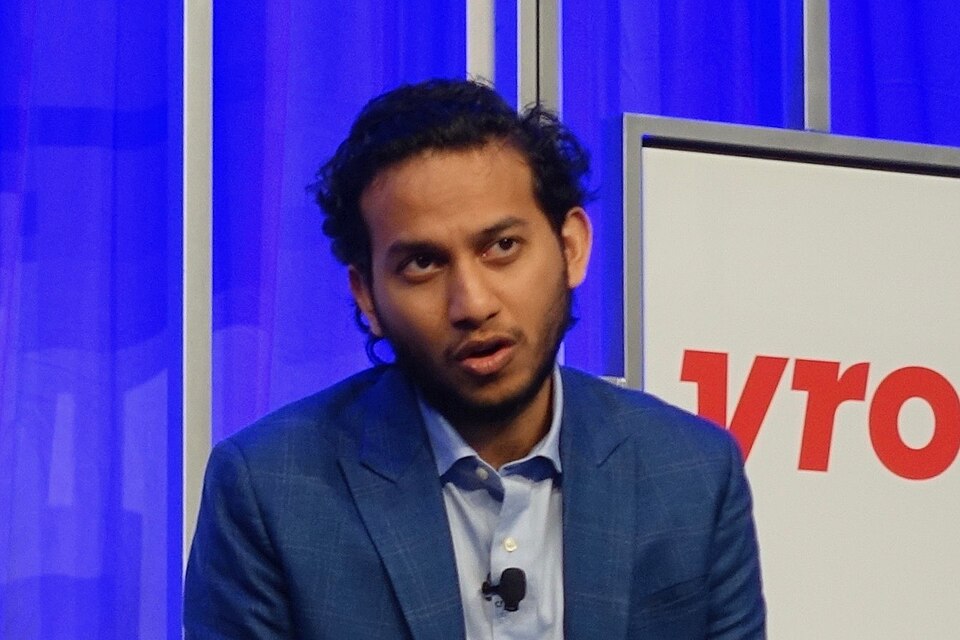
journey
Ritesh Agarwal grew up in Titilagarh, a small town in Odisha, where his family ran a modest shop. He started coding at eight and selling SIM cards at thirteen. In 2011, at seventeen, he moved to Delhi, enrolled in college, and almost immediately stopped attending. Instead, he spent his days riding trains and buses between Indian cities and his nights sleeping in budget guesthouses, bed-and-breakfasts, and family-run lodges. By his own count he stayed in more than a hundred of them. His first attempt, Oravel Stays, launched that same year as a listings site modeled on Airbnb. It did not take off. But the fieldwork did something more valuable than the product: it convinced him that the problem in Indian hospitality was not supply or price. It was predictability. In 2013 he pivoted, renamed the company OYO Rooms, signed up five hotels in Gurugram, and promised travelers one thing competitors would not: the room would look like the photo.
struggles
The Indian budget hotel market was not a market so much as a scattering of tens of thousands of independent properties with no shared standards for cleanliness, wifi, bed linen, or billing. Convincing those owners to repaint walls, install the same mattress, and accept pricing dictated by an app took years of door-to-door persuasion. As OYO scaled, cracks appeared: hoteliers complained about unpaid dues and shifting contracts, cities contested legality, and reporters documented the operational chaos of growing from thousands to hundreds of thousands of rooms in a few years. Then COVID-19 arrived. Travel evaporated, revenue dropped more than fifty percent, and OYO cut or furloughed over five thousand employees. Agarwal took a one hundred percent pay cut for the rest of 2020. The valuation, which had crested near ten billion dollars, collapsed. Three attempts at an IPO were pulled or delayed as SoftBank, the largest shareholder, pushed back on timing and pricing.
success
In 2013, at nineteen, Agarwal became the first Indian accepted into the Thiel Fellowship, Peter Thiel's program that pays young founders one hundred thousand dollars to skip school. OYO grew from five hotels in Gurugram to a network that at its peak claimed presence in more than eighty countries, before pruning back to roughly thirty core markets. In December 2024 OYO closed the acquisition of G6 Hospitality, the parent of Motel 6 and Studio 6, from Blackstone for 525 million dollars, adding around 1,400 franchised properties across North America. The company posted its first annual profit in FY24.
lessons
Agarwal's story is a case study in choosing an unglamorous market and refusing to leave it. Budget hotels in India were not a sector most founders wanted to spend a decade inside: low margins, fragmented ownership, no software adoption, and almost no brand loyalty. That was precisely the opportunity. Fragmentation is a moat for whoever is willing to do the operational work nobody else will. The second lesson is that research is a product input, not a slide for investors.
Track record
Operating principles
Live inside the problem before you try to solve it
Agarwal did not read reports about Indian budget hotels. He slept in them for months. The specific gap he eventually named — predictability — was not available from secondary research.
Fragmented markets reward operators who will do unsexy work
When a market is fragmented enough that nobody has bothered to brand it, the founder who shows up and does the slow operational work can build a position that is hard to attack later.
A clear promise is more valuable than a long feature list
OYO's early pitch was not technology. It was that the room would look like the photo and the price would not change at check-in.
Tell your network. Pre-filled text for LinkedIn and X — edit however you like.
Copy and paste this into your site or bio page.
<a href="https://theentrepreneurstory.com/founders/ritesh-agarwal" target="_blank" rel="noreferrer" style="display:inline-flex;align-items:center;gap:8px;background:#1a2e1a;color:#f4efe1;font-family:sans-serif;font-size:13px;padding:10px 16px;border-radius:4px;text-decoration:none;">As featured in · The Entrepreneur Story</a>Selected coverage
Want your story here?
Submit your founder profile.
Like Ritesh, hundreds of founders have been featured on The Entrepreneur Story. Reviewed weekly — submit yours in under two minutes.
Submit your story →