
Ritesh Agarwal: The 17-Year-Old Who Checked Into Hundreds of Budget Hotels 17-Year-Old
Before OYO was a brand in thirty countries, it was one teenager with a backpack, a notebook, and a growing list of grievances about torn bedsheets.
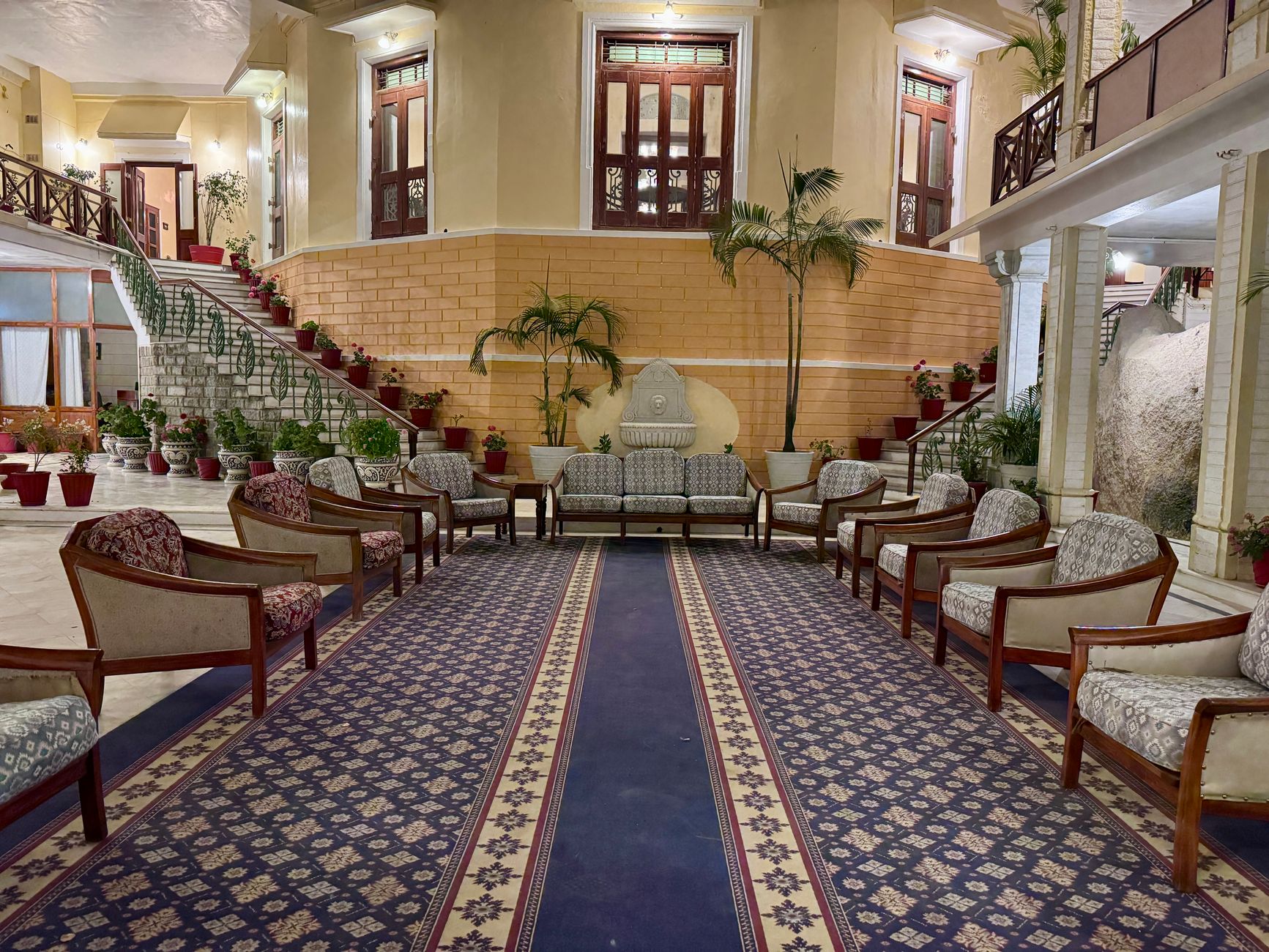
A backpack and a notebook
In 2011, a seventeen-year-old from Titilagarh in Odisha moved to Delhi for college. He almost never showed up to class. Instead he rode trains and overnight buses between Indian cities and checked into whichever budget lodge was nearest the station. He carried a backpack, a notebook, and a growing list of complaints: torn bedsheets, non-working televisions, missing towels, cockroaches, surprise charges at checkout, no card machine. He stayed in more than a hundred of these places in his first year away from home.
He was not doing it for the experience. He was auditing a market.
That teenager was Ritesh Agarwal, and the audit became OYO, which today operates in more than thirty countries, owns the parent company of Motel 6 in the United States, and is preparing a long-delayed IPO at a valuation near seven billion dollars.
The insight that was hiding in plain sight
India had thousands of budget hotels in 2011. Most entrepreneurs who looked at the sector saw the same thing: oversupply, low margins, no technology adoption, no obvious way to charge for software. Agarwal, who had been running small side ventures since he was thirteen, saw something different. He saw that nobody staying in these hotels knew what they were going to get.
The photos on the booking sites were not of the actual rooms. The price quoted on the phone was not the price at the desk. Two rooms in the same hotel could have different furniture. Two hotels on the same street could have wildly different standards. The entire category was defined by what Agarwal would later name as the opposite of what customers actually wanted: predictability.
His first attempt to solve it was called Oravel Stays, launched the same year he arrived in Delhi. It was a listings site modeled on Airbnb. It did not take off. The listings did not fix the underlying problem, which was that the rooms themselves were inconsistent. You could not fix with a website what the walls, the linens, and the staff were doing.
Pivot to OYO
In 2013, at nineteen, Agarwal became the first Indian accepted into the Thiel Fellowship, Peter Thiel's program that pays founders one hundred thousand dollars to skip school. He used the money and the time to pivot. Oravel became OYO Rooms, a network of five hotels in Gurugram that agreed to a simple deal: paint the walls, use the same bed linen, install wifi, run OYO's billing system, and in return get bookings and a share of revenue.
The pitch to customers was almost childishly simple. The room would look like the photo. The price would be the price. Those two sentences were a wedge. Everything else, including the technology, the dynamic pricing, the global expansion, flowed from them.
Growth and its discontents
OYO's growth from 2013 onward was absurd by any normal benchmark. By 2019 the company was valued around ten billion dollars and claimed presence in more than eighty countries. It expanded into China, the UK, Southeast Asia, the United States, Japan, and Europe, often at a pace that strained its ability to deliver the predictability that was supposed to be the whole point.
The cracks were real. In India, hoteliers who had signed up for guaranteed minimums complained publicly about unpaid dues and renegotiated contracts. Reporters covered the gap between OYO's app experience and what guests were actually finding when they walked in the door. The internal story was one of a company trying to retrofit standards onto a network that was growing faster than its ability to enforce them.
Then the world shut down.
The COVID collapse
In early 2020 the pandemic cut OYO's revenue by more than half within weeks. Travel evaporated. Hotels sat empty. The company let go of or furloughed more than five thousand employees globally. Agarwal publicly announced he would take a one hundred percent pay cut for the remainder of the year. The valuation came apart.
Burn came down. OYO came back, but as a smaller, more deliberate company. Many international operations were pruned. By FY24, OYO reported its first annual profit after tax. In FY25, profit grew to roughly 623 crore rupees on revenue of about 6,463 crore rupees.
Buying Motel 6
In December 2024, OYO closed a deal that would have been difficult to imagine during the pandemic. It acquired G6 Hospitality, the parent of Motel 6 and Studio 6, from Blackstone for 525 million dollars. That transaction added roughly 1,400 franchised properties across the United States and Canada.
The deal also neatly closed a loop. The teenager who had traveled India sleeping in budget hotels now owned one of the most recognizable budget hotel brands in North America.
What his story actually teaches
It is easy to read Agarwal's story as a dropout fairytale. That reading misses what he did. He picked a market that was unglamorous, operationally hard, and ignored by sophisticated founders, and then he refused to leave it. He slept in it. He paid attention to the specific texture of what was broken.
The insight that eventually built OYO — that customers in the budget segment wanted predictability more than they wanted low prices — is not a slogan. It came out of a hundred specific uncomfortable nights.
There is a version of the Ritesh Agarwal story that is about youth, about Peter Thiel, about SoftBank, about valuation. There is another version that is about a teenager with a notebook who figured out, before anyone else, that in a fragmented market the real product is a promise.
That second version is the one worth remembering.
Continue reading



The Entrepreneur Story
Is your story worth telling?
We feature founders who are building something real. Apply and we'll be in touch.
Apply to be featured →Stay sharp.
Ideas that move.
Founder stories, emerging ventures, and essays on what's next — straight to your inbox.
Unsubscribe any time.