
Sara Blakely: The $5,000 Bet That Became a Billion-Dollar Brand $5,000 Bet
She had no MBA, no fashion training and no investors. She had a pair of scissors, a pair of pantyhose, and the stubbornness of a woman who had already spent seven years having her business card ripped up.
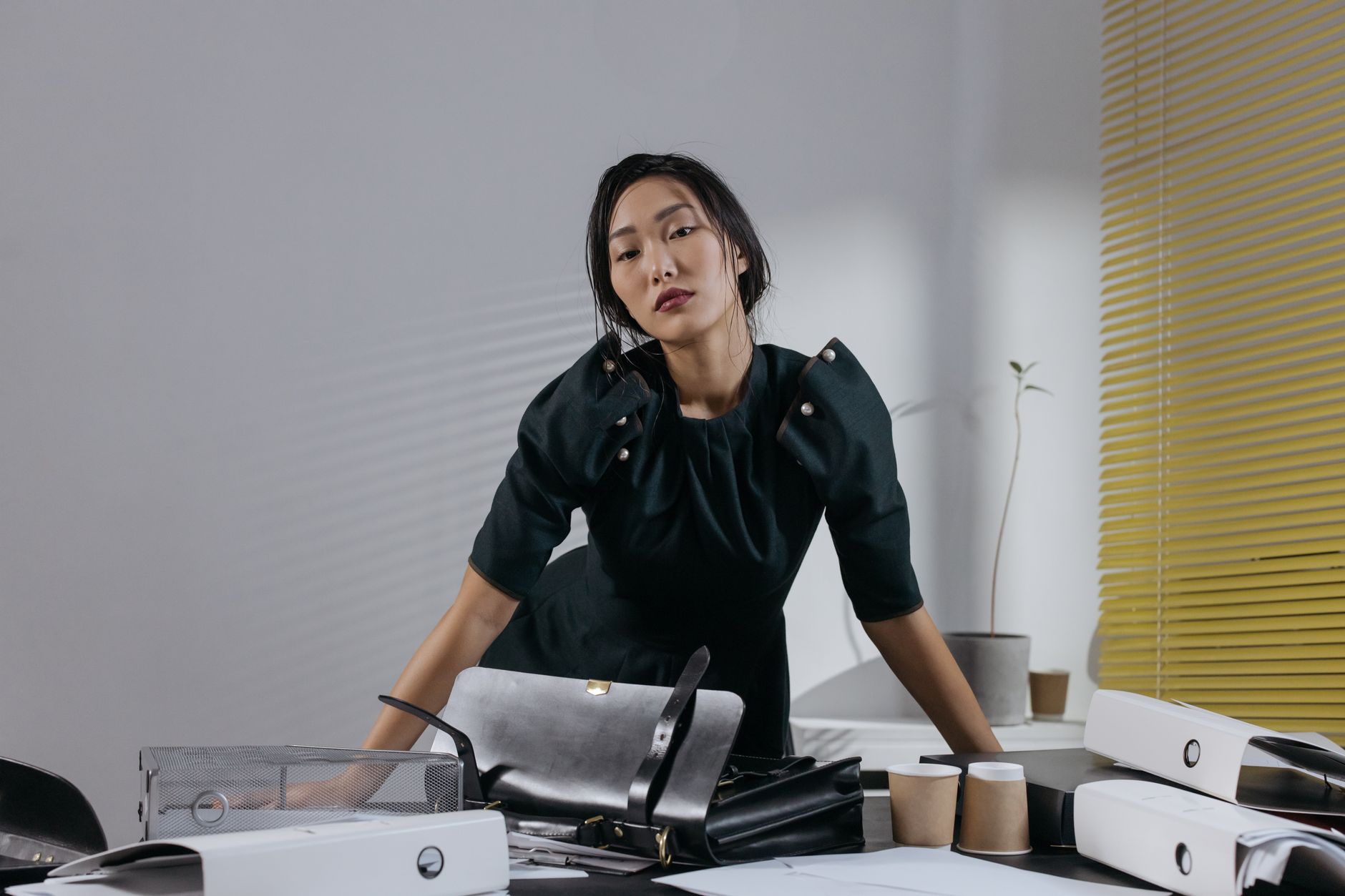
The scissors on the apartment floor
In 1998, in an apartment in Atlanta, a 27-year-old fax-machine saleswoman named Sara Blakely stood in front of a mirror in a pair of cream-coloured trousers and did not like what she saw. The pants showed every line of her underwear. Her control-top pantyhose solved that problem but ended in a thick seam at her ankles that ruined the open-toed sandals she wanted to wear.
She picked up a pair of scissors, sat on the floor, and cut the feet off the hose.
That is the entire origin story of Spanx — a brand that would hit $4 million in revenue in its first year, land on Oprah's Favorite Things in year one, make Blakely the youngest self-made female billionaire in America by 2012, and sell to Blackstone in 2021 at a reported $1.2 billion valuation.
She had no fashion training. No manufacturing experience. No retail contacts. No MBA. No investors. $5,000 in the bank.
She had something more useful: seven years of being told no.
Seven years of ripped-up business cards
Blakely was born in Clearwater, Florida, the daughter of an artist mother and a trial-lawyer father. She planned to go to law school. She twice took the LSAT and twice scored, in her own words, abysmally. She took a job at Walt Disney World, where she was two inches too short to play Goofy and ended up buckling guests into the World of Motion ride at Epcot for eight hours a day.
She quit, joined an office-equipment company called Danka, and spent the next seven years selling fax machines door-to-door across Florida. She has told the story many times since: she was turned away, laughed at, and had her business card physically ripped in half roughly once a week. She was promoted to Danka's national sales trainer at 25.
Those seven years were not detours. They were the training. By the time she walked into her first hosiery mill carrying hand-drawn sketches of footless pantyhose on a legal pad, rejection was the most familiar sound in her working life.
Writing her own patent
Blakely saved $5,000 from her Danka commissions and decided to build the product.
Her first problem was a legal one. She needed a utility patent to protect the design. The lawyers she called quoted between $3,000 and $5,000 — most of the money she had.
She went to Barnes & Noble, bought a textbook on patents and trademarks, and drafted the application herself. She filed the paperwork and hired a lawyer only for the final claims language. The savings bought her the manufacturing runway she would need next.
The hosiery mills of North Carolina
American hosiery, at the end of the 1990s, was a shrinking industry concentrated in a cluster of mills around Asheboro, North Carolina. Blakely got on a plane, rented a car, and drove from mill to mill.
Every owner said no. The feedback was uniformly dismissive: pantyhose are already comfortable; women do not want a bodywear product in that shape; the margins are not there; go home.
Two weeks after she had driven back to Atlanta, the phone rang. The owner of one of the mills, Highland Mills, had changed his mind. He had told his two teenage daughters about the strange woman who had come through pitching footless hose. His daughters had told him he was an idiot. He agreed to produce the prototype.
Red package, hard K sound
Blakely did two things with her packaging that are now obvious and were counter-intuitive at the time.
She picked a name — Spanx — because her research told her that made-up words with a hard K sound were disproportionately represented among the most successful consumer brands in America. Kodak. Coca-Cola. Nike (phonetically). She wanted a word a buyer could not forget.
Then she designed packaging that was bright red and loud at a time when every hosiery product on the shelf was packaged in beige with photographs of legs. The point was not elegance. The point was that in a sea of beige, red is impossible to miss. She drew the package herself on her apartment floor.
The Neiman Marcus bathroom pitch
In late 1999 Blakely cold-called the Neiman Marcus buying office in Dallas and talked her way into a ten-minute meeting. She flew out on her own dime.
The pitch was going badly. Halfway through, she asked the buyer to follow her into the women's restroom. In the stall, Blakely changed into a pair of her trousers and showed the before-and-after. The buyer walked out, placed Spanx into seven Neiman Marcus stores, and the rollout began.
She then did a similar thing with every department-store buyer who would meet her. The pitch was always the physical demonstration — a buyer, usually a woman, wearing the product under her own clothes.
The Oprah call
Blakely did not have a PR firm. She bought a gift basket, packed it with Spanx samples and a handwritten note, and mailed it to Oprah Winfrey's longtime stylist Andre Walker. She knew Oprah would see what Walker wore.
In November 2000, Oprah Winfrey named Spanx one of her Favorite Things on national television. The orders that followed carried Spanx from a one-woman operation to a real business inside a year. Blakely resigned from Danka. Spanx closed its first year at roughly $4 million in revenue and doubled past that in year two.
Twenty-one years without a dollar of outside capital
The decision that would ultimately make Blakely a billionaire was quieter than any of the moments above. For 21 years she took no outside investment. She did not raise venture capital. She did not go public. She did not spend money on television advertising. Earned media and word of mouth did the work.
In 2012 Forbes named her the youngest self-made female billionaire in America. In October 2021 Blackstone acquired a majority stake in Spanx at a reported $1.2 billion valuation. The morning the deal closed, Blakely gave every one of her employees two first-class plane tickets to anywhere in the world and $10,000 in cash.
What a domain outsider actually sees
Spanx is one of the clearest cases in modern consumer goods for a very specific advantage: being an outsider in your category.
Every experienced person Blakely met in hosiery told her the category was over. Pantyhose sales had been declining for a decade. The mill owners knew their market the way veterans always do: deeply, and from inside the box.
Blakely saw it with the eyes of a woman who had to get dressed that morning. She was not trying to save pantyhose. She was trying to solve a seam at her ankle. The product that resulted — footless, bodywear-first, red-packaged, hard-K named, pitched in bathroom stalls — violated almost every convention of the hosiery category it came from.
That is the real lesson of her story, and it is harder than it sounds. Being an outsider is not sufficient. Outsiders are wrong about markets all the time. What Blakely added to her outsider's view was seven years of selling fax machines door-to-door — a volume of rejection that most insiders have never experienced and that gave her the stamina to keep driving between North Carolina mills after the first ten owners had sent her home.
The playbook, stripped down
If you squint, the Spanx playbook is a short list.
Solve a problem you have personally lived with. Draft your own paperwork when the lawyers are too expensive. Keep driving after the first ten no's. Design packaging that is louder than the shelf you are competing on. Put the buyer physically in the product. Mail a handwritten note to the right stylist. Say no to outside money for as long as you possibly can.
It is not glamorous. It is almost offensively simple. It is also, on the evidence, worth about $1.2 billion.
Continue reading


The Entrepreneur Story
Is your story worth telling?
We feature founders who are building something real. Apply and we'll be in touch.
Apply to be featured →Stay sharp.
Ideas that move.
Founder stories, emerging ventures, and essays on what's next — straight to your inbox.
Unsubscribe any time.