
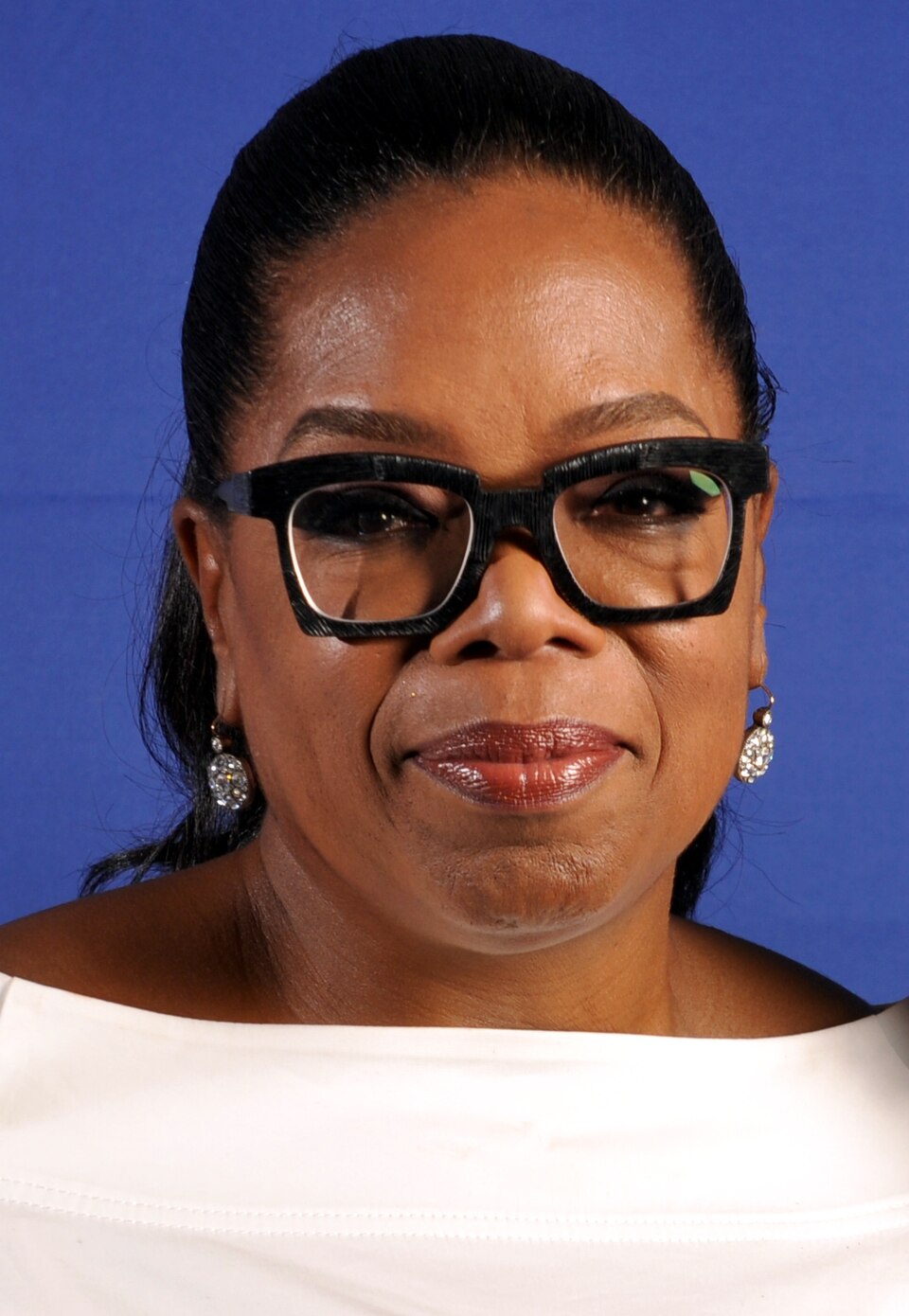
Oprah Winfrey.
The talk-show host who became a media owner — turning a Chicago morning program into Harpo Productions and the first Black-female-billionaire media empire.
journey
Born January 29, 1954 in Kosciusko, Mississippi, Oprah Winfrey spent her earliest years on her grandmother's farm, reciting Bible verses in local churches by age three. After difficult years in Milwaukee and a turnaround living with her father in Nashville, she entered broadcasting as a teenager — reading news at a local radio station before becoming a television anchor in Nashville and later Baltimore. In January 1984 she was hired to host AM Chicago, a struggling half-hour morning program on WLS-TV. Within months she had overtaken Phil Donahue in the local ratings. The show was renamed The Oprah Winfrey Show, expanded to an hour, and in 1986 went into national syndication through King World — the pivot that transformed a regional host into a national brand and set the stage for the company she would build around her name.
struggles
Winfrey's early life was shaped by poverty and trauma. Raised by a mother dependent on welfare after returning to Milwaukee at age six, she was assaulted by a cousin at nine and, by her own account, molested by three other family acquaintances over the following years. Her first on-air television job, co-anchoring the news in Baltimore, ended with her being removed from the anchor desk; management told her she was unfit for news. She was moved to a morning talk slot — a demotion that, in hindsight, matched her actual gift. Even after AM Chicago took off, the industry assumed a Black woman from the South would never travel nationally in syndication. Convincing distributors, affiliates and advertisers that she could carry a daily hour in markets from Los Angeles to Birmingham was a years-long argument she had to win one station group at a time.
success
The Oprah Winfrey Show launched in national syndication on September 8, 1986 and became the highest-rated daytime talk show in American television history, running for 25 seasons until May 2011. In 1988 Winfrey took ownership of the show itself through Harpo Productions — a rare move for any television host — and later built Harpo Studios in Chicago, where the show was taped. She launched O, The Oprah Magazine in 2000, produced films and television through Harpo Films, and in January 2011 co-launched OWN: Oprah Winfrey Network as a 50/50 joint venture with Discovery Communications, which contributed roughly $100 million. By the time her daytime show ended she was already recognised as the first Black female billionaire in America.
lessons
Winfrey's career is the clearest modern case study in authentic storytelling as a business model. She did not out-produce, out-spend or out-market her competitors on day one — she simply refused to perform a version of herself the industry recognised. The commercial lesson for founders is structural: distribution without ownership is a wage. Her 1988 decision to acquire her own show from WLS-TV, and to produce future seasons through Harpo rather than for a studio, converted a hit into an asset. The second lesson is category discipline. She did not drift into unrelated ventures while the core was still compounding; magazine, book club, films and finally a cable network all extended the same voice into adjacent surfaces. Trust, built one broadcast at a time, became the only moat that mattered — and the one competitors could never buy.
Track record
Operating principles
Own the show, not just star in it
In 1988 Winfrey acquired her own talk show from WLS-TV through Harpo Productions. Hosts rarely owned their programs; she insisted on it. Equity in the work you create is the difference between a career and a company.
Authenticity is a defensible moat
Told she was wrong for news in Baltimore, Winfrey stopped imitating anchors and started talking like herself. The audience followed. Voice is the one asset competitors cannot license, replicate or outbid you for.
Extend the core before you diversify
O Magazine, Oprah's Book Club, Harpo Films and OWN all extended one trusted relationship into new surfaces. Winfrey added formats, not identities — and compounded a single audience across decades.
Tell your network. Pre-filled text for LinkedIn and X — edit however you like.
Copy and paste this into your site or bio page.
<a href="https://theentrepreneurstory.com/founders/oprah-winfrey" target="_blank" rel="noreferrer" style="display:inline-flex;align-items:center;gap:8px;background:#1a2e1a;color:#f4efe1;font-family:sans-serif;font-size:13px;padding:10px 16px;border-radius:4px;text-decoration:none;">As featured in · The Entrepreneur Story</a>Selected coverage
Want your story here?
Submit your founder profile.
Like Oprah, hundreds of founders have been featured on The Entrepreneur Story. Reviewed weekly — submit yours in under two minutes.
Submit your story →