
Oprah Winfrey: The Media Founder Who Owned the Platform Owned the Platform
Everyone remembers the host. The more interesting story is the founder who refused to be an employee of her own hit show.
The negotiation nobody remembers
In 1988, two years into national syndication, Oprah Winfrey walked into a conversation with WLS-TV in Chicago that most daytime hosts never get to have. She did not ask for a raise. She did not ask for a longer contract. She asked to buy the show.
The Oprah Winfrey Show was, by then, the highest-rated talk program in the United States. It had launched into syndication on September 8, 1986 through King World and overtaken Phil Donahue in a matter of months. By the standard playbook, the next move was obvious: lock the host into a bigger deal and keep the asset on the station's books. Winfrey rewrote the playbook. Through Harpo Productions — the company she had quietly incorporated in 1986, with her agent Jeffrey Jacobs as president and a 5% stake — she took ownership of her own show.
It is the single most important sentence in her business history, and it is almost never the sentence anyone leads with. Celebrity obscures the founder.
From Kosciusko to the anchor desk
Winfrey was born January 29, 1954 in Kosciusko, Mississippi. Her first years were spent on her grandmother's farm, where she learned to read before she was four and recited Bible verses at the local church. At six she was sent to Milwaukee to live with her mother, who was working long hours and dependent on welfare. The years that followed were marked by abuse — Winfrey has spoken openly about being assaulted by a cousin at nine and molested by three other men known to her family over the next several years. At fourteen she moved to Nashville to live with her father, Vernon Winfrey, and the trajectory inverted. She finished high school with honours, won a scholarship to Tennessee State University, and was reading news at a local radio station before she had a driver's licence.
A television job in Nashville led to a bigger one in Baltimore. The Baltimore job did not go well. Management decided she was wrong for news — too emotional, too untrained, too present on camera — and moved her to a morning chat show called People Are Talking. The demotion matched her actual gift. The news desk had been asking her to be someone else. Daytime television let her be herself and ask the questions she actually wanted to ask.
AM Chicago
In January 1984 she was hired to host AM Chicago, a half-hour morning program on WLS-TV that was losing badly in its slot. The station had tried a long list of fixes. Hiring a Black woman from Nashville by way of Baltimore to go head-to-head with Phil Donahue in his own city was not an obvious one.
Within a month, AM Chicago was beating Donahue in Chicago. Within a year it had been expanded to an hour and renamed The Oprah Winfrey Show. By 1986 it was being syndicated nationally. Movie critic Roger Ebert, who had been dating a producer on the show, is widely credited with sitting Winfrey down and running the math on the King World syndication offer — the deal that would ultimately make her a millionaire at thirty-two.
Harpo
Most founders of large companies describe a founding moment. Winfrey's was quieter than most. She incorporated Harpo Productions — Oprah spelled backwards, also the name of her on-screen husband in The Color Purple the previous year — the same year her show went national. For the first two years, Harpo was a vehicle without an asset. The show it produced was owned by WLS-TV and distributed by King World.
In 1988 that changed. Harpo took ownership of The Oprah Winfrey Show from WLS-TV. The deal is often reported in a single line in biographies and almost never explained in the terms that matter: a working television host had just converted herself from the most valuable employee in daytime into the owner of the most valuable programme in daytime.
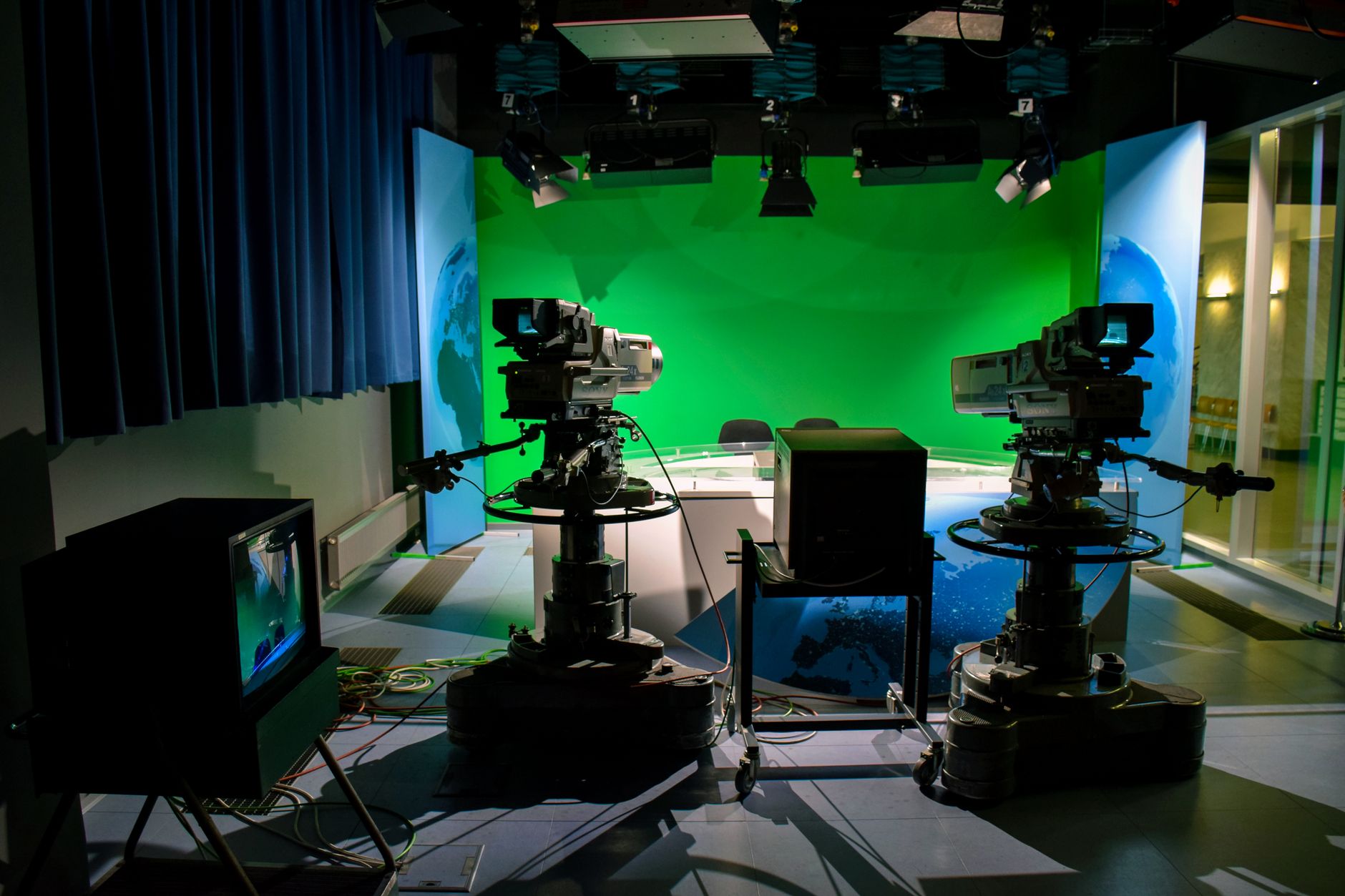
She then built Harpo Studios on the near West Side of Chicago, the first major studio facility in the city since the silent era and the home of the show until it ended in 2011. The studio was itself a statement. Daytime television had always been produced in Los Angeles or New York. Winfrey built in Chicago, kept her staff in Chicago, and ran the company from Chicago. The geography was the strategy.
Extending the core
The interesting discipline of the Harpo decade is not what Winfrey did; it is what she did not do. She did not launch an airline. She did not buy a sports team. She did not start a cosmetics line in year three. She extended the single relationship she had with her audience into formats that could carry it.
In 1996, she launched Oprah's Book Club as a segment on the show. Mid-list authors became number-one bestsellers inside a week; some literary careers were effectively made by a single appearance. In 2000, she launched O, The Oprah Magazine with Hearst — one of the most successful magazine debuts of the decade, and still the only American magazine of the era to put the same person on every cover. Harpo Films produced Beloved, Precious, Selma. Each of these was a different format; none of them was a different brand.
The second principle is the one most founders miss. New products should extend the existing trust, not test whether you can earn new trust in a new category.
OWN
On January 15, 2008, Winfrey and Discovery Communications announced that Discovery Health Channel would be converted into OWN: Oprah Winfrey Network. The launch slipped from 2009 and eventually went live on January 1, 2011 as a 50/50 joint venture, with Discovery contributing roughly $100 million. The network launched into about 80 million homes.
The first two years were, by any honest measure, difficult. Ratings were below projection. Programming misfired. The talk-show host was no longer in daytime; the daytime show ended its 25-season run in May 2011, four months after OWN launched. Winfrey herself has described the period as the hardest of her career. The pivot — toward scripted series with Tyler Perry, toward documentaries, toward a tighter programming slate — came in 2012 and 2013, and OWN eventually turned a profit. In 2017, Discovery increased its stake in the network, and in 2020 Winfrey sold most of her remaining equity to what is now Warner Bros. Discovery, retaining a minority position.
The lesson is not that OWN was a mistake. The lesson is that Winfrey, at the point where most founders would have cashed the brand into a licensing deal, chose instead to re-enter a hard operating business as a majority partner. She lost money. She fixed the slate. She exited on her own schedule.
What founders should take from the Oprah file
Three things are worth lifting out of a career that is often described in language that obscures what she actually did.
First, ownership is the only compounding structure. The 1988 acquisition of her own show from WLS-TV is the inflection point of her net worth, not the 1986 syndication deal. Distribution without equity is still a job.
Second, authenticity is defensible precisely because it is non-transferable. Baltimore's news director was correct that Winfrey was not a traditional anchor; he was wrong that this was a weakness. The thing you keep getting critiqued for is often the thing competitors cannot copy.
Third, extensions should run through the core, not around it. Book club, magazine, film company and finally a cable network were all expressions of the same trust she had earned one broadcast at a time. There was no diversification into verticals she did not know. There was concentration until concentration ran out of oxygen, and only then a careful adjacency.
She is remembered as a host. The record is of a founder.
Continue reading


The Entrepreneur Story
Is your story worth telling?
We feature founders who are building something real. Apply and we'll be in touch.
Apply to be featured →Stay sharp.
Ideas that move.
Founder stories, emerging ventures, and essays on what's next — straight to your inbox.
Unsubscribe any time.