
SpaceX Acquires Cursor AI for $500M: Key Implications *A Strategic AI Integration*
SpaceX acquires AI coding startup Cursor for $500M, integrating advanced generative AI to accelerate Starship and Starlink development.
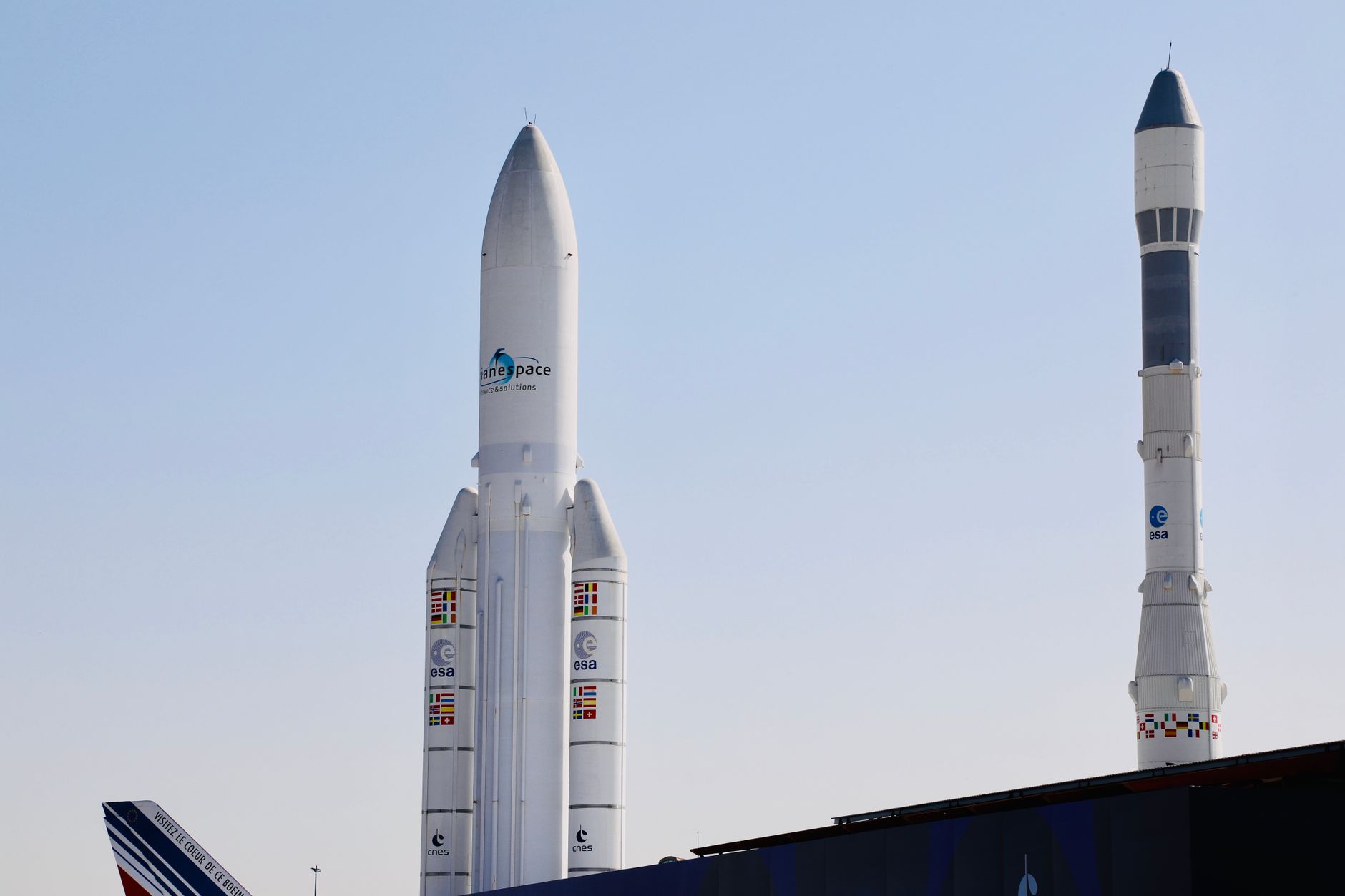
SpaceX officially finalized its acquisition of AI coding startup Cursor on August 15, 2026, in a deal valued at approximately $500 million TechCrunch, 2026. This strategic move signals a growing trend: large industrial technology companies are internalizing specialized AI capabilities to gain a competitive edge, demonstrating to founders the significant value in building targeted, mission-critical AI solutions.
Quick Takeaways
- SpaceX acquired AI coding startup Cursor for $500 million on August 15, 2026, integrating advanced generative AI tools into its aerospace development.
- Cursor's co-founders, Aman Khan and Arvid Kahl, are slated to join SpaceX's AI and software engineering leadership, signifying the integration of startup talent into a large enterprise.
- The acquisition highlights a broader market trend where major industrial tech players are buying specialized AI tool providers to accelerate innovation in complex, mission-critical sectors.
- SpaceX aims to leverage Cursor's AI to expedite software development for critical projects like Starship and Starlink, underscoring the demand for AI in highly specialized engineering domains.
- For founders, this deal illustrates the premium placed on AI solutions that directly enhance developer productivity and address specific, high-stakes technical challenges within established industries.
The Deal: Strategic Play for Aerospace AI
SpaceX’s acquisition of Cursor for $500 million on August 15, 2026, marks a definitive move to bolster its internal software capabilities with advanced artificial intelligence TechCrunch, 2026. Cursor, founded in 2023, built a generative AI coding platform specifically designed to enhance developer productivity through features like AI-driven code generation and debugging TechCrunch, 2026. This integration is not merely about incremental efficiency gains; it is about fundamentally accelerating the development of critical software for SpaceX's ambitious projects, including Starship and Starlink TechCrunch, 2026.
For founders in the AI space, this acquisition underscores the significant market value for specialized tools that solve concrete problems within complex engineering environments. Cursor did not aim to build a general-purpose AI, but rather a focused product that directly impacts the daily workflow of software developers. Its AI-powered code editor, with its ability to generate and debug code, addresses a core pain point for engineers: the speed and accuracy of software creation. This targeted approach allowed Cursor to raise over $50 million in venture capital funding prior to the acquisition, demonstrating investor confidence in its specialized value proposition TechCrunch, 2026. The $500 million acquisition price further validates this strategy, indicating that large enterprises are willing to pay a premium for solutions that can directly impact their operational efficiency and competitive advantage.
Elon Musk, CEO of SpaceX, has consistently emphasized the transformative role of AI in scaling development for future space exploration and colonization efforts TechCrunch, 2026. This acquisition aligns directly with that vision, providing SpaceX with internal control over AI development capabilities crucial for mission-critical applications. The move reflects a strategic decision to internalize expertise rather than rely solely on external vendors or general-purpose AI models that may not meet the specific, stringent requirements of aerospace software. For founders, this signals a clear message: building AI tools tailored to the unique demands of high-stakes industries, where performance and reliability are paramount, creates substantial acquisition appeal. The market is shifting from broad AI applicability to deep, vertical integration, where a company like SpaceX sees direct, measurable benefits from owning its AI development infrastructure.
Cursor's Journey: From Startup to Strategic Asset
Cursor, founded in 2023, quickly established itself as a notable player in the burgeoning field of AI-powered developer tools. Its core offering, an AI-powered code editor, differentiated itself by integrating generative AI capabilities directly into the coding workflow, offering features like AI-driven code generation and intelligent debugging assistance TechCrunch, 2026. This focus on enhancing developer productivity resonated with investors, leading Cursor to successfully raise over $50 million in venture capital funding prior to its acquisition TechCrunch, 2026. The rapid ascent from a 2023 founding to a $500 million acquisition in 2026 underscores the speed at which specialized AI solutions are being valued and integrated into larger tech ecosystems.
For Cursor's co-founders, Aman Khan and Arvid Kahl, the acquisition marks a significant transition. Both are expected to join SpaceX's AI and software engineering leadership, bringing their expertise and vision directly into the aerospace giant's operations TechCrunch, 2026. This move from leading an independent startup to integrating into a vast, established organization presents both opportunities and challenges. On one hand, they gain access to SpaceX's immense resources, data, and engineering talent, allowing their AI platform to scale and tackle problems of unprecedented complexity in aerospace. On the other hand, they will navigate the cultural and operational differences between a lean startup and a large, mission-driven enterprise. The integration process itself is projected to be completed within 18 months, with Cursor's team relocating to SpaceX's Hawthorne campus in California TechCrunch, 2026. This physical relocation and extended integration timeline highlight the deliberate effort required to fully merge a startup's technology and talent into a larger organizational structure.
Founders can draw several key lessons from Cursor's trajectory. First, the success of Cursor demonstrates the power of solving a specific, high-value problem with AI, rather than pursuing a broad, undifferentiated approach. Developer productivity is a universal pain point, but Cursor's ability to offer generative AI and debugging within an editor provided a tangible, measurable benefit. Second, securing substantial venture capital funding validated their product-market fit and technological prowess, making them an attractive acquisition target. Third, the decision by Khan and Kahl to join SpaceX leadership indicates a willingness to commit to the long-term vision of the acquiring company, a factor often crucial in successful M&A outcomes for talent-heavy startups. For founders contemplating an exit, understanding how their leadership and team will integrate and contribute post-acquisition is as critical as the financial terms of the deal. Cursor's journey exemplifies how a focused AI startup can quickly become a strategic asset for a leading industrial tech company.
Implications for AI Development in Specialized Industries
SpaceX's acquisition of Cursor is a powerful signal for the future of AI development, particularly within specialized, high-stakes industries. The aerospace sector, with its demand for extreme precision, reliability, and safety, represents one of the most challenging environments for software engineering. Projects like Starship and Starlink involve intricate systems, real-time data processing, and mission-critical code that directly impacts human safety and multi-billion-dollar assets. SpaceX aims to leverage Cursor's technology to accelerate the development of this complex software, recognizing that traditional development cycles may be insufficient for its ambitious timelines and goals TechCrunch, 2026.
This move highlights a growing trend: large industrial tech companies are acquiring specialized AI tool providers to gain a competitive edge in innovation TechCrunch, 2026. The rationale is clear: rather than attempting to build these niche capabilities from scratch or adapting general-purpose AI models, it is often more efficient and strategically advantageous to acquire proven, specialized solutions. For founders, this means a significant opportunity exists in identifying industries with unique software development challenges and building AI tools tailored to those specific needs. Consider sectors such as advanced manufacturing, where AI could optimize robotics programming and quality control; medical technology, where AI could accelerate the development of diagnostic software and device firmware; or autonomous systems, where AI could aid in the rapid iteration and validation of complex control algorithms. In each case, the ability of AI to generate, test, and debug code with domain-specific awareness becomes invaluable.
The integration of Cursor into SpaceX means that AI will be directly applied to problems that demand unparalleled levels of accuracy and robustness. This pushes the boundaries of what generative AI can achieve, moving beyond boilerplate code generation to assisting with highly specialized, safety-critical functions. Founders developing AI solutions for these sectors must prioritize not only efficiency but also explainability, verifiability, and formal methods where applicable. The aerospace industry cannot afford errors, and any AI tool integrated into its development pipeline must meet stringent quality and safety standards. This creates a distinct market for "responsible AI" development tools that incorporate rigorous testing, validation, and transparency features. The Cursor acquisition is not just about faster coding; it is about enabling more reliable, robust, and ultimately safer software development in an industry where the stakes are exceptionally high. This focus on specialized, high-integrity AI offers a blueprint for other founders targeting similarly demanding industrial verticals.
The Future of AI Integration in Large Tech
SpaceX's acquisition of Cursor is indicative of a broader strategic shift among large technological enterprises: the internalization of advanced AI development capabilities. Rather than relying solely on external partnerships or subscribing to generalized AI services, companies like SpaceX are opting to bring specialized AI talent and technology in-house. This decision is driven by several factors, including the need for greater control over intellectual property, enhanced data security, deeper customization for proprietary systems, and the imperative to maintain a competitive advantage in rapidly evolving fields. For SpaceX, owning Cursor's generative AI coding platform means it can tailor the tools precisely to the unique demands of its Starship and Starlink projects, integrating them deeply into its existing engineering workflows and data infrastructure TechCrunch, 2026.
However, the integration of a startup like Cursor into a large entity like SpaceX is not without its challenges. The 18-month integration process, which includes the relocation of Cursor's team to SpaceX's Hawthorne campus, underscores the complexity involved in merging distinct company cultures, technological stacks, and operational methodologies TechCrunch, 2026. Maintaining the innovative spirit and agility of a startup while adhering to the rigorous processes and scale of a large corporation is a delicate balance. For founders, understanding these integration dynamics is crucial. While an acquisition offers resources and scale, it also entails navigating new corporate structures and potentially adapting initial product visions to align with the acquiring company's broader strategic goals. The success of such integrations often hinges on how effectively the acquired team's expertise is leveraged and how well their methodologies can be integrated without stifling innovation.
Looking ahead, this trend suggests a bifurcation in the AI market. On one side, there will continue to be a robust ecosystem for general-purpose AI models and platforms, accessible to a wide range of users. On the other side, there will be an increasing premium placed on highly specialized, vertical AI solutions that can be deeply embedded within specific industries and enterprises. For founders, this means identifying unmet needs within niche markets that are currently underserved by generic AI. The opportunity lies in building AI tools that are not just "smart," but contextually intelligent – understanding the unique constraints, data types, and operational requirements of a particular domain. Elon Musk's emphasis on AI for scaling space exploration highlights that the ultimate goal is not just faster coding, but accelerated progress towards monumental engineering feats TechCrunch, 2026. This vision creates a demand for AI that can genuinely transform complex industrial processes, offering a fertile ground for new startup ventures and subsequent acquisition targets. The future of AI integration in large tech will be defined by how effectively these specialized capabilities can be woven into the fabric of core operations, driving innovation from within.
FAQ
Q: What was the value of SpaceX's acquisition of Cursor? A: SpaceX acquired AI coding startup Cursor for approximately $500 million TechCrunch, 2026.
Q: When did SpaceX officially acquire Cursor? A: The acquisition was officially finalized on August 15, 2026 TechCrunch, 2026.
Q: What does Cursor's technology do? A: Cursor is known for its AI-powered code editor, which enhances developer productivity with features such as AI-driven code generation and debugging TechCrunch, 2026.
Q: Who are the co-founders of Cursor, and what will be their roles at SpaceX? A: Cursor's co-founders, Aman Khan and Arvid Kahl, are expected to join SpaceX's AI and software engineering leadership TechCrunch, 2026.
Q: Why did SpaceX acquire Cursor? A: SpaceX acquired Cursor to accelerate the development of critical software for its Starship, Starlink, and other aerospace projects, internalizing advanced AI development capabilities for specialized, mission-critical applications TechCrunch, 2026.
Continue reading


The Entrepreneur Story
Is your story worth telling?
We feature founders who are building something real. Apply and we'll be in touch.
Apply to be featured →Stay sharp.
Ideas that move.
Founder stories, emerging ventures, and essays on what's next — straight to your inbox.
Unsubscribe any time.