
Ex-Apple Engineers Raised $165M Before Shipping a Single Product
Lyte's three ex-Apple engineers closed a $165M seed round at a $1.6B valuation — in stealth, pre-product. The deal rewrites what seed stage means in Physical AI.
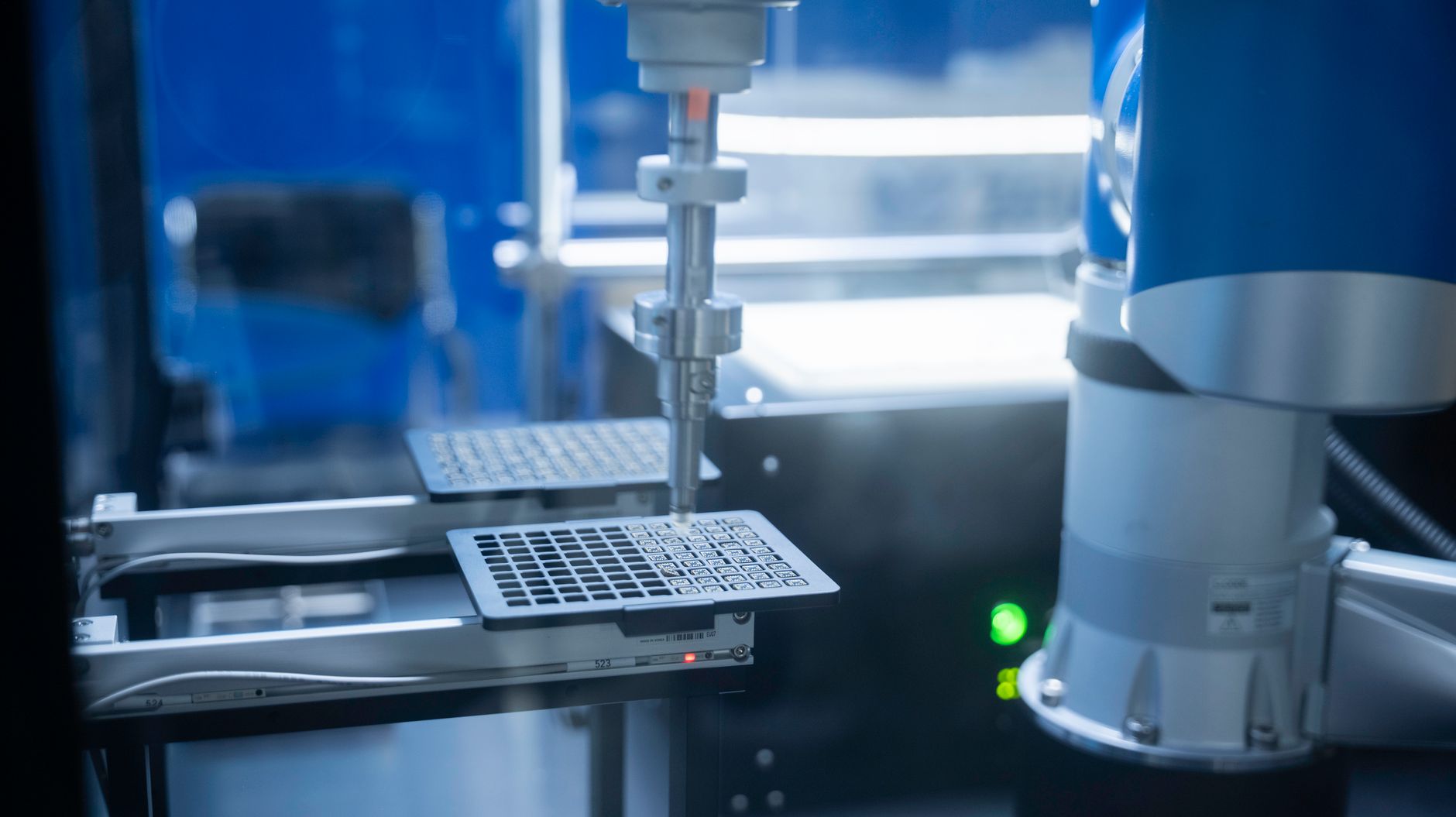
Lyte, a stealthy "Physical AI" startup founded by former Apple engineers Alex Wey, Sasa Marinkovic, and Jared Novick, announced on April 26, 2024, it has secured a record-setting $165 million seed funding round at a $1.6 billion valuation. This substantial early investment from top-tier venture capital firms signals a significant market shift and validation for the nascent Physical AI category, urging founders to observe how deep-pocketed investors are now valuing foundational robotics and AI plays.
Quick takeaways:
- Lyte's $165 million seed round at a $1.6 billion valuation sets a new benchmark for early-stage funding in the Physical AI sector.
- The company, founded by former Apple engineers, aims to develop a foundational hardware and software stack, including a robot operating system and an AI model for physical interaction.
- Lyte's mission is to enable general-purpose robots to intelligently perform diverse tasks in unstructured environments, combining generative AI with robotics.
- The massive investment from Andreessen Horowitz, Sequoia Capital, Founders Fund, and others validates a growing investor appetite for foundational technologies in robotics and AI.
- Founders should note the increasing trend of experienced teams securing significant capital for ambitious, long-term visions in hardware-software convergence.
The Record-Setting Seed Round
Lyte's announcement on April 26, 2024, of a $165 million seed funding round marks a notable transaction in the startup ecosystem. The round, which values the company at $1.6 billion, positions Lyte as a significant player in the emerging Physical AI category even before its public debut. Andreessen Horowitz (a16z) led the investment, a move that often signals strong confidence in a company's potential to define a new market segment or disrupt an existing one The Information, 2024.
The participation of other prominent investors underscores the broad appeal of Lyte's vision. Founders Fund, Sequoia Capital, Lightspeed Venture Partners, 8VC, Thrive Capital, and Bond Capital all contributed to the seed round The Information, 2024. This consortium of investors represents a substantial portion of the venture capital landscape, typically backing companies with ambitious, long-term goals and significant market potential. For founders, the size and composition of Lyte's seed round highlight a shift where foundational technology companies, particularly those integrating hardware and advanced AI, are attracting unprecedented early-stage capital. This suggests that investors are increasingly willing to place large bets on teams with deep technical expertise tackling complex, multi-disciplinary problems.
The $165 million capital injection is earmarked for the development of a foundational hardware and software stack for 'Physical AI' The Information, 2024. This includes building a robot operating system and an AI model specifically designed for understanding how objects behave in the physical world. Unlike many robotics startups that focus on a single application or a specific robot design, Lyte's strategy appears to be platform-centric. Its aim to 'democratize robot hardware' suggests a vision where its foundational technology could power a wide array of robotic applications, rather than being confined to a proprietary robot. This approach aligns with the current trend in generative AI, where foundational models are built to be broadly applicable across numerous tasks, and Lyte is extending this paradigm to the physical realm. The capital infusion will enable Lyte to accelerate R&D, recruit top engineering talent, and potentially acquire necessary infrastructure to build out this complex stack. The scale of this investment indicates the perceived difficulty and ambition of developing a truly general-purpose system capable of robustly interacting with the physical world, moving beyond the specialized, task-specific robots that dominate current industrial and logistical applications.
From Apple's Labs to Physical AI
Lyte's founding team brings a significant pedigree from Apple, a company renowned for its integration of sophisticated hardware, intuitive software, and advanced user experiences. The co-founders — Alex Wey, Sasa Marinkovic, and Jared Novick — each held critical roles at Apple, providing them with a unique blend of expertise relevant to Lyte's ambitious mission in Physical AI The Information, 2024. Their collective experience at a company known for pushing the boundaries of consumer technology offers a strong signal to investors about their capability to execute on a complex, interdisciplinary vision.
Alex Wey, Lyte's CEO, previously led hardware design initiatives for some of Apple's most iconic and complex products, including the iPhone, Vision Pro, and Apple Watch The Information, 2024. His experience designing hardware for devices that seamlessly integrate into users' daily lives, demanding both aesthetic appeal and robust functionality, is directly applicable to the challenges of Physical AI. Building robots that can interact intelligently and reliably in the real world requires a deep understanding of mechanical engineering, sensor integration, and user-centric design principles. Wey's background suggests a focus on creating a hardware foundation that is not only powerful but also practical and extensible, a critical factor for Lyte's goal of "democratizing robot hardware." His leadership in bringing complex hardware products to market at scale provides a strategic advantage in a field often hampered by the intricacies of physical design and manufacturing.
Sasa Marinkovic, Lyte's Chief Commercial Officer, previously led worldwide marketing for Apple's Vision Products group The Information, 2024. This role involved communicating the value and potential of cutting-edge, often abstract, technologies to a global audience. For a startup venturing into a nascent and potentially complex field like Physical AI, Marinkovic's expertise in market positioning and commercial strategy is invaluable. His ability to articulate a clear vision and identify market opportunities will be crucial in translating Lyte's advanced technology into viable products and partnerships. Understanding how to build and communicate a compelling narrative around a new category, especially one that combines sophisticated AI with tangible hardware, is a distinct advantage for Lyte as it seeks to attract partners, customers, and further investment.
Jared Novick, Lyte's CTO, brings expertise in AI and machine learning, having worked on the iPhone's AI capabilities at Apple The Information, 2024. His background in integrating advanced AI into a mass-market device like the iPhone demonstrates a practical understanding of deploying sophisticated algorithms in real-world applications. This experience is central to Lyte's core mission of developing an AI model for understanding how objects behave and enabling robots to perform general-purpose tasks. Novick's technical leadership will be critical in developing the complex AI models that allow robots to perceive, reason, and act intelligently in diverse and unstructured environments. The combination of hardware design, commercial strategy, and AI expertise from Apple's top ranks positions Lyte with a founding team capable of tackling the multi-faceted challenges inherent in building a foundational Physical AI platform. Their track record at Apple suggests an ability to innovate at the intersection of consumer experience, advanced technology, and mass-market deployment, a rare combination in the robotics space.
Defining 'Physical AI': Beyond the Assembly Line
Lyte's core mission is to develop a foundational hardware and software stack for 'Physical AI,' a term that signals a departure from traditional robotics and a convergence with advanced artificial intelligence. The concept of Physical AI, as envisioned by Lyte, extends beyond the specialized, repetitive tasks typically performed by industrial robots in highly structured environments, such as automotive assembly lines or controlled warehouse settings. Instead, Lyte aims to enable general-purpose robots to intelligently interact with and perform diverse tasks in the unpredictable, unstructured physical world The Information, 2024. This represents a significant leap from current robotic capabilities, which are often limited by their pre-programmed nature and inability to adapt to novel situations or dynamic environments.
At the heart of Lyte's technology is the combination of generative AI with robotics The Information, 2024. Generative AI, known for its ability to create new content based on learned patterns (like text, images, or code), is being applied by Lyte to enable robots to understand and predict the behavior of physical objects. This goes beyond simple object recognition or manipulation. It implies a deeper cognitive ability for robots to reason about physics, material properties, and environmental dynamics, allowing them to adapt their actions on the fly. For instance, instead of being programmed for every specific grip and movement to pick up a particular item, a Physical AI robot could infer the best way to grasp and move an unfamiliar object based on its visual properties, estimated weight, and context, much like a human would. This capability is crucial for operating in environments where every task isn't pre-defined, such as a cluttered home, a dynamic construction site, or a rapidly changing retail floor.
Lyte's approach to 'democratize robot hardware' further distinguishes its vision The Information, 2024. This suggests that Lyte is not necessarily building a specific robot model to sell directly, but rather developing the underlying operating system and AI models that can power a wide range of robotic hardware platforms. By focusing on a foundational software layer and an AI model for physical understanding, Lyte aims to provide the intelligence that makes any robot more capable and versatile. This mirrors the trajectory of personal computing, where operating systems like Windows or macOS provided a universal platform for diverse hardware, or the more recent trend of large language models (LLMs) providing foundational intelligence for various AI applications. Such a platform approach could significantly lower the barrier to entry for companies wanting to deploy advanced robotics, allowing them to focus on application-specific hardware and use cases, while leveraging Lyte's core intelligence for general-purpose tasks. This shift from bespoke, single-purpose robots to general-purpose, AI-driven systems represents a paradigm change, promising to unlock a vast array of new applications for robotics in daily life and across industries, moving physical automation beyond the confines of highly controlled industrial settings.
The Market Opportunity: Unstructured Environments and General Purpose Robotics
The market opportunity for Physical AI, as targeted by Lyte, lies in addressing the significant limitations of current robotics and unlocking the potential for automation in unstructured, dynamic environments. Traditional industrial robots excel in controlled settings, performing precise, repetitive tasks such as welding car parts or assembling electronics. These robots operate within predefined parameters, relying on meticulously engineered environments and pre-programmed sequences. However, their utility diminishes rapidly when faced with variability, novelty, or the need for adaptable decision-making—qualities inherent in most real-world scenarios outside of highly specialized factories. This gap represents a vast, largely untapped market for intelligent automation.
Lyte's vision of enabling general-purpose robots to perform diverse tasks in unstructured environments directly addresses this limitation The Information, 2024. Consider the challenges in sectors like logistics, where warehouses are becoming increasingly complex, handling a wider variety of items and requiring flexible fulfillment strategies. Current robotic solutions often require significant infrastructure changes or operate only within specific zones. A Physical AI system, capable of understanding object behavior and adapting to new situations, could allow robots to navigate cluttered aisles, pick and pack irregularly shaped items, or even manage inventory in real-time without extensive pre-programming. This could dramatically increase efficiency and reduce labor costs in e-commerce fulfillment centers, where human intervention is still frequently required for complex tasks.
Beyond industrial and logistics applications, the potential extends to commercial and even domestic settings. Imagine robots that can assist in elder care, performing tasks like fetching items, preparing simple meals, or providing mobility support in a home environment that is inherently unpredictable and varies from one residence to another. In retail, robots could manage stock on shelves, organize displays, or assist customers, adapting to changing store layouts and product placements. Even in construction, where labor shortages are acute and environments are constantly in flux, general-purpose robots equipped with Physical AI could perform tasks like material handling, site monitoring, or even rudimentary assembly, adapting to dynamic worksite conditions.
The development of a foundational hardware and software stack, including a robot operating system and an AI model for understanding object behavior, is crucial for realizing this potential The Information, 2024. Such a platform would provide the underlying intelligence and flexibility needed for robots to perceive, reason, and act effectively in environments where every variable cannot be anticipated. The concept of 'democratizing robot hardware' suggests that Lyte's technology could become a universal brain for various robotic bodies, much like how operating systems power diverse computers or large language models power various AI applications. This platform approach could accelerate innovation across the entire robotics industry, allowing specialized hardware developers and application builders to leverage Lyte's core intelligence without having to build their own from scratch. The market opportunity is not just about replacing human labor, but about enabling new forms of automation and creating entirely new services and capabilities that are currently impossible with existing robotic technology.
Investor Confidence and the Competitive Landscape
The $165 million seed round for Lyte, led by Andreessen Horowitz and including firms like Sequoia Capital and Founders Fund, signals a profound investor confidence in the Physical AI category and Lyte's approach The Information, 2024. This level of early-stage funding is typically reserved for companies with experienced teams tackling truly foundational problems that promise massive market disruption. Investors are betting that Lyte's strategy to build a universal hardware and software stack, coupled with an AI model for understanding physical objects, can unlock a new era of general-purpose robotics. The sheer size of the round reflects a belief that the technical challenges are significant, requiring substantial capital, but the eventual payoff could be transformative, similar to the early investments in large language models.
The competitive landscape for Physical AI is emerging, with several companies pursuing various aspects of advanced robotics and intelligent automation. While Lyte's specific product remains under wraps, its stated goal of enabling general-purpose robots in unstructured environments positions it in a rapidly evolving field. Companies like Figure AI are developing humanoid robots capable of performing diverse tasks, recently securing significant funding to accelerate their efforts in general-purpose robotics. Their approach often involves building the entire robot from the ground up, integrating hardware and AI. Similarly, Boston Dynamics has long been at the forefront of advanced robotics, known for its agile and dynamic robots like Atlas and Spot, often showcasing impressive capabilities in navigation and manipulation, though primarily focused on specific, high-performance hardware platforms.
Other players in the broader robotics and AI space include Covariant, which focuses on AI-powered robotic picking solutions for warehouses, leveraging advanced computer vision and machine learning to handle varied items. While Covariant targets a specific vertical, its emphasis on AI-driven manipulation in less structured environments aligns with the broader goals of Physical AI. Even automotive companies like Tesla are exploring general-purpose humanoid robots with their Tesla Bot initiative, aiming to apply their AI expertise from self-driving cars to physical manipulation in diverse settings. These companies, while having different form factors or initial applications, all share the common thread of pushing robotics beyond rigid automation towards more intelligent, adaptable systems.
What differentiates Lyte, based on the available information, is its explicit focus on a foundational hardware and software stack, including a robot operating system and an AI model for understanding how objects behave The Information, 2024. This suggests a platform play, aiming to 'democratize robot hardware' rather than necessarily building a single, proprietary robot The Information, 2024. This horizontal strategy could allow Lyte to become an enabling technology for a multitude of robotic applications across different industries and form factors. Investors are likely drawn to this potential for broad impact, seeing Lyte as a fundamental building block for the next generation of robotics, much like how Nvidia provides the foundational compute for AI or how operating systems underpin modern computing. The high valuation at seed stage reflects not just the potential of the category, but also the confidence in the Apple-pedigree founding team to execute on such an ambitious, infrastructure-level vision.
Implications for Founders in Robotics and AI
Lyte's record-setting $165 million seed round at a $1.6 billion valuation carries significant implications for founders operating in the robotics and AI sectors. This deal serves as a clear signal that venture capital is increasingly willing to make substantial early-stage bets on companies tackling foundational problems in hardware-software integration, particularly within the Physical AI paradigm. For founders, this means several key takeaways regarding market validation, funding strategies, and the evolving technical landscape.
Firstly, the investment validates the "Physical AI" category as a high-potential frontier. Founders who are working on intelligent automation, robot operating systems, or AI models designed for real-world physical interaction should recognize this as a strong indication of investor interest. It suggests that the market is maturing beyond niche industrial automation towards more general-purpose, adaptable robotic solutions. This validation could lead to increased interest and easier fundraising for startups operating in adjacent spaces, provided they articulate a clear vision for how their technology contributes to this broader goal of intelligent physical interaction. However, it also raises the bar: the size of Lyte's round implies that investors expect ambitious, long-term visions and experienced teams capable of executing on complex, multi-disciplinary challenges.
Secondly, the scale of Lyte's seed round highlights a trend towards larger early-stage investments for companies with experienced teams and ambitious, foundational technology goals. For founders with significant industry experience, particularly from leading tech companies like Apple, this indicates that presenting a bold vision for a new category can attract unprecedented capital, even at the earliest stages. This contrasts with traditional seed funding, which is often much smaller and focused on proving initial traction or a minimal viable product. Lyte's round suggests that for certain critical technologies, investors are willing to fund the idea and the team with a long runway, trusting that the market opportunity is large enough to warrant a multi-year development cycle without immediate revenue pressure. Founders should consider how to leverage their own experience and network to articulate a compelling, audacious vision that attracts this new class of "super seed" funding.
Thirdly, Lyte's focus on a "foundational hardware and software stack" and "democratizing robot hardware" points to a strategic approach that other founders might emulate. Instead of building a single, specialized robot, Lyte is targeting the underlying infrastructure – the robot operating system and the AI model for physical understanding The Information, 2024. This platform-centric strategy, common in software and generative AI, is now gaining traction in robotics. Founders should consider if their unique technology can serve as a horizontal enabler for a wider range of applications, rather than being confined to a vertical solution. Building foundational layers that empower others to innovate on top can create a much larger total addressable market and attract significant investor interest. This requires a shift in mindset from direct product delivery to ecosystem enablement, focusing on interoperability, developer tools, and broad applicability. Lyte's success suggests that investors are looking for the "Android of Physical AI" or the "GPT of physical interaction," rather than just another specialized robot.
FAQ
Q: What is Lyte's core mission? A: Lyte aims to build a foundational hardware and software stack for 'Physical AI,' including a robot operating system and an AI model for understanding how objects behave. The goal is to enable general-purpose robots to intelligently interact with and perform diverse tasks in unstructured environments The Information, 2024.
Q: Who founded Lyte and what is their background? A: Lyte was co-founded by former Apple engineers Alex Wey, Sasa Marinkovic, and Jared Novick. Alex Wey (CEO) worked on hardware design for iPhone, Vision Pro, and Apple Watch. Sasa Marinkovic (Chief Commercial Officer) led worldwide marketing for Apple's Vision Products group. Jared Novick (CTO) worked on AI and machine learning for the iPhone The Information, 2024.
Q: How much funding did Lyte raise and at what valuation? A: Lyte secured a $165 million seed funding round at a $1.6 billion valuation on April 26, 2024 The Information, 2024.
Q: Which investors participated in Lyte's seed round? A: Andreessen Horowitz (a16z) led the seed funding round. Other major investors include Founders Fund, Sequoia Capital, Lightspeed Venture Partners, 8VC, Thrive Capital, and Bond Capital The Information, 2024.
Q: What does 'Physical AI' mean in Lyte's context? A: 'Physical AI' for Lyte refers to combining generative AI with robotics to enable robots to perform general-purpose tasks in the physical world, moving beyond specialized, pre-programmed actions. It involves building an AI model for understanding how objects behave and allowing robots to adapt to diverse, unstructured environments The Information, 2024.
Continue reading



The Entrepreneur Story
Is your story worth telling?
We feature founders who are building something real. Apply and we'll be in touch.
Apply to be featured →Stay sharp.
Ideas that move.
Founder stories, emerging ventures, and essays on what's next — straight to your inbox.
Unsubscribe any time.