
DeepMind Alumni's Inherent AI Outperforms OpenAI & Anthropic New AI Agent Faraday Shakes Up Market
Former DeepMind researchers launched Inherent AI, whose Faraday agent achieved 92% accuracy in scientific replication, surpassing OpenAI and Anthropic models and securing a $35M seed round.
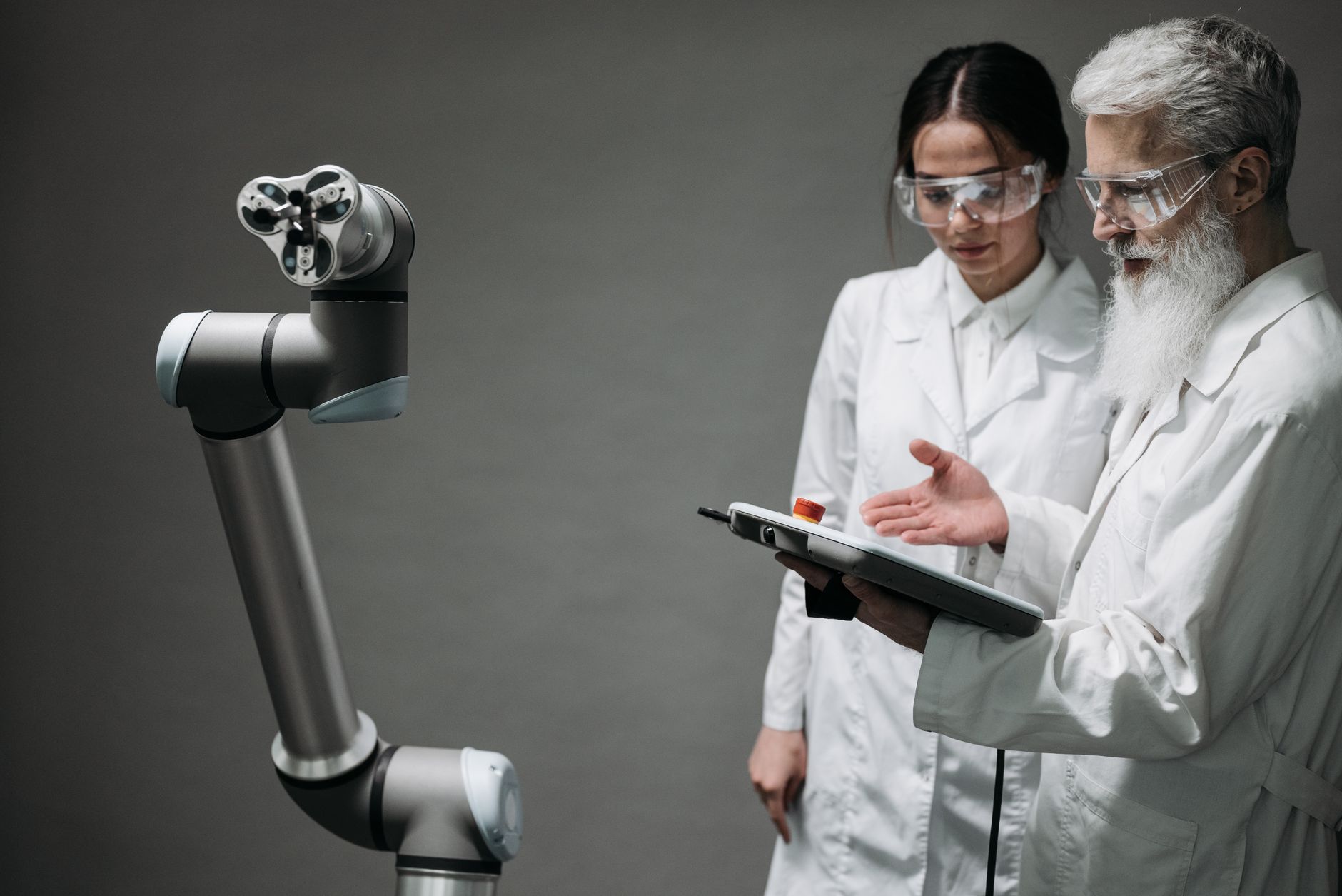
Dr. Anya Sharma and Dr. Ben Carter, former DeepMind lead researchers, launched Inherent early this year (2026) in London and San Francisco, securing a $35 million seed round led by Ignition Ventures and Synthetica Capital. Their flagship AI agent, Faraday, claims to have outperformed OpenAI's and Anthropic's leading models in scientific research replication, signaling a new competitive front for founders building in the AI agent space. The speed and accuracy demonstrated by a new entrant highlight the potential for specialized AI models to disrupt established generalist platforms, urging founders to consider niche expertise over broad application in a rapidly evolving market.
Quick Takeaways
- Inherent, a new AI lab founded by DeepMind alumni Dr. Anya Sharma (CEO) and Dr. Ben Carter (CTO), secured $35 million in seed funding led by Ignition Ventures and Synthetica Capital early this year (2026).
- Inherent's Faraday AI agent achieved 92% accuracy in scientific research replication within 24 hours per study, significantly outperforming OpenAI's undisclosed agents (78%) and Anthropic's Claude 3.5 Sonnet (81%).
- Faraday's success stems from a novel "Cognitive Architecture" and "Deep Causal Reasoning" approach, moving beyond predictive models to understand underlying scientific principles.
- This performance challenges the dominance of large, general-purpose AI models, demonstrating that specialized, performance-driven AI can carve out significant market share and investor interest.
- The emergence of Inherent underscores the value of deep domain expertise from top-tier research labs like DeepMind in identifying critical market gaps and developing targeted, high-impact AI solutions.
The New Challenger: Inherent's $35 Million Seed Round and Faraday AI
Inherent, a startup founded by Dr. Anya Sharma (CEO) and Dr. Ben Carter (CTO), both former lead researchers at DeepMind, has rapidly established itself as a significant new player in the artificial intelligence landscape. Launched early this year in 2026, the company announced a substantial $35 million seed round, a testament to investor confidence in its vision and the pedigree of its founders TechCrunch, 2026. This early-stage funding was co-led by prominent venture capital firms Ignition Ventures and Synthetica Capital, signaling a strong belief in Inherent's potential to disrupt the highly competitive AI research and development sector. For founders navigating the fundraising environment, Inherent's successful seed round underscores that deep technical expertise and a clear, differentiated product vision can attract substantial capital even in a crowded market.
The core of Inherent's offering is its flagship AI agent, Faraday. This agent has garnered attention for its claimed performance in a critical and complex task: scientific research replication. According to Inherent, Faraday achieved an impressive 92% replication accuracy across a benchmark of 100 recent peer-reviewed studies spanning biology, chemistry, and physics TechCrunch, 2026. Crucially, Faraday completed these replications within 24 hours per study. This speed and accuracy are presented as a significant improvement over existing solutions from industry leaders. In comparative tests, OpenAI's undisclosed agents achieved 78% accuracy, while Anthropic's Claude 3.5 Sonnet managed 81% accuracy, both taking a considerably longer 36-48 hours per study for replication TechCrunch, 2026.
This performance differential is not merely incremental; it suggests a fundamental advantage in Inherent's approach. For founders in the AI space, these results highlight that market leadership is not solely determined by the largest models or the most extensive training data. Instead, specialized architectures and focused problem-solving can yield superior outcomes in specific, high-value domains. The $35 million seed capital will likely be deployed to further develop Faraday, expand its capabilities, and potentially explore new applications for its underlying "Cognitive Architecture" and "Deep Causal Reasoning" technology. Inherent's dual presence in London and San Francisco positions it to tap into two major global hubs for AI talent and innovation, further enhancing its ability to scale its research and commercial efforts. This substantial early investment validates the founders' strategy of targeting a specific, challenging problem with a novel technical solution, rather than attempting to build another general-purpose foundational model. The market is increasingly rewarding depth and demonstrable performance in niche applications, a lesson for any founder contemplating their AI strategy.
DeepMind Pedigree Meets New Frontiers: The Founders' Trajectory
The founding team of Inherent, Dr. Anya Sharma and Dr. Ben Carter, brings a significant pedigree from DeepMind, one of the world's foremost AI research institutions. Both served as lead researchers at DeepMind, a role that typically entails spearheading complex, multi-year projects, publishing cutting-edge research, and guiding teams of highly skilled AI scientists and engineers. This background implies a profound understanding of advanced AI architectures, machine learning methodologies, and the rigorous scientific process inherent in developing novel intelligence systems. Their time at DeepMind would have exposed them to the challenges and opportunities at the very edge of AI capabilities, from developing reinforcement learning agents that master complex games to designing models for scientific discovery and medical applications. This experience is a crucial asset for Inherent, providing not only technical depth but also a strategic vision for how to build and scale an impactful AI company.
The decision to leave a well-resourced, globally recognized institution like DeepMind to co-found a startup is a high-stakes move. It signals a belief that their new approach, embodied by Inherent’s Cognitive Architecture and Deep Causal Reasoning, could not be fully realized within the confines of a larger organization, or that the specific market opportunity they identified required an independent venture. For founders, this trajectory offers several lessons. Firstly, it demonstrates the entrepreneurial drive inherent in top-tier research talent, a willingness to take calculated risks to pursue a distinct technological vision. Sharma and Carter likely identified a specific limitation in existing general-purpose AI models—their struggle with deep causal understanding and reliable scientific replication—and saw an opportunity to address it with a differentiated architecture. This identification of a precise market gap, often overlooked by larger players focused on broader applications, is a hallmark of successful startup formation.
Secondly, their ability to secure a $35 million seed round speaks volumes about the value investors place on proven expertise and a clear, disruptive thesis. The DeepMind alumni network and their individual reputations as lead researchers undoubtedly played a role in attracting capital from Ignition Ventures and Synthetica Capital. This highlights that for founders, a strong track record, especially from a leading institution, can significantly de-risk an early-stage venture in the eyes of investors. Their prior experience likely equipped them with not only technical prowess but also an understanding of how to structure research projects, manage complex teams, and articulate a compelling vision for a new AI paradigm. The stakes for Sharma and Carter are high: they are not just building another AI company but attempting to redefine how AI interacts with and contributes to scientific discovery, a domain with immense societal and economic implications. Their move from a research giant to an agile startup exemplifies the dynamic nature of the AI industry, where innovation can emerge from focused, experienced teams challenging the status quo. Their London and San Francisco bases reflect a strategy to leverage global talent pools and access critical markets, reinforcing the ambition inherent in their venture.
Beyond Predictive Models: Inherent's Cognitive Architecture
Inherent's core technological differentiation lies in its "Cognitive Architecture" and "Deep Causal Reasoning" approach, a deliberate departure from the predominantly predictive models that characterize much of the current AI landscape, including those from giants like OpenAI and Anthropic. While large language models (LLMs) excel at identifying patterns, generating coherent text, and making predictions based on vast datasets, they often struggle with true causal understanding—the ability to grasp why something happens, rather than just what is likely to happen next. This distinction is critical, especially in domains like scientific research, where understanding mechanisms and causality is paramount.
The problem of scientific research replication serves as a stark illustration of this limitation. Replicating a scientific study involves more than just summarizing its abstract or predicting its outcome. It requires an AI agent to comprehend the experimental setup, the specific methodologies employed, the precise conditions under which data was collected, and the analytical steps taken to arrive at conclusions. This demands a deep understanding of scientific principles, experimental design, and the often subtle causal relationships between variables. A purely predictive model might identify correlations, but it would struggle to reliably reconstruct an experiment from first principles or identify subtle flaws in methodology that could impact reproducibility. Inherent's Faraday AI agent, with its Cognitive Architecture, aims to overcome this by building a more robust internal representation of knowledge, enabling it to model causal dependencies and reason about scientific processes in a more human-like, principled way TechCrunch, 2026.
This novel approach translates directly into Faraday's superior performance: 92% replication accuracy within 24 hours, compared to 78-81% accuracy over 36-48 hours for competitor models TechCrunch, 2026. The speed indicates not just efficiency but a more profound grasp of the underlying scientific logic, allowing Faraday to quickly parse complex information, identify critical experimental steps, and simulate or re-execute procedures. For founders, this highlights a significant opportunity: while general-purpose LLMs have broad applications, there is immense value in developing specialized AI systems that address specific, high-complexity tasks requiring deeper forms of intelligence.
The implications of "Deep Causal Reasoning" extend far beyond scientific replication. In domains such as drug discovery, materials science, climate modeling, or even complex engineering, understanding causality is essential for innovation and problem-solving. An AI that can reason causally could accelerate the development of new therapeutics by predicting not just drug efficacy but the underlying biological pathways, or design new materials by understanding the atomic-level interactions that lead to desired properties. This approach could lead to more robust, interpretable, and trustworthy AI systems, moving the industry closer to truly intelligent agents that can augment human intellect in fundamental ways. Inherent's focus on this architectural innovation positions it not just as a competitor in the AI agent market, but as a potential pioneer in a new wave of AI that prioritizes understanding over mere prediction.
The Stakes in Scientific AI: Replication, Trust, and Acceleration
The ability of an AI agent like Faraday to perform scientific research replication with high accuracy and speed addresses a critical challenge within the global scientific community. For decades, science has grappled with a "replication crisis," where a significant number of published research findings, particularly in fields like psychology, medicine, and social sciences, cannot be reliably reproduced by independent researchers. This crisis erodes trust in scientific findings, wastes research funding, and slows down the pace of discovery. The reasons for non-replication are complex, ranging from subtle differences in experimental conditions and analytical methods to publication bias and, in some cases, outright fraud.
Faraday's reported 92% replication accuracy within 24 hours per study across 100 peer-reviewed studies in biology, chemistry, and physics represents a potential breakthrough in addressing this challenge TechCrunch, 2026. By automating and accelerating the replication process, Inherent's AI could provide an independent, unbiased validation layer for scientific claims. This has profound implications for the scientific ecosystem. Faster validation means that robust findings can be identified and built upon more quickly, accelerating the pace of scientific discovery. Conversely, non-replicable studies can be flagged earlier, preventing wasted resources and misdirection in subsequent research.
The impact extends to various stakeholders. Researchers would gain a powerful tool for self-correction and validation, enhancing the reliability of their work before publication. Funding bodies could use such AI agents to assess the reproducibility of prior research before allocating new grants, ensuring more effective use of public and private investment. Pharmaceutical companies, biotechnology firms, and other R&D-intensive industries could significantly de-risk their innovation pipelines by validating foundational scientific claims more rigorously and rapidly, potentially shortening development cycles for new drugs, materials, and technologies. The ability to quickly and accurately replicate experiments could also democratize access to scientific validation, allowing smaller labs or individual researchers to verify findings without needing extensive resources.
However, the integration of AI into scientific replication also raises important ethical and practical considerations. While AI can reduce human bias, it introduces its own set of challenges, such as algorithmic bias or the potential for misinterpretation if the AI's "understanding" is not fully transparent. Human oversight remains crucial, as the AI acts as a sophisticated tool rather than a replacement for human scientific judgment. Questions around data access, intellectual property, and the interpretability of the AI's reasoning process will need careful consideration as such technologies mature. For founders building in the scientific AI space, Inherent's success underscores that solving fundamental problems within scientific methodology can unlock immense value. It demonstrates that AI's role is not just to generate new hypotheses, but also to strengthen the very foundations of scientific knowledge, fostering greater trust and accelerating the overall progress of human understanding. The development of AI agents capable of deep causal reasoning, as exemplified by Faraday, is a critical step towards building more reliable and impactful AI assistants for the scientific community.
Competing with Giants: OpenAI, Anthropic, and the Specialized AI Wave
Inherent's emergence with its Faraday AI agent highlights a dynamic shift in the competitive landscape of artificial intelligence, where specialized, performance-driven solutions are beginning to challenge the dominance of large, general-purpose models. Companies like OpenAI and Anthropic have invested billions into developing foundational models such as GPT and Claude, which aim for broad applicability across a multitude of tasks, from content generation to coding assistance. These giants leverage massive compute resources, vast datasets, and extensive research teams to push the boundaries of general AI capabilities. Their business models often revolve around offering API access to their models, enabling developers to build diverse applications on top of a powerful, versatile foundation. OpenAI's undisclosed agents and Anthropic's Claude 3.5 Sonnet, which achieved 78% and 81% accuracy respectively in the scientific replication task over 36-48 hours, represent the state-of-the-art in general-purpose AI TechCrunch, 2026.
Inherent, a startup founded by DeepMind alumni, is taking a different strategic path. Instead of competing directly on the scale and generality of foundational models, it focuses on a highly specialized problem: scientific research replication. By employing a novel "Cognitive Architecture" and "Deep Causal Reasoning," Faraday is engineered to excel in this specific, complex task, achieving 92% accuracy in 24 hours TechCrunch, 2026. This strategy of deep specialization allows Inherent to outperform larger, more general models in a critical domain where causal understanding is paramount. For founders, this illustrates that market segmentation in AI is becoming increasingly viable. There is a growing opportunity to build "vertical AI" companies that develop highly optimized agents or models for specific industries or functions, rather than trying to compete directly with the generalist behemoths. These specialized players can often achieve superior performance because their architectures, training data, and optimization efforts are tailored precisely to the nuances of their chosen problem.
While the research bundle does not name other specific specialized AI companies, the trend is evident across the industry. Startups are emerging with AI solutions for specific challenges in healthcare (e.g., drug discovery, diagnostics), finance (e.g., fraud detection, algorithmic trading), manufacturing (e.g., predictive maintenance, quality control), and legal tech (e.g., contract analysis, case prediction). These companies differentiate themselves not by building the largest model, but by building the most effective model for a particular use case. Inherent's early success with Faraday positions it as a leader in this specialized AI wave, demonstrating that a focused approach can yield significant competitive advantages.
However, Inherent faces its own set of challenges. While early performance is promising, scaling a specialized AI company requires continuous innovation to maintain its edge, attracting and retaining top talent, and navigating market adoption against established brands with extensive resources and existing customer bases. The long-term success of Inherent, and other specialized AI startups, will depend on their ability to translate their technical superiority into sustainable commercial products and integrate effectively into existing workflows within their target industries. This evolving dynamic suggests a future AI landscape that is more fragmented and competitive, with a co-existence of powerful general-purpose foundation models and highly effective, niche-specific AI agents, presenting diverse opportunities for founders to innovate and capture value.
FAQ
Q: What is Inherent's flagship AI agent called? A: Inherent's flagship AI agent is named Faraday TechCrunch, 2026.
Q: How much seed funding did Inherent raise and who led the round? A: Inherent raised a $35 million seed round led by Ignition Ventures and Synthetica Capital TechCrunch, 2026.
Q: Who founded Inherent? A: Inherent was founded by Dr. Anya Sharma (CEO) and Dr. Ben Carter (CTO), both of whom are former DeepMind lead researchers TechCrunch, 2026.
Q: How accurate was Faraday in scientific replication compared to competitors? A: Faraday achieved 92% replication accuracy within 24 hours per study. In comparison, OpenAI's undisclosed agents achieved 78% accuracy and Anthropic's Claude 3.5 Sonnet achieved 81% accuracy, both taking 36-48 hours per study TechCrunch, 2026.
Q: What is Inherent's key technological approach? A: Inherent employs a "Cognitive Architecture" and "Deep Causal Reasoning" to move beyond predictive models, enabling a deeper understanding of scientific processes TechCrunch, 2026.
Continue reading


The Entrepreneur Story
Is your story worth telling?
We feature founders who are building something real. Apply and we'll be in touch.
Apply to be featured →Stay sharp.
Ideas that move.
Founder stories, emerging ventures, and essays on what's next — straight to your inbox.
Unsubscribe any time.