
Humyn Labs Raises $47M for US Robotics AI Data Indian AI Training Data
Humyn Labs, an Indian AI startup, secured $47 million to address the critical scarcity of specialized training data for US robotics and physical AI systems, highlighting a growing cross-border market opportunity.
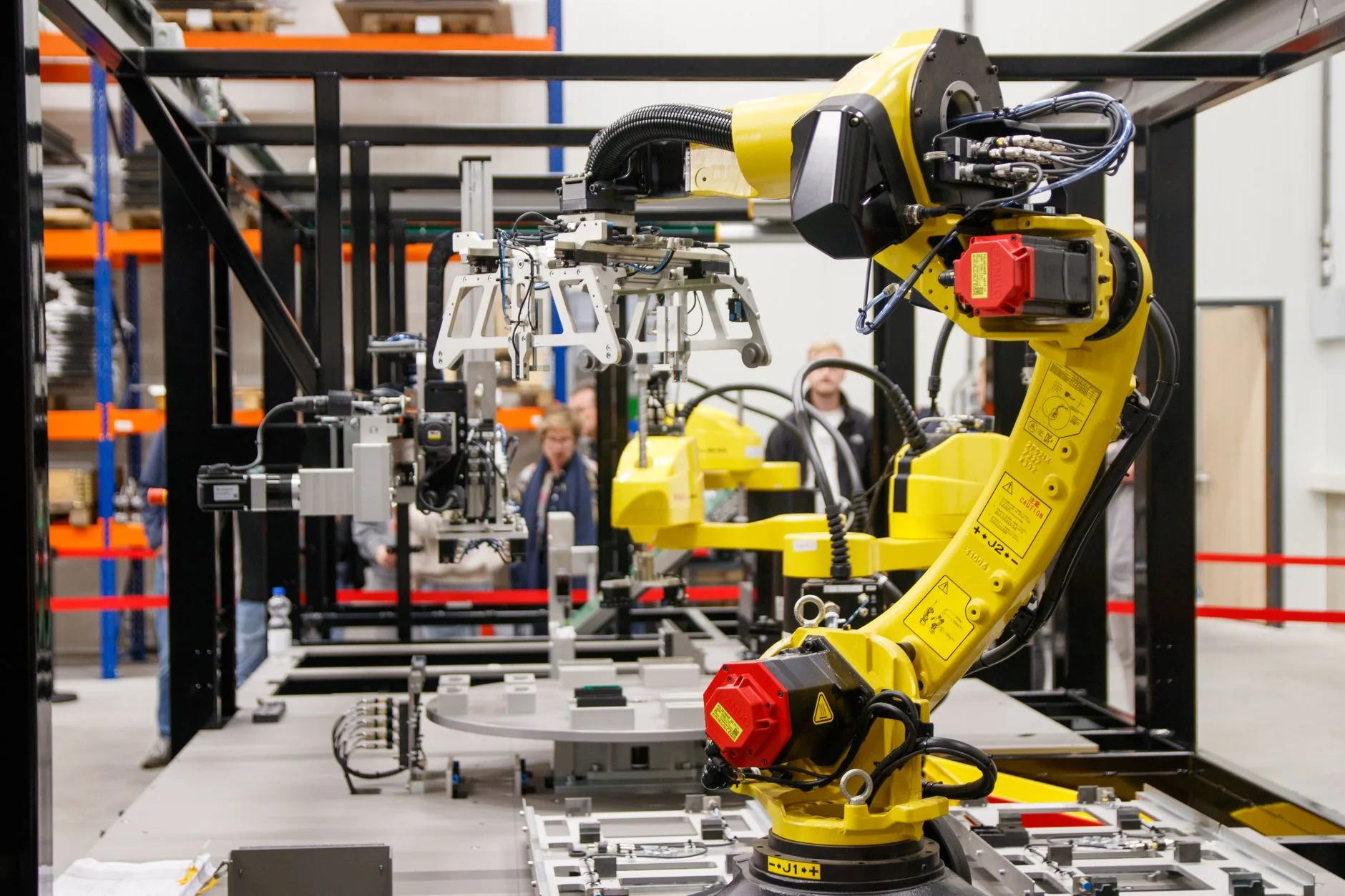
Humyn Labs, an Indian AI startup, secured $47 million in a funding round led by Accel, reported on November 18, 2026. This capital infusion is earmarked to address a critical bottleneck in the US robotics and AI industry: the scarcity of specialized training data for physical AI systems. For founders building in AI or robotics, this investment highlights the growing, cross-border market opportunity in foundational AI services and the strategic importance of specialized data supply chains.
Quick takeaways
- Humyn Labs raised $47 million on November 18, 2026, led by Accel, with participation from Nexus Venture Partners and Lightspeed Venture Partners.
- The funding targets the critical shortage of specialized training data required by US robotics and AI developers for physical AI applications.
- The Bengaluru-headquartered company leverages India's skilled workforce for high-quality data collection, annotation, and synthetic data generation.
- This investment underscores India's emerging role in the global AI supply chain, particularly for foundational data services.
- The company plans a small California team to manage US client relations, signaling a direct cross-border operational strategy.
Humyn Labs' $47 Million Infusion and Strategic Backing
Humyn Labs, an AI startup based in Bengaluru, India, announced on November 18, 2026, that it has closed a $47 million funding round. Accel led this significant investment. Nexus Venture Partners and Lightspeed Venture Partners also participated in the round TechCrunch, 2026. This capital injection follows an earlier $2.5 million seed round secured by Humyn Labs in early 2026, which saw participation from Nexus Venture Partners and Lightspeed Venture Partners as well Inc42, 2026. The rapid progression from a seed round to a $47 million growth round within the same year signals investor confidence in Humyn Labs' business model and the market demand it addresses.
The primary mission of Humyn Labs is to collect and supply specialized training data for US robotics and AI developers Inc42, 2026. This focus on a specific, high-value niche within the broader AI market differentiates the company. While general data annotation services are abundant, the need for specialized data tailored for complex physical AI systems, such as autonomous robots or industrial automation, remains a significant challenge for developers. Accel's lead in this round indicates a strategic bet on this particular segment of the AI data market, recognizing it as a foundational component for the advancement of robotics and AI in the United States. For founders, this demonstrates that large-scale funding is available for infrastructure plays that address core operational bottlenecks in emerging, capital-intensive sectors like physical AI. The investment underscores that even in a rapidly evolving tech landscape, solving fundamental problems with a clear value proposition can attract substantial capital. The involvement of multiple prominent venture capital firms, including repeat investors from the seed round, also suggests a validation of Humyn Labs' execution capabilities and market traction since its earlier funding. This collective backing allows Humyn Labs to aggressively scale its operations, expand its data collection methodologies, and solidify its position as a critical supplier in the global AI supply chain.
Addressing the Data Bottleneck in Physical AI
The core problem Humyn Labs aims to solve is the critical shortage of specialized training data for US robotics and AI developers Inc42, 2026. Physical AI, encompassing robots, autonomous vehicles, and smart industrial systems, demands a unique type of data compared to traditional software AI applications. These systems operate in complex, dynamic real-world environments, requiring vast amounts of highly accurate, context-rich data to learn and adapt. This data must reflect diverse scenarios, environmental conditions, object interactions, and edge cases that a robot might encounter. Without such specialized datasets, AI models struggle to achieve the robustness, reliability, and safety required for real-world deployment. The bottleneck is not merely about volume; it is about the quality, diversity, and specificity of the data.
Developing AI for physical systems involves training models to interpret sensor inputs—from cameras, LiDAR, radar, and tactile sensors—and translate them into actionable decisions in the physical world. This requires data that is not only meticulously labeled but also captures temporal sequences, object relationships, and environmental nuances. For instance, training a robotic arm for a manufacturing task requires data on object deformation, varying lighting, occlusions, and human-robot interaction. Similarly, autonomous driving systems need extensive datasets covering diverse weather conditions, road types, traffic situations, and pedestrian behaviors. The cost and complexity of collecting, annotating, and validating such data in-house are often prohibitive for individual robotics companies, especially startups. This creates a significant market gap for specialized data providers.
Humyn Labs is positioning itself to bridge this gap by offering a dedicated service for these complex data needs. The company's focus on "specialized" data implies a deeper understanding of robotics and AI development workflows, moving beyond generic image or text annotation. This could involve 3D point cloud annotation, semantic segmentation for complex scenes, object tracking across video frames, or synthetic data generation tailored to specific simulation environments. The overall AI data market is projected to exceed $10 billion by 2030 TechCrunch, 2026, and specialized data for physical AI represents a high-growth, high-value segment within this larger market. Companies that can reliably supply this critical input stand to become indispensable partners for the next generation of AI innovation. For founders in the robotics and AI space, this highlights the necessity of either building robust internal data pipelines or strategically partnering with specialized providers like Humyn Labs to accelerate development and deployment of their physical AI products. The investment in Humyn Labs validates the thesis that data infrastructure is as crucial as compute power for advanced AI.
Leveraging India's Workforce for Global AI
Humyn Labs' operational strategy hinges on leveraging India's large, skilled workforce for data collection and annotation TechCrunch, 2026. This approach is a cornerstone of its business model, allowing the company to offer high-quality, specialized data at a competitive scale. India has long been recognized for its vast talent pool in engineering, IT, and data services, making it a strategic hub for labor-intensive, knowledge-based operations. For the intricate demands of AI training data, this translates into access to a workforce capable of understanding complex instructions, maintaining high levels of accuracy, and adapting to evolving annotation guidelines. The company's headquarters in Bengaluru, India TechCrunch, 2026, a major tech hub, further reinforces its ability to attract and retain such talent.
The specific methodologies employed by Humyn Labs include synthetic data generation and human-in-the-loop validation TechCrunch, 2026. Synthetic data involves creating artificial datasets that mimic real-world data, often generated in simulated environments. This approach is particularly valuable for physical AI, where collecting real-world data for rare or dangerous scenarios can be impractical or impossible. India's engineering talent can contribute to developing the algorithms and environments for generating high-fidelity synthetic data, ensuring it is relevant and robust for training advanced AI models. However, synthetic data alone is often insufficient. Real-world data, along with human oversight, remains critical. This is where "human-in-the-loop" validation becomes essential. This process involves human annotators reviewing, correcting, and validating both real and synthetic data, ensuring its accuracy and quality before it is fed into AI models. India's workforce provides the scale and skill necessary to implement these labor-intensive validation processes effectively, offering a critical layer of quality control.
The strategic decision to base operations in India for global AI data supply highlights a growing trend in the global technology landscape. As AI development becomes increasingly resource-intensive, companies are looking beyond their domestic borders for specialized services and talent. India's emergence as a key player in supplying foundational data underscores its evolving role from IT services to a critical component of the global AI supply chain. This model allows US robotics and AI developers to access high-quality, specialized data without incurring the significant operational overhead of building and managing large internal data teams. For founders considering international expansion or leveraging global talent pools, Humyn Labs' success demonstrates the viability of building a globally focused service company from a talent-rich, cost-effective base like India, catering to high-demand segments in advanced technology markets. This cross-border synergy is becoming a defining characteristic of the modern AI ecosystem, where specialized expertise and efficient resource allocation drive innovation.
The Founders and Their Vision for Physical AI Data
Humyn Labs was founded by Aravind Reddy, who serves as CEO, Shishir Bhargava as COO, and Neha Singh as CTO TechCrunch, 2026. This leadership triumvirate brings together distinct roles essential for scaling a venture-backed company in the specialized AI data market. Aravind Reddy, as CEO, is responsible for the overall strategic direction, investor relations, and market positioning of Humyn Labs. His role would involve identifying market opportunities, forging key partnerships, and driving the company's growth trajectory in a competitive landscape. The successful acquisition of $47 million in funding, led by Accel, points to Reddy's ability to articulate the company's vision and secure significant financial backing from prominent investors.
Shishir Bhargava, as COO, is tasked with overseeing Humyn Labs' operational execution. In a company that relies heavily on a large, skilled workforce for data collection and annotation, the COO's role is critical for ensuring efficiency, quality control, and scalable processes. Bhargava would be responsible for optimizing the company's data pipelines, managing the workforce in India, and ensuring timely delivery of specialized datasets to US clients. The complexity of handling diverse data types—from real-world sensor data to synthetic environments—and maintaining high accuracy standards requires robust operational leadership. His focus would be on translating the company's strategic goals into day-to-day operational realities, ensuring that Humyn Labs can meet the demanding requirements of physical AI developers.
Neha Singh, as CTO, leads Humyn Labs' technological development and innovation. Her responsibilities include building the platforms and tools necessary for efficient data collection, annotation, synthetic data generation, and human-in-the-loop validation. The ability to generate high-fidelity synthetic data and implement sophisticated annotation workflows for complex physical AI models requires deep technical expertise. Singh's role would involve leveraging advanced AI and machine learning techniques to automate parts of the data processing pipeline, enhance data quality, and develop proprietary solutions that give Humyn Labs a competitive edge. The integration of technology to augment human annotators is key to scaling such a business while maintaining precision. The combined expertise of Reddy, Bhargava, and Singh forms the backbone of Humyn Labs' strategy to become a leading provider of specialized training data for the global AI and robotics industry. Their collective vision centers on addressing a fundamental need in the AI development lifecycle, recognizing that the advancement of physical AI is directly dependent on the availability of high-quality, targeted data. This leadership structure reflects the multifaceted challenges and opportunities inherent in building a global data services company for a highly technical domain. For founders, this demonstrates the importance of a well-rounded executive team capable of navigating both market strategy and complex operational and technical execution.
Cross-Border Dynamics and Market Opportunity
Humyn Labs' strategy inherently involves a significant cross-border dynamic, serving US robotics and AI developers from its base in Bengaluru, India TechCrunch, 2026. This model capitalizes on the economic and talent advantages of India while directly addressing a critical need in the technologically advanced US market. The company plans to establish a small team in California to manage client relations in the US TechCrunch, 2026. This dual-location approach is strategic: the Indian team focuses on the labor-intensive and technical aspects of data production, while the California team ensures close collaboration, understanding, and responsiveness to the specific needs of US clients. This setup is crucial for building trust and ensuring that the specialized data delivered meets the precise requirements of sophisticated AI and robotics projects.
The cross-border market opportunity for services like those offered by Humyn Labs is expanding rapidly. As AI development globalizes, companies are increasingly seeking specialized expertise and cost-effective solutions wherever they can be found. India, with its large pool of English-speaking, technically proficient graduates, has become a natural fit for data annotation, engineering, and research support for global AI initiatives. This trend signifies a shift from traditional outsourcing models to more integrated partnerships where Indian companies become critical components of the global AI supply chain, providing foundational services that enable innovation in leading tech markets. For US-based robotics and AI founders, this means access to a scalable, high-quality data pipeline that can significantly reduce their operational costs and accelerate development cycles. Instead of diverting valuable engineering resources to data collection and annotation, they can leverage specialized providers to focus on core AI model development and product innovation.
The market opportunity extends beyond cost savings. It is also about accessing specialized skills that might be scarce domestically. As physical AI becomes more complex, the demand for annotators who understand 3D environments, sensor fusion, and robotics-specific nuances increases. Companies like Humyn Labs can cultivate this specialized workforce, offering expertise that might be difficult to build in-house. This cross-border collaboration fosters a symbiotic relationship: Indian companies gain access to cutting-edge AI projects and global capital, while US companies gain access to essential resources for their AI development. This dynamic highlights a broader trend for founders: identifying critical, underserved infrastructure needs in advanced tech sectors and building globally distributed teams to meet those needs. The success of Humyn Labs will likely inspire other startups to explore similar cross-border models, leveraging regional strengths to address global technological challenges, particularly as the AI data market continues its projected growth beyond $10 billion by 2030 TechCrunch, 2026. The strategic placement of a US client relations team demonstrates an understanding that while production can be global, client intimacy often requires local presence.
The Broader AI Data Market and Future Implications
The AI data market is projected to exceed $10 billion by 2030 TechCrunch, 2026. This growth is driven by several factors, including the increasing complexity of AI models, the proliferation of AI applications across industries, and the continuous need for high-quality, diverse datasets to train and validate these models. As AI moves from research labs into real-world deployments—especially in physical domains like robotics, autonomous vehicles, and industrial automation—the demand for data that accurately reflects varied, dynamic environments intensifies. This is not merely about labeling images or text; it involves sophisticated annotation of 3D point clouds, video sequences, sensor fusion data, and the generation of synthetic data for simulation-based training.
The implications for founders are significant. First, for those building AI models, access to specialized, high-quality data will be a key differentiator. Companies that can effectively source or generate the right data will have a competitive edge in developing robust and reliable AI products. This may mean investing in internal data annotation capabilities, partnering with specialized providers like Humyn Labs, or developing novel data generation techniques. Second, for founders looking to build businesses around AI, the data market itself presents a massive opportunity. Humyn Labs' success demonstrates that there is substantial capital available for companies that solve the foundational problem of data supply. This could involve developing new annotation tools, creating platforms for synthetic data generation, or building specialized data collection services for niche AI applications. The market is segmented, with different needs for computer vision, natural language processing, audio processing, and, critically, physical AI.
The projected market size also suggests that the demand for data is not a temporary trend but a fundamental requirement for the AI era. As AI models become more sophisticated and generalizable, they still require vast amounts of curated data to learn from. Furthermore, the concept of continuous learning and MLOps (Machine Learning Operations) means that data pipelines must be ongoing, providing fresh, relevant data to update and improve deployed AI systems. This creates a recurring revenue opportunity for data providers. The investment in Humyn Labs is a clear signal that investors view specialized AI data as a critical, long-term infrastructure play. For founders, understanding these market dynamics and identifying specific underserved niches within the broader AI data ecosystem can unlock significant entrepreneurial opportunities. Whether it's developing tools, providing services, or creating new data sources, the $10 billion market projection indicates a fertile ground for innovation and value creation in the coming years. The focus on physical AI by Humyn Labs underscores that some of the most challenging, and thus valuable, data problems lie in enabling AI to interact safely and effectively with the physical world.
Reader questions.
01What is Humyn Labs' primary mission?
Humyn Labs' primary mission is to collect and supply specialized training data for US robotics and AI developers, addressing a critical bottleneck in the physical AI industry [Inc42, 2026](https://inc42.com/buzz/humyn-labs-raises-47-mn-to-collect-training-data-for-robots/).02Who led the $47 million funding round for Humyn Labs?
The $47 million funding round for Humyn Labs was led by Accel, with participation from Nexus Venture Partners and Lightspeed Venture Partners [TechCrunch, 2026](https://techcrunch.com/2026/11/18/accel-backs-indias-humyn-labs-to-supply-training-data-needed-by-u-s-robotics-ai-developers/).03How does Humyn Labs leverage India's workforce?
Humyn Labs leverages India's large, skilled workforce for data collection and annotation, including synthetic data generation and human-in-the-loop validation, to produce high-quality data for its clients [TechCrunch, 2026](https://techcrunch.com/2026/11/18/accel-backs-indias-humyn-labs-to-supply-training-data-needed-by-u-s-robotics-ai-developers/).04Where are Humyn Labs' headquarters located, and what are their plans for a US presence?
Humyn Labs' headquarters are located in Bengaluru, India. The company plans to establish a small team in California to manage client relations in the US [TechCrunch, 2026](https://techcrunch.com/2026/11/18/accel-backs-indias-humyn-labs-to-supply-training-data-needed-by-u-s-robotics-ai-developers/).05What is the projected size of the overall AI data market?
The overall AI data market is projected to exceed $10 billion by 2030 [TechCrunch, 2026](https://techcrunch.com/2026/11/18/accel-backs-indias-humyn-labs-to-supply-training-data-needed-by-u-s-robotics-ai-developers/).
Continue reading



The Entrepreneur Story
Is your story worth telling?
We feature founders who are building something real. Apply and we'll be in touch.
Apply to be featured →Stay sharp.
Ideas that move.
Founder stories, emerging ventures, and essays on what's next — straight to your inbox.
Unsubscribe any time.