
Newcleo's Micro-Reactors: Powering AI Data Centers, Eyeing IPO
Newcleo, a European startup, plans a multi-billion euro IPO, developing underground nuclear micro-reactors to power AI data centers and sustainably meet AI's escalating energy demands.
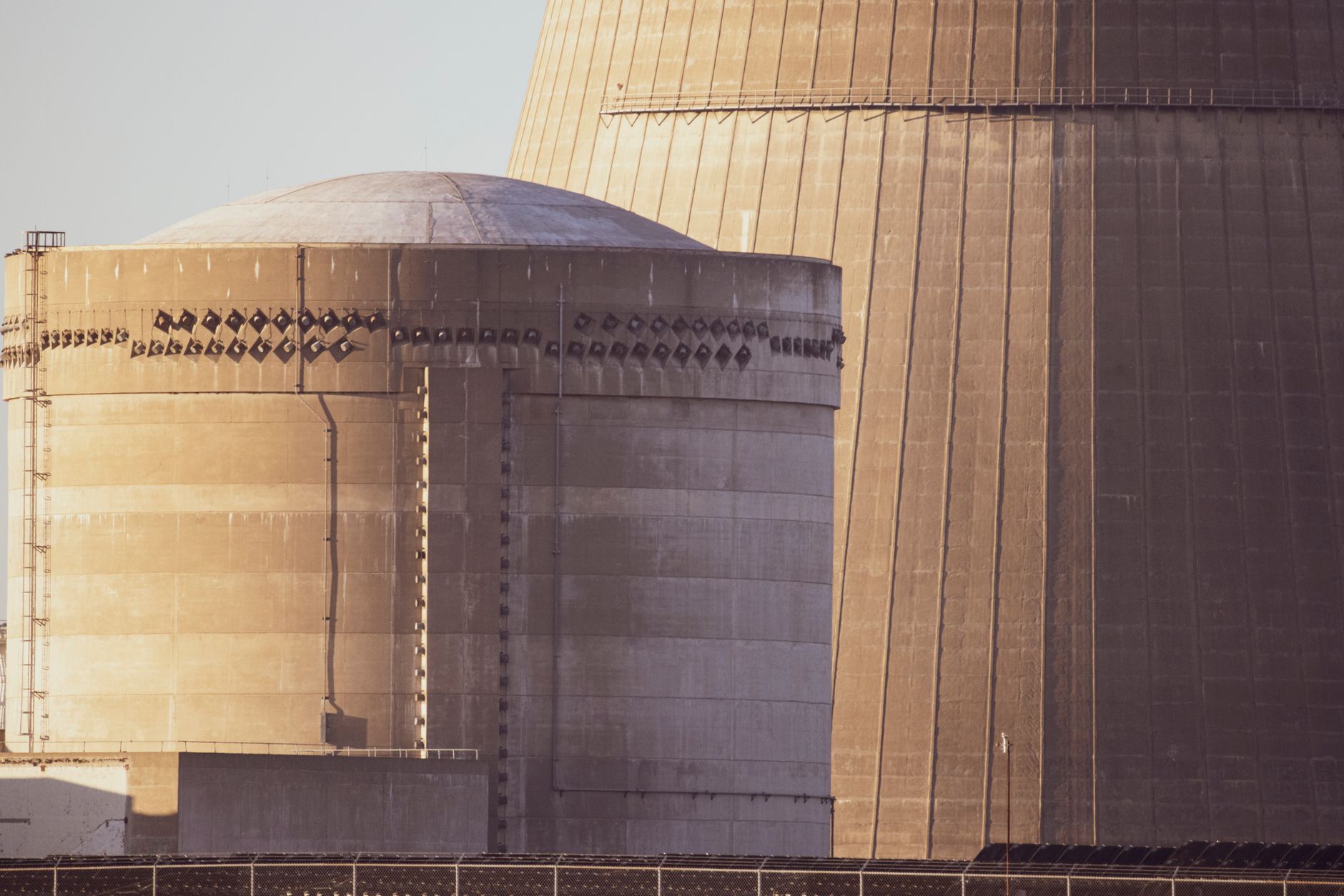
Newcleo, a European hard-tech startup, plans to launch an IPO within the next 18 months, potentially by early 2026, aiming for a valuation in the "billions of euros" as it develops underground nuclear micro-reactors to power the burgeoning energy demands of AI data centers Fortune, 2024. This move signals a significant shift in infrastructure investment, presenting a new category of energy solutions for founders grappling with escalating operational costs and sustainability pressures in the era of compute-intensive AI.
Quick takeaways
- Newcleo, a European startup, plans an IPO within 18 months, targeting a valuation in the "billions of euros."
- The company develops underground, modular Lead-cooled Fast Reactors (LFRs) to power AI data centers.
- Newcleo has raised €400 million, including €300 million in 2022 and an additional €100 million in 2024.
- Its core technology is designed to burn existing nuclear waste as fuel, addressing sustainability concerns.
- Initial deployment targets include a prototype reactor in France and a commercial LFR in the UK by 2030.
The AI Power Crisis and Newcleo's Hard-Tech Solution
The rise of artificial intelligence has created an unprecedented demand for computational power. This demand, in turn, translates directly into an escalating need for energy. AI data centers, operated by companies from Microsoft to OpenAI, are projected to consume electricity equivalent to that of small cities Fortune, 2024. Traditional energy grids, often reliant on fossil fuels or intermittent renewables, struggle to meet this constant, high-density power requirement sustainably and reliably. This energy crisis represents a critical choke point for AI innovation and deployment, creating a profound market gap for novel power solutions.
Newcleo, headquartered in London with R&D operations in Italy and France, is positioning itself to fill this gap with advanced nuclear technology Fortune, 2024. The company’s core technology involves developing Lead-cooled Fast Reactors (LFRs), which are designed to be modular and installed underground Fortune, 2024. These micro-reactors promise a continuous, high-density power supply directly at the point of consumption, mitigating transmission losses and grid strain. Newcleo's strategy involves more than just power generation; it addresses the sustainability challenge of nuclear energy by designing its reactors to burn existing nuclear waste, such as depleted uranium and reprocessed spent fuel, as fuel Fortune, 2024. This dual benefit of clean power and waste reduction positions Newcleo as a contender in the hard-tech energy sector.
The company has already secured substantial financial backing, raising a total of €400 million ($440 million) from investors including Exor Ventures and LIFTT Fortune, 2024. This includes €300 million raised in 2022 and an additional €100 million in 2024, demonstrating investor confidence in its long-term vision and technological approach Fortune, 2024. The planned IPO, targeting a valuation in the "billions of euros" by early 2026, would represent a significant milestone for a hard-tech startup in Europe, signaling a potential resurgence of investor appetite for capital-intensive, long-horizon projects that tackle fundamental infrastructure challenges Fortune, 2024. For founders, Newcleo’s trajectory highlights the growing opportunity and imperative to solve critical infrastructure problems, even those requiring decades of development and substantial upfront capital. The success of such ventures could redefine the scope of what venture capital and public markets are willing to fund in the pursuit of foundational technological advancements.
Stefano Buono's Bet on Nuclear: From Biotech to Deep Tech
Newcleo was founded by Stefano Buono, an entrepreneur with a track record in scaling complex, science-driven businesses. Buono previously served as the CEO of Advanced Accelerator Applications (AAA), a company focused on radiopharmaceuticals Fortune, 2024. His background at AAA, which specializes in molecular nuclear medicine and precision oncology, provided him with direct experience navigating highly regulated industries, managing intricate scientific development processes, and bringing advanced technologies to market. While radiopharmaceuticals differ in application from nuclear power generation, both fields operate at the intersection of advanced physics, stringent safety protocols, and long development cycles. This prior experience equipped Buono with a deep understanding of the challenges inherent in commercializing deep-tech innovations, particularly those involving radioactive materials and complex engineering.
Buono's decision to pivot from biotech to the nuclear energy sector with Newcleo represents a calculated bet on a different, yet equally foundational, scientific challenge. The stakes are substantial: Newcleo aims to re-engineer a critical piece of global energy infrastructure. The transition from developing targeted therapies for medical applications to designing modular nuclear reactors for industrial power consumption underscores a broader trend among seasoned founders: applying lessons learned from one complex, regulated sector to another. Buono’s experience at AAA in managing scientific teams, securing regulatory approvals, and scaling manufacturing processes offers a transferable skillset crucial for Newcleo’s ambitious goals. His ability to attract significant early-stage capital, totaling €400 million, reflects investor confidence not only in Newcleo’s technology but also in Buono’s leadership and prior execution capabilities Fortune, 2024.
The move into nuclear micro-reactors is also driven by the escalating energy demands of AI, a problem that did not exist in its current form during Buono's tenure at AAA. This pivot demonstrates a founder's responsiveness to emerging global challenges and the conviction that deep scientific solutions are required. For other founders, Buono's trajectory provides a case study in leveraging past successes in regulated industries to tackle new, high-impact problems. It highlights the value of a founder's ability to identify fundamental shifts in market needs, such as the AI power crisis, and to assemble the necessary scientific, engineering, and financial resources to address them, even if it requires venturing into a new, capital-intensive domain. His leadership in navigating both the technical complexities of nuclear physics and the regulatory landscapes of multiple European nations will be critical to Newcleo's success as it moves towards its first deployments and eventual IPO.
Engineering the Future: Lead-Cooled Fast Reactors and Waste Reprocessing
Newcleo's foundational technology centers on Lead-cooled Fast Reactors (LFRs), a class of advanced nuclear reactors designed for improved safety, efficiency, and sustainability. Unlike traditional light-water reactors that use water as a coolant and neutron moderator, LFRs employ molten lead Fortune, 2024. Lead offers several advantages: it has a high boiling point, allowing reactors to operate at higher temperatures and pressures without boiling, which enhances thermal efficiency. Furthermore, lead is chemically inert, reducing the risk of chemical reactions with air or water that could lead to hydrogen explosions, a concern in some reactor designs. Its high density also provides excellent shielding against radiation. The "fast" in Lead-cooled Fast Reactors refers to the use of fast neutrons, which allows for more efficient fuel burn-up and, crucially, enables the transmutation of nuclear waste.
A key design principle for Newcleo's LFRs is modularity. Modular reactors are factory-built components that can be assembled on-site, reducing construction time, costs, and risks compared to large, custom-built nuclear power plants. This modular approach is intended to facilitate rapid deployment and scalability, making them suitable for distributed power generation, such as powering individual data centers Fortune, 2024. The company envisions these reactors being installed underground, a design choice that enhances physical security against external threats and provides a natural containment barrier in the event of an accident Fortune, 2024. This underground placement also minimizes the above-ground footprint, potentially easing siting challenges in dense industrial areas.
Perhaps the most significant differentiator for Newcleo is its ability to utilize existing nuclear waste as fuel Fortune, 2024. The reactors are designed to burn depleted uranium and reprocessed spent fuel, materials that constitute a significant portion of the world's accumulated nuclear waste. By consuming these long-lived radioactive isotopes, Newcleo's technology aims to reduce the volume and radiotoxicity of nuclear waste, transforming a liability into an energy source. This "closed fuel cycle" approach offers a compelling answer to one of nuclear power's most persistent criticisms: the generation of hazardous, long-term waste. This sustainability aspect is a core part of Newcleo's value proposition, particularly for environmentally conscious clients like major tech companies.
Newcleo's commercial reactors are designed to produce 30 MW (electric) output, with initial plans for 200 MWth (thermal) lead-cooled fast neutron reactors Fortune, 2024. This scale is well-suited for powering large industrial facilities or clusters of data centers. The company's R&D operations are based in Italy and France, leveraging European nuclear expertise, while its headquarters in London provide a strategic base for international operations and financing Fortune, 2024. The combination of advanced reactor design, modularity, underground deployment, and waste-burning capability positions Newcleo at the forefront of a new wave of nuclear energy innovation.
The Path to Commercialization: Funding, Prototypes, and Market Entry
Newcleo’s journey from R&D to commercial deployment is structured around a multi-stage plan, underpinned by significant capital raises and ambitious timelines. The company has successfully secured €400 million ($440 million) in funding to date, with €300 million raised in 2022 and an additional €100 million in 2024 Fortune, 2024. This capital, provided by investors such as Exor Ventures and LIFTT, is critical for funding the lengthy and capital-intensive development cycles characteristic of nuclear technology Fortune, 2024. Unlike software startups, deep tech ventures like Newcleo require substantial investment in physical infrastructure, materials science, and regulatory compliance long before generating revenue.
Newcleo aims for its first prototype reactor, with a 400 MWth (thermal) output, to be operational in France by 2030 Fortune, 2024. Concurrently, the company targets the deployment of its first commercial LFR, a 200 MWth (thermal) unit, in the United Kingdom within the same timeframe Fortune, 2024. These initial deployments will serve as crucial validation points for the technology, demonstrating its safety, operational efficiency, and economic viability. Achieving these targets within six years represents an aggressive schedule, given the rigorous regulatory approval processes for nuclear facilities in both France and the UK. Navigating these regulatory landscapes, which involve multiple governmental agencies and public consultations, will be a significant challenge.
The long-term vision for Newcleo extends well beyond these initial prototypes. By 2040, the company targets having 12 to 24 operational reactors, specifically to supply the massive power demands of AI data centers Fortune, 2024. This ambitious scale-up underscores the anticipated growth in AI-driven energy consumption and Newcleo's belief in its ability to become a foundational energy provider for the digital economy. The focus on AI data centers as a primary market segment is strategic; these facilities require constant, reliable, and high-density power, attributes that nuclear micro-reactors are uniquely positioned to provide. Furthermore, major tech companies are increasingly seeking sustainable and carbon-neutral energy sources, aligning with Newcleo's waste-burning technology.
Newcleo's planned IPO within 18 months, with a projected valuation in the "billions of euros," highlights the company's confidence in its trajectory and the broader investor interest in hard-tech solutions to global challenges Fortune, 2024. A successful public offering would provide Newcleo with additional capital to accelerate its R&D, expand its manufacturing capabilities, and navigate the complex permitting processes for widespread deployment. It would also validate the investment model for deep-tech ventures that require substantial upfront capital and long development timelines. This market entry strategy into a "new category of energy infrastructure" for AI data centers could redefine how digital industries secure their power, moving beyond traditional grid reliance to more localized and dedicated nuclear solutions.
Competing for Power: The Broader Advanced Nuclear Landscape
Newcleo operates within the broader context of the advanced nuclear energy sector, a field characterized by innovation aimed at addressing the limitations of conventional nuclear power. This landscape includes numerous companies developing various Small Modular Reactors (SMRs) and other advanced reactor designs, each with unique technological approaches and target markets. While Newcleo's specific focus on Lead-cooled Fast Reactors (LFRs) and its explicit targeting of AI data centers provide a distinct niche, it faces the general challenges inherent in bringing any new nuclear technology to market: immense capital requirements, lengthy regulatory approval processes, and the need to build public trust.
Many advanced nuclear startups are exploring different coolants, fuel cycles, and reactor sizes. Some are developing molten salt reactors, others gas-cooled reactors, and still others are focused on alternative fast reactor designs. The common thread among these innovators is the pursuit of reactors that are inherently safer, more efficient, and produce less waste than their predecessors. Newcleo's differentiation lies in several key areas. Its choice of lead as a coolant offers inherent safety benefits due to its high boiling point and chemical inertness, reducing operational risks Fortune, 2024. The modular nature of its LFRs aims for faster deployment and scalability, a critical factor for meeting rapidly growing industrial demands.
However, Newcleo’s most significant competitive edge, as outlined in its strategy, is its ability to burn existing nuclear waste as fuel Fortune, 2024. This capability not only addresses a major environmental concern associated with nuclear power but also provides a secure and abundant fuel source, potentially reducing reliance on fresh uranium mining. This "closed fuel cycle" approach offers a compelling sustainability narrative that resonates with corporate clients and governments pushing for decarbonization. For AI data center operators, who are under increasing pressure to demonstrate green credentials, a power source that actively reduces nuclear waste could be highly attractive.
The capital intensity of developing and deploying hard tech like nuclear reactors is a significant barrier to entry, placing these ventures in a different league than typical software or even biotech startups. Newcleo's ability to raise €400 million demonstrates its capacity to attract patient capital willing to invest in long-term, high-impact projects Fortune, 2024. In the broader advanced nuclear space, government support and national energy strategies play a crucial role. Countries like France and the UK, where Newcleo plans its initial deployments, have expressed renewed interest in nuclear power as a component of their energy security and climate goals Fortune, 2024. This alignment with national priorities can provide regulatory support and potential funding mechanisms that are essential for scaling nuclear technology.
Scaling nuclear technology, even modular designs, faces unique challenges compared to renewables or traditional fossil fuels. The construction of a single nuclear reactor, regardless of size, involves complex engineering, manufacturing precision, and stringent quality controls. The regulatory environment demands exhaustive safety analyses and environmental impact assessments. While Newcleo's underground, modular design aims to streamline these processes, the inherent complexity of nuclear physics and safety will always necessitate a cautious, methodical approach. Newcleo's success will depend on its ability to not only innovate technologically but also to navigate these institutional and public perception hurdles effectively, distinguishing itself within a competitive and highly scrutinized sector.
Implications for Founders: Lessons from Newcleo's Ambition
Newcleo's journey offers several critical lessons for founders, particularly those operating in deep tech, hard tech, or capital-intensive industries. The company's ambition to power AI data centers with nuclear micro-reactors is a testament to identifying and tackling problems at a foundational, infrastructure level, rather than merely incremental improvements. This approach, while requiring substantial time and capital, can yield transformative impact and create entirely new market categories.
One primary takeaway is the importance of long-term vision in deep tech. Newcleo is targeting commercial deployment by 2030 and significant scale by 2040 Fortune, 2024. Such multi-decade horizons are common in fields like nuclear energy, space exploration, or advanced materials. Founders in these sectors must cultivate investor relationships that value patient capital and strategic patience over rapid returns. Newcleo's ability to secure €400 million demonstrates that large-scale, long-term funding is available for ventures addressing critical global infrastructure challenges Fortune, 2024. This requires a compelling narrative, a robust technical plan, and a credible leadership team.
The experience of Stefano Buono, Newcleo's founder, highlights the value of a strong founder's track record in navigating complex, regulated environments Fortune, 2024. His background at Advanced Accelerator Applications (AAA) in radiopharmaceuticals provided him with invaluable experience in scientific development, regulatory compliance, and scaling a deep-science company. Founders entering highly regulated fields should recognize the importance of either possessing such experience themselves or building a team that collectively has it. This expertise is not merely about technical knowledge but also about understanding the intricate processes of validation, safety, and public acceptance.
Newcleo's strategy also underscores the increasing relevance of sustainability as a core differentiator. By designing its LFRs to burn existing nuclear waste, Newcleo addresses a major environmental and public perception challenge associated with nuclear power Fortune, 2024. For founders across industries, integrating sustainability into the core product or service, rather than as an afterthought, can unlock significant market opportunities and investor interest, especially from large corporations with ambitious ESG goals. This approach transforms a potential liability into a unique selling proposition.
Furthermore, Newcleo's focused market entry into powering AI data centers illustrates the power of problem-solving at scale for specific, high-demand segments. Rather than attempting to revolutionize the entire energy grid at once, Newcleo is targeting a rapidly growing sector with acute energy needs. This allows for a more concentrated effort in product development, regulatory navigation, and customer acquisition. Founders should consider how their deep-tech solutions can address specific, high-value pain points in emerging industries, even if the broader application is still years away. The anticipated IPO of Newcleo, with a valuation in the "billions of euros," could serve as a bellwether for increased investment in hard tech and foundational infrastructure, signaling a maturation of the venture capital landscape beyond purely digital plays Fortune, 2024. This shift suggests that capital is increasingly willing to back ambitious, science-driven ventures that promise to reshape fundamental industries.
FAQ
Q: What is Newcleo's core technology? A: Newcleo's core technology involves developing Lead-cooled Fast Reactors (LFRs
Continue reading



The Entrepreneur Story
Is your story worth telling?
We feature founders who are building something real. Apply and we'll be in touch.
Apply to be featured →Stay sharp.
Ideas that move.
Founder stories, emerging ventures, and essays on what's next — straight to your inbox.
Unsubscribe any time.