
Anduril's $100B Valuation Reshapes Defense Tech VC Landscape
Anduril Industries' potential $100 billion valuation marks a pivotal moment, signaling a profound shift in venture capital interest towards defense and dual-use technologies driven by global needs.
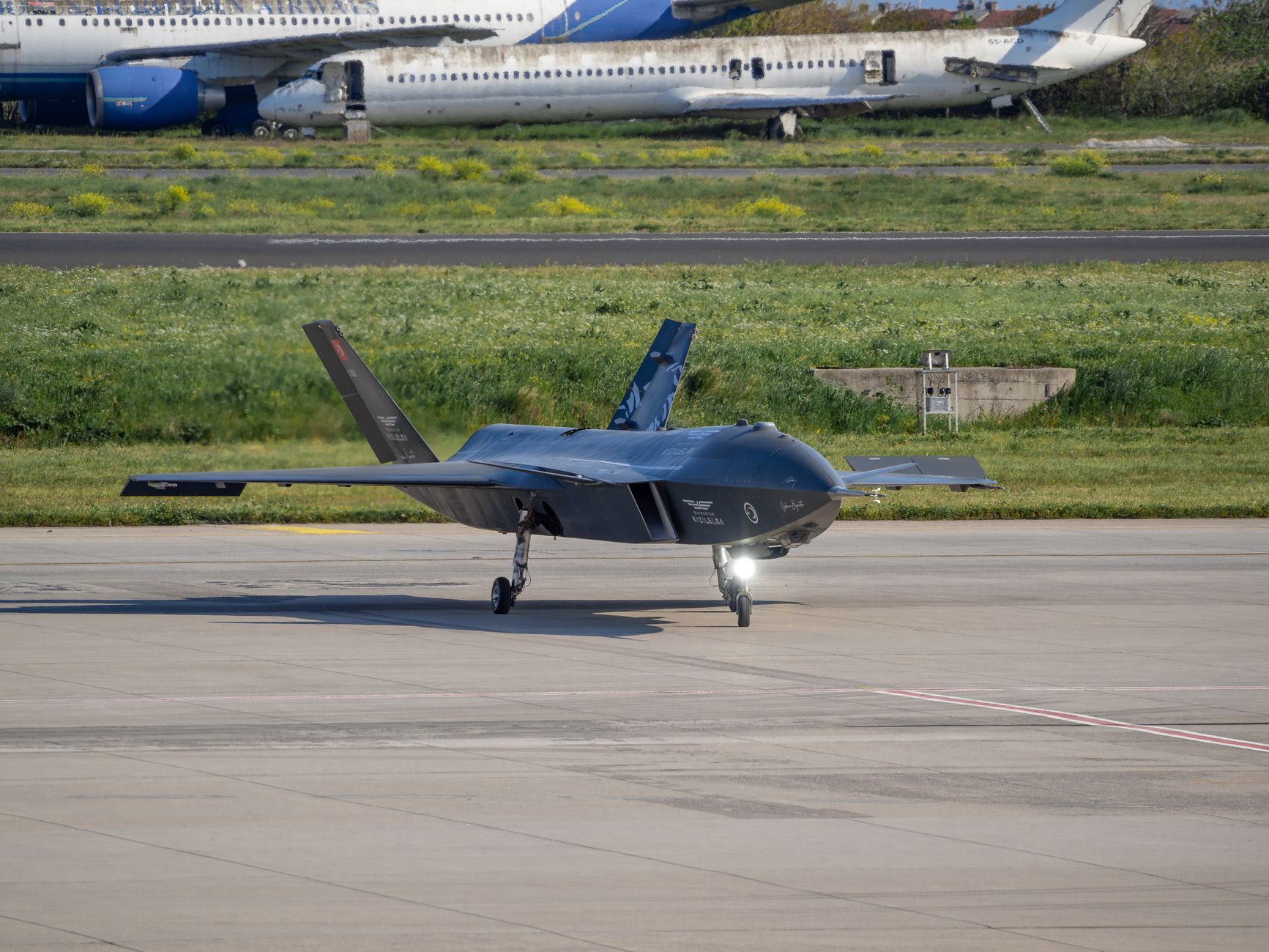
Anduril Industries is reportedly in discussions to raise funding at a staggering $100 billion valuation, a figure more than three times its valuation from the previous year TechCrunch, 2026. This potential mega-round signals a profound shift in venture capital interest towards defense and dual-use technologies, underscoring increasing investor confidence in national security startups TechCrunch, 2026. For founders, this redefines the scale of ambition and available capital within a sector previously considered niche, highlighting a new frontier for technological innovation and market opportunity.
Quick Takeaways
- Anduril Industries is reportedly seeking funding at a $100 billion valuation, tripling its previous year's mark.
- This potential mega-round signifies a profound venture capital shift towards defense and dual-use technologies.
- The surge reflects increasing investor confidence in national security startups and the urgent need for advanced military technology.
- Founders in defense tech can expect expanded market opportunities and greater access to capital, driven by global geopolitical tensions.
- Anduril’s success highlights a model of integrating commercial-style innovation into traditional defense procurement.
The $100 Billion Bet: Anduril's Valuation Surge
Anduril Industries, co-founded by Palmer Luckey and Trae Stephens, is reportedly engaging in talks for a funding round that could push its valuation to $100 billion TechCrunch, 2026. This figure represents a more than threefold increase from the company's valuation just one year prior TechCrunch, 2026. Such a substantial leap in valuation for a defense technology company marks a significant moment, not only for Anduril but for the entire venture capital landscape.
Anduril specializes in developing AI-powered defense systems and autonomous solutions TechCrunch, 2026. Its mission centers on modernizing military capabilities by integrating commercial-style innovation into traditional defense procurement TechCrunch, 2026. This approach directly challenges the long-standing, often slow, development cycles of established defense contractors. The proposed $100 billion valuation is not merely a financial milestone; it is a validation of this strategy and a clear signal of investor belief in the company's ability to execute on its ambitious goals.
The discussions around this mega-round underscore a broader trend: the growing recognition of the need for advanced technology in national security TechCrunch, 2026. For founders operating in adjacent or related sectors, this valuation provides a powerful proof point. It demonstrates that significant capital is available for companies addressing critical national security challenges with innovative, often software-first, solutions. The scale of this potential investment reflects a shift in how venture capitalists perceive risk and opportunity within the defense sector, moving past previous hesitations to embrace a market driven by urgent global demands. The capital infusion, if materialized, would enable Anduril to accelerate its research and development, expand its product portfolio, and scale its deployments, further cementing its position as a leader in the nascent defense technology space. This move positions Anduril not just as a startup success story, but as a bellwether for the entire industry, indicating a maturation and increased investor appetite for companies that can deliver rapid, impactful technological advancements to defense clients.
A New Era for Defense Tech: VC's Shifting Focus
The potential $100 billion valuation for Anduril Industries is more than an individual company's success; it signals a profound shift in venture capital interest towards defense and dual-use technologies TechCrunch, 2026. For years, venture capital largely shied away from the defense sector. The reasons were varied: long sales cycles, complex regulatory hurdles, ethical considerations, and the perception of lower returns compared to consumer tech or enterprise software. However, recent global geopolitical tensions have fundamentally altered this calculus TechCrunch, 2026. The urgency to modernize military capabilities and ensure national security has become paramount, creating an undeniable demand for rapid technological innovation.
This shift represents increasing investor confidence in national security startups TechCrunch, 2026. Traditional defense contractors, while foundational, are often perceived as slow-moving, burdened by legacy systems, and less agile in adopting cutting-edge technologies like AI and advanced autonomy. Startups, by contrast, offer the promise of speed, iterative development, and a software-first mindset that can rapidly deploy new capabilities. This divergence has created a significant market opportunity. Venture capitalists are now recognizing that the defense sector, when approached with a commercial mindset, can offer substantial returns and address critical, high-stakes problems. The surge in valuation for companies like Anduril reflects this evolving understanding.
The "dual-use" aspect of these technologies is also a key driver. Many innovations developed for defense applications, such as advanced sensors, AI-driven data analysis, autonomous navigation, and secure communication systems, have direct civilian applications. This dual potential mitigates some of the perceived market risks, offering companies multiple revenue streams and broader market appeal. For founders, this means that developing technology with defense applications no longer necessarily limits their market to government contracts. The skills and solutions honed in the demanding environment of national security can often be adapted for commercial logistics, infrastructure monitoring, disaster response, or industrial automation. This expanded market perspective makes defense tech a more attractive investment proposition for VCs. The growing recognition of the need for advanced technology in national security is not a fleeting trend but a structural change, influencing investment decisions across the board TechCrunch, 2026. This new era means founders addressing these challenges can expect a more receptive and well-capitalized investor base than ever before.
Anduril's Playbook: Integrating Commercial Innovation
Anduril Industries' reported $100 billion valuation talks highlight the potency of its core strategy: modernizing military capabilities by integrating commercial-style innovation into traditional defense procurement TechCrunch, 2026. This approach stands in stark contrast to the decades-old model prevalent within the defense industry. Traditionally, defense procurement has been characterized by lengthy, multi-year development cycles, bespoke hardware, and often, cost-plus contracts that disincentivize efficiency. Anduril, co-founded by Palmer Luckey and Trae Stephens, has instead adopted principles common in Silicon Valley: rapid prototyping, agile software development, and the use of commercial off-the-shelf components where appropriate TechCrunch, 2026.
The company specializes in developing AI-powered defense systems and autonomous solutions TechCrunch, 2026. This means focusing on software as a central component of its offerings, which allows for faster updates, feature iterations, and adaptability in the field. Unlike hardware-centric defense systems that can take years to upgrade, software-defined platforms can be improved and customized with greater agility, responding to evolving threats and operational needs more quickly. This commercial-style innovation also extends to the company's business model, which often involves delivering integrated systems that combine hardware, software, and services, rather than just selling standalone components.
For founders looking to enter or scale within the defense or dual-use sector, Anduril's playbook offers several critical lessons. First, prioritize software. The ability to iterate and deploy new capabilities through code provides a significant competitive advantage over traditional hardware-focused incumbents. Second, focus on integration. Modern defense needs often require sophisticated systems that seamlessly combine data from multiple sources, controlled by intelligent software. Third, embrace agility. The defense landscape is dynamic, and customers require solutions that can adapt quickly to new challenges. This necessitates a development methodology that allows for continuous feedback and rapid deployment of improvements, mirroring the best practices of leading tech companies. Finally, understand the customer's pain points. Anduril's success stems from identifying critical gaps in military capabilities and proposing solutions that are not just technologically advanced but also practical and deployable within existing operational frameworks. The growing recognition of the need for advanced technology in national security has created a fertile ground for companies that can deliver on these principles TechCrunch, 2026. Anduril's valuation talks underscore that commercial innovation, when strategically applied, can unlock unprecedented value in a sector hungry for change.
The Competitive Landscape and Emerging Players
Anduril Industries' reported $100 billion valuation talks position it as a dominant force within the emerging defense technology sector, but it operates within an increasingly dynamic competitive landscape. While the provided facts do not name specific competitors, the context of "national security startups" and the "modernization of military capabilities" implies a growing ecosystem of companies vying for contracts and market share TechCrunch, 2026. This landscape is characterized by a blend of established defense primes, innovative startups, and even commercial tech giants exploring defense applications for their technologies.
Traditional defense contractors, such as Lockheed Martin, Raytheon, and Boeing, remain formidable. They possess deep institutional knowledge, vast manufacturing capabilities, and long-standing relationships with government clients. However, their size and legacy systems often make them slower to adapt to rapid technological shifts, particularly in software-driven domains like AI and autonomy. This is precisely where startups like Anduril find their niche, offering faster development cycles and more integrated, cutting-edge solutions. Anduril's specialization in AI-powered defense systems and autonomous solutions allows it to target specific capability gaps that traditional players may struggle to fill quickly TechCrunch, 2026.
The rise of national security startups signifies a fragmentation of the market, with new entrants focusing on specialized areas. These might include companies developing advanced sensor technologies, cybersecurity solutions tailored for military applications, resilient communication networks, or novel approaches to drone technology and counter-drone systems. Others might focus on data fusion and analytics, leveraging AI to process vast amounts of intelligence data more efficiently. The "dual-use" nature of many of these technologies means that some companies may initially develop solutions for commercial markets before adapting them for defense, or vice-versa. This cross-pollination of innovation is a hallmark of the new defense tech era.
The increasing investment in defense tech, driven by global geopolitical tensions, has attracted a diverse array of founders and investors TechCrunch, 2026. This influx of capital and talent intensifies competition but also fosters innovation. For any founder entering this space, understanding Anduril's scale and strategic approach is crucial. It demonstrates the potential for rapid growth and significant valuation for companies that can effectively bridge the gap between commercial-grade technology and defense requirements. While Anduril's potential $100 billion valuation sets a high bar, it also validates the entire sector, signaling to other founders and investors that substantial opportunities exist for those who can deliver on the promise of advanced technology in national security. The market is expanding, driven by urgent demand for modernization, creating space for multiple players across various specialized domains.
Implications for Dual-Use Founders
Anduril Industries' reported $100 billion valuation talks carry significant implications for founders operating in the dual-use technology space. This potential mega-round is not merely a financial headline for one company; it serves as a powerful validation for the entire sector, signaling a maturing market and an unprecedented level of investor confidence. For founders developing technologies with both commercial and national security applications, this news fundamentally alters the fundraising landscape and market perception.
Firstly, the sheer scale of Anduril's valuation demonstrates that venture capital is now willing to deploy enormous sums into defense and dual-use startups TechCrunch, 2026. Historically, many VCs shied away from defense due to perceived ethical concerns, long sales cycles, and a belief that the market was too niche or slow-moving. Anduril's trajectory, and the three-fold increase in its valuation within a year, shatters these preconceptions. This means that other dual-use founders will likely find a more receptive audience among investors, who now have a clear, high-profile example of the potential returns in this sector. The "profound shift in venture capital interest" is translating into tangible opportunities for capital access TechCrunch, 2026.
Secondly, the success of Anduril validates the model of integrating commercial-style innovation into defense TechCrunch, 2026. Founders who prioritize agile development, software-first solutions, and rapid iteration can point to Anduril as proof that this approach resonates with national security clients. This encourages other startups to leverage modern tech development practices, which can lead to faster product cycles and more responsive solutions for defense needs. For dual-use companies, this also means that building a robust, commercially viable product can simultaneously serve as a strong foundation for defense applications, creating efficiency in development and market expansion.
Thirdly, the increased investment in defense tech, spurred by global geopolitical tensions, underscores the urgent demand for advanced technology in national security TechCrunch, 2026. This demand creates a significant market opportunity for founders working on AI, autonomy, cybersecurity, advanced materials, and other frontier technologies. Founders can confidently articulate the critical need for their solutions, knowing that governments are actively seeking to modernize military capabilities and are increasingly looking to innovative startups to achieve this TechCrunch, 2026.
However, challenges remain. Founders must still navigate complex government procurement processes, ensure compliance with defense regulations, and build trust with clients who value reliability and security above all else. The ethical considerations surrounding defense applications also remain a factor for some founders and investors. Despite these hurdles, Anduril's potential $100 billion valuation undeniably marks a turning point, signaling that dual-use technology is now a mainstream, high-growth sector for ambitious founders. It encourages a new generation of entrepreneurs to apply their skills to some of the most critical challenges facing nations today, with the promise of significant impact and substantial returns.
Beyond the Valuation: Market Dynamics and Future Outlook
Anduril Industries' reported pursuit of a $100 billion valuation transcends a mere financial transaction; it is a powerful indicator of fundamental shifts in market dynamics and the future outlook for the defense technology sector. This valuation surge, more than three times its previous year's mark, reflects a profound and lasting change in how both governments and investors perceive the role of advanced technology in national security TechCrunch, 2026. The market is no longer content with incremental improvements from traditional contractors; it demands rapid, disruptive innovation, a demand that startups are uniquely positioned to meet.
The underlying driver for this accelerated investment is the escalating global geopolitical tensions TechCrunch, 2026. Nations worldwide are engaged in a renewed push to modernize their military capabilities, recognizing that technological superiority is increasingly crucial for defense and deterrence. This creates a sustained, high-demand environment for companies specializing in areas like AI-powered defense systems and autonomous solutions, which Anduril exemplifies TechCrunch, 2026. The urgency of these needs translates into faster procurement cycles and a greater willingness to adopt innovative, even if unproven, technologies from agile startups.
The future outlook for defense tech is characterized by several key trends. Firstly, the emphasis on software and AI will only intensify. As conflicts become more complex and data-intensive, the ability to process information, make rapid decisions, and automate tasks through AI will be paramount. Anduril's focus on AI-powered systems positions it at the forefront of this trend TechCrunch, 2026. Secondly, autonomy will expand beyond drones to encompass a wider range of platforms, from ground vehicles to naval vessels, reducing human risk and increasing operational efficiency. Companies developing robust, secure, and intelligent autonomous systems will find a ready market. Thirdly, the "dual-use" nature of technologies will continue to attract a broader investor base and talent pool, fostering a more dynamic innovation ecosystem. The convergence of commercial best practices with defense requirements will drive further breakthroughs.
This market environment suggests a sustained period of growth for national security startups. The increasing investor confidence in this sector is not a fleeting phenomenon but a response to undeniable global realities TechCrunch, 2026. For founders, this means that the opportunities in defense tech are no longer marginal but central to global strategic priorities. The pathway forged by companies like Anduril demonstrates that significant capital, market influence, and societal impact are attainable for those who can deliver cutting-edge solutions to critical national security challenges. The era of defense tech as a niche, slow-growth sector is over; a new age of rapid innovation and significant investment has begun.
FAQ
Q: What is the significance of Anduril Industries' reported $100 billion valuation? A: The reported $100 billion valuation, more than three times its previous year's valuation, signals a profound shift in venture capital interest towards defense and dual-use technologies TechCrunch, 2026. It underscores increasing investor confidence in national security startups and the growing recognition of the need for advanced technology in national security TechCrunch, 2026.
Q: Who are the co-founders of Anduril Industries? A: Anduril Industries was co-founded by Palmer Luckey and Trae Stephens TechCrunch, 2026.
Q: What type of technology does Anduril Industries specialize in? A: Anduril Industries specializes in developing AI-powered defense systems and autonomous solutions TechCrunch, 2026.
Q: Why is there an increased investment in defense technology now? A: The increased investment in defense technology is influenced by current global geopolitical tensions and a growing recognition of the need for advanced technology in national security TechCrunch, 2026. This drives the urgency to modernize military capabilities.
Q: How does Anduril aim to modernize military capabilities? A: Anduril aims to modernize military capabilities by integrating commercial-style innovation into traditional defense procurement TechCrunch, 2026. This approach emphasizes agile development and software-first solutions.
Continue reading



The Entrepreneur Story
Is your story worth telling?
We feature founders who are building something real. Apply and we'll be in touch.
Apply to be featured →Stay sharp.
Ideas that move.
Founder stories, emerging ventures, and essays on what's next — straight to your inbox.
Unsubscribe any time.