
Richard Branson: The Dropout Who Built 400 Companies 400 Companies
A dyslexic schoolboy was told he would end up in prison or a millionaire. He chose a third option: build a brand that rents its name to the world.
The headmaster's prophecy
On his last day at Stowe School in 1966, Richard Branson stood in the office of headmaster Robert Drayson and received a parting line that has been repeated at every Virgin product launch since. Drayson told the sixteen-year-old that he would either end up in prison or become a millionaire. Branson, dyslexic and incapable of pretending to care about Latin verbs, took it as a compliment.
He would eventually manage both. In 1971, HM Customs caught him running a purchase-tax dodge on export-stock records; he spent one night in a cell at Dover and settled the fine with his mother's help. By 2000 he was Sir Richard, knighted at Buckingham Palace for services to entrepreneurship. The space between those two facts is one of the most studied careers in modern business, and most people get the lesson wrong.
The lesson is not that Branson is lucky, charming, or allergic to risk. The lesson is that he built a brand before he built a company, and spent the next fifty years renting that brand to industries that deserved disruption.
From a church crypt to Tubular Bells
Branson dropped out of Stowe to launch Student, a youth-culture magazine aimed at the generation that was marching against Vietnam while their parents read the Daily Telegraph. The first issue appeared in January 1968 from an office in the crypt of St John's Church, off London's Bayswater Road. Branson, still a teenager, cold-called Mick Jagger, R.D. Laing and anyone else who might lift his print run.
Student never made real money. What it did was teach him two things: how to sell advertising, and that his readers desperately wanted cheap records. In 1970 he started a mail-order discount record business from the same crypt and called it Virgin because, as he later admitted, everyone in the room was new to business. Within a year he had a shop on Oxford Street. By 1972 he had bought a rundown country house in Oxfordshire and converted it into The Manor, one of Britain's first residential recording studios.
In May 1973, Virgin Records released its first album: Mike Oldfield's Tubular Bells. Oldfield was 19, the record had no vocals, and no major label would touch it. It sold over 15 million copies, soundtracked The Exorcist, and funded everything Branson has done since.
The Virgin playbook, discovered by accident
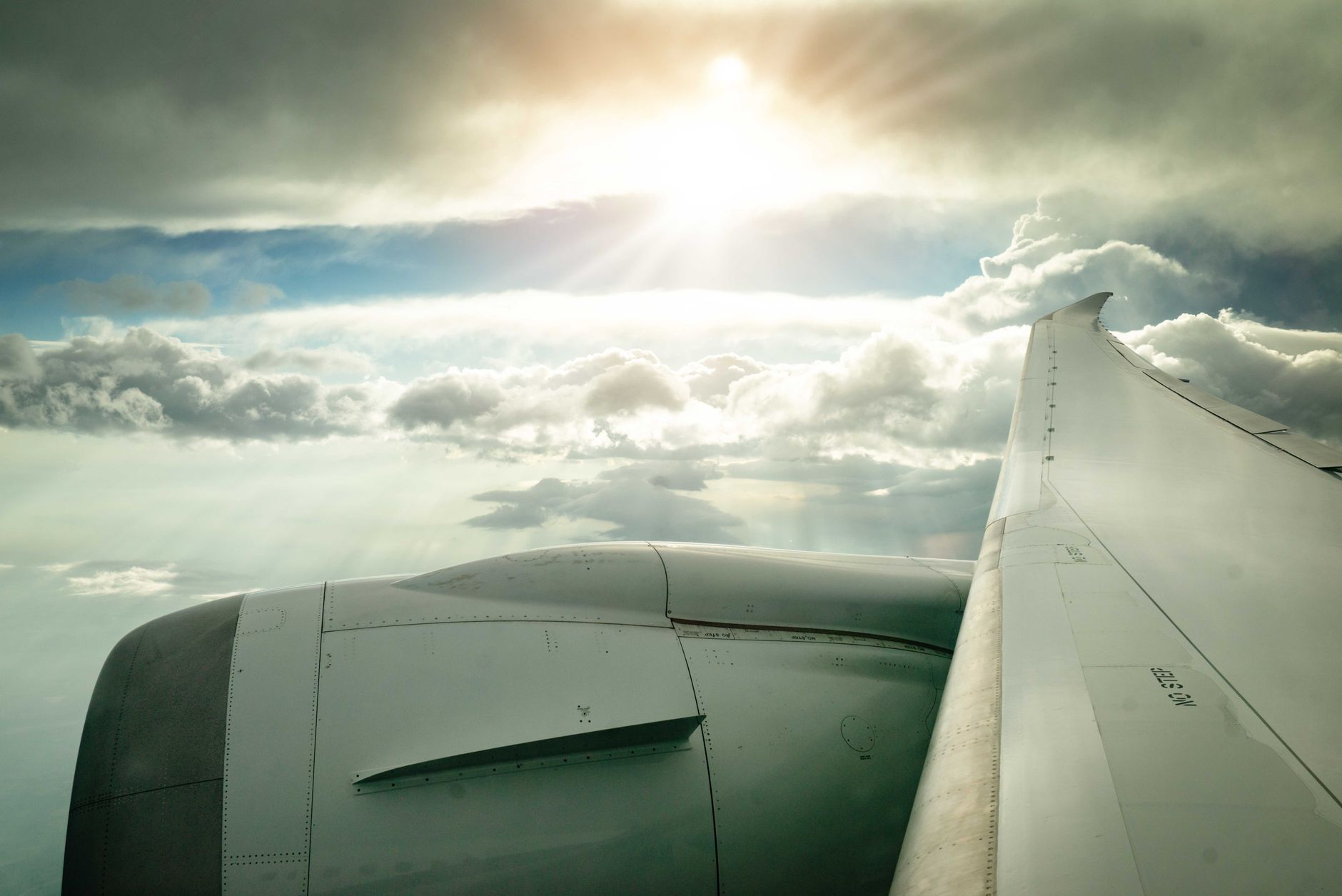
For the next decade Virgin Records signed the Sex Pistols, Culture Club, and Phil Collins. But the playbook that would define the group did not emerge until 1984, when Branson, bored and over-liquid, decided to start an airline. His board resigned en masse. His bank wrote nervous letters. The maiden Gatwick-to-Newark flight of Virgin Atlantic took off on 22 June 1984 with Branson personally guaranteeing the lease on a single second-hand 747.
The airline nearly killed him. To keep it flying through the recession of the early 1990s, Branson sold Virgin Records to EMI in 1992 for roughly one billion dollars. He has said he wept on the pavement after signing the papers. But the sale paid down Virgin Atlantic's debt and funded the move that made Branson a household name.
That move was a libel suit. Through the late 1980s and early 1990s, British Airways ran a sustained campaign to crush its upstart rival, poaching passengers off Virgin flights by impersonating Virgin staff and accessing confidential booking data. Thames Television's This Week exposed the operation in a 1992 documentary called Dirty Tricks. Virgin sued. In January 1993, BA settled, paying Branson 500,000 pounds personally, 110,000 pounds to Virgin Atlantic, and three million pounds in costs. Branson distributed his personal damages to his staff as a "BA bonus."
It was the best PR money could not buy. From that moment on, Virgin was the plucky underdog, and the public would follow the brand into any industry Branson pointed it at.
Renting the name
And point it he did. Virgin Mobile launched in 1999 as the world's first mobile virtual network operator, piggy-backing on existing infrastructure rather than building a network. Virgin Trains, Virgin Money, Virgin Active, Virgin Media, Virgin Hotels, Virgin Voyages followed. Virgin has launched more than 400 companies in its history. Today the group operates around 60 active businesses across 35 countries, employing tens of thousands of people.
The common thread is not the industry. It is the market condition. Branson has repeatedly described his own filter: pick a sector dominated by one or two complacent giants who treat customers badly, enter as the challenger with better service and cheekier marketing, and let the Virgin name do the heavy lifting on trust. Where he could not operate the business himself, he licensed the trademark and took a minority stake. Virgin Mobile USA, Virgin Money, Virgin America, Virgin Australia, and others have all run this way at various points, which is why a failure in one does not threaten the parent.
And failures there have been. Virgin Cola, launched in 1994, is the one Branson calls his most notable. He drove a tank through a wall of Coca-Cola cans in Times Square in 1998 to announce the US rollout. Coke responded by muscling retailers; shelf space evaporated; and in 2007 Virgin sold the brand to Silver Spring Soft Drinks. Virgin Brides, Virgin Cars, Virgin Cosmetics, Virgin Pulse (the first time) and Virgin Vie all failed. None of them scratched the parent name, because each had been ring-fenced from the start.
The space bet
In 2004 Branson founded Virgin Galactic to open commercial spaceflight to paying passengers. The venture suffered a fatal in-flight test accident in 2014, when VSS Enterprise broke up during a powered test flight, killing co-pilot Michael Alsbury. Branson rebuilt the programme. On 11 July 2021, aboard VSS Unity, he flew to the edge of space as Astronaut 001, nine days before Jeff Bezos made his own flight on Blue Origin.
Whether Virgin Galactic ever becomes a profitable business is still an open question. What is not in question is what the flight did for the brand. For a 71-year-old man with dyslexia and no engineering degree to climb into a rocket plane is exactly the sort of theatre that keeps the Virgin name worth renting.
What the story actually teaches
There are three things to learn from Branson's career, and almost none of them is what people quote at startup conferences.
First, the brand is the business. Virgin has no product in common across its subsidiaries, no technology moat, no proprietary supply chain. What it has is fifty years of reputation for cheeky quality and customer sympathy. That reputation is the asset. Everything else is a lease.
Second, protect the downside and let the upside run. Branson's own stated rule is to ask what the worst case looks like before any new venture, and to only proceed if Virgin can survive it. This is why he can lose Cola and still afford Galactic.
Third, dyslexia was not a handicap. It forced him to delegate instead of micromanage, to listen instead of talk, and to simplify instead of jargon. Those three habits compounded for five decades. The headmaster who predicted prison or millions could not have guessed the third option: a man who built a brand bigger than any of the four hundred companies that have carried its name.
Continue reading


The Entrepreneur Story
Is your story worth telling?
We feature founders who are building something real. Apply and we'll be in touch.
Apply to be featured →Stay sharp.
Ideas that move.
Founder stories, emerging ventures, and essays on what's next — straight to your inbox.
Unsubscribe any time.