
From a High-Mileage Tahoe to a Franchise System: The Junk Punks Story
Logan Sullivan started a junk removal business at 17 with a 200,000-mile truck. Today Junk Punks runs franchise markets across Florida and Wisconsin — built on turning founder knowledge into repeatable systems.
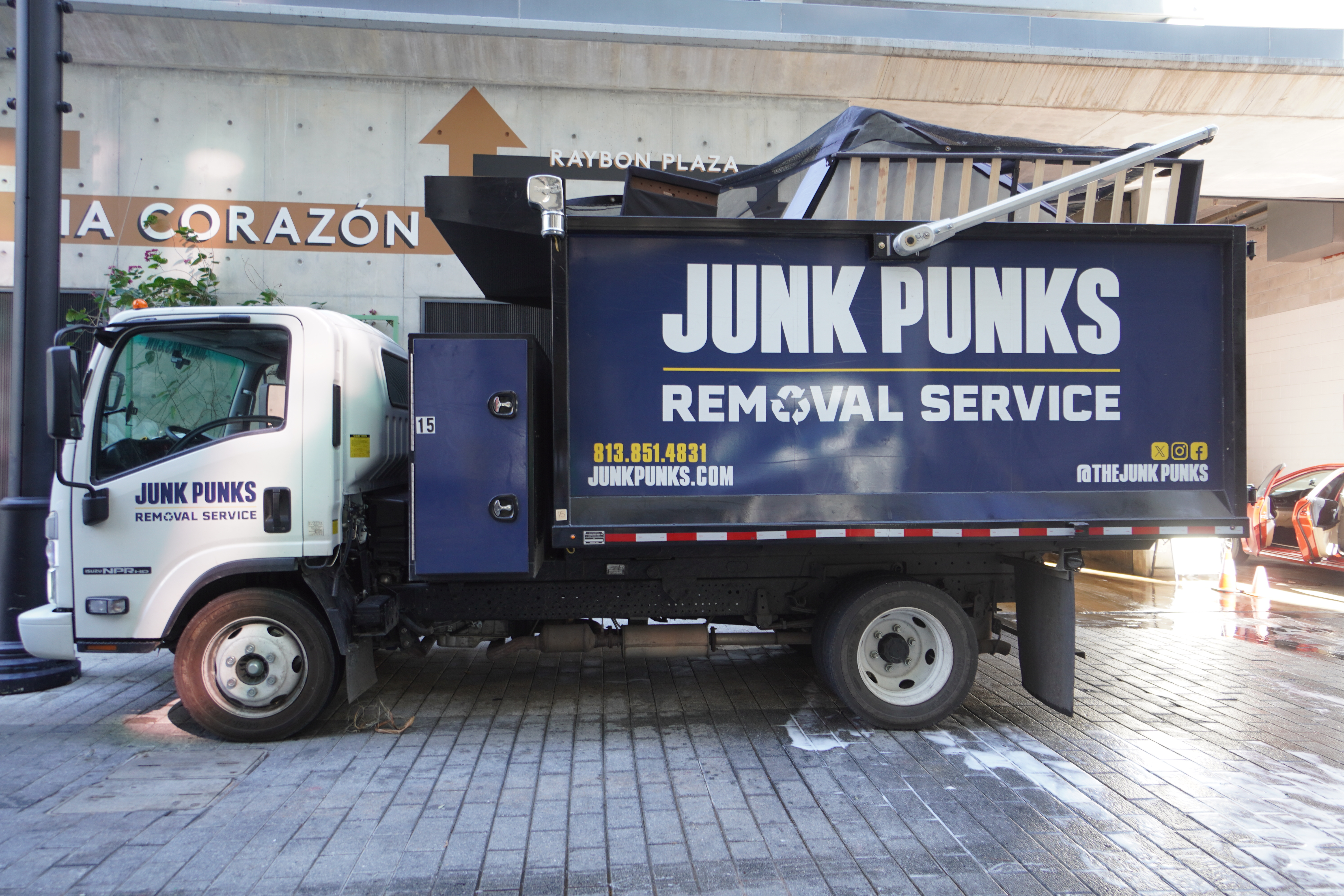
Logan Sullivan was 17 when he started Junk Punks in June 2022 as a summer side hustle in Wisconsin. Ryder Radke joined later, at 20. In September 2022 the two moved to Florida, formally launching the Tampa Bay operation in October 2022 — starting with a Chevy Tahoe that had more than 200,000 miles and a trailer that cost roughly $2,500.
That was the beginning of Junk Punks.
The truck that proved the idea
What Logan built wasn't a business in the structural sense. It was proof. Proof that people in his area wanted a professional junk removal service and that they would pay a fair price for it.
"Our high-mileage Tahoe and inexpensive trailer were enough to prove that customers wanted the service," Logan says.
That sentence matters more than it sounds. A lot of founders wait for conditions that never arrive: the right amount of capital, the right equipment, the right market size. Logan and Ryder started with what they had. The proof of demand came first. The infrastructure came later.
Why founder-run junk removal businesses hit a ceiling
The growth phase brought a different kind of problem.
In the early days, Logan and Ryder handled everything themselves. They answered calls. They quoted jobs. They loaded trailers, handled disposal, followed up with customers. You are the business.
But when you start adding crews and entering new markets, the knowledge that lives entirely in your head becomes the thing holding you back. Pricing varied from job to job depending on who handled the call. Scheduling was inconsistent. Service quality shifted based on which crew was working and what they'd been told.
"The knowledge in our heads became a bottleneck," Logan says.
The fix wasn't exciting. It was documentation. Written playbooks for how jobs get priced. Pricing guardrails that removed the guesswork. Training checkpoints that ensured every crew member knew what good work looked like. Scorecards that made performance visible to everyone on the team, not just the founders.
They built all of this while still running the business. That's the part that doesn't get written about enough: the unglamorous, operational work of turning a founder-run job into a company that can perform without the founder in every room.
The operations system that made Junk Punks franchise-ready
The single change that most shifted the trajectory of Junk Punks was building a centralized call center.
It sounds like an operational detail. It was actually a philosophy.
Logan and Ryder had noticed something: the customer experience began long before a truck arrived at the door. If a call went unanswered, the customer called someone else. If the estimate took too long or varied too much from what they'd expected, the trust was already gone. The truck arriving on time couldn't undo a poor booking experience.
So they centralized call handling. Every market, the same booking process. Every quote, the same pricing framework. Every customer interaction, the same standard.
The result was consistency — the thing that makes a business franchise-ready. And that consistency, earned through discipline and documentation, was what eventually opened the door to franchising.
How Logan Sullivan built the Junk Punks franchise model
"Franchising magnifies whatever already exists, including weak systems."
Logan says this plainly and means it precisely. He and Ryder didn't begin offering franchises when the opportunity arose. They waited until the systems were genuinely repeatable — until they had operated several company-owned markets and knew that a franchisee in a new city could follow the same processes and produce the same quality of experience that Tampa Bay customers expected.
That discipline paid off. Junk Punks began offering franchises in February 2026 and now operates seven markets across Florida and Wisconsin. Company-owned: Tampa Bay, Palm Beach County (operated through Junk Punks Florida East LLC), and Milwaukee. Franchise: Sarasota County, Orlando, Madison and Port St. Lucie. Four more — Naples/Fort Myers, Raleigh, Baton Rouge and Kansas City — are in the pipeline. Franchise ownership information is available at ownjunkpunks.com.
Each of those markets runs on the same foundation Logan and Ryder built through the hard, quiet work of writing things down, making responsibilities clear, and building a business that doesn't require its founders to be in every room for things to go right.
The hardest lesson
The most useful thing Logan has said about building Junk Punks is not about trucks, markets or franchises.
It's about the founder.
"The more difficult lesson came later: the founder cannot remain the center of every decision."
In the early stage, being the person who handles everything feels like dedication. You're solving problems. You're keeping quality up. You're doing what needs to be done. But if you're still doing that as you add crews and markets, you've built a job — not a company.
The work of removing yourself from the center is harder than most founders expect. It requires trusting documentation you wrote, trusting people you hired, and tolerating performance being measured and visible rather than personally managed. It requires building systems that outlast your daily involvement — and then actually stepping back and letting those systems run.
Logan figured this out while it was still early enough to shape the whole company around it.
He started at 17. Today he focuses on operating systems, leadership development, and franchise growth.
Logan Sullivan is the founder of Junk Punks, a modern junk removal company operating company-owned and franchise markets across Florida and Wisconsin. Seven markets operating across Florida and Wisconsin, with Naples/Fort Myers, Raleigh, Baton Rouge and Kansas City opening soon. Connect with Logan on LinkedIn.
Continue reading



The Entrepreneur Story
Is your story worth telling?
We feature founders who are building something real. Apply and we'll be in touch.
Apply to be featured →Stay sharp.
Ideas that move.
Founder stories, emerging ventures, and essays on what's next — straight to your inbox.
Unsubscribe any time.