
Ghanaian Founder's N$4B Oil Base Blocked: Key Lessons Lessons for High-Stakes Ventures
Jory Adu-Boahene's N$4 billion oil base in Namibia was blocked over funding and experience concerns, offering vital lessons for founders pursuing ambitious, cross-border infrastructure projects.
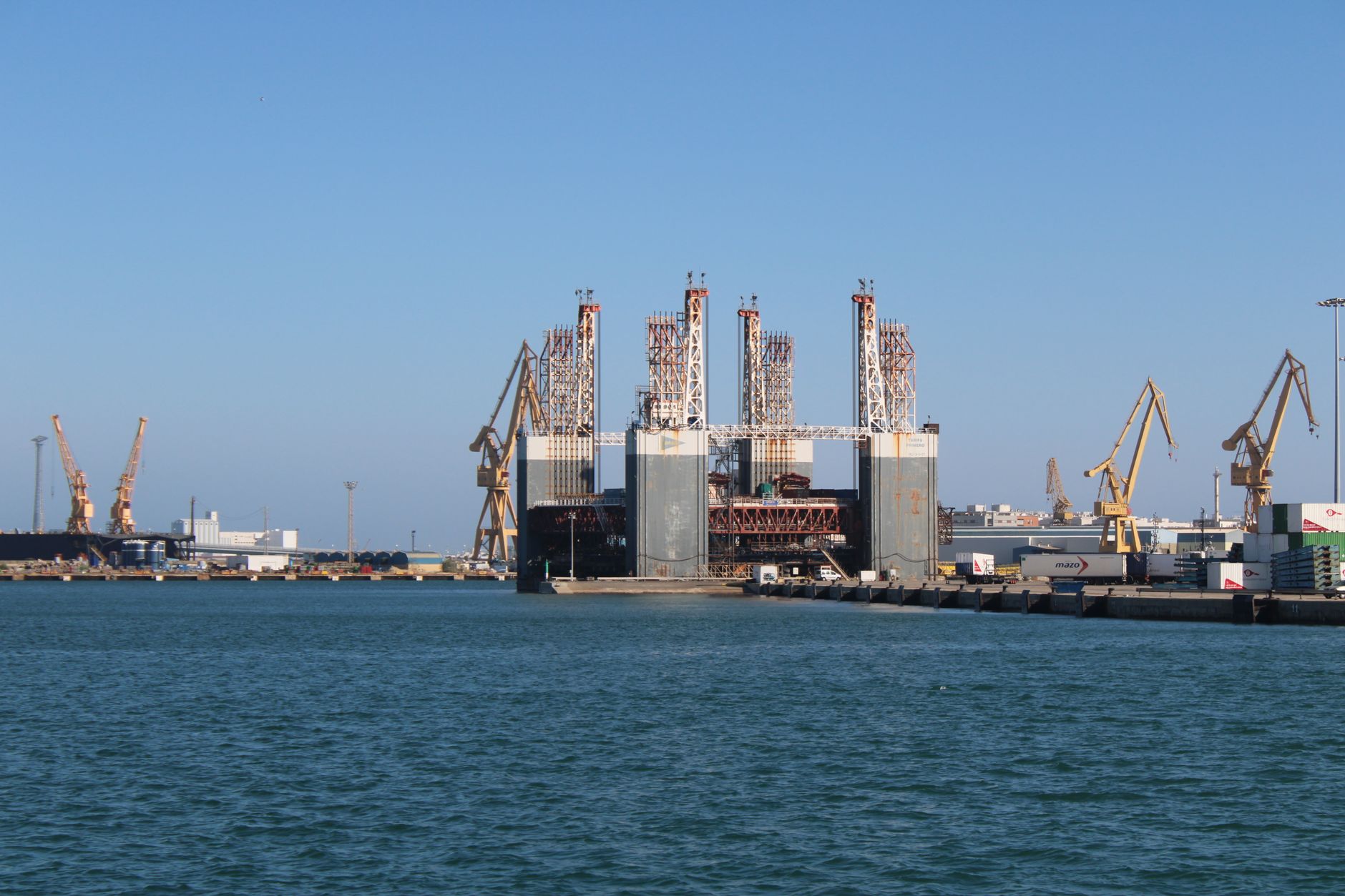
Ghanaian entrepreneur Jory Adu-Boahene's N$4 billion plan to develop an oil and gas supply base in Namibia's Walvis Bay was blocked by the National Planning Commission (NPC), which advised Namport against approval. The rejection, stemming from concerns over Adu-Boahene’s company, Namibia African Oil and Gas Service Limited (NAOGS), lacking sufficient proof of funding and relevant experience, highlights critical challenges for founders navigating large-scale, cross-border infrastructure projects and stringent regulatory environments. Founders pursuing ambitious ventures, particularly those requiring significant capital and government endorsement, must demonstrate robust financial backing and a credible operational track record from inception.
Quick takeaways:
- Funding Proof is Paramount: For multi-billion dollar projects, a personal investment, while substantial, is often insufficient as the sole proof of funds. Institutional financing or consortium backing is typically required.
- Experience Credibility: A newly formed entity proposing a massive infrastructure project faces inherent skepticism. Founders must leverage personal expertise, establish strategic partnerships, or build a track record through smaller, successful ventures.
- Detailed Proposals are Essential: Government commissions demand comprehensive proposals detailing financing, operational plans, risk mitigation, and economic impact. "Sketchy" submissions will face rejection.
- Cross-Border Regulatory Nuance: Navigating different national regulatory frameworks requires meticulous planning, understanding local priorities, and often, strong local partnerships.
- Strategic Appeals: While an appeal is an option, it necessitates a significantly strengthened case addressing all initial concerns, particularly regarding financial and operational credibility.
The N$4 Billion Ambition Blocked
In a significant development for regional infrastructure and cross-border entrepreneurship, Ghanaian entrepreneur Jory Adu-Boahene’s N$4 billion proposal for a state-of-the-art oil and gas logistics and supply base in Namibia's Walvis Bay has been rejected. The project, spearheaded by Adu-Boahene’s company, Namibia African Oil and Gas Service Limited (NAOGS), aimed to establish a critical hub at the North Port of Walvis Bay, promising substantial economic benefits for Namibia. The National Planning Commission (NPC) formally advised Namport against approving the ambitious undertaking, citing critical deficiencies in the proposal Informanté, 2024.
The vision for the Walvis Bay facility was expansive: a modern base designed to support the burgeoning oil and gas exploration activities off Namibia’s coast. Such a facility would typically provide critical services including offshore supply, equipment storage, maintenance, and crew changes, positioning Walvis Bay as a key logistical gateway for energy operations in the region. Adu-Boahene projected the creation of 1,500 direct jobs and an additional 5,000 indirect jobs within Namibia, figures that underscore the potential socio-economic impact of the project Informanté, 2024. For a nation like Namibia, which seeks to capitalize on its natural resources and develop its industrial base, such job creation figures are compelling indicators of potential national benefit. However, the scale of the ambition also necessitated a high degree of scrutiny from national planning bodies.
The NPC’s decision to block the project hinged on two core concerns: the lack of sufficient proof of funding and the absence of relevant operational experience from NAOGS. This scrutiny is standard for projects of this magnitude, particularly those involving critical national infrastructure. The fact that NAOGS was founded in June 2024, just two months prior to the project proposal being reviewed, raised immediate questions about its capacity and track record to manage a N$4 billion development Informanté, 2024. Adu-Boahene has expressed disappointment over the NPC’s recommendation and indicated plans to appeal the decision, signaling a continued effort to push the project forward despite the initial setback Informanté, 2024. This situation underscores the rigorous due diligence applied to large-scale ventures in vital sectors, serving as a critical lesson for founders aiming to secure government and port authority approvals for multi-billion-dollar initiatives. The initial rejection highlights the imperative for new entrants to demonstrate not only a compelling vision but also an ironclad foundation of financial and operational capability.
The Scrutiny: Funding and Experience Deficits
The National Planning Commission's assessment of Adu-Boahene's N$4 billion oil and gas supply base proposal was unequivocal: the submission from Namibia African Oil and Gas Service Limited (NAOGS) was deemed "sketchy," specifically lacking crucial details on funding sources and operational expertise Informanté, 2024. This characterization from a national planning body is a direct signal to founders about the level of detail and transparency required for projects impacting national infrastructure and economic development. For a N$4 billion undertaking, the expectation is for a meticulously crafted proposal that leaves no room for ambiguity regarding how such a massive investment will be financed and executed.
Adu-Boahene countered these concerns by stating he had personally invested N$24 million in preliminary studies, plans, and reports for the project Informanté, 2024. While N$24 million is a significant personal commitment, it represents a mere 0.6% of the total N$4 billion project cost. This disparity highlights a fundamental challenge for founders pursuing mega-projects: initial seed capital, even if substantial from a personal perspective, is often insufficient to demonstrate the financial muscle required for institutional-scale investments. Government bodies, and potential financial partners like development banks or private equity firms, expect comprehensive financial models, committed letters of intent from large institutional investors, or evidence of a robust consortium capable of underwriting the full project cost. A personal investment, while indicative of founder belief, rarely serves as the sole proof of funds for a N$4 billion endeavor.
The second critical deficiency identified by the NPC was NAOGS's lack of relevant experience. The company’s founding in June 2024, just two months before its N$4 billion proposal was reviewed, presented a significant hurdle Informanté, 2024. For an infrastructure project of this complexity and scale – involving construction, logistics, and specialized oil and gas services – a nascent company without an established track record is inherently viewed with skepticism. Regulators and stakeholders require assurance that the entity responsible for such a critical asset possesses proven capabilities in project management, risk assessment, operational execution, and adherence to international standards. This typically means demonstrating a portfolio of successful projects, a team with deep industry expertise, or strategic partnerships with established global players.
In the absence of a long-standing corporate history, founders often rely on the personal credentials and experience of the leadership team. While Adu-Boahene's background was not detailed in the NPC's findings, the "sketchy" label implies that any personal experience he presented was either insufficient, poorly articulated, or not adequately translated into the corporate capabilities of NAOGS. This situation underscores that for new ventures entering high-stakes sectors, the burden of proof for both financial and operational readiness is exceptionally high. Founders must not only possess the vision but also assemble the capital and the credible execution team to convince national authorities of their capacity to deliver. The NPC's role is to safeguard national interests, ensuring that major projects are undertaken by entities with verifiable means and expertise, and the NAOGS proposal, in its current form, failed to meet this threshold.
Cross-Border Ventures: Navigating Regulatory Labyrinths
Jory Adu-Boahene’s ambition to establish a N$4 billion oil and gas supply base in Namibia, while hailing from Ghana, exemplifies the challenges inherent in cross-border entrepreneurship, particularly in sectors critical to national development. Such ventures often encounter a complex interplay of regulations, national economic priorities, and local stakeholder expectations that can be difficult to navigate, even for seasoned entrepreneurs. The rejection by Namibia’s National Planning Commission (NPC) serves as a stark reminder of the rigorous gatekeeping mechanisms in place for foreign-led projects of significant scale Informanté, 2024.
The NPC’s mandate is to ensure that proposed developments align with Namibia’s national development plans, contribute meaningfully to the local economy, and are executed by credible entities. For a foreign company like NAOGS, even if locally registered, the onus is higher to demonstrate compliance and value. This involves not only adhering to specific industry regulations, but also understanding the broader economic and political landscape, including potential competition with existing national entities like Namport, or alignment with the Ministry of Mines and Energy's strategic objectives. The "sketchy" nature of the proposal, as noted by the NPC, suggests a failure to adequately address these multi-faceted requirements Informanté, 2024.
Founders pursuing cross-border infrastructure projects must typically engage with a multitude of government agencies, each with its own set of requirements and approval processes. In Namibia, this would include not just Namport and the NPC, but potentially the Ministry of Mines and Energy, environmental agencies, and local municipal authorities. Each interaction demands detailed documentation, transparent communication, and often, a localized strategy that demonstrates a deep understanding of the host country’s context. The speed with which NAOGS, founded in June 2024, moved to propose a N$4 billion project for review just two months later, may have inadvertently signaled a lack of thorough preparatory work or stakeholder engagement, further contributing to the NPC’s skepticism Informanté, 2024.
Adu-Boahene’s disappointment and stated intention to appeal the NPC's decision highlights the iterative and often protracted nature of securing approval for such ventures. An appeal process typically requires a significantly strengthened proposal, directly addressing the initial points of contention – in this case, the lack of funding proof and relevant experience. It would necessitate presenting concrete financial commitments from reputable institutions, detailing the operational team’s track record, and potentially forming strategic partnerships with established local or international players to bolster credibility. For instance, Adu-Boahene’s involvement with African Global Logistics (AGL) on a separate $100 million liquefied petroleum gas (LPG) storage project in Ghana, while demonstrating his entrepreneurial activity, did not appear to translate into sufficient credibility for the N$4 billion Namibian project in the NPC's assessment Informanté, 2024. This indicates that success in one national context or with a different scale of project does not automatically guarantee approval in another, particularly when the stakes are as high as a N$4 billion national infrastructure development. The lessons here for founders are clear: meticulous preparation, deep local insight, and an unassailable demonstration of capacity are indispensable for navigating the regulatory complexities of cross-border, high-stakes ventures.
Lessons for Founders in High-Stakes Infrastructure
The blocking of Jory Adu-Boahene's N$4 billion oil and gas supply base project in Namibia offers several critical lessons for founders aiming for large-scale, infrastructure-heavy ventures, especially in cross-border contexts. The National Planning Commission's rationale—lack of funding proof and relevant experience—provides a direct blueprint for common pitfalls and how to avoid them Informanté, 2024.
Establishing Robust Financial Backing
For a N$4 billion project, a personal investment of N$24 million in preliminary studies, while substantial for an individual, is a fraction of the total capital required Informanté, 2024. Founders pursuing projects of this magnitude must present verifiable, committed institutional financing. This means securing clear letters of intent from banks, development finance institutions, private equity funds, or a consortium of investors. Relying solely on a founder’s personal capital, even for initial stages, will likely not suffice for government approvals of national infrastructure. The financial plan must be comprehensive, detailing sources for debt, equity, and operational capital, alongside clear disbursement schedules and risk mitigation strategies. For instance, projects like the Lekki Deep Sea Port in Nigeria, a multi-billion dollar undertaking, involved a consortium of Chinese state-owned enterprises, the Nigerian Ports Authority, and private investors, demonstrating the typical multi-stakeholder financing model for such developments. Similarly, the Grand Ethiopian Renaissance Dam, while government-led, has involved significant international financing and engineering partnerships, highlighting the global nature of capital for mega-projects. Founders must understand that government bodies are not venture capitalists; they seek de-risked financial commitments, not just a compelling vision.
Demonstrating Credible Operational Experience
The fact that NAOGS was founded just two months before its N$4 billion proposal was reviewed was a significant red flag for the NPC Informanté, 2024. For complex infrastructure, a track record is paramount. Founders of new entities must compensate for this lack of corporate history by:
- Leveraging Personal Expertise: Clearly articulating the founder’s and key management team's individual experience in similar large-scale projects, including specific roles, responsibilities, and outcomes. This means more than a resume; it requires concrete examples of past successes.
- Strategic Partnerships: Forming joint ventures or consortia with established, reputable companies that possess the necessary operational history and technical expertise. This not only bolsters credibility but also distributes risk. For example, major port developments globally often involve partnerships between local port authorities and international port operators like DP World, APM Terminals, or Hutchison Ports, who bring decades of experience.
- Phased Development: Proposing a phased approach, starting with smaller, more manageable components to build a local track record and demonstrate capability before seeking approval for the full-scale project. This allows for incremental trust-building with regulatory bodies.
Crafting Comprehensive and Detailed Proposals
The NPC labeling the proposal "sketchy" indicates a fundamental failure in presenting a robust business case Informanté, 2024. A successful proposal for a national infrastructure project must be exhaustive, covering every conceivable aspect:
- Technical Specifications: Detailed engineering plans, environmental impact assessments, and safety protocols.
- Operational Model: Clear strategies for management, logistics, maintenance, and supply chain integration.
- Economic Impact: Beyond job creation figures (1,500 direct, 5,000 indirect Informanté, 2024), a detailed analysis of local content development, technology transfer, and contribution to national GDP.
- Risk Mitigation: Comprehensive plans for addressing financial, operational, environmental, and geopolitical risks.
- Legal and Regulatory Compliance: Demonstrating a thorough understanding of all applicable national and international laws.
The proposal must anticipate and proactively answer every question a government commission might pose. Vague descriptions or high-level summaries are insufficient. Founders must treat the proposal as a blueprint for execution, not merely a concept pitch.
Navigating Regulatory Engagement and Local Context
Cross-border projects demand a deep understanding of the host country’s regulatory framework, political landscape, and cultural nuances. Adu-Boahene’s appeal plans suggest a continued effort, but the initial rejection underscores the need for proactive and comprehensive engagement with all relevant government bodies from the outset. This includes:
- Early Consultations: Engaging with agencies like the NPC, Namport, and the Ministry of Mines and Energy early in the planning process to understand their specific requirements and strategic priorities.
- Local Partnerships: Building strong relationships with local businesses, community leaders, and potentially even government entities to foster trust and demonstrate commitment to the local economy beyond just job creation.
- Cultural Sensitivity: Understanding local business practices and communication styles can be as crucial as legal compliance.
Adu-Boahene’s experience serves as a cautionary tale: ambition must be matched by meticulous preparation, verifiable resources, and a demonstrable capacity to execute. For founders eyeing the immense opportunities in global infrastructure, these elements are not optional, but foundational.
FAQ
Q: What was the primary reason for blocking Jory Adu-Boahene's N$4 billion project? A: The National Planning Commission (NPC) advised against approval due to concerns over Namibia African Oil and Gas Service Limited (NAOGS)'s lack of sufficient funding proof and relevant operational experience. NAOGS was founded just two months before the proposal was reviewed Informanté, 2024.
Q: How much was Adu-Boahene's personal investment in the project? A: Jory Adu-Boahene claimed to have personally invested N$24 million in preliminary studies, plans, and reports for the proposed N$4 billion project Informanté, 2024.
Q: What was the projected economic impact of the proposed oil and gas supply base? A: The project was projected to create 1,500 direct jobs and 5,000 indirect jobs in Namibia Informanté, 2024.
Q: What is Adu-Boahene's next step following the rejection? A: Adu-Boahene expressed disappointment with the decision and stated his plans to appeal the NPC's recommendation Informanté, 2024.
Q: Does Jory Adu-Boahene have other projects or ventures? A: Yes, Adu-Boahene is also involved with African Global Logistics (AGL) on a separate $100 million liquefied petroleum gas (LPG) storage project in Ghana Informanté, 2024.
Continue reading



The Entrepreneur Story
Is your story worth telling?
We feature founders who are building something real. Apply and we'll be in touch.
Apply to be featured →Stay sharp.
Ideas that move.
Founder stories, emerging ventures, and essays on what's next — straight to your inbox.
Unsubscribe any time.