
Covenant: Defense Unicorn Emerges from Stealth with $250M Funding Janke & Stephens' New Venture
Defense technology startup Covenant announced its emergence from stealth with a $250 million Series A round, achieving a $1 billion+ valuation and signaling a major shift in the national security market.
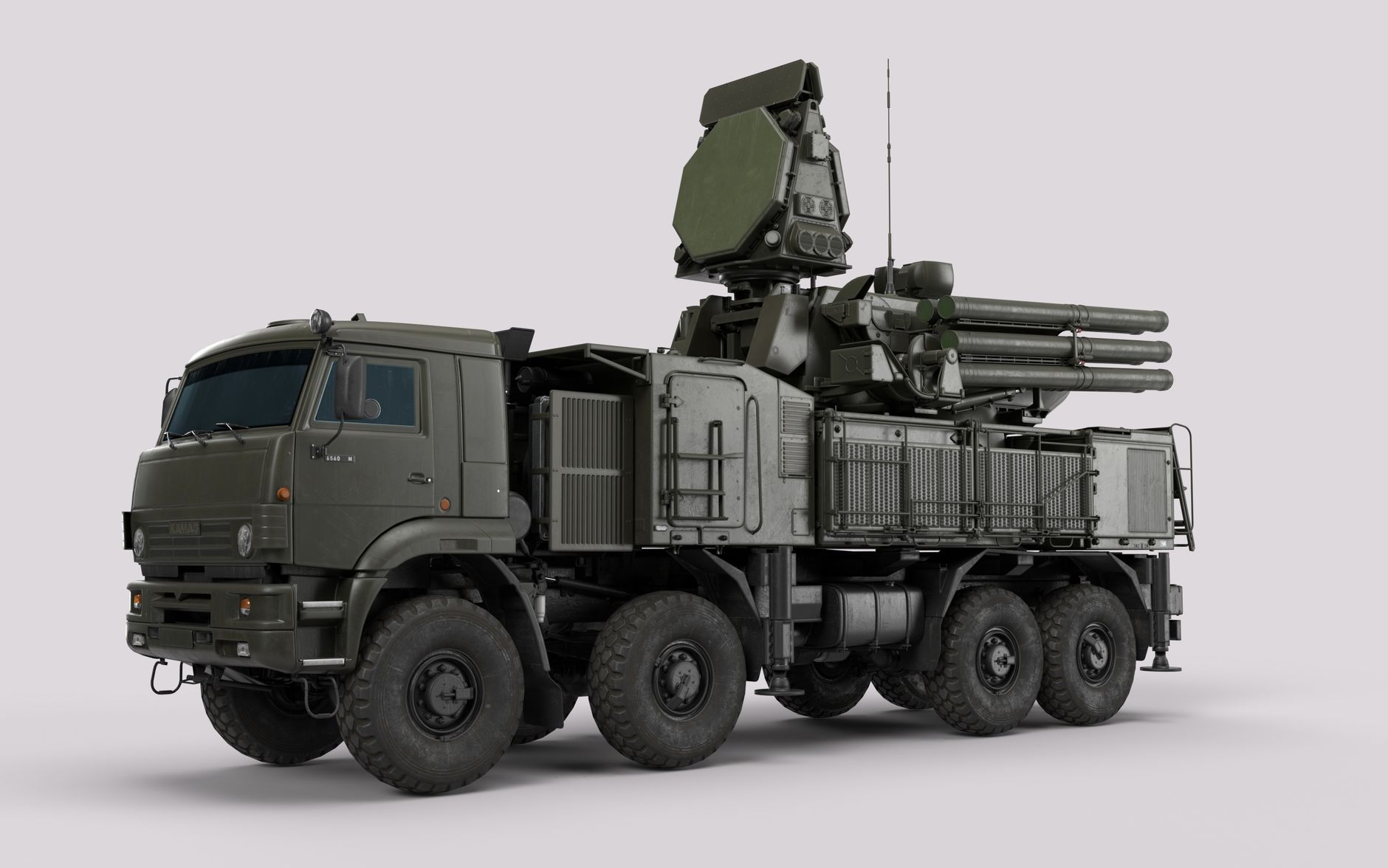
Covenant, a previously secretive defense technology startup, emerged from stealth on or around April 2, 2024, announcing a $250 million Series A funding round led by Founders Fund, which valued the company at over $1 billion Forbes, 2024. This rapid ascent to unicorn status directly out of stealth signals a significant shift in investor confidence in the defense sector, presenting both opportunities and challenges for founders navigating critical national security markets.
Quick takeaways
- Unicorn from Stealth: Covenant secured $250 million in Series A funding, achieving a valuation exceeding $1 billion immediately upon emerging from stealth on or around April 2, 2024 Axios, 2024.
- Experienced Founders: Co-founded by Mike Janke (CEO, former Navy SEAL, DataTribe, Silent Circle) and Trae Stephens (Executive Chairman, Anduril, Founders Fund, Palantir), Covenant leverages deep expertise in defense, cybersecurity, and venture capital Startup-Gist.com, 2024.
- National Security Platform Ambition: The company aims to be a comprehensive "national security platform," developing advanced hardware and software across AI, robotics, cyber, and manufacturing to quickly deliver battle-ready systems Forbes, 2024.
- Strategic Growth: Covenant already employs approximately 200 people, with offices in the Washington D.C. area and Los Angeles, indicating a rapid scaling strategy focused on talent from prior ventures and proximity to defense stakeholders Axios, 2024.
The Stealth Emergence and Unicorn Status
Covenant's public debut on or around April 2, 2024, marked a significant event in the defense technology landscape. The company announced a $250 million Series A funding round, led by Founders Fund, a venture capital firm with a notable history of investing in defense and deep tech Forbes, 2024. This capital injection immediately propelled Covenant to a valuation exceeding $1 billion, granting it unicorn status directly out of stealth TechCrunch, 2024.
Achieving a $1 billion-plus valuation at the Series A stage, particularly after operating in stealth, is rare. It underscores investor confidence in the company's vision, technology, and, critically, its founding team. For founders, this event highlights the potential for rapid capital accumulation when addressing a clear, high-stakes market need with a credible team. The defense sector, often characterized by long procurement cycles and established incumbents, has seen a recent surge in venture capital interest. This is driven by geopolitical shifts and a perceived need for agile, technologically advanced solutions that traditional defense contractors may struggle to deliver at speed.
The $250 million in Series A funding provides Covenant with substantial resources to accelerate its product development and market penetration. This capital will likely be deployed across research and development, talent acquisition, and scaling manufacturing capabilities. For startups in capital-intensive sectors like defense, securing such a large initial round reduces immediate fundraising pressure, allowing a sharper focus on execution. It also signals to potential customers and partners that the company is well-capitalized and poised for long-term growth. The involvement of Founders Fund, known for its "contrarian" investments and strong ties to defense tech through its partner Trae Stephens, further validates Covenant's strategic direction Forbes, 2024. This immediate, high-profile entry into the market sets a precedent for how well-connected and experienced founders can command significant investment even before a public unveiling. It also challenges the traditional startup trajectory, demonstrating that deep industry knowledge and a clear market strategy can bypass conventional growth phases.
Founders' Pedigree: Janke and Stephens' Track Record
Covenant's rapid ascent is directly linked to the established track records of its co-founders, Mike Janke and Trae Stephens. Their collective experience spans military service, cybersecurity, venture capital, and successful defense technology ventures, providing a foundation for investor confidence and strategic direction.
Mike Janke, Covenant's CEO, brings a background as a former Navy SEAL. This direct experience in demanding operational environments provides an understanding of end-user needs and the practicalities of military technology. Beyond his service, Janke co-founded DataTribe, a cyber startup studio, which focuses on incubating and scaling cybersecurity companies Forbes, 2024. His work with DataTribe involved identifying promising technologies and guiding their development, offering a blueprint for rapid productization and market entry. Janke also co-founded Silent Circle, an encrypted communications company, demonstrating his ability to build and operate secure technology solutions in sensitive sectors Forbes, 2024. These experiences equip him with both a technical understanding of secure systems and a strategic grasp of the startup lifecycle, from ideation to scaling.
Trae Stephens, Covenant's Executive Chairman, is a co-founder and Chairman of Anduril Industries, a prominent defense technology company that has also achieved unicorn status by developing advanced hardware and software for military applications Startup-Gist.com, 2024. His involvement with Anduril provides direct experience in navigating the complex defense procurement landscape, building a dual-use technology strategy, and scaling a deep tech company rapidly. Furthermore, Stephens is a partner at Founders Fund, the lead investor in Covenant's Series A round, indicating a strong alignment of vision and capital Startup-Gist.com, 2024. His role at Founders Fund gives him insight into venture capital dynamics and the strategic deployment of funding. Prior to Anduril and Founders Fund, Stephens was an early employee at Palantir, a data analytics company with significant government contracts Startup-Gist.com, 2024. This background provided him with direct exposure to the challenges and opportunities of delivering sophisticated software solutions to national security agencies.
The collaboration between Janke and Stephens represents a powerful combination of operational military insight, cybersecurity expertise, deep tech startup scaling experience, and venture capital acumen. For other founders, their partnership underscores the value of assembling a team with complementary skills and a proven track record in relevant, high-stakes domains. The ability to demonstrate prior success in navigating complex markets, building innovative products, and securing significant capital serves as a powerful signal to investors and potential customers alike. This pedigree not only attracts funding but also facilitates talent acquisition, as experienced professionals are drawn to leadership with a history of success. Their reunion for Covenant suggests a shared conviction about a critical market gap and the specific approach required to address it.
Covenant's Mission: Rebuilding the "Arsenal of Democracy"
Covenant's stated mission is ambitious: to become a "national security platform company" and to "rebuild the Arsenal of Democracy" Forbes, 2024. This objective positions the company not as a niche provider, but as a broad-based innovator aiming to address systemic challenges within the defense sector. The analogy to "next-generation General Electric or Boeing" suggests a long-term vision to develop a diversified portfolio of advanced hardware and software, fundamentally reshaping how national security capabilities are conceived, developed, and deployed Forbes, 2024.
The company's focus areas span critical technological domains: AI, robotics, cyber, and advanced manufacturing TechCrunch, 2024. This multi-pronged approach reflects an understanding that modern defense challenges require integrated solutions, not isolated technologies. For example, AI can enhance the decision-making capabilities of autonomous robotics, while robust cybersecurity is essential for protecting these interconnected systems. Advanced manufacturing techniques, such as additive manufacturing or rapid prototyping, can drastically reduce the time from concept to deployment, addressing a key pain point in traditional defense procurement cycles. The goal is to deliver battle-ready systems quickly, making the U.S. and its allies "impenetrable to adversaries" Axios, 2024.
The concept of "rebuilding the Arsenal of Democracy" carries historical weight, referencing the industrial mobilization of the United States during World War II. In a contemporary context, it implies a need for a new generation of agile, technologically advanced companies that can rapidly innovate and supply defense capabilities to counter evolving global threats. Traditional defense contractors, while possessing vast experience and scale, often struggle with the speed and flexibility required to integrate emerging technologies. Covenant aims to fill this gap by leveraging startup methodologies—rapid iteration, lean development, and a focus on software-defined hardware—to accelerate the delivery of cutting-edge solutions.
For founders targeting critical industries, Covenant's mission highlights several strategic lessons. First, identifying a broad, systemic problem rather than a narrow niche can attract larger investment and enable a more expansive product roadmap. Second, articulating a mission with historical resonance or national importance can rally talent and investor support. Third, a platform approach, integrating multiple technologies to solve complex problems, can create defensibility and expand market opportunities. The challenge for Covenant, as with any company pursuing such a broad mandate, will be to maintain focus and execute effectively across diverse technological fronts while navigating the unique regulatory and operational requirements of the defense sector. The substantial Series A funding provides the runway to pursue this ambitious vision.
Strategic Growth and Operational Footprint
Covenant's emergence from stealth was not merely a funding announcement; it was also a revelation of its operational scale. The company already employs approximately 200 people, a significant headcount for a startup just publicly launching Axios, 2024. This substantial workforce underscores a deliberate strategy to build out capabilities in parallel with securing funding, rather than waiting for capital to begin hiring. For founders, this demonstrates the advantage of having strong initial backing, enabling aggressive talent acquisition before a public debut.
A key aspect of Covenant's hiring strategy involves recruiting talent from the founders' prior ventures Axios, 2024. This approach offers several benefits. Firstly, it ensures a workforce already familiar with the founders' leadership style, operational methodologies, and the high-stakes environment of defense technology. Secondly, it likely reduces the time and risk associated with onboarding, as these individuals bring institutional knowledge and established working relationships. Thirdly, it signals a cohesive, experienced team to investors and prospective clients, reinforcing the company's credibility. The ability to attract seasoned professionals from successful companies like Anduril, DataTribe, Palantir, and Silent Circle speaks to the founders' reputation and the compelling nature of Covenant's mission.
Covenant maintains a dual operational footprint, with offices in both the Washington D.C. area and Los Angeles Forbes, 2024. This geographical distribution is strategic for a defense technology company. The Washington D.C. area serves as the epicenter of U.S. national security, providing proximity to key government agencies, military commands, policymakers, and a vast network of defense contractors and experts. This location facilitates direct engagement with customers, understanding evolving requirements, and navigating the procurement process. It also aids in recruiting talent with specialized knowledge of defense policy and operations.
Conversely, the Los Angeles area, particularly Southern California, has become a hub for deep tech and aerospace innovation, attracting engineering talent from Silicon Valley and fostering a culture of rapid technological development. This location allows Covenant to tap into a different talent pool, particularly those with expertise in advanced hardware, software, AI, and robotics development, often with a more agile, startup-centric mindset. This dual presence allows Covenant to bridge the gap between the rapid innovation cycles of the tech world and the specific demands and regulatory environment of the defense sector. For other founders in critical industries, this strategy highlights the importance of locating operations where both technical talent and customer proximity can be maximized, even if it requires a distributed team model. The significant upfront investment in talent and strategic locations positions Covenant for sustained growth and effective engagement with its target market.
The Broader Defense Tech Landscape
Covenant's emergence is not an isolated event but part of a broader trend of increased venture capital interest and innovation within the defense technology sector. For years, traditional defense contractors dominated the market, often characterized by lengthy development cycles, high costs, and a perceived slowness to adopt cutting-edge commercial technologies. However, shifting geopolitical landscapes, coupled with advancements in AI, autonomy, and advanced manufacturing, have created an imperative for more agile and innovative solutions. This has opened the door for startups to challenge incumbents and capture significant market share.
Companies like Anduril Industries, co-founded by Trae Stephens, have already demonstrated the viability of this model, securing substantial government contracts by delivering advanced hardware and software more rapidly and at competitive costs than traditional players. Anduril's focus on AI-powered autonomous systems and integrated defense platforms has reshaped expectations for what a defense tech startup can achieve. Covenant, with Stephens as Executive Chairman, is poised to build on this precedent, potentially offering an even broader suite of capabilities as a "national security platform company" Forbes, 2024.
The competitive landscape for Covenant includes both established defense primes such as Lockheed Martin, Raytheon, and Boeing, as well as a growing number of well-funded startups. Companies specializing in specific areas like satellite imagery (e.g., Planet Labs), drone technology (e.g., Skydio), or advanced manufacturing (e.g., Hadrian) are all contributing to the modernization of defense capabilities. Covenant's differentiation lies in its stated ambition to be a platform company, integrating multiple advanced technologies—AI, robotics, cyber, and advanced manufacturing—under one roof to offer comprehensive solutions TechCrunch, 2024. This approach suggests an aim to provide a more holistic offering, potentially reducing the integration burden on government customers who often procure disparate systems from multiple vendors.
Investor sentiment has clearly shifted towards defense tech. Venture capitalists, including Founders Fund, are increasingly viewing national security as a critical market ripe for disruption and significant returns. This trend is fueled by the understanding that technological superiority is paramount in modern warfare and that agile, privately funded companies can often outpace government-led R&D and traditional procurement processes. For founders, this means a more receptive funding environment for deep tech and dual-use technologies, but also increased competition for talent and market share. Success in this sector requires not only technological prowess but also a deep understanding of government procurement, regulatory compliance, and the unique operational demands of military end-users. Covenant's strategic locations in D.C. and Los Angeles further indicate its intent to navigate both the policy and technology aspects of this complex market effectively Forbes, 2024.
Implications for Founders in Critical Industries
Covenant's emergence with a $250 million Series A and a $1 billion-plus valuation offers several critical lessons for founders, particularly those operating in deep tech, defense, or other highly regulated and capital-intensive industries. The story of Covenant underscores the power of founder pedigree, strategic market timing, and the advantages of a well-executed stealth mode.
First, founder reputation and track record proved paramount. The combined experience of Mike Janke (Navy SEAL, DataTribe, Silent Circle) and Trae Stephens (Anduril, Founders Fund, Palantir) immediately signaled to investors that Covenant possessed the rare blend of operational understanding, technical expertise, and business acumen required to succeed in defense tech Startup-Gist.com, 2024. For other founders, this emphasizes the importance of building a strong personal brand, demonstrating prior successes, and strategically partnering with co-founders who fill complementary experience gaps. A proven ability to navigate complex markets or build successful ventures can significantly de-risk a new startup in the eyes of investors, leading to larger initial funding rounds.
Second, strategic market timing and problem identification were key. Covenant is addressing a clear, urgent need to modernize national security capabilities in an era of heightened global instability. The "rebuild the Arsenal of Democracy" mission resonates with current geopolitical realities, making the company's value proposition immediately apparent to both investors and potential government clients Forbes, 2024. Founders should critically assess the macro-trends impacting their target industries and position their solutions to address pressing, large-scale problems. Identifying a market ripe for disruption, where existing solutions are slow or inadequate, can open doors to significant capital and rapid growth.
Third, the effective use of stealth mode allowed Covenant to build substantial capabilities and attract significant talent (approximately 200 employees) before public scrutiny Axios, 2024. For deep tech or defense startups, operating in stealth can protect intellectual property, allow for focused product development without external distractions, and enable the recruitment of key personnel under a compelling, yet private, vision. When the company finally emerges, it does so with tangible progress, a validated team, and a clear story, making a more impactful public debut. However, stealth also requires significant initial capital or strong investor relationships to fund operations without public fundraising.
Finally, Covenant's ambition to be a "national security platform company" likened to a next-generation General Electric or Boeing highlights the value of thinking big and building broad platforms Forbes, 2024. Instead of focusing on a single product, the company aims to integrate AI, robotics, cyber, and advanced manufacturing to offer comprehensive solutions TechCrunch, 2024. This strategy can create stronger defensibility, broader market opportunities, and a more compelling value proposition for customers seeking integrated systems rather than piecemeal solutions. For founders, this means considering how their initial product can evolve into a broader platform or ecosystem, solving multiple related problems for their target market. The ability to articulate this long-term vision from the outset can attract investors looking for category-defining companies.
FAQ
Q: What is Covenant, and what is its primary mission?
A: Covenant is a defense technology startup that emerged from stealth on or around April 2, 2024. Its primary mission is to become a "national security platform company," rapidly developing advanced hardware and software across areas like AI, robotics, cyber, and advanced manufacturing to address critical defense challenges and deliver battle-ready systems quickly to the U.S. and its allies Forbes, 2024.
Q: Who are the co-founders of Covenant, and what is their background?
A: Covenant was co-founded by Mike Janke (CEO) and Trae Stephens (Executive Chairman). Mike Janke is a former Navy SEAL and co-founder of DataTribe (a cyber startup studio) and Silent Circle (an encrypted communications company). Trae Stephens is a co-founder and Chairman of Anduril Industries, a partner at Founders Fund, and an early employee of Palantir Startup-Gist.com, 2024.
Q: How much funding did Covenant raise, and what is its valuation?
A: Covenant secured $250 million in Series A funding, which was led by Founders Fund. This funding round immediately valued the company at over $1 billion, granting it unicorn status upon its public emergence Axios, 2024.
Q: Why is Covenant's emergence significant for the defense technology sector?
A: Covenant's rapid achievement of unicorn status directly out of stealth, with substantial funding and an experienced founding team, signals a significant shift in investor confidence and strategic interest in the defense technology sector. It highlights the potential for agile, tech-focused startups to challenge traditional defense contractors and rapidly innovate in critical national security areas TechCrunch, 2024.
Q: Where are Covenant's main operational centers located?
A: Covenant maintains offices in both the Washington D.C. area and Los Angeles. This dual presence allows the company to engage closely with national security stakeholders while also tapping into a vibrant ecosystem of deep tech talent and innovation Forbes, 2024.
Continue reading



The Entrepreneur Story
Is your story worth telling?
We feature founders who are building something real. Apply and we'll be in touch.
Apply to be featured →Stay sharp.
Ideas that move.
Founder stories, emerging ventures, and essays on what's next — straight to your inbox.
Unsubscribe any time.