
Brian Chesky: Air Mattresses, Cereal Boxes, and a $100 Billion Company Cereal Boxes
How two broke design-school graduates and an engineer turned a sold-out conference and three air mattresses into the world's largest hospitality company, and nearly lost it all in 2020.
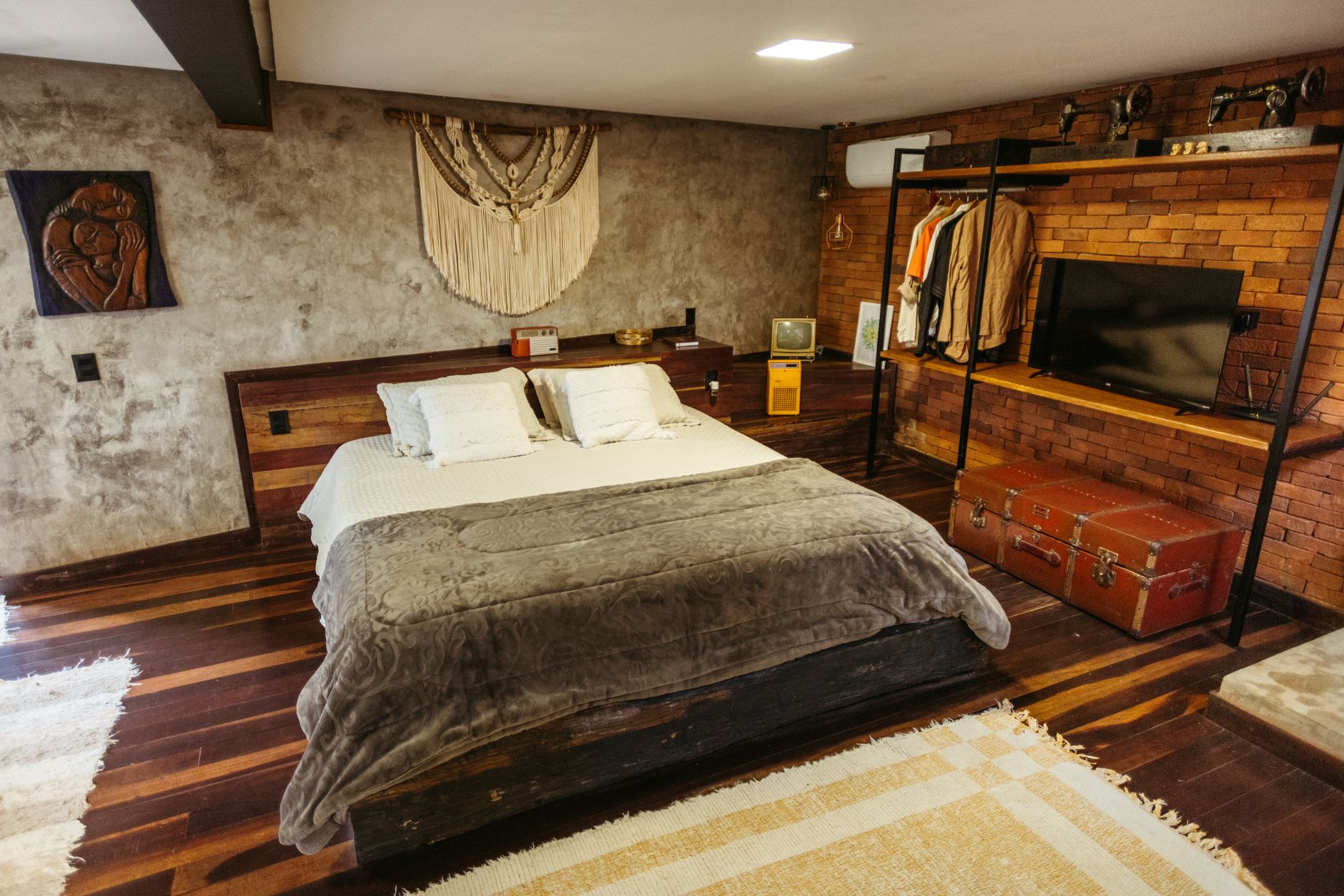
The night they inflated the mattresses
In October 2007, Brian Chesky was lying on the floor of a loft at 19 Rausch Street in San Francisco, trying to figure out how to pay $1,150 in rent on roughly $1,000 to his name. He had just driven out from Los Angeles to crash with his old Rhode Island School of Design friend, Joe Gebbia. Neither of them had a steady job. Both had expensive design-school debt and no clear plan.
That week, the Industrial Designers Society of America was holding its annual conference in San Francisco. Every hotel in the city was sold out. Gebbia emailed Chesky with what sounded like a joke: pull three air mattresses out of the closet, charge designers to sleep on them, and throw in a homemade breakfast. They would call it Air Bed and Breakfast.
Three strangers showed up that weekend. One from India, one from Boston, one from Utah. Chesky and Gebbia made them untoasted Pop-Tarts, walked them around the city, and realised something strange had happened. Nobody felt like a customer. Everyone felt like a friend.
That was the beginning of Airbnb.
From conference hack to company
After the design conference, Chesky and Gebbia tried to pitch the air-mattress idea as a real business. Investors said no. Everyone they met gave the same two objections: nobody would ever sleep in a stranger's home, and nobody would ever let a stranger sleep in theirs.
They needed an engineer. Gebbia's former roommate Nathan Blecharczyk reluctantly agreed to join as the technical co-founder. In August 2008 the three of them launched Airbedandbreakfast.com, timed to the Democratic National Convention in Denver, where Barack Obama was about to accept the nomination. Hotels in Denver were sold out, too. The site got a trickle of users, a trickle of press, and almost no revenue.
Months went by. The founders racked up roughly $20,000 in credit card debt between them. At one point Chesky was eating cereal for dinner because there was nothing else in the apartment.
And then came the cereal boxes.
Obama O's and Cap'n McCains
During the 2008 election, Chesky and Gebbia hand-designed two limited-edition cereal boxes: Obama O's ("The breakfast of change") and Cap'n McCains ("A maverick in every bite"). They hot-glued the boxes together in their kitchen, filled them with generic cereal, and sold them for $40 each as collector's items.
They sold roughly a thousand of them. The stunt netted around $30,000, more than Airbnb was making from its actual product. More importantly, it caught Paul Graham's eye.
When the trio applied to Y Combinator's Winter 2009 batch, Graham initially thought the business was a bad idea. He only invited them to interview out of curiosity. In the meeting, Chesky mentioned the cereal. Graham famously replied with something like, "If you can convince people to pay forty dollars for a four-dollar box of cereal, you can probably convince strangers to sleep in each other's homes."
Airbnb got in. The $20,000 YC cheque was the first money they had ever raised.
Do things that don't scale
Inside Y Combinator, Graham gave Chesky the advice that would later become one of the most quoted essays in startup history: do things that don't scale. The listings in New York were Airbnb's best market, but conversion was low. Why? The photos were terrible, taken on cheap phones in bad light.
So Chesky and Gebbia flew to New York, rented a nice camera, and knocked on hosts' doors one by one. They re-shot every listing. They stayed in hosts' apartments, asked what was broken, took notes. Bookings doubled, then kept doubling.
That trip became the Airbnb religion. Every product manager, every designer, every executive at the company was trained on the same idea: the way you find out what to build is to sit with the user, in person, and feel what is wrong.
Growth, scandal, and global expansion
The business took off. By 2011, Airbnb was in 89 countries. In 2012, it crossed 10 million nights booked. By the mid-2010s it was raising at valuations north of $25 billion and squaring off against hotel lobbies and city councils around the world. Hosts turned into small businesses. Entire travel markets reorganised around the platform.
It was not all good. There were safety incidents, racial-discrimination studies that forced the company to change how it displayed profile photos, and regulatory fights in cities from New York to Barcelona. Chesky's response was usually the same: write about it publicly, change the product, and ship. Not perfectly, but visibly.
The eight weeks that almost ended Airbnb
In early March 2020, Airbnb was preparing for an IPO at a rumoured $31 billion. Then COVID-19 hit. Within eight weeks, more than 80% of the business disappeared. Cancellations outpaced new bookings. The company was burning roughly $250 million a month. In April, Airbnb raised $2 billion in emergency debt from Silver Lake and Sixth Street at punishing terms.
On May 5, 2020, Chesky sent a letter to employees announcing that Airbnb would cut 25% of its workforce, roughly 1,900 people. The letter did not read like a corporate memo. It read like a person being honest in public. He explained how the decisions were made, which teams would shrink, and what each departing employee would get: 14 weeks of severance plus one additional week for every year of service, a year of extended healthcare, four months of mental-health support, and a public alumni directory to help them land new jobs.
The letter became required reading at business schools. More importantly, inside Airbnb it reset the company around a single idea: focus only on the core home-sharing product and the hosts who made it possible.
The IPO comeback
Travel came back faster than anyone expected, but it came back different. People wanted longer stays, in smaller towns, in homes with Wi-Fi and a kitchen. That was exactly Airbnb's product.
In December 2020, Airbnb went public on the Nasdaq. The stock priced at $68. On the first day of trading it opened at $146 and closed with a market capitalisation above $100 billion, more than Marriott, Hilton and Expedia combined. Chesky's personal stake was suddenly worth more than $11 billion. His mother, who had once told him, "You're not an entrepreneur, you're unemployed," was in the room.
What Chesky's story actually teaches
It is tempting to flatten the Airbnb story into a montage of cereal boxes and billion-dollar valuations. The real lesson is more boring and more useful.
One, do things that don't scale, for longer than feels reasonable. Chesky personally hosted guests, re-shot photos and answered support tickets years into the company. That is where product taste comes from.
Two, resourcefulness is the real signal to investors. Nobody funded the air-mattress idea. They funded two guys who could sell cereal for ten times its worth and refuse to quit.
Three, how you behave in a crisis is the brand. The 2020 layoff letter did more for Airbnb's long-term reputation than any marketing campaign.
And four, the best companies are often started by people who are not obviously qualified. Chesky was a design-school graduate who had never run a business, never written a line of production code, and had no money. He is now one of the most quoted CEOs in technology, running a company that redefined how a generation thinks about where they sleep.
All because, one week in October 2007, rent was due and there were a few air mattresses in a closet.
Continue reading



The Entrepreneur Story
Is your story worth telling?
We feature founders who are building something real. Apply and we'll be in touch.
Apply to be featured →Stay sharp.
Ideas that move.
Founder stories, emerging ventures, and essays on what's next — straight to your inbox.
Unsubscribe any time.