
Aravind Srinivas and the company that decided to rebuild search
Perplexity's bet was that the next interface for the open web wouldn't be ten blue links — it would be a paragraph with citations. Three years and several billion dollars of valuation later, that bet is still running.
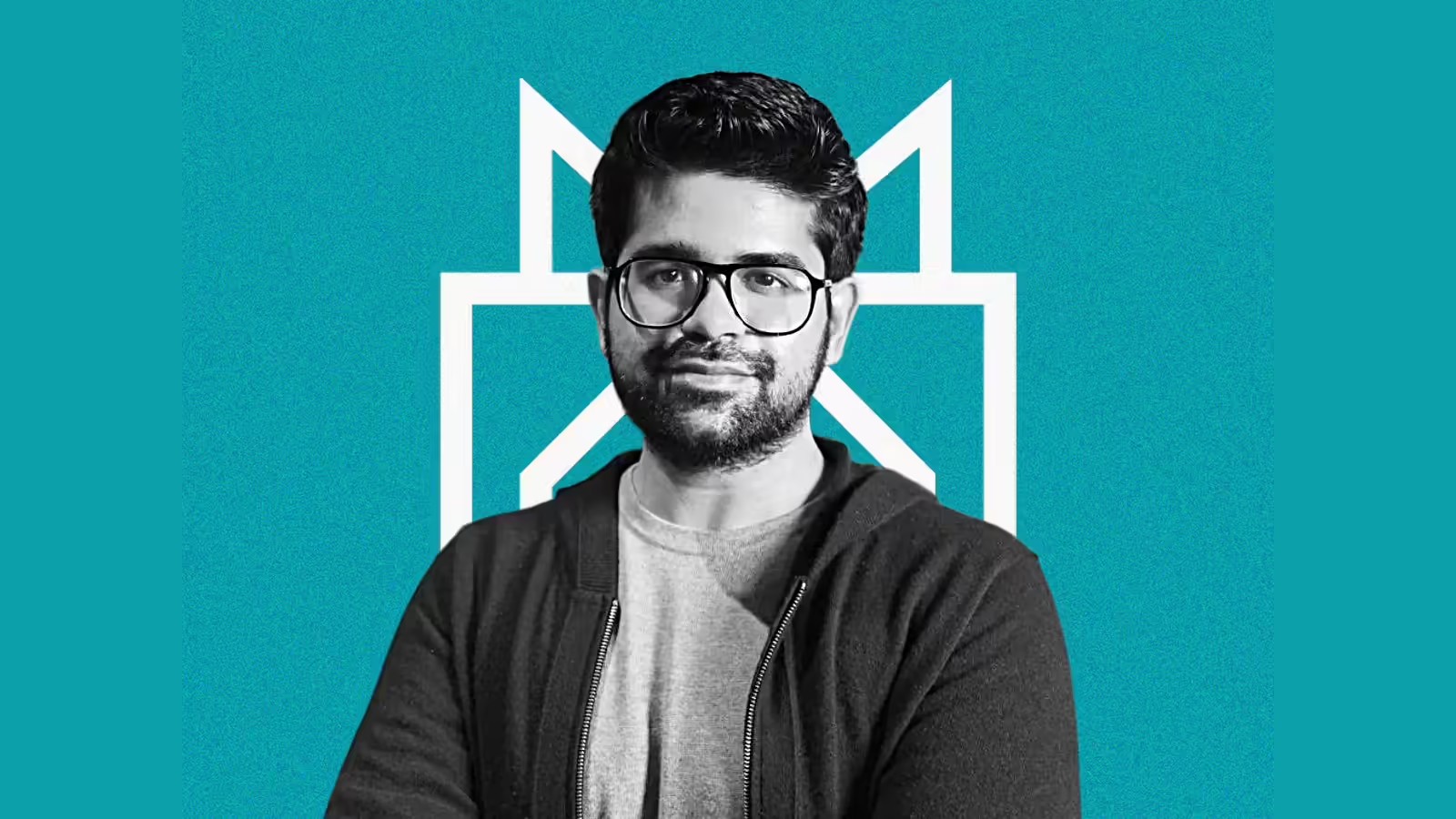
In the summer of 2022, four researchers sat in a small office in San Francisco and asked a question that, on paper, almost no rational founder asks: what if the next interface for the open web was not Google?
The four were Aravind Srinivas, Denis Yarats, Johnny Ho, and Andy Konwinski. Srinivas had just finished his PhD at Berkeley under Pieter Abbeel, with research stints at OpenAI, DeepMind, and Google Brain in between. Yarats had spent years at Facebook AI. Ho came from Quora. Konwinski had co-founded Databricks. By any reading of their resumes, the right next step for each of them was a job at one of the labs they had already worked inside. They picked a different one. They founded Perplexity.
The bet was specific. The dominant interface for the open web had been ten blue links since 1998. Generative models had made it possible, in principle, to replace those links with a paragraph that synthesized the answer and cited its sources. The question was whether that interface was a new product or a feature inside someone else's. Srinivas's answer, then and since, has been that it was a product — and that the moat would not be the model, but the retrieval system, the UX, and the trust the citations built. Three years later, it is still the most consequential founding bet in consumer AI.
The setup
Srinivas grew up in Chennai. He finished his BTech in electrical engineering at IIT Madras in 2017 and went straight to Berkeley for a PhD. The Berkeley AI Research lab in those years was the engine room of modern reinforcement learning — the lab that produced much of the work that fed into the early generative-AI wave. His advisor, Pieter Abbeel, would later co-found Covariant. Most of Srinivas's lab mates ended up at the same handful of frontier labs.
What separated his trajectory was the willingness to leave them. He had stints at three of the four labs that defined the field — OpenAI in 2018, DeepMind in 2019, Google Brain in 2020 — and then, three months after defending his thesis, he started a company. The lesson he has repeated since is that the inside-view at any frontier lab is that the lab's product is downstream of the research; the outside-view is that the lab's product is the actual constraint. The founders who break out of the lab are the ones who notice the gap.
The defended surface
Perplexity launched into the most defended product surface in modern technology. Google Search generates the cash flow that funds the rest of Alphabet — north of a hundred billion dollars in annual revenue, depending on how you count the parts. Rebuilding it requires either crawling the web independently (which is legally and operationally hard, especially in 2024 when major publishers are blocking AI crawlers as a default) or sitting on top of Google's index and hoping not to be cut off (which is fragile).
The early Perplexity product mixed both — using third-party indexes for breadth while progressively building its own crawl for the queries that mattered most. Every quarter, the share of queries served by its own index grew. Every quarter, the share that depended on Bing or Brave fell. By late 2025, press reports placed the in-house crawl at the kind of scale that lets Perplexity serve most of its query traffic without depending on a competitor's index.
The pricing problem nobody talks about
There is a less visible problem with the entire category, and Srinivas has been more honest about it than most: large-language-model inference is dramatically more expensive than a traditional search index lookup, and the unit economics of running an LLM for every query were, for a long time, brutal. Google's per-query cost is fractions of a cent. Perplexity's, at launch, was orders of magnitude higher.
The arithmetic worked anyway, for two reasons. First, inference costs have been falling roughly an order of magnitude a year as the foundation labs compete on price. Second, the gross margins on a paid subscription tier — which Perplexity launched early and aggressively — are enormous compared to ad-supported search. The bet was that by the time Google's cost advantage closed, Perplexity would be a paid product with millions of subscribers, and the comparison would no longer matter. So far, that bet is on track.
The model is not the product. Models commoditize. The retrieval system, the UX, and the trust layer are where defensibility lives.
The capital
Perplexity's funding history reads like a stress test of the venture market's belief in the category. The seed round closed in late 2022 led by a group of angels, with the rumor mill placing the valuation in the low nine figures. By March 2024, IVP led a round valuing the company at a billion. By June, NEA led a round closer to three billion. By the end of the year, the figure was being quoted in the high single-digit billions; through 2025, with NVIDIA and SoftBank and Bezos Expeditions all in the cap table, the number kept moving up.
The dilution math means Srinivas now owns less of Perplexity than most founders own of companies a tenth its size. He has been candid that the trade was deliberate — taking dilution to accelerate distribution and product breadth, rather than running a tight cap table for a slower compounding curve. The opposite strategy would have been a Zoho-like bootstrap. Perplexity is not that company, and Srinivas has been clear that he doesn't believe a Zoho strategy was ever available in his market.
The shipping cadence
What Perplexity actually does, week to week, is ship. The product line in late 2025 includes the original answer engine, a Pages product for long-form research, a Spaces product for shared workspaces, a Discover feed, an enterprise tier, a Mac assistant, an Android-first browser called Comet, and an ecommerce shopping integration. Most of those products are less than eighteen months old. Most of them are improving faster than Google's equivalent surfaces.
This is the moat Srinivas talks about more than any other. Incumbents ship in quarters because they have a launch process, a legal review, a partner review, an executive review, and an internal politics layer. Startups ship in days because they have none of those. Compounding shipping velocity over a 24-month window is, in Srinivas's repeated framing, the actual reason a startup can win a category from a hundred-billion-dollar incumbent. The model doesn't have to be better. The ship rate has to be different.
The competitive landscape
The category Perplexity helped define now has the predictable cast of competitors. ChatGPT added Search in late 2024 and turned its consumer surface into something Perplexity-shaped. Google launched AI Overviews and, more recently, AI Mode. Anthropic added web search to Claude. Microsoft's Copilot does an answer engine inside Bing. Several smaller startups — You.com, Phind, Komo, Andi — sit in the same neighborhood.
Srinivas's response to each of these waves has been to argue that the comparison is the wrong one. Perplexity does not need to be the only answer engine. It needs to be the one consumers and enterprises trust enough to pay for. The product team has spent more attention on the citation layer than any competitor — making sources visible, making them clickable, making them verifiable — because the differentiator is not the answer, it is whether the answer can be trusted.
What founders are watching
For other AI-native founders, the lesson of Perplexity has been less about search and more about the playbook. Pick a defended surface, accept that the model is commodity, build the retrieval and trust layers as the real product, raise enough capital to outlast the incumbent's response cycle, ship weekly, and refuse the assumption that the category is closed. That is the operating manual every Perplexity-adjacent founder is now studying.
Whether the company itself becomes a generational business — a Google-scale outcome rather than a billion-dollar acqui-hire — is still an open question. Srinivas is candid that the answer depends on whether subscription revenue can outrun inference cost faster than Google can crush its own margins to compete. The early signs are that it can. The next two years will tell.
Quick takeaways
-
Perplexity took the most defended product surface in tech (Google Search) and treated it as a research problem with a UX wrapped around it.
-
The retrieval system + the citation layer + the shipping cadence — not the underlying model — are the defensibility.
-
Unit economics started brutal and got better as inference costs fell roughly an order of magnitude a year.
-
The bet against a Zoho-style bootstrap was deliberate — distribution required capital, and Srinivas chose dilution over patience.
-
The category playbook (defended surface + AI-native UX + weekly ship rate) is now being copied across consumer AI.
FAQ
Who is Aravind Srinivas?
Co-founder and CEO of Perplexity AI. PhD from UC Berkeley (2021), with research stints at OpenAI, DeepMind, and Google Brain. Founded Perplexity in August 2022 with Denis Yarats, Johnny Ho, and Andy Konwinski.
What does Perplexity do?
Perplexity is an AI-native answer engine. Instead of returning ten blue links, it synthesizes an answer from web sources and cites them inline. Adjacent products include Pages, Spaces, Discover, an enterprise tier, and the Comet browser.
What is Perplexity's valuation?
Press reports through 2025 placed the valuation in the high single-digit billions and rising, after a sequence of rounds led by IVP, NEA, NVIDIA, SoftBank, and Bezos Expeditions. Exact figures move with each round.
What's the moat against Google?
Per Srinivas, the retrieval system, the citation layer, and the shipping cadence — not the underlying model. The argument is that the LLM commoditizes faster than the surface, and that incumbents cannot match a startup's ship rate even when they have more capital.
Continue reading

The Entrepreneur Story
Is your story worth telling?
We feature founders who are building something real. Apply and we'll be in touch.
Apply to be featured →Stay sharp.
Ideas that move.
Founder stories, emerging ventures, and essays on what's next — straight to your inbox.
Unsubscribe any time.