
X-energy's $1B IPO: AI Data Centers Fuel Nuclear Resurgence Powering the AI Revolution
X-energy aims for a $1 billion IPO, driven by AI data centers' insatiable demand for reliable, carbon-free power, highlighting a new era for deep tech investment in energy infrastructure.
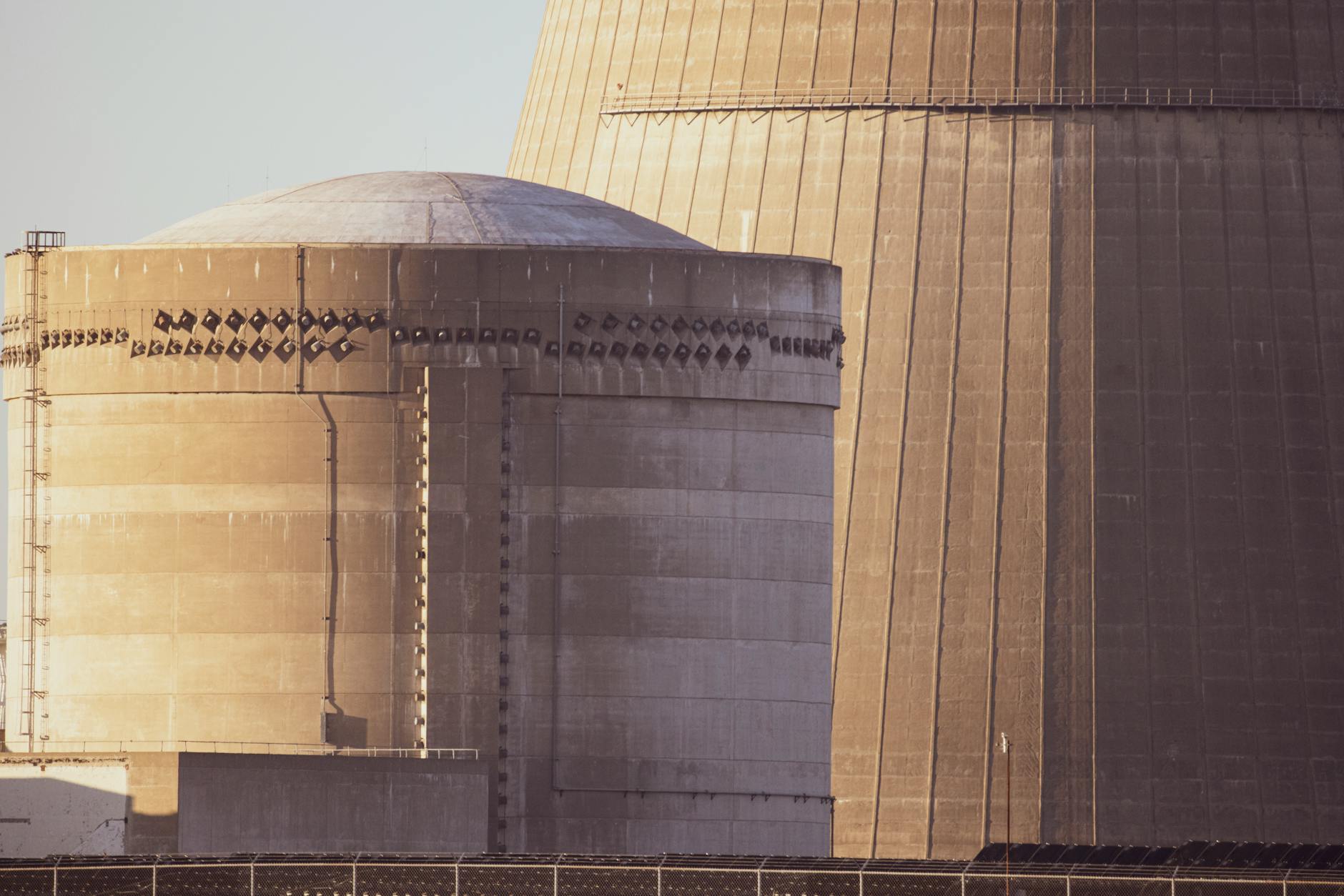
Advanced nuclear reactor and fuel technology company X-energy is targeting approximately $1 billion through an initial public offering (IPO), driven directly by the escalating, continuous energy demands of artificial intelligence (AI) data centers. This significant capital event underscores how the foundational infrastructure needs of emerging technologies are creating massive investment opportunities in deep tech, compelling founders to consider the energy backbone of their innovations.
Quick takeaways
- X-energy is going public via a SPAC merger with Ares Acquisition Corp. II (AAC), aiming for roughly $1 billion in gross proceeds.
- The primary catalyst for this capital raise is the surging electricity demand from AI data centers, which require reliable, carbon-free baseload power.
- X-energy specializes in Small Modular Reactors (SMRs), specifically its high-temperature gas-cooled Xe-100 design, and manufactures TRISO fuel for enhanced safety and performance.
- The company has secured substantial government backing, including up to $1.2 billion in matching funds from the U.S. Department of Energy's Advanced Reactor Demonstration Program (ARDP).
- X-energy plans to deploy its first commercial Xe-100 reactor by 2030 in collaboration with Dow in Texas, demonstrating a path to commercialization for advanced nuclear technology.
The Nuclear Resurgence: X-energy's Billion-Dollar Bet
X-energy, a developer of advanced nuclear reactors and fuel technology, is set to secure substantial investment, targeting approximately $1 billion, through an initial public offering. This move is not merely a play on the renewed interest in nuclear power; it is primarily driven by the escalating energy demands of AI data centers, which require continuous, high-capacity power BNN Bloomberg, 2023. The company is going public via a SPAC merger with Ares Acquisition Corp. II (AAC), a transaction initially expected to provide X-energy with up to $1.15 billion in gross proceeds, with its shares slated to trade on the NYSE BNN Bloomberg, 2023. This capital injection is poised to accelerate the deployment of X-energy's Small Modular Reactors (SMRs), specifically its high-temperature gas-cooled Xe-100 reactor design, and its proprietary TRISO fuel.
The decision to pursue a public listing, backed by such a significant sum, highlights a critical juncture where the demands of the digital economy intersect with the capabilities of deep technology. Founders in emerging tech sectors often face the challenge of securing the necessary infrastructure to scale their innovations. For AI, that infrastructure is increasingly defined by power availability. X-energy's approach provides carbon-free, always-on (baseload) power, positioning it as an ideal energy solution for the continuous operations of high-demand data centers BNN Bloomberg, 2023. This direct link between a speculative, high-growth sector like AI and a capital-intensive, long-horizon deep-tech solution like advanced nuclear demonstrates a shift in investment priorities. It signals that foundational infrastructure, once considered a utility, is now a strategic differentiator and a major investment driver. The market is recognizing that the future of AI and other data-intensive technologies cannot proceed without a corresponding revolution in reliable, clean energy generation. For founders, this means understanding the energy footprint of their products and considering how scalable, sustainable power solutions are becoming as critical as computational power itself.
Powering the AI Revolution: Data Centers' Insatiable Demand
The global data center industry's power consumption is projected to grow substantially, with some forecasts suggesting a doubling by 2030 BNN Bloomberg, 2023. This surge is not merely a linear increase in computing needs; it is fundamentally reshaped by the exponential demands of artificial intelligence. AI workloads, particularly those involving large language models and complex machine learning, require massive, uninterrupted computational resources. This translates directly into an insatiable appetite for electricity. Traditional data centers already consume significant power for servers, cooling, and auxiliary systems. AI-driven data centers amplify this, demanding higher power densities per rack and continuous uptime to support real-time processing and training cycles. The intermittency of renewable energy sources, while vital for decarbonization, poses a significant challenge for operations that cannot tolerate fluctuations or downtime.
For founders building AI companies, this energy crunch is becoming a critical operational and strategic hurdle. Securing access to affordable, reliable, and sustainable power is no longer just an environmental concern; it is a prerequisite for growth. Hyperscalers like Microsoft, Amazon, and Google, as well as emerging AI startups, are all grappling with how to power their expanding compute infrastructure without compromising their sustainability goals or facing crippling energy costs. The sheer scale of demand means that traditional grid upgrades struggle to keep pace, and relying solely on intermittent renewables necessitates expensive and complex battery storage solutions. This creates a market opportunity for technologies that can offer baseload, carbon-free power at scale. X-energy's focus on SMRs directly addresses this gap by providing a solution that can be deployed closer to demand centers, offer consistent output, and integrate into existing grid infrastructure more efficiently than large-scale conventional nuclear plants. The challenge for founders extends beyond just developing groundbreaking algorithms; it now encompasses the very physical infrastructure that underpins them. Without a robust, future-proof energy supply, the promise of AI innovation risks being bottlenecked by power limitations. This dynamic is fueling investment in advanced energy solutions, proving that the future of software is inextricably linked to the future of energy hardware.
The Xe-100 Reactor and TRISO Fuel: A Deep Dive into X-energy's Technology
X-energy's core technological offering revolves around its high-temperature gas-cooled Xe-100 reactor design and the proprietary TRISO fuel that powers it. The Xe-100 is a Small Modular Reactor (SMR), a class of nuclear reactors distinct from conventional gigawatt-scale plants. SMRs are characterized by their smaller physical footprint, modular construction, and lower power output, typically less than 300 MWe. This modularity allows for factory fabrication of components, reducing construction times and costs, and enabling deployment in diverse locations, including potentially industrial sites or remote communities where large reactors are impractical. The Xe-100, specifically, is a Generation IV reactor, designed with inherent safety features that rely on passive systems rather than active operator intervention, significantly reducing the risk of accidents BNN Bloomberg, 2023. Its high-temperature operation also makes it suitable for industrial process heat applications, broadening its market beyond just electricity generation.
Central to the Xe-100's advanced safety and performance is its TRISO (Tristructural-Isotropic) fuel. X-energy manufactures this advanced nuclear fuel, which consists of uranium oxycarbide (UCO) kernels encapsulated in multiple layers of ceramic materials, including porous carbon, pyrolytic carbon, and silicon carbide BNN Bloomberg, 2023. These layers act as miniature pressure vessels, preventing the release of radioactive fission products even under extreme temperatures. This robust containment is a key factor in the Xe-100's enhanced safety profile, as it eliminates the possibility of a meltdown in the traditional sense. The TRISO fuel's resilience allows the reactor to operate at higher temperatures and with greater efficiency than conventional light-water reactors, while also enabling longer fuel cycles. For deep-tech founders, X-energy's dual focus on reactor design and fuel manufacturing illustrates the importance of vertical integration in complex, capital-intensive industries. Controlling both the core technology and its critical supply chain component, like TRISO fuel, allows for greater innovation, quality control, and ultimately, faster deployment. The company's aim to deploy its first commercial Xe-100 reactor by 2030, in collaboration with Dow at a site in Texas, provides a concrete timeline and a strategic partnership that validates its technology and business model BNN Bloomberg, 2023. This collaboration with an industrial giant like Dow highlights the potential for SMRs to decarbonize not only the electric grid but also energy-intensive industrial processes, further expanding the market opportunity for advanced nuclear solutions.
Government Backing and Market Context: De-risking Deep Tech
The journey for deep-tech companies, particularly those in advanced energy, is often characterized by high capital requirements, long development cycles, and significant regulatory hurdles. X-energy's trajectory exemplifies how strategic government support can play a pivotal role in de-risking these ventures and attracting private investment. The company has received substantial funding, notably up to $1.2 billion in matching funds from the U.S. Department of Energy's (DOE) Advanced Reactor Demonstration Program (ARDP) BNN Bloomberg, 2023. The ARDP is a critical initiative designed to accelerate the demonstration and deployment of advanced nuclear reactors. By providing significant financial backing, the DOE signals governmental commitment to advanced nuclear technology as a viable solution for clean energy and energy security. This public-private partnership model is crucial for technologies like SMRs, which require billions in upfront investment before commercial revenues can be realized.
For founders in deep tech, the ARDP's support for X-energy offers several key lessons. First, it demonstrates the necessity of aligning technological innovation with national strategic priorities, such as decarbonization and energy independence. Second, government funding, especially matching funds, acts as a powerful validator, reducing perceived risk for private investors. This validation is particularly important for technologies with long development timelines and complex regulatory pathways. Third, such programs often come with technical and regulatory support, streamlining the path to commercialization. While X-energy is a leader in the SMR space, it operates within a broader ecosystem of advanced nuclear startups. Companies like TerraPower, backed by Bill Gates, are also developing advanced reactor designs, focusing on different technologies like molten salt reactors or sodium-cooled fast reactors. NuScale Power, another SMR developer, has already gone public and is pursuing its own deployment projects. This competitive landscape, combined with significant government backing, indicates a robust and growing sector. The collective progress of these companies suggests that advanced nuclear is moving beyond the theoretical stage into tangible deployment, driven by the acute need for reliable, carbon-free baseload power that the AI revolution has only intensified. The government's role in fostering this environment is not just about financial aid; it's about creating the regulatory frameworks and market conditions that allow these capital-intensive, long-term ventures to thrive.
The SPAC Route and Public Market Ambition
X-energy's decision to go public via a SPAC merger with Ares Acquisition Corp. II (AAC) reflects a strategic choice in navigating the capital markets for a deep-tech company. A Special Purpose Acquisition Company (SPAC) is a shell company created solely to raise capital through an IPO with the purpose of acquiring an existing private company, thereby taking it public. This "de-SPAC" transaction allows the target company, in this case, X-energy, to bypass the traditional IPO process, which can be lengthy, costly, and subject to volatile market conditions. For a company like X-energy, which operates in a capital-intensive sector with long development timelines and significant future revenue projections, a SPAC can offer a more predictable path to accessing public market capital. The initial expectation was that the SPAC transaction would provide X-energy with up to $1.15 billion in gross proceeds, a substantial sum necessary to fund the continued development and deployment of its Xe-100 reactors and TRISO fuel manufacturing capabilities BNN Bloomberg, 2023.
The SPAC route, while offering speed and potentially greater valuation certainty, also comes with its own set of complexities and scrutiny. Recent years have seen a mixed track record for SPAC mergers, with some companies struggling post-merger. However, for deep-tech companies like X-energy, which require significant, patient capital to bring their innovative technologies to fruition, the advantages can outweigh the risks. It provides a direct infusion of capital from public investors who are often looking for long-term growth opportunities in transformative sectors. For founders considering similar paths, X-energy's move underscores the importance of a clear investor narrative, particularly when dealing with technologies that are years away from widespread commercialization. The company's ability to link its advanced nuclear technology directly to the immediate and growing demand from AI data centers provides a compelling story for public market investors, framing its long-term vision within a near-term market imperative. Trading on the NYSE following the merger provides X-energy with increased visibility, liquidity, and a platform for future fundraising, all critical elements for scaling a deep-tech company with global ambitions in the energy sector. This public market access is essential for financing the large-scale infrastructure projects that advanced nuclear deployment entails.
Implications for Founders: Capital, Innovation, and Infrastructure
X-energy's $1 billion IPO, directly fueled by the energy demands of AI data centers, presents several crucial implications for founders across various sectors, particularly those in deep tech, energy, and AI itself. First, it highlights the immense capital flowing into foundational infrastructure when a critical market demand emerges. The AI revolution, while often framed in terms of software and algorithms, is fundamentally constrained by its physical energy footprint. Founders should recognize that bottlenecks in one industry (power supply) can create massive opportunities in another (advanced energy solutions). This means looking beyond immediate product features to the underlying infrastructure that enables scale. The projected doubling of global data center power consumption by 2030 is not just a statistic; it is a clear signal of an underserved market waiting for innovative energy solutions BNN Bloomberg, 2023.
Second, the success of X-energy in attracting significant private and public capital underscores the importance of patient capital and strategic partnerships for deep-tech ventures. Developing advanced nuclear reactors and fuel technology is a multi-decade endeavor requiring billions in investment before commercial deployment. The U.S. Department of Energy's ARDP matching funds, totaling up to $1.2 billion, were instrumental in de-risking X-energy's technology and attracting private investors BNN Bloomberg, 2023. Founders in deep tech should actively seek government grants, strategic industry partners like Dow, and long-term institutional investors who understand the extended development cycles. The collaboration with Dow to deploy the first commercial Xe-100 reactor by 2030 in Texas provides a tangible roadmap and proof of industrial demand, which is crucial for deep-tech commercialization [BNN Bloomberg, 2023](https://www.bnnbloomberg.ca/advanced-nuclear-startup-x-energy-aiming-for-1b-ipo-says-ai-data-centers-will-fuel-demand-1.2010195].
Finally, for AI founders, this development serves as a wake-up call regarding the sustainability and scalability of their operations. Relying solely on existing grid infrastructure or intermittent renewables may not be sufficient for the continuous, high-capacity power needs of future AI models. Exploring partnerships with advanced energy providers or even considering co-locating data centers with dedicated power sources could become a competitive differentiator. The narrative that AI is driving investment in advanced nuclear technology demonstrates a powerful interdependency: the future of AI is now directly tied to innovations in energy generation. Founders must integrate energy strategy into their core business planning, not just as a cost center, but as a critical enabler of their product roadmap and market expansion. The market is increasingly rewarding companies that address these foundational challenges, demonstrating that solving hard, infrastructure-level problems can unlock immense value and attract substantial capital.
FAQ
Q: What is X-energy's core technology? A: X-energy specializes in the development of Small Modular Reactors (SMRs), specifically its high-temperature gas-cooled Xe-100 reactor design, and manufactures TRISO fuel, an advanced nuclear fuel designed for enhanced safety and performance in its reactors BNN Bloomberg, 2023.
Q: How much capital is X-energy targeting through its IPO? A: X-energy is targeting approximately $1 billion through its IPO, which is being executed via a SPAC merger with Ares Acquisition Corp. II (AAC) BNN Bloomberg, 2023.
Q: Why is there such significant investment in X-energy now? A: The investment is primarily driven by the escalating energy demands of AI data centers, which require continuous, high-capacity, carbon-free baseload power. X-energy's SMR technology offers a solution to meet this growing need BNN Bloomberg, 2023.
Q: What government support has X-energy received? A: X-energy has received significant funding, including up to $1.2 billion in matching funds from the U.S. Department of Energy's Advanced Reactor Demonstration Program (ARDP) BNN Bloomberg, 2023.
Q: When does X-energy plan to deploy its first commercial reactor? A: X-energy aims to deploy its first commercial Xe-100 reactor by 2030, in collaboration with Dow at a site in Texas BNN Bloomberg, 2023.
Continue reading


The Entrepreneur Story
Is your story worth telling?
We feature founders who are building something real. Apply and we'll be in touch.
Apply to be featured →Stay sharp.
Ideas that move.
Founder stories, emerging ventures, and essays on what's next — straight to your inbox.
Unsubscribe any time.