
Cerebras IPO: A Test for AI Hardware Investor Appetite Navigating Deep Tech's Public Test
Cerebras Systems' confidential IPO filing in May 2024 will gauge public market readiness for specialized, capital-intensive AI hardware companies, setting a benchmark for deep tech founders.
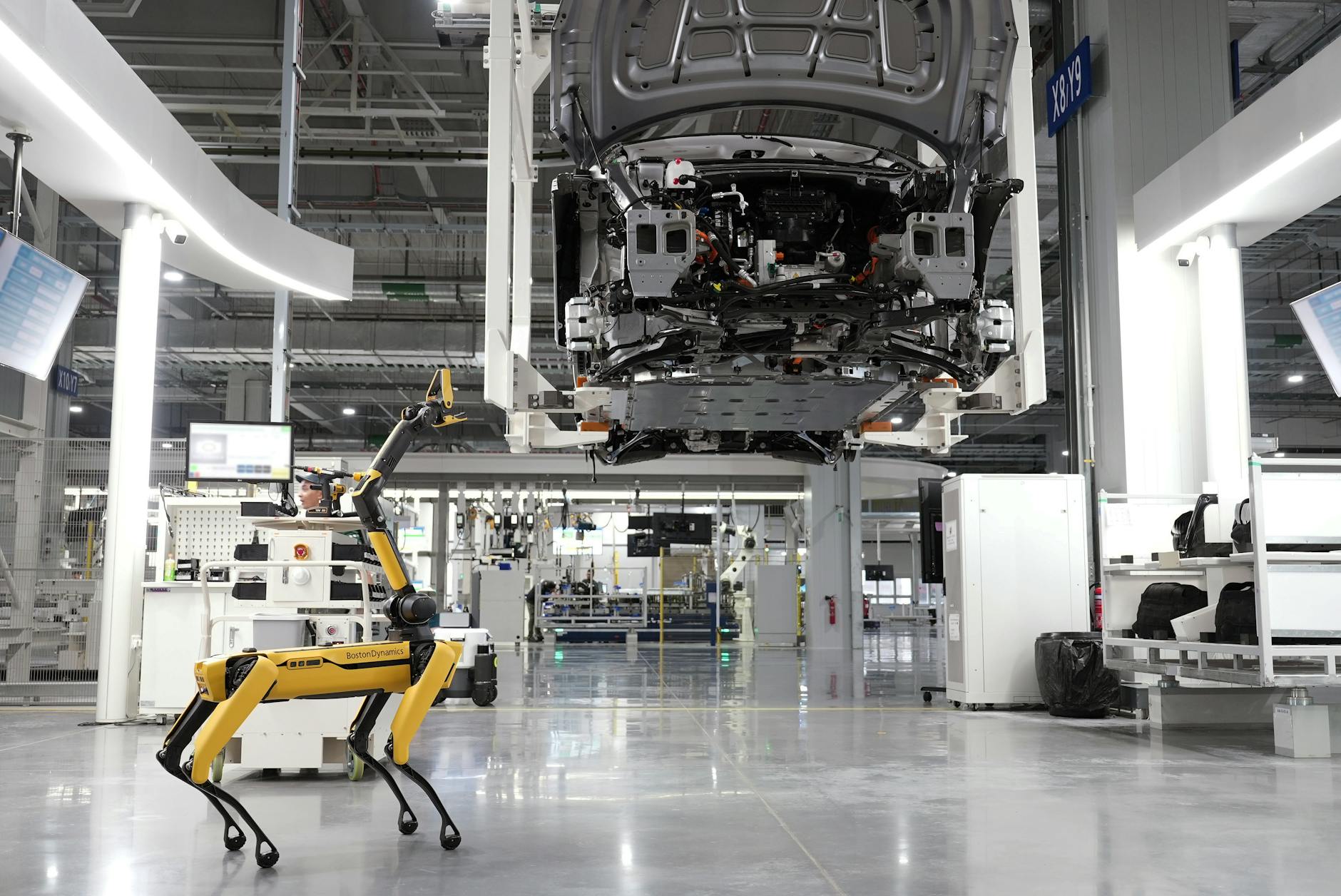
Cerebras Systems, a developer of specialized artificial intelligence chips, confidentially filed for an initial public offering (IPO) in May 2024, aiming to list its shares on the Nasdaq Stock Market under the ticker symbol "CSX" [Reuters, 2024]. This move will serve as a crucial test for investor appetite for specialized, capital-intensive AI hardware companies in the current public market climate. For founders in deep tech, particularly those in hardware, Cerebras's trajectory offers a real-world benchmark for navigating massive capital requirements, fierce competition, and the challenge of bringing highly differentiated technology to market.
Quick Takeaways
- Cerebras Systems' confidential IPO filing in May 2024 signals a significant test for public market readiness for specialized AI hardware.
- The company, known for its large Wafer-Scale Engine (WSE) chips for training AI models, was valued at $4 billion in 2021.
- Cerebras directly competes with established players like Nvidia, highlighting the intense capital and technological demands of the AI chip sector.
- The IPO's success will indicate investor confidence in capital-intensive hardware ventures and their ability to scale amid the broader AI technology boom.
- Founders in deep tech should observe this IPO for insights into market valuation, investor expectations for profitability, and strategies for differentiation against entrenched incumbents.
The Cerebras Gambit: A Public Market Test
Cerebras Systems, founded in 2016 by CEO Andrew Feldman, has confidentially initiated the process to go public, filing for an IPO in May 2024 [Reuters, 2024; Bloomberg, N/A]. The company intends to list its shares on the Nasdaq Stock Market under the ticker symbol "CSX" [Reuters, 2024]. This confidential filing marks a pivotal moment, not just for Cerebras, but for the broader landscape of artificial intelligence hardware startups. The offering will gauge investor readiness to back highly specialized, capital-intensive companies operating in a market dominated by established giants.
The AI technology boom has driven billions of dollars into AI infrastructure, creating a fertile, yet demanding, environment for hardware innovators [Reuters, 2024]. Cerebras enters this public market test having been valued at $4 billion during a 2021 funding round [Reuters, 2024]. That valuation reflects significant private investor confidence in its unique approach to AI compute, specifically its Wafer-Scale Engine (WSE) chips. These chips are designed to accelerate the training of large artificial intelligence models, a task that demands immense computational power and memory bandwidth [Reuters, 2024].
For founders, the Cerebras IPO offers a direct look into how public markets assess deep tech companies with substantial upfront research and development costs, long product cycles, and complex manufacturing processes. The success or struggle of Cerebras in attracting public capital will provide tangible data points on investor appetite for innovation that requires patient capital and sustained investment. It will also reveal how public investors weigh differentiation against the challenges of market penetration and scaling production in a hardware-centric industry. The company’s ability to articulate a clear path to profitability and demonstrate a sustainable competitive advantage against formidable rivals like Nvidia will be under intense scrutiny. This IPO is not merely about Cerebras raising capital; it is a bellwether for the entire AI hardware sector, indicating whether the public market is prepared to fund the next generation of physical infrastructure powering the AI revolution. The confidential nature of the filing means specific financial details, such as revenue, profitability, and the target IPO valuation, remain undisclosed for now, but these figures will be critical in shaping the market's perception once the S-1 becomes public. The market will be watching to see how Cerebras justifies its previous private valuation and how it plans to fund its future growth and manufacturing expansion.
The Wafer-Scale Engine: Differentiated Hardware in a GPU World
Cerebras Systems distinguishes itself through its Wafer-Scale Engine (WSE) chips, which are significantly larger than traditional Graphics Processing Units (GPUs) [Reuters, 2024]. This design choice is fundamental to Cerebras's strategy: to create a single, massive chip capable of handling the most demanding artificial intelligence model training tasks. The WSE chips are specifically engineered for this purpose, aiming to provide a consolidated compute fabric that reduces latency and increases throughput by keeping vast amounts of data and computation on a single piece of silicon [Reuters, 2024]. This contrasts sharply with the traditional approach of using many smaller, interconnected GPUs.
The technical implications of wafer-scale integration are profound. A standard silicon wafer, from which hundreds of individual chips are typically cut, is instead used to produce one giant chip. This approach minimizes the bottlenecks associated with inter-chip communication, which can become a significant performance limitation when training models with billions or trillions of parameters across thousands of GPUs. By building a single, monolithic processor, Cerebras attempts to circumvent these issues, offering a specialized solution for AI workloads that are increasingly data-intensive and computationally demanding. The WSE's architecture is optimized for parallelism and memory bandwidth, crucial characteristics for the matrix multiplications and data movements inherent in neural network training.
However, this differentiation comes with inherent challenges. Manufacturing wafer-scale chips is a complex, capital-intensive endeavor. The yield rates for such large chips are typically lower than for smaller, individual chips, as any defect across the entire wafer can render the whole component unusable. The packaging, cooling, and power delivery for such a massive piece of silicon also present significant engineering hurdles. These factors contribute directly to the "capital-intensive" nature of Cerebras as an AI hardware company [Reuters, 2024]. The company must continually invest heavily in R&D, advanced manufacturing processes, and specialized infrastructure to produce and deploy its systems.
In a market largely defined by Nvidia's dominance with its GPU architectures, Cerebras's WSE represents a bold, alternative vision. While Nvidia's GPUs are highly versatile and have evolved to become the de facto standard for AI, Cerebras focuses on specialized hardware for a specific, albeit critical, segment of the AI workload: large-scale model training. This specialization is both its strength and its challenge. It allows for potential performance advantages in specific scenarios, but also requires convincing customers to adopt a fundamentally different hardware paradigm and integrate it into their existing infrastructure. The IPO will test whether public investors believe this specialized, differentiated hardware approach can capture sufficient market share and generate sustainable profits against the formidable ecosystem and economies of scale enjoyed by general-purpose chip manufacturers.
Scaling Production and Customer Acquisition
The journey from innovative chip design to widespread market adoption is fraught with challenges, particularly for hardware companies like Cerebras Systems. Scaling the production of its Wafer-Scale Engine (WSE) chips demands significant capital outlay and sophisticated manufacturing partnerships. Unlike software companies that can scale with relatively low marginal costs, hardware ventures require continuous investment in fabrication, assembly, and testing facilities. The capital-intensive nature of Cerebras, highlighted in the context of its IPO, directly reflects these requirements [Reuters, 2024]. Producing silicon at scale, especially a unique and complex product like the WSE, necessitates long-term contracts with foundries, stringent quality control, and the ability to manage complex global supply chains. These operational complexities mean that growth often requires substantial upfront investment before revenue generation.
Beyond manufacturing, Cerebras faces the equally demanding task of customer acquisition and deployment. The company's customer base already includes government agencies, research institutions, and large enterprises [Reuters, 2024]. These are organizations with significant computational needs for training large AI models, precisely the target market for the WSE chips [Reuters, 2024]. However, selling to such entities involves long sales cycles, rigorous evaluation processes, and often bespoke integration efforts. Government agencies, for instance, typically have stringent security and procurement requirements. Research institutions may prioritize raw compute power and flexibility, while large enterprises require seamless integration with existing data centers and software stacks.
Deploying Cerebras's specialized hardware also extends beyond simply selling a chip. The WSE is not a drop-in replacement for a GPU; it often requires a dedicated system, specialized cooling, and a specific software environment to maximize its performance. This means Cerebras must provide comprehensive support, from initial system design and integration to ongoing maintenance and software optimization. Building out this support infrastructure, including field engineers and technical sales teams, adds another layer of operational cost and complexity. The success of Cerebras's scaling efforts will hinge on its ability to not only produce its chips efficiently but also to effectively educate, onboard, and support its high-value customers.
The IPO will provide Cerebras with capital that could be used to address these scaling challenges. Funds raised could be allocated to expand manufacturing capacity, invest in further R&D to improve successive generations of the WSE, and grow its global sales and support teams. However, public market investors will scrutinize the company's plan for achieving economies of scale, its customer acquisition costs, and its path to profitability given the substantial investments required. For founders in the hardware space, Cerebras's journey underscores the critical importance of a robust go-to-market strategy that accounts for both the physical production of the product and the extensive support required to integrate it into complex customer environments.
Nvidia's Shadow: Competition and Market Dynamics
Cerebras Systems operates in an AI chip market dominated by Nvidia, facing direct competition from the established industry giant [Reuters, 2024]. Nvidia's market leadership stems from its early investment in GPUs for parallel computing, which proved serendipitous for the emergence of deep learning. Over decades, Nvidia has built a formidable ecosystem around its hardware, including the CUDA software platform, which has become the de facto standard for AI development. This ecosystem lock-in, combined with continuous innovation in GPU architecture, gives Nvidia a significant competitive advantage. For founders, competing with such a dominant player requires not just technological differentiation but also a strategy to break through an entrenched ecosystem.
The AI technology boom has amplified the demand for specialized hardware, leading to "billions of dollars being poured into AI infrastructure" [Reuters, 2024]. This surge in investment has attracted numerous startups and spurred incumbent semiconductor companies to develop their own AI accelerators. While Cerebras differentiates with its Wafer-Scale Engine (WSE) chips, designed specifically for training large AI models, it still vies for the same customer budgets and computational workloads as Nvidia's powerful H100 and upcoming B200 GPUs [Reuters, 2024]. The competition is not just about raw performance; it encompasses factors like software compatibility, ease of integration, power efficiency, total cost of ownership, and the maturity of the support ecosystem.
Nvidia's strategy includes not only selling chips but also offering complete AI platforms and cloud services, further solidifying its position. This integrated approach can make it challenging for a hardware-focused startup like Cerebras to gain traction, as customers often prefer comprehensive solutions from a single vendor. Cerebras must demonstrate compelling performance advantages and a clear return on investment to justify the adoption of its specialized hardware, which may require changes to existing workflows and infrastructure. The company's customer base, which includes government agencies, research institutions, and large enterprises, represents entities with the resources and specific needs to consider alternative, high-performance solutions [Reuters, 2024]. However, even these sophisticated customers often have existing investments in Nvidia's ecosystem.
The IPO will reveal how Cerebras plans to navigate this competitive landscape. Its S-1 filing will likely detail its market strategy, including how it intends to expand its customer base and articulate its value proposition against Nvidia. It will also need to address the long-term sustainability of its technological advantage, given the rapid pace of innovation in the AI chip sector. Founders in competitive deep tech markets should note Cerebras's approach to carving out a niche with highly specialized hardware, while simultaneously being prepared for the ecosystem challenges posed by market leaders. The success of Cerebras will indicate whether a focused, differentiated hardware strategy can thrive in the shadow of a dominant, general-purpose platform provider.
Investor Sentiment and the AI Boom
Cerebras Systems' confidential IPO filing in May 2024 arrives amidst a sustained period of intense investor interest in artificial intelligence, with "billions of dollars being poured into AI infrastructure" [Reuters, 2024]. This broad enthusiasm for AI technology forms the backdrop against which Cerebras will test public market readiness for specialized hardware companies. Investor sentiment is currently high for anything related to AI, driven by the transformative potential of large language models and other advanced AI applications. This creates an opportunity for Cerebras to capitalize on the market's hunger for companies that provide the foundational compute necessary for this boom.
However, the investment landscape for hardware companies is distinct from that of software. Hardware ventures are typically more capital-intensive, requiring substantial upfront investment in R&D, manufacturing, and supply chain management. Cerebras, with its unique Wafer-Scale Engine (WSE) chips designed for training large AI models, embodies this capital-intensive profile [Reuters, 2024]. Public investors will need to weigh the long-term growth potential of Cerebras's differentiated technology against the inherent risks associated with hardware manufacturing, including long development cycles, potential supply chain disruptions, and the rapid obsolescence of technology. The company’s 2021 valuation of $4 billion provides a benchmark for its private market perception, and the IPO will reveal whether public markets assign a similar, or higher, value to its future prospects [Reuters, 2024].
The current market environment presents a dichotomy: on one hand, the insatiable demand for AI compute creates a strong tailwind for companies like Cerebras. On the other, investors are increasingly scrutinizing profitability and sustainable business models, especially after a period of high growth and sometimes questionable valuations in the private markets. Cerebras will need to demonstrate a clear path to generating significant revenue and, eventually, profit, justifying its substantial capital requirements. Its customer base, comprising government agencies, research institutions, and large enterprises, suggests a focus on high-value clients with deep pockets and critical AI workloads [Reuters, 2024]. This client profile could be attractive to investors looking for stable, recurring revenue streams from mission-critical applications.
The IPO's outcome will also reflect broader investor confidence in the ability of specialized hardware to compete with general-purpose solutions from companies like Nvidia. While Nvidia's ecosystem dominance is clear, the sheer scale and complexity of future AI models might necessitate highly specialized architectures like Cerebras's WSE. Investors will be evaluating whether Cerebras can effectively carve out and expand this niche. For founders, the Cerebras IPO offers critical insights into how public markets value technological differentiation, capital efficiency in hardware, and the ability to convert a strong technical vision into a scalable, profitable business in a rapidly evolving market. The market's reception will serve as a barometer for how much risk and long-term investment public shareholders are willing to undertake for the promise of next-generation AI infrastructure.
Lessons for Deep Tech Founders
Cerebras Systems' confidential IPO filing offers several critical lessons for founders operating in deep tech, particularly those building hardware or other capital-intensive solutions. The company's journey highlights the dual challenges of technological differentiation and market commercialization in a highly competitive sector.
First, the imperative of deep technological differentiation is clear. Cerebras chose to develop a fundamentally different architecture with its Wafer-Scale Engine (WSE) chips, significantly larger than traditional GPUs and specifically designed for training large AI models [Reuters, 2024]. This bold move allowed Cerebras to stand out in a market dominated by Nvidia. For other deep tech founders, this underscores the necessity of building products that offer a demonstrable, non-incremental advantage over existing solutions. Merely being "better" might not be enough; being different in a way that solves a critical, underserved problem can create a defensible moat. This differentiation must be rooted in intellectual property and engineering prowess that is difficult for competitors to replicate quickly.
Second, understanding and managing capital intensity is paramount. Cerebras is a "capital-intensive" company, a reality for most hardware and deep tech ventures [Reuters, 2024]. Developing, manufacturing, and deploying highly specialized chips requires massive upfront and ongoing investment in R&D, fabrication, and infrastructure. Founders must accurately project these capital needs, understand the long funding cycles, and demonstrate a clear path to scaling production and achieving profitability. The $4 billion valuation Cerebras achieved in 2021 reflects the significant private investment required to reach this stage [Reuters, 2024]. This suggests that deep tech founders must be prepared for extended periods of fundraising and demonstrate compelling long-term visions to attract investors willing to provide patient capital.
Third, navigating intense competition from incumbents is a constant battle. Cerebras directly competes with Nvidia, a company with an established ecosystem, vast resources, and deep market penetration [Reuters, 2024]. Founders in similar positions must develop strategies that either challenge incumbents head-on with superior performance in specific niches or find complementary roles within the existing ecosystem. This involves not just technological superiority but also strategic partnerships, effective go-to-market strategies, and building a compelling narrative that justifies adoption over familiar alternatives. Cerebras's focus on government agencies, research institutions, and large enterprises indicates a strategy to target customers with unique needs and budgets that might be more open to specialized, high-performance solutions [Reuters, 2024].
Finally, the Cerebras IPO serves as a real-time barometer of investor appetite for hardware innovation within the broader AI boom. While "billions of dollars" are flowing into AI infrastructure, public markets are known for their demand for predictable growth and profitability [Reuters, 2024]. Founders should observe how Cerebras's valuation and market reception are shaped by its financial disclosures, its growth trajectory, and its competitive outlook. This will provide valuable insights into what metrics public investors prioritize for capital-intensive deep tech companies and how they balance the promise of future innovation with the realities of current financial performance. The outcome of this IPO will help other deep tech founders calibrate their own fundraising strategies and market entry timings, understanding the evolving expectations of both private and public capital markets.
FAQ
Q1: What is Cerebras Systems known for in the AI chip market?
A1: Cerebras Systems is known for its Wafer-Scale Engine (WSE) chips, which are significantly larger than traditional GPUs. These chips are specifically designed for training large artificial intelligence models, aiming to provide superior performance by integrating vast computational resources on a single piece of silicon [Reuters, 2024].
Q2: When did Cerebras Systems file for its IPO and on which exchange?
A2: Cerebras Systems confidentially filed for an initial public offering (IPO) in May 2024. The company intends to list its shares on the Nasdaq Stock Market under the proposed ticker symbol "CSX" [Reuters, 2024].
Q3: How was Cerebras Systems previously valued, and what does this IPO signify for AI hardware companies?
A3: Cerebras Systems was valued at $4 billion during a 2021 funding round [Reuters, 2024]. This IPO will serve as a crucial test for investor appetite for specialized, capital-intensive AI hardware companies, indicating public market readiness to fund such ventures amidst the broader AI technology boom [Reuters, 2024].
Q4: Who are Cerebras Systems' main competitors in the AI chip space?
A4: Cerebras Systems faces direct competition from established players in the AI chip market, most notably Nvidia [Reuters, 2024]. Nvidia dominates the market with its GPU architectures and extensive software ecosystem.
Q5: What types of customers does Cerebras Systems serve?
A5: Cerebras Systems' customer base includes government agencies, research institutions, and large enterprises. These organizations typically have significant computational needs for training large AI models, which aligns with the specialized capabilities of the company's Wafer-Scale Engine chips [Reuters, 2024].
Continue reading


The Entrepreneur Story
Is your story worth telling?
We feature founders who are building something real. Apply and we'll be in touch.
Apply to be featured →Stay sharp.
Ideas that move.
Founder stories, emerging ventures, and essays on what's next — straight to your inbox.
Unsubscribe any time.