
I Never Set Out to Become an Entrepreneur. I Just Wanted to Keep Creating. Anurag Kulkarni, SA Digital Films
From a rented VCR in Nagpur to corporate films for Tech Mahindra and a government initiative spanning 22 languages — Anurag Kulkarni's two-decade journey through music, filmmaking, and B2B communication.
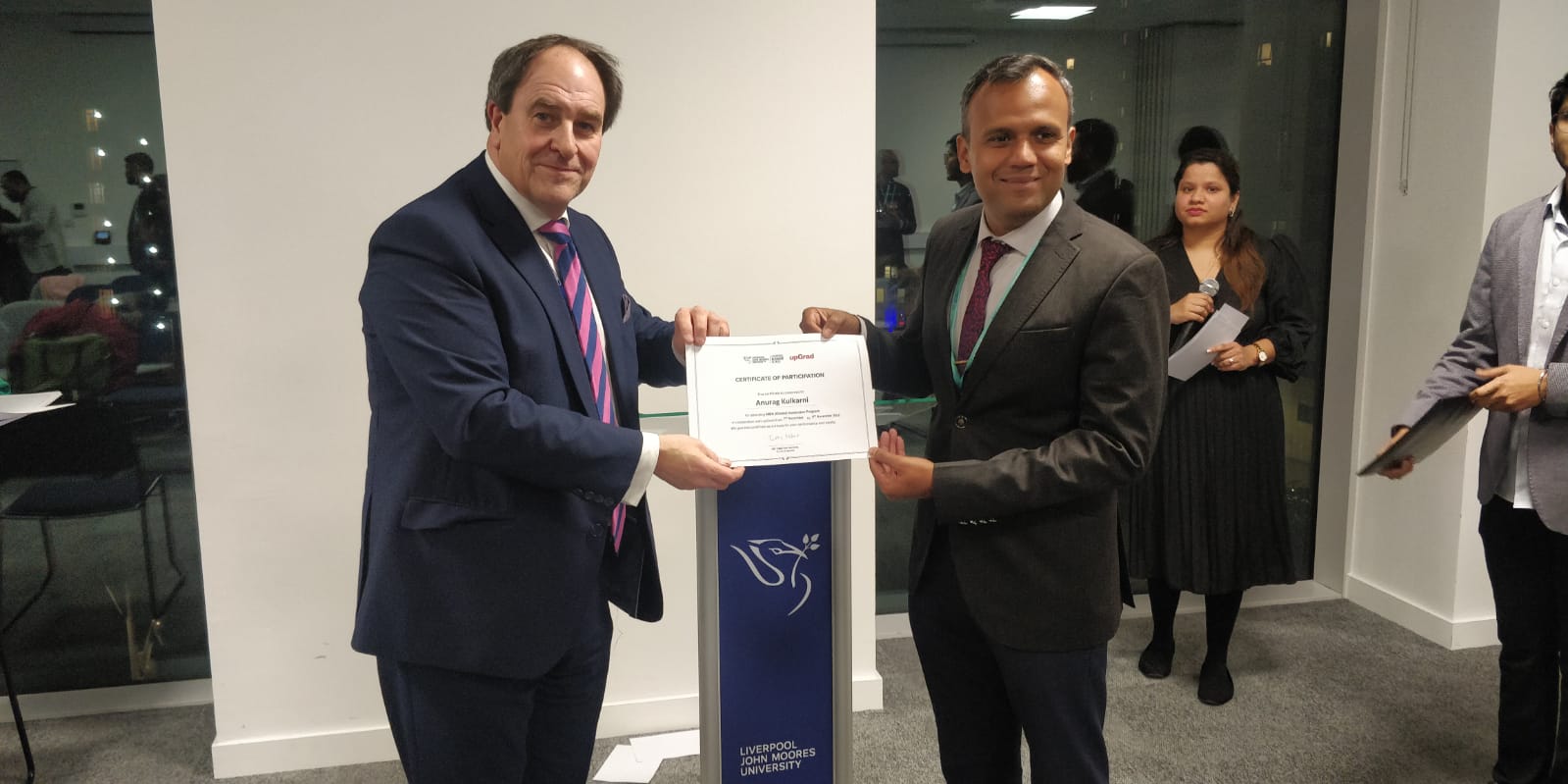
Anurag Kulkarni was in his final year of electrical engineering in Nagpur when he first had to choose between what was expected and what he wanted.
A filmmaker from Bombay was travelling to meet him — bringing a VHS tape containing the rough cut of a promotional film. Kulkarni had been asked to work on its background score. He had arranged an old CRT television and a VCR so they could watch the film and work on the music together.
Then he discovered that his mandatory industrial visit to a power station was scheduled for the same weekend.
Missing the visit risked serious academic consequences. Turning down the assignment meant losing a promising opportunity. He chose to stay and explained the situation honestly to his Head of Department.
"To my surprise, he congratulated me," Kulkarni recalls. "He encouraged me to pursue the opportunity and offered to help."
It was a small moment. But it established a belief that has shaped every significant decision in the two decades since.
"Saying no often means staying exactly where you are. Saying yes creates possibilities. Some work out. Others don't. But unless you explore them, you'll never know what lies ahead."
From Engineering to Music to Film
Kulkarni graduated in Electrical Engineering in 2001. Engineering fascinated him — fieldwork, large machines, complex systems in action. But conventional engineering jobs held little appeal. He was, by his own account, a fairly average engineering student.
Music was different.
He was fascinated by digital recording technology: MIDI instruments, synthesisers, sampling, and the possibilities of combining computers with musical creativity. He spent hours experimenting with keyboards and digital music software, blending new technologies with the Indian music he had grown up listening to.
Cinema was another obsession. During his Class XII year, he watched around 75 films in theatres in Nagpur. Later, he and his friends would watch films on Star Movies and HBO — sometimes five, seven, or even eight films in a week.
People began noticing his work. Friends from other departments approached him for music. He began making connections with professionals in Mumbai. In his third year of engineering, a filmmaker from Bombay contacted him after hearing some of his compositions and asked him to create the background score for his short film.
For a young engineering student in Nagpur, that phone call was a confidence booster. Someone in the professional film industry had heard his work and wanted to collaborate. It wasn't about the money — it was about discovering that something he genuinely enjoyed could also become a career.
By the time he completed engineering, Kulkarni already had professional connections in Mumbai. He began working on background scores, advertising films, and music production. But even music could become monotonous if it remained the only discipline. He started exploring more broadly: editing, cinematography, direction, sound processing, production. He enjoyed understanding how different creative disciplines came together to tell a story.
A Creative Professional, Not Yet an Entrepreneur
For the first ten or twelve years of his career, Kulkarni was more a self-employed creative professional than an entrepreneur. He loved making music, films, theatre and storytelling. He enjoyed working with interesting people and experimenting with new technologies.
The work took him across music production, multimedia content, ringtones, mobile entertainment, and eventually digital video — following the wave of emerging technologies as each new format opened up. It also took him to Mumbai, Delhi, and several other cities, and gave him opportunities to collaborate with people outside India.
One of the more important lessons from those years was not about technology. It was about people.
"Creative projects often meant long hours, sleepless nights and working under tremendous pressure. Sometimes we practically lived out of sleeping bags while completing assignments. When you do all that alone, you're often too exhausted to enjoy the result. When you work with people who are equally invested, the experience changes completely. You share the challenges. You share the excitement. And when the project is finally completed, you have people to celebrate with."
During the ringtone-production years, he began exploring ways to streamline the production process using technology and automation — not because he thought of it as business management, but because he enjoyed creating an environment where talented people could work better together.
The Shift: From Reactive to Purposeful
Around 2010 to 2012, something began to change in how Kulkarni saw the work.
They were doing interesting assignments. But the business felt reactive. A client would need something. An agency would offer a project. A new technology would create an opportunity. They would respond, deliver, and move on.
"Gradually, I began realising that we had very little control over our direction. We were good at what we did. But we were often being driven by the industry rather than deciding where we wanted to go."
A friend and mentor challenged him. Was he building a career around interesting assignments? Or could he build an organisation with a clearer purpose?
At the same time, India's digital landscape was changing rapidly. Internet access was expanding. YouTube was becoming mainstream. Businesses were beginning to understand the possibilities of video communication. Large brands had always worked with established advertising agencies and production houses. But Kulkarni and his team wondered whether growing Indian enterprises and MSMEs could also benefit from professional filmmaking and communication services.
SA Digital had begun as a creative venture in 2002. They formally incorporated S A Digital Films Pvt. Ltd. in October 2012.
This time, the vision was clearer. They wanted to build specialised capabilities in corporate filmmaking, advertising films, post-production, and related creative services. For the first time, Kulkarni was consciously trying to build an organisation — and that required him to change as well.
From the Anurag Kulkarni Way to the SA Digital Films Way
One of the biggest challenges was learning to lead creative people.
As a hands-on professional, Kulkarni had developed strong opinions about quality. He knew how he wanted things done. But creative quality is often subjective, and what he considered the right approach was not necessarily the only good one.
"Initially, I found this difficult. I could become impatient when something wasn't being done the way I imagined it."
A teammate helped him see it differently. The two would take long evening walks together, and during those conversations, the teammate would patiently explain that they needed to move beyond the Anurag Kulkarni way of doing things. They had to build a SA Digital Films way.
"Building an organisation wasn't about getting everyone to think like me. It was about building shared standards, mutual trust and collective ownership. I had to become more patient. More empathetic. More willing to accept different approaches. And sometimes, the people around you understand things that you haven't yet learned."
Maintaining high standards and giving people creative freedom were not contradictory goals. It was possible to do both.
Understanding Businesses, Not Just Making Films
The next important transition came through their clients.
Earlier, SA Digital Films had worked largely through established advertising agencies and production houses. Now they were approaching growing enterprises directly. Many of these businesses had limited exposure to structured advertising and professional filmmaking.
"We spoke the language of creative professionals. Our prospective clients were thinking about their businesses, markets, products and customers. We gradually realised that we needed to understand their world before expecting them to understand ours. And that changed everything."
Some early direct client relationships proved formative. Working with the SMS Group exposed them to infrastructure, waste management, and engineering. Work with Tech Mahindra introduced them to communicating complex technology concepts, including Industry 4.0 and Factories of the Future.
"A good corporate film is not simply a collection of beautiful visuals. It begins with understanding the business. What does the company actually do? Why does it matter? Who needs to understand it? And what should they remember?"
Over time, SA Digital Films' work expanded across engineering, manufacturing, healthcare, technology, and institutional communication. Clients increasingly valued them not merely for producing videos, but for understanding their businesses and helping them communicate more effectively.
A Company Rooted in Nagpur, Working Across Geographies
SA Digital Films has its roots and operational foundation in Nagpur. But much of Kulkarni's professional journey happened elsewhere. Between 2002 and 2008, he operated substantially out of Mumbai. Later, from 2016 to 2022, he was based largely in Delhi. Through both periods, the team in Nagpur kept the backend running — production coordination, post-production, creative support and project execution continuing while Kulkarni worked across different cities.
"That experience strengthened my belief that opportunity and capability need not exist in the same geography. Not everyone needs to be in the spotlight to make an extraordinary contribution."
A Film in 22 Languages
Among SA Digital Films' more memorable assignments was a film for India's One District One Product initiative, produced in 22 languages. The team also created an original jingle celebrating the craftsmanship and regional diversity of India:
"Kalakaari ka samundar, har haath ka hunar."
The project brought them in touch with communities from remote corners of the country. Their generosity and willingness to help were, in Kulkarni's words, genuinely humbling.
"For someone whose journey began with music and cinema, being able to participate in telling stories about India's people, their skills and their aspirations was deeply meaningful. These experiences reinforced my belief that creative work becomes more valuable when it helps people understand, appreciate or connect with something beyond themselves."
AI and the Next Shift
Today, Kulkarni finds himself witnessing another major transformation in the industry. The organised, department-based structure of agencies and production houses is giving way to a more fluid, gig-based creative economy — young professionals who prefer working on projects that interest them, collaborating for weeks or months rather than joining permanent teams. At the same time, clients are changing: growing enterprises led by people with high aspirations, more open to unconventional approaches and willing to give creative partners greater autonomy.
SA Digital Films now uses AI extensively across different functions — particularly for research, ideation, content development, and exploring creative possibilities.
"One of its most interesting contributions has been helping us move past creative blocks. Earlier, you could spend hours struggling with an idea. Today, when you're stuck, an AI tool can offer another perspective, challenge your assumptions or suggest a different direction. You may not accept its suggestions. But often, that interaction is enough to get your own thinking moving again. AI doesn't have to replace creative thinking. It can help us think more freely and explore more possibilities."
He also believes AI will significantly change the organisational structure of communication businesses. A strong team of ten people may soon have access to capabilities that once required much larger organisations.
Looking Ahead
Over the next five to ten years, Kulkarni wants SA Digital Films to become a trusted communication partner for B2B enterprises — understanding clients' businesses deeply, helping them tell their stories in fresh ways, and engaging younger audiences in a changing world.
He is increasingly interested in enabling the next generation of creative professionals rather than being the person who does the work himself. He wants to surround himself with young, curious, and ambitious minds — people willing to experiment, who don't always choose the safe path, who bring perspectives he may not have considered, and who are comfortable challenging his beliefs.
"I don't want my experience to become a limitation for the next generation of creative professionals working with us. I want it to become a resource they can use. And I want their curiosity and ambition to keep challenging me to learn."
The belief that guided a young engineering student in Nagpur continues to guide him today.
"Interestingly, I never really set out to become an entrepreneur. I simply wanted to keep doing things I loved. One opportunity led to another. One experiment opened another door. Wonderful people came into my life and helped me see possibilities I might otherwise have missed. Somewhere along the way, that became a business. And then an organisation."
What's the harm in trying?
Anurag Kulkarni is the Founder and Managing Director of SA Digital Films Pvt. Ltd., a strategic marketing and communication company with roots in Nagpur.
Continue reading


The Entrepreneur Story
Is your story worth telling?
We feature founders who are building something real. Apply and we'll be in touch.
Apply to be featured →Stay sharp.
Ideas that move.
Founder stories, emerging ventures, and essays on what's next — straight to your inbox.
Unsubscribe any time.