
Alex Liberman (Ex-Anduril) Raises $42M for Continuum Materials 'Amazon of Composite Parts'
Alex Liberman, an ex-Anduril engineer, secured $42M for Continuum Materials, a startup aiming to build a vertically integrated supply chain for advanced composite parts.
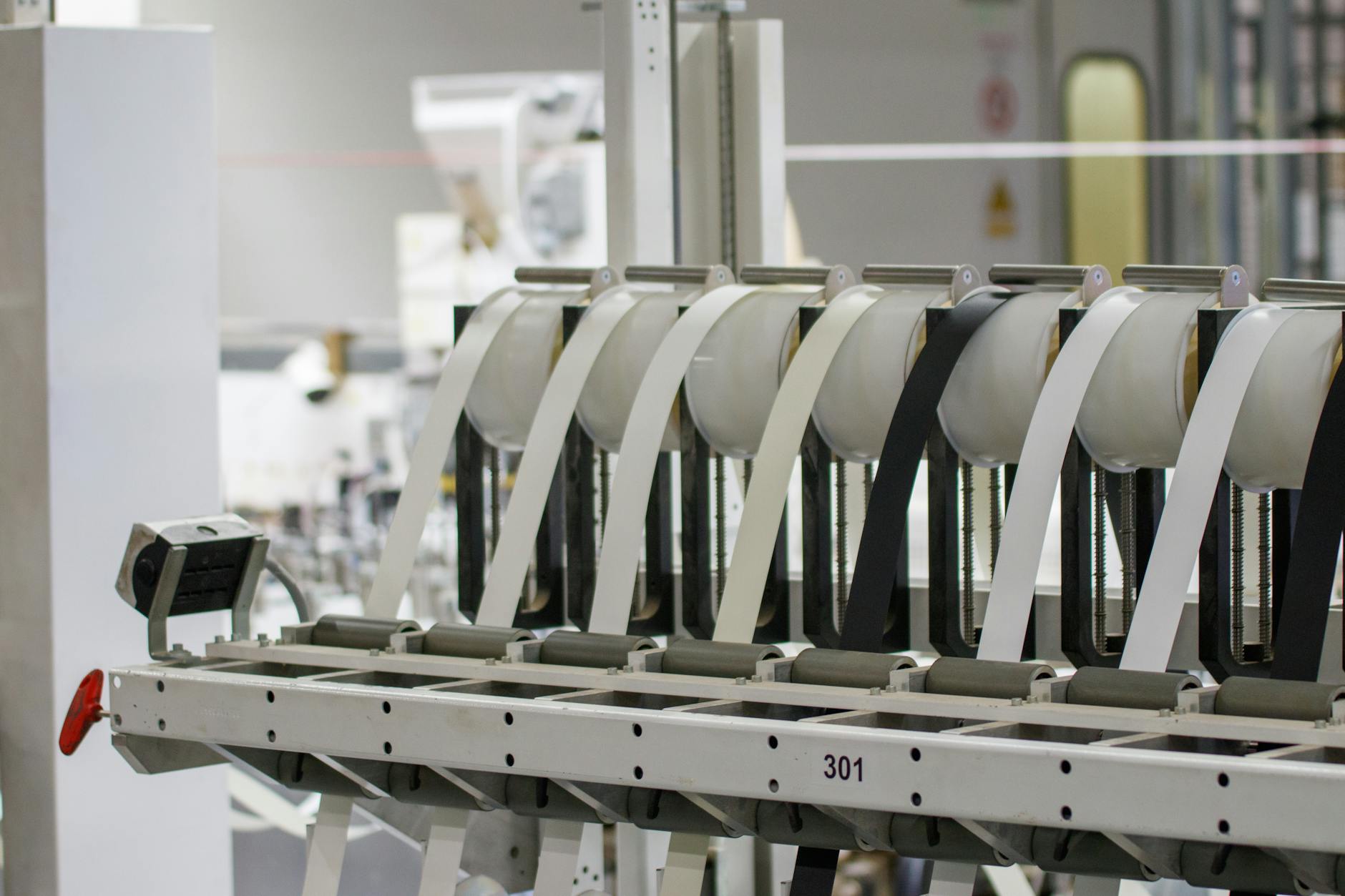
Alex Liberman, a former special projects lead at Anduril Industries, has secured $42 million in seed funding for his new venture, Continuum Materials, aimed at establishing a vertically integrated supply chain for advanced composite parts. This substantial seed round, co-led by Coatue Management and Founders Fund, signals investor confidence in a bold strategy to disrupt advanced manufacturing by controlling the entire process from raw materials to finished products. For founders in hardware, defense tech, and advanced manufacturing, this deal highlights the increasing appetite for capital-intensive, vertically integrated solutions to fundamental supply chain inefficiencies.
Quick Takeaways
- Significant Seed Funding: Continuum Materials raised $42 million in a seed round, co-led by Coatue Management and Founders Fund, with participation from 8VC and Atomic.
- Founder's Pedigree: Alex Liberman, previously a special projects lead at Anduril Industries, brings direct experience in rapid prototyping and advanced manufacturing for defense applications.
- Vertical Integration Strategy: The company aims to control the entire composite materials supply chain, from raw fiber to finished parts, to reduce costs and lead times.
- 'Amazon of Composite Parts' Vision: Liberman intends to democratize access to high-performance composite manufacturing through an integrated, efficient platform.
- AI and Automation Core: Continuum Materials plans to leverage AI-driven design and automation to streamline manufacturing processes, enhancing efficiency and accessibility.
- Target Markets: The company is focused on high-growth sectors including aerospace, defense, and automotive, where advanced composites are critical.
A $42 Million Seed for Vertical Integration
Continuum Materials, a Los Angeles-based startup, has closed a $42 million seed funding round to tackle one of advanced manufacturing's most persistent challenges: the fragmented, costly, and slow supply chain for composite materials. The investment was co-led by prominent venture capital firms Coatue Management and Founders Fund, known for backing ambitious technology and deep tech ventures. Additional participation came from 8VC and Atomic, further underscoring the broad investor interest in Liberman's vision The Information, 2024.
This $42 million seed round is notable for its size. Seed funding rounds, while highly variable, typically range from a few hundred thousand to a few million dollars. A $42 million seed allocation for a manufacturing company indicates several key investor beliefs. First, it acknowledges the capital-intensive nature of building a physical, vertically integrated supply chain. Establishing facilities, acquiring specialized machinery, and hiring a skilled workforce for advanced composite manufacturing requires substantial upfront investment. Second, the scale of this funding suggests a high conviction in the market opportunity and in Alex Liberman's ability to execute a complex, ambitious strategy. Investors are betting that the long-term returns from disrupting a foundational industry like advanced manufacturing outweigh the inherent risks and capital demands.
The immediate use of this capital is directed towards establishing Continuum Materials' core infrastructure. This includes setting up manufacturing capabilities that span the entire process, from processing raw composite fibers to the final production of complex parts. By controlling each stage, Continuum aims to eliminate the inefficiencies, delays, and cost markups typically associated with relying on multiple external suppliers. For founders evaluating their own capital needs, Continuum's large seed round illustrates that for ventures addressing significant, tangible problems in physical industries, substantial early capital can be a prerequisite for achieving the necessary scale and control to make an impact. This also signals a shift in venture capital, which increasingly supports deep tech and hardware startups requiring significant upfront investment, moving beyond purely software-centric models. The funding validates the strategic importance of vertical integration in markets where supply chain control translates directly into competitive advantage.
From Anduril's Front Lines to Foundership
Alex Liberman's journey to founding Continuum Materials is rooted in his prior experience as a special projects lead at Anduril Industries, a defense technology company known for its rapid development cycles and vertically integrated approach to national security solutions. His tenure at Anduril provided him with firsthand exposure to the inefficiencies and opportunities within advanced manufacturing, particularly in the context of high-stakes defense applications The Information, 2024.
At Anduril, Liberman focused on rapid prototyping and advanced manufacturing techniques. This work often involved pushing the boundaries of what was possible with materials and production methods to quickly develop and deploy sophisticated defense systems. The defense sector, more than many others, demands materials that are not only high-performance—lightweight, strong, durable, and often stealthy—but also capable of being produced and iterated upon with unprecedented speed. Traditional supply chains, characterized by long lead times, opaque pricing, and a lack of integration between material suppliers and part manufacturers, often proved to be bottlenecks in this environment. Liberman's role would have involved identifying these bottlenecks and developing internal solutions or workaround strategies to accelerate development.
This direct experience highlighted a critical gap: while the demand for advanced composite parts was growing across industries, the manufacturing infrastructure to support this demand efficiently did not exist. The insights gained from building and iterating complex hardware rapidly for defense applications likely crystallized Liberman's understanding of the need for a more streamlined, controlled, and technologically advanced approach to composite manufacturing. He observed how fragmentation in the supply chain led to inflated costs, protracted development cycles, and limited access for innovators who couldn't afford custom, high-volume production. The decision to leave a successful, fast-growing company like Anduril to start Continuum Materials speaks to the conviction he developed regarding this market opportunity. It underscores a founder's willingness to tackle a complex, foundational problem rather than a superficial one.
For other founders, Liberman's path offers several lessons. First, deep domain expertise, cultivated through direct experience in challenging environments, is invaluable. His time at Anduril was not just about engineering; it was about understanding the systemic failures in a critical supply chain. Second, the transition from an operator within a high-growth company to a founder often stems from identifying a problem that even the most innovative existing companies cannot fully solve due to their specific mandates or existing structures. Liberman saw a universal need for a new manufacturing paradigm, not just a product. Finally, his background provides instant credibility with investors, demonstrating a proven ability to operate in advanced manufacturing and a clear understanding of the target markets. This pedigree helped secure a significant seed round, acknowledging that the challenges he aims to solve are not theoretical but practical, born from the front lines of advanced hardware development.
The 'Amazon of Composite Parts': A Vertically Integrated Vision
Continuum Materials' core vision is to establish a vertically integrated supply chain for composite materials, spanning from raw fiber to finished parts. Alex Liberman aims for Continuum Materials to become the 'Amazon of composite parts,' making advanced materials manufacturing more accessible The Information, 2024. This ambition represents a fundamental challenge to the established, often fragmented, composite manufacturing industry.
Current composite manufacturing typically involves a complex network of specialized suppliers. Raw material producers create fibers (like carbon fiber or fiberglass) and resins. These are then sold to prepreg manufacturers, who combine them into sheets. These prepregs are then supplied to part fabricators, who design, cut, lay up, cure, and finish the final components. Each step involves different companies, separate logistics, quality control handoffs, and profit margins. This multi-layered structure leads to several pervasive problems:
- High Costs: Each intermediary adds its own overhead and margin, driving up the final cost of parts.
- Long Lead Times: The sequential nature of the process, with each step relying on the previous, leads to extended delivery schedules. Communication breakdowns, shipping delays, and scheduling conflicts at different vendors compound these issues.
- Quality Control Challenges: Maintaining consistent quality across multiple vendors can be difficult, as each company may have different standards, processes, and equipment.
- Limited Accessibility: For smaller companies or those needing rapid prototyping, accessing custom composite parts can be prohibitive due to high minimum order quantities, long lead times, and the complexity of managing multiple vendors.
- Lack of Innovation: The fragmented nature can hinder rapid innovation, as changes in material or process at one stage require coordination and re-qualification across the entire chain.
Continuum Materials' vertical integration strategy directly addresses these inefficiencies. By bringing all stages of production under one roof – from raw material processing to final part fabrication – the company seeks to gain complete control over the entire value chain. This control allows for:
- Cost Reduction: Eliminating intermediary margins, streamlining logistics, and optimizing material flow internally can significantly reduce the overall cost of composite parts.
- Accelerated Lead Times: With all processes integrated, Continuum can drastically cut down on the time it takes to move from design to finished product. This is critical for industries requiring rapid iteration and deployment.
- Enhanced Quality Control: A unified system allows for consistent quality standards and continuous monitoring across all production steps, leading to more reliable and predictable part performance.
- Increased Accessibility: By standardizing processes and leveraging automation, Continuum aims to lower the barriers for companies to access high-performance composite parts, potentially enabling smaller orders and faster turnarounds.
The "Amazon of composite parts" analogy is instructive. Amazon did not invent retail, but it integrated and optimized the entire customer experience, from selection and purchase to logistics and delivery, making it vastly more accessible and efficient. Similarly, Continuum aims to simplify and accelerate the procurement of composite parts. Imagine a platform where engineers can design a part, select materials, receive rapid quotes, and have it manufactured and delivered with the speed and reliability typically associated with e-commerce. This vision extends beyond mere manufacturing; it implies a new paradigm for how industries interact with advanced materials, transforming a bespoke, often cumbersome process into a standardized, efficient service. This approach democratizes access to materials and manufacturing capabilities that were once the exclusive domain of large corporations with dedicated internal resources. For founders, this highlights the power of rethinking an entire value chain, not just a single component, to unlock new market opportunities and deliver unprecedented value.
AI and Automation: The Engine of Disruption
A cornerstone of Continuum Materials' strategy to achieve its vertically integrated vision and deliver on the promise of reduced costs and lead times is the extensive use of AI-driven design and automation in its manufacturing processes The Information, 2024. This technological layer is critical for turning the concept of an integrated supply chain into a scalable, economically viable reality. Without advanced automation and intelligent systems, vertical integration in a complex field like composite manufacturing would simply shift inefficiencies rather than eliminate them.
AI-driven design aims to optimize every aspect of a composite part, from its geometry and material composition to its manufacturing process, before any physical production begins. Traditional composite design is often iterative and labor-intensive, relying on experienced engineers to make choices about fiber orientation, ply stacking, and resin selection. AI can accelerate this by:
- Generative Design: AI algorithms can explore a vast design space, generating multiple optimal geometries based on specified performance requirements (e.g., strength, stiffness, weight) and manufacturing constraints. This can lead to lighter, stronger parts that are impossible to conceive with human-only design.
- Material Optimization: AI can predict how different composite material combinations and fiber architectures will perform under various loads and environmental conditions, identifying the most efficient use of materials to meet specifications while minimizing waste.
- Process Simulation: AI can simulate the manufacturing process itself, predicting how materials will behave during layup, curing, and finishing. This helps identify potential defects or areas for optimization before production, reducing scrap rates and rework.
Once a design is finalized, automation takes over on the factory floor. This involves a range of advanced manufacturing techniques and robotics that perform tasks with precision, speed, and consistency far beyond human capabilities. In composite manufacturing, this can include:
- Automated Fiber Placement (AFP) and Automated Tape Laying (ATL): Robotic systems precisely lay down composite fibers or tapes onto molds, following complex patterns generated by the AI design. This ensures optimal fiber orientation for strength and reduces manual labor, which is prone to error and inconsistency.
- Robotic Machining and Trimming: Automated systems can precisely trim and machine cured composite parts, ensuring tight tolerances and repeatable quality.
- Automated Quality Inspection: AI-powered vision systems and sensors can continuously monitor the manufacturing process and inspect finished parts for defects, ensuring high quality control without manual intervention. This includes detecting voids, delaminations, or incorrect fiber alignment.
- Predictive Maintenance: AI can monitor the performance of manufacturing equipment, predicting potential failures before they occur and scheduling maintenance proactively, minimizing downtime and maximizing throughput.
The combined effect of AI and automation is a paradigm shift in manufacturing. It enables Continuum Materials to produce complex composite parts with unprecedented speed and accuracy. This directly translates to significant reductions in both cost and lead times. By minimizing human error, optimizing material usage, and automating repetitive tasks, the cost per part can be driven down dramatically. Simultaneously, the ability to move from design to production seamlessly, without manual handoffs or extensive human intervention, compresses the overall manufacturing cycle. This technological backbone is what allows Continuum to envision itself as the 'Amazon of composite parts,' offering a level of efficiency and accessibility that current, less automated systems cannot match. For founders in any hardware-centric industry, Continuum's approach underscores the critical role of integrating intelligent systems and automation not just as tools, but as fundamental drivers of a new business model, enabling capabilities previously considered unfeasible.
Targeting High-Growth Industries: Aerospace, Defense, Automotive
Continuum Materials intends to target high-growth markets such as aerospace, defense, and automotive with its composite solutions The Information, 2024. These industries represent a significant and expanding demand for advanced materials, driven by stringent performance requirements, regulatory pressures, and the constant pursuit of innovation. The current challenges of cost, lead time, and accessibility in composite manufacturing are acutely felt within these sectors, making them prime targets for Continuum's vertically integrated and automated approach.
Aerospace
The aerospace industry constantly seeks materials that offer an optimal strength-to-weight ratio. Lighter aircraft consume less fuel, leading to significant operational cost savings and reduced emissions. Composites, particularly carbon fiber reinforced polymers, have become indispensable in modern aircraft design, from fuselage sections and wings to interior components. The demand for new aircraft, coupled with the ongoing need for more fuel-efficient designs, ensures a robust market for advanced composites. However, the aerospace supply chain is notoriously slow, with qualification processes often taking years and production lead times extending significantly. Continuum's ability to reduce lead times and potentially lower costs could accelerate the development and deployment of next-generation aircraft components, enabling faster iteration on designs and more efficient production. This is particularly relevant for new aerospace ventures and urban air mobility startups that require rapid prototyping and production of lightweight, high-performance structures.
Defense
For the defense sector, performance requirements are paramount, encompassing not only strength and weight but also durability, stealth characteristics, and resistance to extreme environments. Modern defense systems, from unmanned aerial vehicles (UAVs) and missiles to personnel protection equipment, increasingly rely on advanced composites. Alex Liberman's background at Anduril Industries provides direct insight into the urgent need for rapid prototyping and advanced manufacturing techniques in this space. The ability to quickly design, produce, and iterate on defense components using composites can give a significant strategic advantage. Traditional defense procurement cycles are long, but there is a growing push for faster innovation and deployment, often termed "software-defined hardware." Continuum's model aligns with this by offering a more agile and cost-effective way to develop and manufacture critical defense components, potentially enabling faster upgrades and deployments for military applications.
Automotive
The automotive industry, especially with the rapid shift towards electric vehicles (EVs), is another high-growth market for advanced composites. Lightweighting is crucial for EVs to extend range and improve performance, as battery weight is a significant factor. Composites offer a compelling alternative to traditional metals, allowing for lighter body structures, chassis components, and battery enclosures without compromising safety or structural integrity. Furthermore, composites enable greater design freedom for complex geometries, which can be leveraged for aerodynamic efficiency and aesthetic appeal. While cost has historically been a barrier for widespread composite adoption in mass-market automotive applications, Continuum's promise of cost reduction through vertical integration and automation could make these materials more economically viable for high-volume production. This would accelerate the transition to lighter, more efficient vehicles and support the innovation cycles of both established automakers and emerging EV startups.
Across all three sectors, the market for advanced materials is driven by a constant push for higher performance, greater efficiency, and reduced environmental impact. Continuum Materials aims to position itself as a critical enabler for these industries by providing a more accessible, efficient, and cost-effective way to procure the advanced composite parts they need. The existing supply chains in these industries are often rigid and slow, creating a significant opportunity for a disruptive player that can offer speed, quality, and affordability. By tackling these fundamental challenges, Continuum seeks to not only serve existing demand but also to unlock new applications for composites that were previously unfeasible due to manufacturing constraints.
Lessons for Founders: Capital, Integration, and Domain Expertise
The emergence of Continuum Materials with a $42 million seed round offers several critical lessons for founders, particularly those operating in hardware, deep tech, and capital-intensive industries. This venture underscores the evolving landscape of venture capital and the strategic importance of certain business models and founder attributes.
The Significance of Large Seed Capital for Hardware
Continuum's substantial seed round highlights a growing trend: for startups tackling fundamental problems in physical industries, significant upfront capital is not just desirable, but often essential. Building a vertically integrated manufacturing operation, especially one involving advanced materials and automation, requires substantial investment in facilities, machinery, and specialized talent. Unlike software startups that can often achieve product-market fit with minimal capital, hardware ventures face higher fixed costs from day one. This deal suggests that investors are increasingly willing to fund these capital-intensive bets when the market opportunity is large and the proposed solution is truly disruptive. For founders, this means accurately assessing the true capital requirements of their physical product or manufacturing venture and being prepared to articulate why a larger-than-average seed round is necessary to achieve initial milestones and de-risk the venture. It also implies that the "lean startup" methodology, while valuable for validating ideas, might need adaptation for ventures with inherent capital needs.
Strategic Vertical Integration in Fragmented Markets
Alex Liberman's decision to pursue a vertically integrated model is a strategic play against the backdrop of a fragmented composite manufacturing market. For founders in any industry characterized by complex, multi-layered supply chains, vertical integration offers a powerful path to differentiation and control. By owning the entire process, Continuum aims to eliminate inefficiencies, reduce costs, and accelerate lead times that external dependencies would otherwise impose. This strategy is not without its challenges—it requires significant capital, operational complexity, and a broad range of expertise—but the potential rewards are immense. Founders should consider where fragmentation in their target markets creates bottlenecks and whether a degree of vertical integration could unlock significant value for customers. This could mean integrating design and manufacturing, or even raw material sourcing, to gain competitive advantage.
Leveraging Deep Domain Expertise
Liberman's background as a special projects lead at Anduril Industries is central to Continuum Materials' credibility and funding success. His direct experience in rapid prototyping and advanced manufacturing for defense applications provided him with an intimate understanding of the pain points in the composite supply chain. This deep domain expertise, gained on the front lines of a demanding industry, is invaluable. It allowed him to identify a critical, unmet need and formulate a credible solution. For aspiring founders, this emphasizes the importance of gaining significant, hands-on experience in the industry they wish to disrupt. Theoretical knowledge is important, but practical experience in identifying systemic problems and developing solutions within existing frameworks often forms the bedrock of truly innovative and fundable ventures. Investors are increasingly looking for founders who have "earned the right" to tackle complex problems through direct, relevant experience.
Tackling Foundational Industry Problems
Continuum Materials is not just creating a new product; it is attempting to re-architect a foundational industry's supply chain. This approach demonstrates a commitment to solving deep, systemic problems rather than superficial ones. For founders, this is a lesson in ambition and impact. While incremental improvements are valuable, ventures that aim to fundamentally transform how an industry operates often attract the most significant investment and have the potential for the largest returns. It requires a long-term vision and the resilience to tackle challenges that extend beyond product development into operational complexity, market education, and ecosystem building. Continuum's journey highlights that addressing "boring" but critical infrastructure problems can be a highly lucrative and impactful path for founders.
FAQ
Q: What is Continuum Materials, and what does it aim to do? A: Continuum Materials, founded by Alex Liberman, aims to build a vertically integrated supply chain for advanced composite parts, from raw fiber to finished products. The company's goal is to become the 'Amazon of composite parts,' using AI-driven design and automation to reduce costs and lead times, making advanced materials manufacturing more accessible The Information, 2024.
Q: Who founded Continuum Materials, and what is their background? A: Continuum Materials was founded by Alex Liberman, who previously served as a special projects lead at Anduril Industries. His experience at Anduril involved focusing on rapid prototyping and advanced manufacturing techniques for defense applications The Information, 2024.
Q: How much funding did Continuum Materials raise, and who invested? A: Continuum Materials raised $42 million in a seed funding round. The round was co-led by Coatue Management and Founders Fund, with additional investments from 8VC and Atomic The Information, 2024.
Q: Which industries will Continuum Materials target with its composite solutions? A: Continuum Materials intends to target high-growth markets such as aerospace, defense, and automotive with its composite solutions The Information, 2024.
Q: How does Continuum Materials plan to reduce costs and lead times? A: The company plans to leverage AI-driven design and automation in its manufacturing processes. By controlling the entire supply chain from raw materials to finished products and utilizing these advanced technologies, Continuum Materials aims to significantly reduce both costs and lead times The Information, 2024.
Continue reading


The Entrepreneur Story
Is your story worth telling?
We feature founders who are building something real. Apply and we'll be in touch.
Apply to be featured →Stay sharp.
Ideas that move.
Founder stories, emerging ventures, and essays on what's next — straight to your inbox.
Unsubscribe any time.