
Wonder Secures $650M Series D, Valuation Jumps to $9 Billion
Wonder, the mobile restaurant kitchen startup, secures $650M Series D funding, boosting its valuation to $9B, validating its unique, vertically integrated food tech model.
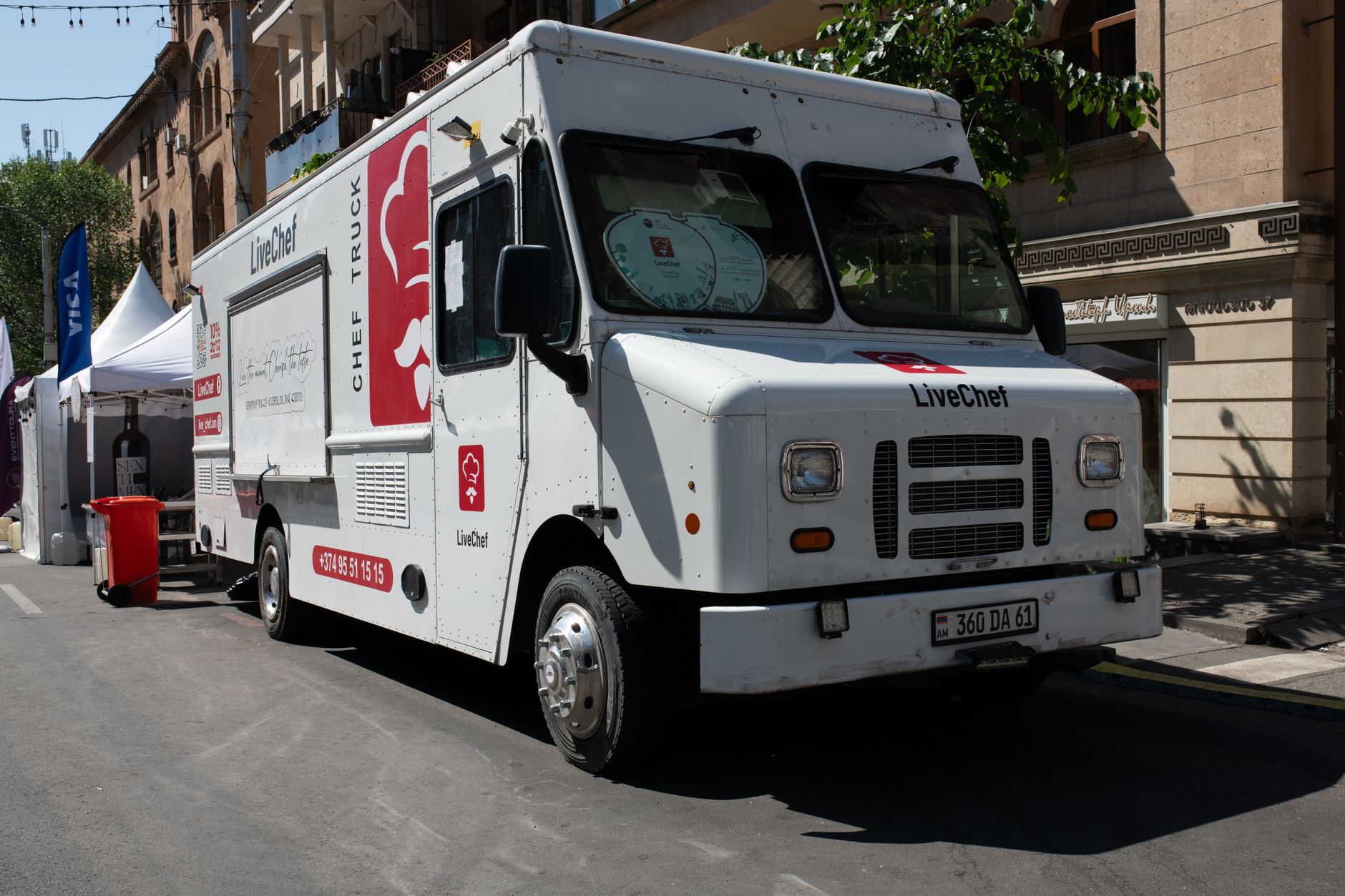
Wonder, the food delivery startup operating mobile restaurant kitchens, closed a $650 million Series D funding round, boosting its pre-money valuation to $9 billion. This capital infusion signals a renewed investor appetite for differentiated models in the food tech sector. Founders in food delivery and logistics must analyze Wonder's strategy for scaling a high-touch, vertically integrated operation against established third-party platforms.
Quick takeaways
- Wonder's $650 million Series D funding round at a $9 billion pre-money valuation underscores investor confidence in its hybrid food delivery model.
- The significant capital injection will fuel Wonder's expansion beyond its current New York and New Jersey service areas.
- Wonder differentiates itself by cooking meals fresh on-site in mobile kitchens and offering pick-up/delivery from physical locations, aiming for higher quality than traditional aggregators.
- This funding intensifies competition within the food tech market, compelling existing players and new entrants to innovate on service quality and operational efficiency.
- Founders should study Wonder's approach to scaling complex operational logistics and delivering a premium, direct-to-consumer food experience.
The $650 Million Bet: Wonder's Valuation and Funding Strategy
Wonder secured $650 million in a Series D funding round, propelling its pre-money valuation to $9 billion Bollyinside, 2024. This substantial capital injection positions Wonder as a significant player in the evolving food tech landscape. The $9 billion valuation reflects investor belief in Wonder's distinctive operational model and its potential for market disruption, especially given the challenging environment for many food delivery companies. Traditional delivery giants like DoorDash and Uber Eats have faced pressure on profitability and driver acquisition, while Wonder pursues a more vertically integrated strategy.
Wonder's model combines mobile restaurant kitchens that cook food fresh outside customers' homes with a pick-up and delivery service from physical restaurant locations Bollyinside, 2024. This hybrid approach requires significant upfront capital for vehicle fleets, specialized kitchen equipment, and a large, skilled workforce. The $650 million Series D round provides the necessary runway to scale such a capital-intensive operation. It allows Wonder to invest in technology infrastructure, expand its culinary offerings, and enhance the overall customer experience, which includes cooking 'from scratch' on-site TechCrunch, 2024.
The valuation suggests that investors see long-term potential in a model that prioritizes food quality and a direct relationship with the consumer, rather than solely focusing on logistics efficiency. For founders, this funding round highlights the potential for substantial capital raises even in mature markets, provided a clear differentiation and a scalable, albeit complex, operational blueprint. The ability to secure such a sum also indicates a strong belief in Wonder's execution capabilities and its capacity to carve out a profitable niche. This capital will be crucial for Wonder to navigate the high operational costs associated with its unique approach, including vehicle maintenance, fuel, and specialized culinary staff. It also provides a buffer against potential market downturns or increased competition, allowing Wonder to focus on its strategic expansion and product development initiatives.
Expanding Footprint: Beyond New York and New Jersey
Wonder plans to use its new $650 million funding to expand its service to more markets beyond its current operations in parts of New York and New Jersey Bollyinside, 2024. This geographical expansion presents a complex set of challenges and opportunities for the company. Scaling a fleet of mobile kitchens requires significant investment in logistics infrastructure, including vehicle acquisition, maintenance facilities, and local operational hubs. Each new market necessitates establishing a new supply chain for fresh ingredients, hiring and training specialized culinary and driving staff, and navigating diverse local regulatory landscapes concerning food preparation and mobile vending.
The expansion strategy differs markedly from asset-light traditional delivery aggregators like DoorDash or Uber Eats, which primarily onboard existing restaurants and leverage independent contractors. Wonder's direct ownership of its kitchens and delivery mechanisms means it retains full control over the customer experience and food quality, but at a much higher operational cost and complexity. When expanding, Wonder must consider market density, consumer demographics, and competitive intensity. It might target affluent suburban areas where its 'from scratch' cooking on-site model could appeal to consumers seeking premium, convenient meal solutions.
Past examples of food tech companies attempting aggressive expansion offer varied lessons. Some, like Deliveroo, expanded internationally rapidly but faced profitability challenges and eventually scaled back operations in some markets. Others, such as national meal kit services like HelloFresh, built centralized production facilities and extensive logistics networks to serve broad geographical areas. Wonder's hybrid model, combining mobile kitchens with physical pick-up points, provides flexibility. The physical locations could serve as strategic hubs for ingredient sourcing, vehicle maintenance, and staff training, streamlining expansion efforts. The capital will also be used to expand its menu, allowing Wonder to tailor offerings to local tastes and preferences as it enters new regions, further enhancing its customer experience TechCrunch, 2024. This multi-faceted expansion requires careful planning and execution to ensure operational efficiency and maintain service quality across new territories.
Redefining Food Delivery: Wonder's Hybrid Model
Wonder's operational model represents a significant departure from conventional food delivery services, offering a hybrid approach that integrates mobile restaurant kitchens with traditional pick-up and delivery from physical locations Bollyinside, 2024. The core of its innovation lies in its mobile restaurant kitchens, which cook food 'from scratch' directly outside customers' homes TechCrunch, 2024. This approach aims to address a fundamental flaw in traditional delivery: the degradation of food quality during transit from restaurant to customer. By cooking on-site, Wonder promises a fresher, hotter, and higher-quality meal experience, directly competing on taste and perception rather than solely on speed or selection.
This model contrasts sharply with the "dark kitchen" or "ghost kitchen" concepts popularized by companies like CloudKitchens or REEF Technology, which prepare food in centralized facilities for delivery. While dark kitchens optimize for efficiency and variety, they still face the same last-mile delivery challenges regarding food quality over distance. Wonder's mobile kitchens essentially bring the restaurant kitchen to the customer's curb, minimizing the time between cooking and consumption. This unique value proposition allows Wonder to differentiate itself in a crowded market where many consumers have grown accustomed to mediocre delivery experiences.
The second part of Wonder's model, offering pick-up and delivery from physical restaurant locations, provides operational flexibility and expands its reach. These physical locations might serve as commissary kitchens for ingredient prep, hubs for mobile kitchen resupply, or traditional storefronts capturing walk-in or local delivery orders. This hybrid strategy allows Wonder to diversify its revenue streams and cater to different customer preferences or logistical constraints within a service area. For instance, in denser urban environments, physical locations might be more efficient, while suburban areas could benefit more from the mobile kitchen experience.
However, operating such a model is complex and capital-intensive. It requires a sophisticated logistics network to manage the mobile kitchens, including vehicle maintenance, fuel management, and real-time dispatch. Specialized staff, including trained chefs capable of working in a mobile environment and drivers who also possess culinary skills, are essential. Energy consumption for these mobile kitchens is another operational consideration. Despite these challenges, Wonder's significant funding suggests investors believe the premium experience justifies the operational complexity and higher cost structure. This model allows Wonder to build a direct relationship with its customers, controlling the entire experience from ingredient sourcing to final delivery, which is difficult for third-party aggregators to replicate.
Competitive Landscape: The Battle for Food Tech Dominance
Wonder's $650 million Series D funding round at a $9 billion valuation intensifies the competition within the food tech market, a sector already characterized by high stakes and fierce battles for market share. Its primary competitors include the established third-party delivery giants such as DoorDash, Uber Eats, and Grubhub. These platforms operate on an aggregator model, connecting customers with a vast network of existing restaurants through an asset-light approach. Their strength lies in selection, convenience, and extensive logistical networks.
However, Wonder differentiates itself by directly controlling the entire culinary and delivery process. Its mobile restaurant kitchens cook food 'from scratch' on-site, directly outside customers' homes, a unique value proposition aimed at delivering superior food quality and freshness TechCrunch, 2024. This directly challenges the quality compromise often associated with traditional delivery, where food can cool or degrade during transit. The capital injection allows Wonder to scale this premium, vertically integrated model more aggressively, potentially forcing aggregators to invest more in temperature control solutions or explore similar quality-focused initiatives.
Beyond traditional aggregators, Wonder also competes with other innovative food tech models. This includes ghost kitchen operators like CloudKitchens or Kitchen United, which provide shared commercial kitchen spaces for virtual brands or delivery-only restaurants. While these models optimize for kitchen efficiency, they still rely on third-party delivery logistics or their own drivers, facing similar last-mile quality challenges. Meal kit services like HelloFresh and Blue Apron also represent an alternative, offering convenience for home cooking, but they do not provide fully prepared meals. Wonder's model bridges the gap between restaurant-quality food and home dining convenience.
The $650 million funding gives Wonder significant financial muscle to expand its menu, enhance customer experience, and enter new markets Bollyinside, 2024; TechCrunch, 2024. This could lead to increased market share, particularly among consumers willing to pay a premium for a superior dining experience at home. The long-term challenge for all players in this space remains profitability. While Wonder's model aims for higher customer satisfaction, its capital-intensive nature means it must achieve significant scale and operational efficiency to justify its high valuation and generate sustainable returns.
Founder Lessons: Scaling a Capital-Intensive Vision
Wonder's successful $650 million Series D funding round and its $9 billion pre-money valuation offer several critical lessons for founders navigating capital-intensive ventures in competitive markets. The first takeaway is the paramount importance of a clearly differentiated value proposition. In a crowded food delivery market, Wonder chose not to compete solely on speed or breadth of restaurant choice, but on the quality and freshness of the meal, delivered through its unique mobile kitchen model TechCrunch, 2024. Founders must identify a genuine market gap or an underserved customer need and build a solution that stands apart.
Secondly, Wonder demonstrates that even capital-intensive models can attract substantial investment if the vision is compelling and the execution strategy appears sound. Operating a fleet of custom-built mobile kitchens and managing a dual service model (mobile cooking and physical restaurant pick-up/delivery) demands significant upfront investment in assets, technology, and specialized personnel Bollyinside, 2024. Securing $650 million indicates investor confidence in Wonder's ability to manage this operational complexity and achieve economies of scale as it expands beyond New York and New Jersey Bollyinside, 2024. Founders should be prepared to articulate not just their vision, but a robust plan for operational execution and financial management to attract significant funding for asset-heavy businesses.
The focus on customer experience and quality is also a key learning. Wonder's commitment to cooking 'from scratch' on-site and enhancing its menu and customer experience is a direct response to consumer demand for better quality food delivery TechCrunch, 2024. This indicates that in mature markets, simply providing a service is no longer enough; startups must deliver a superior experience to capture and retain customers. For founders, this means deeply understanding their target customer's pain points and designing a solution that addresses them comprehensively, even if it requires greater operational investment. Building a brand that successfully integrates logistics, culinary excellence, and technology is a formidable challenge, but Wonder's funding round suggests it is a viable path to significant valuation and growth.
FAQ
Q: What is Wonder's core business model? A: Wonder operates a hybrid food delivery model. It uses mobile restaurant kitchens that cook food fresh outside customers' homes and also offers pick-up and delivery services from physical restaurant locations Bollyinside, 2024.
Q: How does Wonder differentiate itself from competitors? A: Wonder differentiates itself by cooking food 'from scratch' on-site in its mobile kitchens, aiming to provide a fresher and higher-quality meal experience compared to traditional delivery services that transport pre-cooked food from static restaurants TechCrunch, 2024.
Q: What markets does Wonder currently serve? A: Wonder currently operates in parts of New York and New Jersey [Bollyinside, 2024](https://news.google.com/rss/articles/CBMizwFBVV95cUxPN2pIaFN3Z2VhUWZvOW9tMUh4R1dmb0xIeGtzWndfTnJPM2Jna3Q5RTAzOG0yUEJ1TmZIU2I3SEVoRTlfaklQbEZheTE1UnptRGxpR2dGNFFDdlF2WWNIb1JmcFNXR0VkblBfUGZNN09jV2s5U3dJTkNHX0hWLTgwTGlYZzRkcjZLeFI5WFFsUjY5cEEzbm9Id2NNYkQ5bUdiY2hKLTNLZXFrYUJ
Continue reading

The Entrepreneur Story
Is your story worth telling?
We feature founders who are building something real. Apply and we'll be in touch.
Apply to be featured →Stay sharp.
Ideas that move.
Founder stories, emerging ventures, and essays on what's next — straight to your inbox.
Unsubscribe any time.