
SpaceX's $6.45B Space Force Deal: IPO Catalyst for Deep Tech A Deep Tech Growth Blueprint
SpaceX's $6.45 billion Space Force contracts provide a massive pre-IPO boost, exemplifying how defense spending can propel deep tech companies to mega-company status and validate their technology.
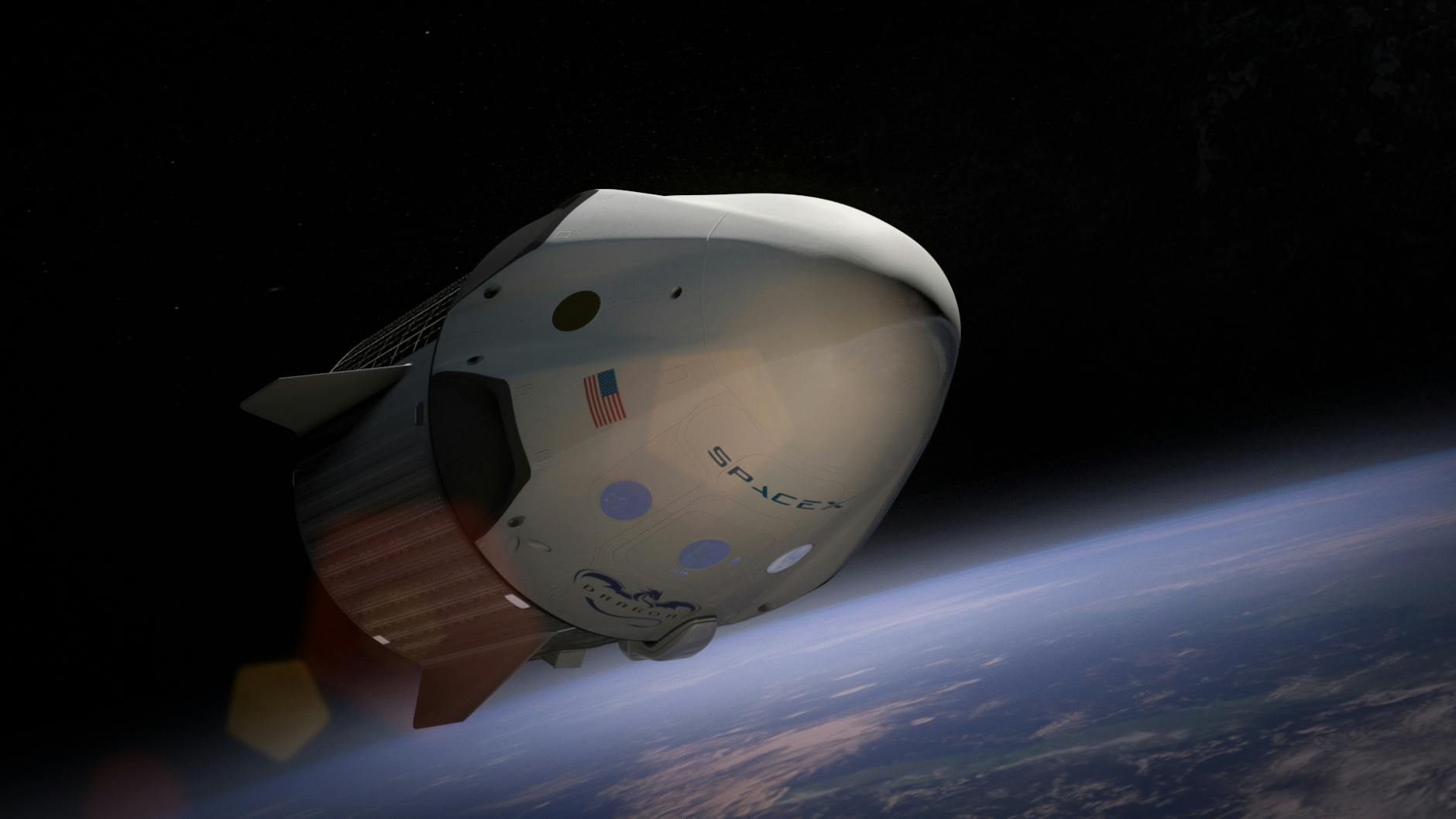
SpaceX was awarded $6.45 billion in government contracts from the U.S. Space Force, an announcement made on May 29, 2026, positioning the deep tech giant for its anticipated Initial Public Offering (IPO) TechCrunch, 2026. This massive government funding is set to significantly boost SpaceX's revenue and enhance its strategic market positioning, illustrating a critical pathway for deep tech startups to achieve mega-company status through defense spending. For founders in capital-intensive sectors, this deal underscores the potential of large-scale government contracts as a foundational catalyst for growth and market validation.
Quick Takeaways
- SpaceX secured $6.45 billion in contracts from the U.S. Space Force on May 29, 2026, directly impacting its financial trajectory ahead of an anticipated IPO.
- This substantial government funding is expected to significantly boost SpaceX's revenue and strengthen its strategic market position.
- The deal exemplifies how defense spending can serve as a powerful engine for deep tech companies, propelling them toward 'mega-company status.'
- For founders, this highlights government contracts as a viable, large-scale capital injection alternative or complement to traditional venture funding, particularly for ventures with dual-use technologies.
- Securing such contracts can de-risk a company, validate its technology, and enhance its appeal to public market investors during an IPO.
The $6.45 Billion Catalyst: Pre-IPO Momentum
SpaceX's recent acquisition of $6.45 billion in contracts from the U.S. Space Force, announced on May 29, 2026, represents a significant financial and strategic milestone for the company TechCrunch, 2026. This influx of capital is not merely a revenue injection; it is a profound endorsement of SpaceX's technological capabilities and operational reliability, strategically timed ahead of its anticipated Initial Public Offering. For any company approaching the public markets, demonstrating consistent, substantial revenue streams and a clear growth trajectory is paramount. This $6.45 billion deal directly addresses these requirements on an unprecedented scale.
The contracts are expected to significantly boost SpaceX's revenue TechCrunch, 2026. For a company operating in the capital-intensive space sector, where research, development, and manufacturing costs are exceptionally high, guaranteed revenue of this magnitude provides stability and predictability. This financial cushion allows SpaceX to continue investing in its ambitious projects, such as Starship development and Starlink expansion, without solely relying on private capital raises or the immediate pressures of quarterly earnings. Public market investors often scrutinize a company's ability to generate sustained profits and manage its cash flow. A multi-billion dollar government contract provides a robust answer to these concerns, signaling long-term financial health and a stable customer base.
Beyond the immediate financial boost, the deal is set to enhance SpaceX's strategic positioning within the market TechCrunch, 2026. Being a primary contractor for a critical defense entity like the U.S. Space Force validates SpaceX's technology as mission-critical and highly reliable. This validation extends beyond the defense sector, influencing commercial clients and partners. It suggests that SpaceX's systems have passed stringent government-level security, performance, and reliability assessments. This public validation can lead to increased commercial contracts, as other entities gain confidence in SpaceX's proven capabilities. For founders, this demonstrates that government contracts can serve as a powerful form of market validation, significantly de-risking a company in the eyes of subsequent investors and customers. The strategic positioning gained from such a contract creates a competitive moat, making it harder for competitors to replicate not just the technology, but also the trust and established relationship with a major governmental client. This foundational support can differentiate a company in a crowded or emerging market, establishing it as a dominant player.
Defense Spending as a Deep Tech Engine
The $6.45 billion in contracts awarded to SpaceX by the U.S. Space Force exemplifies how defense spending can fuel the growth of deep tech startups, propelling them to 'mega-company status' TechCrunch, 2026. Deep tech ventures, characterized by their reliance on fundamental scientific discoveries and engineering innovations, often face unique challenges in their early stages. These include long research and development cycles, immense capital requirements, and a typically longer time-to-market compared to traditional software or consumer tech startups. Traditional venture capital, while crucial, may not always be structured to accommodate the patient capital and large-scale, sustained funding required for deep tech at its most ambitious scale. This is where government contracts, particularly from defense agencies, become a critical accelerant.
Defense departments worldwide have a vested interest in cutting-edge technology to maintain strategic advantages. This creates a symbiotic relationship where government agencies become early, foundational customers for technologies that might otherwise struggle to find initial market traction or sufficient funding for scaling. For deep tech companies, securing a government contract of this magnitude provides not just capital, but also a stable, high-profile customer. This stability allows companies to dedicate resources to long-term R&D, infrastructure development, and talent acquisition without the constant pressure of short-term profitability that often characterizes venture-backed growth. The sheer scale of the $6.45 billion contract underscores the government's capacity to invest in capabilities that private markets might deem too risky or too long-term for immediate returns TechCrunch, 2026.
Furthermore, defense contracts often come with rigorous testing, validation, and security requirements. Meeting these standards serves as a powerful third-party validation of a deep tech company's capabilities and reliability. This stamp of approval can be invaluable when seeking subsequent private investment or commercial clients. It demonstrates that the technology is not only innovative but also robust, secure, and capable of operating in demanding environments. This can significantly reduce perceived risk for other investors and customers, accelerating market adoption. The relationship with a government entity like the U.S. Space Force also provides a feedback loop for product development, allowing companies to refine their technologies based on real-world, high-stakes operational needs. This collaborative development, funded by the government, can push technological boundaries further and faster than might be possible through purely commercial means. For founders building capital-intensive, frontier technologies, understanding and leveraging this defense-driven deep tech engine can be a strategic imperative for achieving significant scale and market dominance.
Pre-IPO Positioning and Valuation Enhancement
The timing and scale of the $6.45 billion contract for SpaceX are particularly significant in the context of its anticipated Initial Public Offering TechCrunch, 2026. An IPO is a critical juncture for any private company, requiring meticulous preparation to present a compelling investment thesis to public market investors. A deal of this magnitude directly impacts several key areas that determine a company's attractiveness and ultimate valuation in the public markets. Firstly, the contract provides a substantial boost to SpaceX's revenue, which is a primary metric public investors use to assess a company's growth and financial health TechCrunch, 2026. A multi-year, multi-billion dollar government contract adds a layer of revenue predictability and stability that is highly valued by investors, especially for a company in a high-growth, capital-intensive sector like space. This predictable revenue stream can translate into a higher valuation multiple, as it reduces perceived risk and enhances confidence in future earnings projections.
Secondly, the contract significantly enhances SpaceX's strategic positioning within the market TechCrunch, 2026. Being a trusted partner for the U.S. Space Force sends a powerful signal to potential public investors about the quality and reliability of SpaceX's technology and operations. It suggests that the company's offerings are not merely innovative but also mission-critical and robust enough to meet stringent governmental requirements. This third-party validation from a key defense agency acts as a de-risking factor, assuaging concerns about technological maturity or market adoption. For a company like SpaceX, which operates at the forefront of space technology, such validation from a demanding customer provides a competitive advantage that can be highlighted during roadshows and investor presentations. Public investors look for companies with sustainable competitive advantages, and a deep, long-term relationship with a major government client constitutes a significant moat.
Moreover, the contract reinforces the narrative of SpaceX as a 'mega-company' with sustained growth potential TechCrunch, 2026. The ability to secure and execute such large-scale government contracts demonstrates operational excellence, scalability, and a sophisticated understanding of complex procurement processes. This capability is attractive to institutional investors who seek companies with proven track records of managing large projects and delivering on high-stakes commitments. In the lead-up to an IPO, companies often highlight their order books and future revenue visibility. A contract of this scale provides substantial visibility, allowing investment banks to build more confident financial models and valuations. For founders eyeing an IPO, the SpaceX example underscores the strategic imperative of securing foundational, large-scale contracts that not only drive revenue but also provide unparalleled market validation and de-risking, ultimately contributing to a stronger public market debut and a higher valuation.
The Strategic Alignment of Space and Defense
The $6.45 billion in contracts from the U.S. Space Force to SpaceX underscores a profound strategic alignment between commercial space capabilities and national defense imperatives TechCrunch, 2026. This partnership is not merely a transactional exchange; it reflects a broader shift in how defense agencies leverage rapidly advancing commercial technologies to achieve strategic objectives. The U.S. Space Force, established to organize, train, and equip space forces to protect U.S. and allied interests in space, relies heavily on access to reliable, cost-effective, and advanced space launch, communication, and reconnaissance capabilities. Commercial entities like SpaceX are uniquely positioned to provide these.
SpaceX's innovations, such as reusable rocket technology and large satellite constellations like Starlink, offer capabilities that were once exclusively the domain of government-funded programs. Reusability significantly reduces the cost of access to space, making frequent launches more economically viable. This is critical for defense applications that require rapid deployment or replenishment of satellites for communications, navigation, and intelligence. The Starlink constellation, initially designed for global internet access, has inherent dual-use potential, providing resilient and ubiquitous communication capabilities that can be invaluable in military operations, particularly in contested environments or areas lacking traditional infrastructure. The U.S. Space Force's investment signals a recognition that commercial advancements can outpace traditional defense procurement cycles, offering cutting-edge solutions more quickly and efficiently.
This massive government contract validates the strategic importance of private sector innovation in maintaining national security TechCrunch, 2026. For SpaceX, the partnership provides a guaranteed, substantial revenue stream that fuels further innovation and expansion. For the U.S. Space Force, it ensures access to advanced technologies and services, enhancing its operational capabilities in an increasingly critical domain. This symbiotic relationship reduces the government's burden of developing every technology in-house, instead tapping into the agility and innovation of the private sector. The commitment of $6.45 billion highlights the scale of this reliance and the perceived value of SpaceX's contributions to national defense TechCrunch, 2026. For founders in deep tech, this alignment reveals a significant market opportunity: developing technologies with inherent dual-use potential that can serve both commercial and governmental needs. Understanding the strategic priorities of defense agencies and tailoring solutions to meet those needs can unlock immense funding and market opportunities, accelerating a company's trajectory toward significant scale and impact.
Lessons for Founders: Navigating Government Contracts
The $6.45 billion contract awarded to SpaceX serves as a compelling case study for deep tech founders considering government contracts as a significant growth engine TechCrunch, 2026. While the scale of this deal is unique to a company like SpaceX, the underlying principles of leveraging government spending to fuel deep tech growth are universal. For founders building capital-intensive, frontier technologies, understanding how to navigate this ecosystem can be as crucial as securing venture capital.
Firstly, identify the strategic needs of government agencies. The U.S. Space Force's investment in SpaceX is driven by explicit national security requirements in space. Deep tech founders should research various government departments (e.g., Department of Defense, NASA, Department of Energy, NIH) to understand their long-term strategic objectives and technology gaps. Technologies with dual-use potential—those that serve both commercial markets and governmental needs—are particularly attractive. For instance, a startup developing advanced battery technology might find applications in electric vehicles (commercial) and military drones or remote energy storage (government). Highlighting this dual-use aspect can broaden a company's appeal and unlock diverse funding sources.
Secondly, prepare for a rigorous and often lengthy procurement process. Government contracts are not typically awarded quickly. They involve extensive bidding processes, technical reviews, compliance requirements, and security clearances. Founders must invest in building teams with expertise in government relations, contract management, and regulatory compliance. This often means hiring individuals with prior experience working with government agencies or defense contractors. Patience and persistence are critical, as the lead time from initial engagement to contract award can span months or even years. However, once secured, these contracts often provide long-term stability and funding that can dwarf typical venture rounds.
Thirdly, focus on demonstrating reliability and scalability. Government agencies, especially defense-related ones, prioritize proven technologies and reliable execution. While innovation is valued, the ability to deliver on promises, meet stringent performance specifications, and scale production is paramount. Early pilot programs, small-scale contracts, and successful demonstrations can build a track record that is essential for securing larger deals. SpaceX's history of successful launches and satellite deployments undoubtedly contributed to the Space Force's confidence in awarding such a massive contract. For smaller startups, this might mean focusing on niche problem sets for government agencies, proving capability, and then expanding scope.
Finally, understand that government contracts provide more than just capital. They offer unparalleled validation, access to advanced testing facilities, and a feedback loop from highly demanding users. This validation can significantly de-risk a deep tech company in the eyes of private investors and commercial customers, accelerating subsequent fundraising and market adoption. The prestige of working with a major government entity can also attract top talent, further bolstering a company's capabilities. While the path to government contracts can be challenging, the SpaceX deal illustrates that for deep tech founders, it can be a transformative journey towards achieving 'mega-company status' TechCrunch, 2026.
The Broader Market Impact and Future Outlook
The $6.45 billion U.S. Space Force contract awarded to SpaceX on May 29, 2026, extends its implications far beyond the company's balance sheet and anticipated IPO TechCrunch, 2026. This massive government contract serves as a bellwether for the broader deep tech and commercial space industries, signaling a profound shift in how national defense and governmental strategic objectives are intertwined with private sector innovation. For other players in the space economy, from launch providers to satellite manufacturers and ground segment operators, this deal intensifies the competitive landscape while simultaneously validating the immense market opportunity presented by government spending.
The sheer scale of the funding underscores the U.S. government's commitment to securing its interests in space, recognizing it as a critical domain for national security and economic prosperity. This commitment is likely to stimulate further investment across the entire space supply chain. Companies developing complementary technologies, such as advanced propulsion systems, on-orbit servicing capabilities, space-based computing, or sophisticated sensor payloads, could see increased demand and funding opportunities as the ecosystem expands around major players like SpaceX. The precedent set by this deal highlights that deep tech companies capable of delivering reliable, scalable, and mission-critical solutions can attract substantial, foundational capital from government sources.
Furthermore, the contract's timing ahead of SpaceX's IPO sends a clear message to private capital markets. It demonstrates that deep tech ventures, even those with long development cycles and high capital requirements, can achieve significant financial maturity and market validation through strategic government partnerships. This could encourage venture capitalists and institutional investors to allocate more capital to other deep tech startups, particularly those with dual-use applications that align with national priorities. The 'mega-company status' that SpaceX is achieving, partly fueled by this defense spending, provides a powerful narrative for investors looking for the next generation of industry titans TechCrunch, 2026. It suggests that a pathway exists for deep tech to deliver not only groundbreaking innovation but also substantial financial returns.
However, this also intensifies the pressure on competitors within the commercial space sector. Companies vying for government contracts will need to demonstrate comparable levels of technological maturity, operational reliability, and cost-effectiveness. The bar for entry into large-scale defense contracting is high, requiring significant investment in infrastructure, talent, and compliance. For smaller, earlier-stage deep tech companies, the challenge will be to carve out niche areas where they can prove their capabilities and build a track record that could eventually lead to larger government partnerships. The future outlook points to an increasingly dynamic and competitive deep tech landscape, where government spending acts as a powerful gravitational force, shaping market leaders and accelerating technological advancements with far-reaching implications for both defense and commercial sectors.
FAQ
Q: What is the significance of the $6.45 billion contract for SpaceX? A: The $6.45 billion contract, awarded by the U.S. Space Force on May 29, 2026, is expected to significantly boost SpaceX's revenue and enhance its strategic market positioning TechCrunch, 2026. It provides a massive financial injection and validates the company's technology and reliability, particularly important ahead of its anticipated IPO.
Q: How does defense spending impact deep tech startups? A: Defense spending can act as a powerful catalyst for deep tech startups, propelling them to 'mega-company status' TechCrunch, 2026. It provides substantial, stable funding for capital-intensive R&D, offers critical market validation through rigorous testing, and ensures a foundational customer, de-risking ventures for private investors.
Q: Why is this contract important for SpaceX's IPO? A: This massive government contract is strategically timed ahead of SpaceX's anticipated IPO TechCrunch, 2026. It demonstrates robust revenue streams and market validation, which are crucial for attracting public market investors, enhancing the company's valuation, and signaling long-term stability and growth potential.
Q: What is the U.S. Space Force's role in this deal? A: The U.S. Space Force is the entity that awarded the $6.45 billion in contracts to SpaceX TechCrunch, 2026. This signifies the strategic alignment between national defense priorities and commercial space technology, with the Space Force leveraging SpaceX's advanced capabilities for national security interests.
Q: Can other deep tech companies leverage government contracts similarly? A: Yes, the SpaceX deal exemplifies how defense spending can fuel deep tech growth TechCrunch, 2026. Other deep tech companies can pursue similar avenues by identifying government agencies' strategic needs, developing dual-use technologies, demonstrating reliability and scalability, and navigating the often-rigorous government procurement processes.
Continue reading



The Entrepreneur Story
Is your story worth telling?
We feature founders who are building something real. Apply and we'll be in touch.
Apply to be featured →Stay sharp.
Ideas that move.
Founder stories, emerging ventures, and essays on what's next — straight to your inbox.
Unsubscribe any time.