
Oxide Computer's $445M Funding Signals Hardware Revival Enterprise Infrastructure
Oxide Computer Company's $445 million Series C funding round pushes its valuation past $1 billion, signaling a significant market shift towards integrated hardware and software solutions for enterprise data centers.
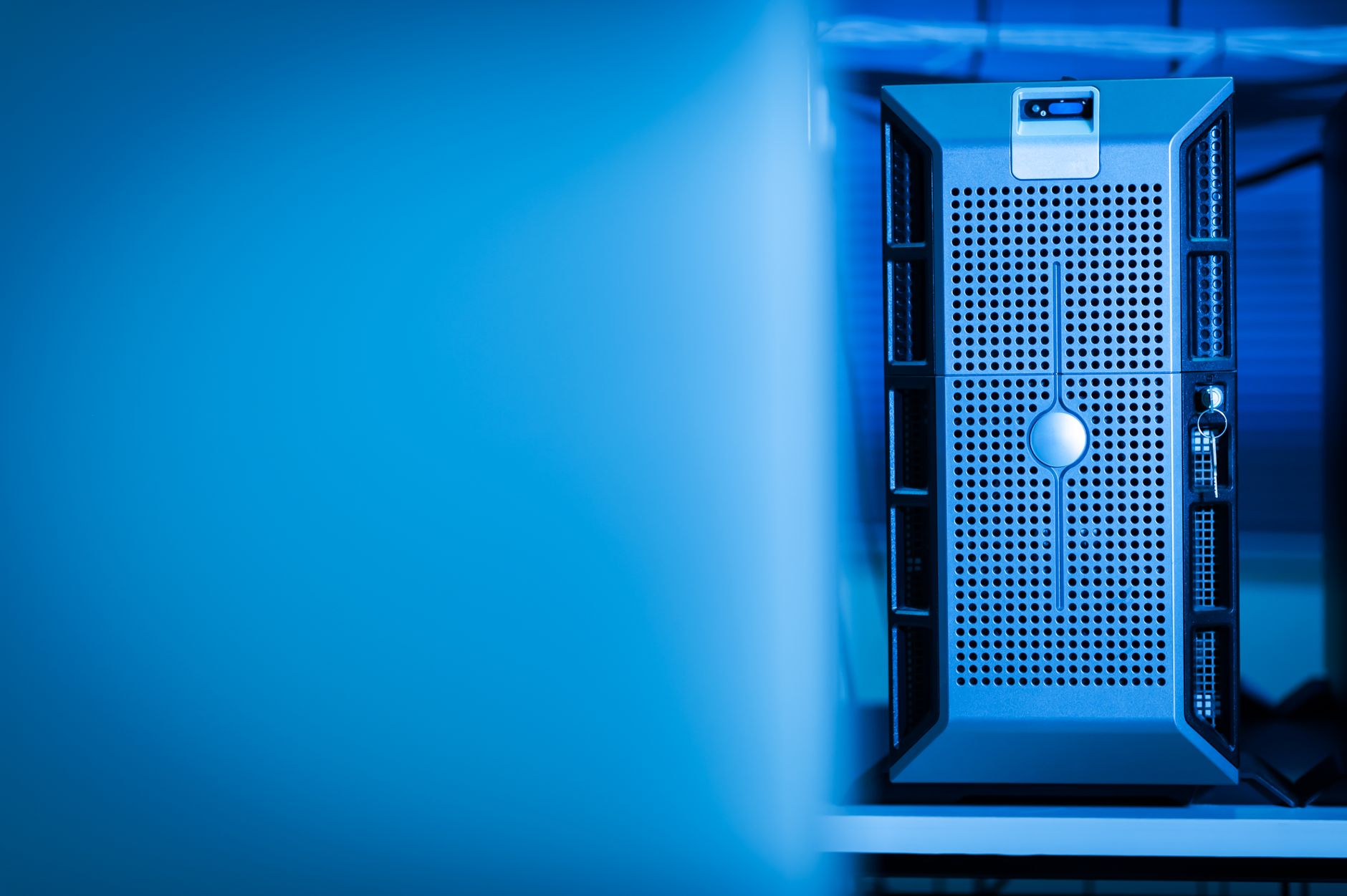
Oxide Computer Company, founded in 2019, closed a $445 million Series C funding round on June 3, 2024, led by Norwest Venture Partners, pushing its valuation past $1 billion and bringing its total capital raised to approximately $465 million [SEC, 2024; TechCrunch, 2024; Axios, 2024]. This substantial investment signals a renewed investor confidence in foundational hardware and software infrastructure, indicating a strategic shift beyond pure-play SaaS solutions for enterprise founders. For entrepreneurs building complex, integrated systems rather than pure software, this deal validates the capital intensity and long-term vision required to tackle fundamental computing challenges.
Quick takeaways
- Significant Capital Infusion: Oxide Computer secured $445 million in Series C funding, led by Norwest Venture Partners, bringing its total raised to $465 million [TechCrunch, 2024].
- Unicorn Valuation: The round values Oxide Computer at over $1 billion, granting it "unicorn" status and highlighting investor belief in its market potential [Axios, 2024].
- Shift to Foundational Infrastructure: This investment signals a broader market trend of venture capital returning to complex, vertically integrated hardware and software solutions for enterprise data centers, moving beyond pure SaaS [Oxide, 2024].
- Experienced Leadership: Founded by former Sun Microsystems and Joyent engineers, Oxide leverages deep expertise in systems design and operating systems to build its rack-scale computing platform [Oxide, 2024].
- On-Prem Private Cloud Focus: Oxide's offering targets organizations seeking hyperscale cloud-like capabilities within their own on-premises data centers, addressing specific performance, compliance, and cost predictability needs [Oxide, 2024].
The $445 Million Bet on Foundational Infrastructure
Oxide Computer Company's $445 million Series C funding round, formalized in an SEC filing on June 3, 2024, represents a significant capital allocation in the enterprise infrastructure sector [SEC, 2024]. Norwest Venture Partners led the round, with Senior Managing Partner Promod Haque joining Oxide's Board of Directors, a move that typically signifies strong strategic alignment and commitment from the lead investor [Oxide, 2024]. The round also saw participation from a syndicate of prominent investors, including Sands Capital, Lightspeed Venture Partners, Sequoia Capital, GV, Nepenthe Capital, and Factory, indicating broad investor conviction in Oxide's vision [Oxide, 2024]. In total, 15 investors participated in the offering, according to the SEC filing [SEC, 2024].
This latest infusion of capital elevates Oxide's total funding to approximately $465 million and pushes its valuation beyond $1 billion, officially bestowing "unicorn" status upon the company [TechCrunch, 2024; Axios, 2024]. The scale of this investment is notable in a venture capital landscape that has, for years, heavily favored pure-play software-as-a-service (SaaS) models due to their perceived scalability, lower capital expenditure, and faster time-to-market. Oxide’s funding suggests a re-evaluation of the investment thesis, recognizing the enduring need for robust, integrated hardware and software solutions at the foundational layer of computing.
Promod Haque's decision to join the board is particularly telling. Norwest Venture Partners has a history of backing enterprise technology, and Haque's involvement underscores a belief in Oxide's potential to disrupt the on-premises infrastructure market. His presence on the board provides Oxide with access to extensive industry insights and strategic guidance, crucial for navigating the complexities of hardware development, supply chain management, and enterprise sales. This level of investment and board representation from a top-tier firm like Norwest signals that the venture community is increasingly willing to commit substantial resources to companies tackling deep technological challenges that require both significant R&D and manufacturing capabilities, diverging from the typical SaaS playbook. The capital is expected to fuel Oxide's continued product development, scale its manufacturing operations, and expand its market reach as it brings its "rack-scale computer" to enterprise customers. The investment serves as a validation for other founders considering ventures that blend hardware and software, demonstrating that significant capital is available for propositions that address fundamental enterprise pain points with integrated solutions.
Oxide's Rack-Scale Vision: Hyperscale for the Enterprise
Oxide Computer Company's core offering is a "rack-scale computer" designed to deliver hyperscale cloud-like capabilities directly to on-premises enterprise data centers [Oxide, 2024]. This integrated system aims to bridge the gap between the operational efficiencies and elasticity of public cloud providers and the specific requirements of organizations that need or prefer to keep their infrastructure on-premises. The company's vision addresses a long-standing challenge for enterprises: how to achieve the agility, automation, and resource utilization found in public clouds without relinquishing control over data, security, or compliance.
Traditional on-premises infrastructure often involves assembling disparate components from various vendors – servers, storage arrays, networking equipment, and virtualization software – and then integrating them through complex, custom engineering efforts. This approach can lead to significant operational overhead, vendor lock-in, and an inability to scale or manage resources with the same fluidity as public cloud environments. Oxide's rack-scale computer seeks to simplify this by offering a vertically integrated system where hardware and software are co-designed and optimized to work seamlessly together. This includes the physical rack, compute nodes, storage, networking, and the underlying operating system and management plane, all delivered as a cohesive unit.
The concept of a "rack-scale computer" is not merely about consolidating hardware; it's about re-imagining the operational model for private cloud. By integrating the entire stack, Oxide aims to provide a single management interface, automated provisioning, and predictable performance, mirroring the experience of consuming resources from a public cloud provider. For enterprises, this means potentially faster deployment of applications, reduced operational complexity, and improved resource utilization, all within the confines of their own data center, addressing concerns around data sovereignty, regulatory compliance, and specific performance requirements that public clouds may not always meet optimally.
This approach directly targets the market segment of enterprises grappling with the trade-offs between public cloud adoption and maintaining their own infrastructure. Companies with sensitive data, strict regulatory mandates, or workloads requiring extremely low latency often find themselves unable to fully migrate to public clouds. Oxide provides an alternative: a private cloud solution that offers the best of both worlds – the control and security of on-premises infrastructure combined with the operational elegance and scalability typically associated with hyperscale public clouds. The funding demonstrates investor belief in the substantial demand for such an integrated, high-performance, and manageable on-premises solution.
The Founders Behind the Hardware Revival
Oxide Computer Company was founded in 2019 by a team of engineers with deep roots in foundational computing, specifically drawing from their extensive experience at Sun Microsystems and Joyent [Oxide, 2024]. This background is critical to understanding Oxide’s vertically integrated approach and its focus on designing hardware and software in conjunction. Sun Microsystems, known for its "The Network is the Computer" philosophy, pioneered highly integrated systems, including SPARC-based servers and the Solaris operating system, shaping much of the enterprise computing landscape in the late 20th and early 21st centuries. Joyent, a cloud computing and software company, was an early innovator in containerization and high-performance cloud infrastructure, particularly with its SmartOS operating system and Triton container platform.
Bryan Cantrill, the CEO and a Director of Oxide Computer Company, embodies this legacy [SEC, 2024]. Cantrill, along with other co-founders, brings decades of expertise in operating systems, distributed systems, and hardware design. Their tenure at companies like Sun and Joyent exposed them to the intricacies of building robust, scalable, and high-performance computing platforms from the ground up. This experience taught them the value of owning the entire stack – from silicon to software – to optimize performance, reliability, and security. It also ingrained a deep understanding of the challenges enterprises face in managing complex infrastructure.
The decision to build a physical "rack-scale computer" rather than another pure-play software solution is a direct reflection of this background. The founders likely observed that while software innovation has accelerated, the underlying hardware infrastructure in many enterprise data centers remains fragmented, complex, and often inefficient. They recognized that true operational efficiency and cloud-like experience on-premises could only be achieved by re-thinking the entire system, not just abstracting away hardware with a software layer. This requires not just software engineering prowess but also significant expertise in electrical engineering, mechanical design, and supply chain management – areas typically outside the scope of most venture-backed startups in recent years.
For other founders, the Oxide story underscores the value of deep domain expertise and a long-term vision. The founders did not shy away from the capital intensity and complexity of building hardware. Instead, they leaned into their strengths, identifying a market gap that required a holistic, integrated solution. Their ability to attract substantial funding, particularly from investors like Norwest, Sequoia, and Lightspeed, is a testament to the credibility of their team and the compelling nature of their technical approach. It suggests that investors are willing to back teams that can demonstrate a profound understanding of fundamental computing problems and propose solutions that tackle the entire stack, even if it entails longer development cycles and higher initial investment. The founders' experience with both hardware and software systems provided a unique vantage point to identify the limitations of current enterprise infrastructure and conceive a truly differentiated product.
A Broader Market Shift: Beyond Pure-Play SaaS
Oxide Computer's substantial funding round reflects a broader, evolving sentiment within the venture capital community: a renewed interest in foundational hardware and software infrastructure that extends beyond the pure-play SaaS model. For over a decade, SaaS companies dominated venture portfolios due to their high margins, recurring revenue, and perceived scalability without the capital expenditure associated with physical products. However, as the software market has matured and become increasingly saturated, investors are now looking for new frontiers of value creation, particularly in areas where physical and digital converge.
Several factors contribute to this shift. Firstly, the sheer scale of modern data processing, driven by artificial intelligence, machine learning, and big data analytics, is pushing the limits of existing infrastructure. These workloads often demand specialized hardware, custom silicon, and tightly integrated systems to achieve optimal performance and energy efficiency. Pure software solutions, while flexible, cannot always overcome the underlying hardware limitations. Companies like Cerebras Systems, building specialized AI chips, or Graphcore, developing IPUs, represent this shift into purpose-built hardware for specific compute-intensive tasks. While not direct competitors, their existence highlights a similar investor appetite for deep tech in the physical layer.
Secondly, the increasing complexity and cost of public cloud services for certain long-term, predictable workloads have led some enterprises to re-evaluate their cloud strategies. While public clouds offer unparalleled flexibility, the operational costs can become substantial for stable, high-volume applications. This has spurred demand for more efficient and cost-predictable on-premises or hybrid cloud solutions. Companies like Nutanix and VMware, through their hyperconverged infrastructure (HCI) offerings, have long addressed parts of this market by simplifying on-prem infrastructure, but Oxide's approach takes integration further by designing hardware and software together from the ground up.
Thirdly, concerns around data sovereignty, regulatory compliance, and security are driving a resurgence in the need for controlled, on-premises environments. Industries such as finance, healthcare, and government often have strict requirements that necessitate keeping data and applications within their own physical boundaries. This creates a persistent market for robust, enterprise-grade private cloud infrastructure.
This trend signals to founders that the venture landscape is broadening. While SaaS remains a viable model, opportunities are emerging for companies tackling harder, more capital-intensive problems at the infrastructure layer. This includes specialized hardware, integrated systems, edge computing devices, and advanced materials. Investors are recognizing that the next wave of innovation may require building deeper into the technology stack, solving problems that cannot be addressed solely through software abstractions. Founders with expertise in electrical engineering, mechanical design, and low-level systems programming are finding a more receptive audience for their ventures, provided they can articulate a clear market need and a credible path to execution, as Oxide has done. This shift encourages founders to think beyond software and consider how integrated hardware and software solutions can unlock new levels of performance, efficiency, and control for enterprise customers.
Competitive Landscape and Differentiation
The market for enterprise on-premises infrastructure is mature and highly competitive, populated by established giants and innovative startups alike. Oxide Computer enters a landscape where customers have long relied on a mix of traditional enterprise hardware vendors, hyperconverged infrastructure (HCI) providers, and increasingly, on-prem extensions of public cloud services. Oxide's differentiation lies in its vertically integrated, rack-scale approach, which aims to deliver a fundamentally different operational experience.
Traditional enterprise hardware vendors such as Dell Technologies, Hewlett Packard Enterprise (HPE), and Cisco Systems offer comprehensive portfolios of servers, storage, and networking equipment. These companies provide robust, reliable components, but enterprises are typically responsible for integrating these disparate pieces, installing operating systems, virtualization layers, and management software. This requires significant IT staff expertise and can lead to complex, siloed environments. Oxide aims to simplify this by delivering a pre-integrated, co-designed system that eliminates much of the integration burden.
Hyperconverged infrastructure (HCI) providers, including Nutanix and VMware (with vSAN), emerged to address the complexity of traditional infrastructure by converging compute, storage, and networking into a single, software-defined platform running on commodity hardware. HCI solutions offer greater agility and simplified management compared to traditional three-tier architectures. However, even HCI typically runs on off-the-shelf servers and relies on a software layer to abstract and manage resources. Oxide's rack-scale computer goes further by designing the hardware and software together, seeking to optimize performance and efficiency in ways that are not possible when software is merely adapting to generic hardware. This co-design approach could yield advantages in power efficiency, thermal management, and overall system performance.
Public cloud providers have also extended their reach into the on-premises space with offerings like AWS Outposts, Azure Stack, and Google Cloud Anthos. These solutions bring public cloud services and APIs to the customer's data center, providing a consistent hybrid cloud experience. While offering familiar interfaces, these typically involve running public cloud software on specialized hardware provided by the cloud vendor, often with a dependency on the public cloud for management and updates. Oxide's model offers a truly private cloud solution that is managed entirely by the enterprise, without a direct dependency on a public cloud provider, offering potentially greater autonomy and control.
Oxide's key differentiator is its commitment to a fully integrated, open-source-inspired, rack-scale design. By controlling the entire stack, from the custom hardware components to the operating system and management plane, Oxide can deliver a level of optimization and operational simplicity that fragmented solutions struggle to match. The company is not just selling hardware, nor is it just selling software; it is selling a complete, pre-engineered private cloud system. This approach aims to provide enterprises with the agility and automation of hyperscale clouds, combined with the security, performance, and cost predictability of on-premises infrastructure. The significant funding validates investor belief that this integrated strategy can carve out a substantial niche in a crowded market by addressing fundamental operational pain points that existing solutions only partially resolve.
Implications for Founders: Building in the Physical Layer
Oxide Computer Company's substantial funding round carries significant implications for founders, particularly those contemplating ventures that involve complex hardware, integrated systems, or deep technological challenges. The investment signals a recalibration in venture capital, demonstrating that patient capital is available for propositions that demand longer development cycles, higher upfront costs, and multidisciplinary expertise.
Firstly, this funding validates the pursuit of deep tech and foundational infrastructure. For years, the venture community leaned towards "asset-light" software models. Oxide's success suggests that investors are increasingly recognizing the strategic importance and long-term value of building at the physical and operating system layers. Founders with expertise in electrical engineering, mechanical design, embedded systems, and low-level software should take note: there is a renewed appetite for solving hard problems that require going beyond superficial software abstractions. This opens doors for innovation in areas like specialized computing, robotics, advanced manufacturing, and sustainable infrastructure.
Secondly, it underscores the importance of vertical integration and co-design. Oxide's premise is that optimal performance and operational simplicity for private cloud can only be achieved by designing hardware and software together. This lesson applies broadly: when a significant performance or experience gap exists due to the fragmentation of components, a vertically integrated solution can create substantial competitive advantage. Founders should consider whether their target problem space could benefit from controlling more of the technology stack, even if it adds complexity to the initial build. This approach, however, requires a diverse founding team with expertise across multiple engineering disciplines.
Thirdly, the Oxide story highlights the value of domain expertise and a long-term vision. The founders' background from Sun Microsystems and Joyent provided them with unique insights into enterprise systems. Their ability to attract such significant capital is partly a testament to their deep credibility and understanding of the problem space. Founders should leverage their unique experiences and insights to identify problems that others might overlook or deem too difficult. Furthermore, building hardware and integrated systems is a marathon, not a sprint. This funding indicates that investors are willing to back companies with a multi-year roadmap, provided the market opportunity is large enough and the team is exceptional.
Finally, for founders, it reinforces the need for rigorous technical execution and a clear value proposition. While the capital requirements for hardware startups are higher, the due diligence from investors like Norwest, Sequoia, and Lightspeed is also intense. Founders must be able to articulate not just the "what" but the "how" – detailing their engineering approach, supply chain strategy, and go-to-market plan. The value proposition must clearly address a critical pain point that existing solutions fail to solve effectively, such as the operational complexity of on-premises infrastructure or the specific needs that public clouds cannot meet. Oxide's success demonstrates that even in a capital-intensive sector, a compelling vision backed by deep technical expertise and a well-defined strategy can attract substantial investment. This encourages a return to fundamental engineering and a focus on building enduring value at the core of enterprise computing.
Reader questions.
01What is Oxide Computer Company's core product?
Oxide Computer Company offers a "rack-scale computer" that integrates hardware and software to enable organizations to deploy private cloud infrastructure on-premises [Oxide, 2024]. This system aims to provide hyperscale cloud-like capabilities within an enterprise's own data center.02How much capital has Oxide Computer Company raised in total?
Following its $445 million Series C funding round, Oxide Computer Company has raised approximately $465 million in total capital [TechCrunch, 2024].03What is Oxide Computer Company's valuation after this funding round?
The Series C funding round valued Oxide Computer Company at over $1 billion, granting it "unicorn" status [Axios, 2024].04Who are the key investors in Oxide Computer Company's Series C round?
The Series C funding round was led by Norwest Venture Partners, with Senior Managing Partner Promod Haque joining Oxide's Board of Directors. Other participating investors include Sands Capital, Lightspeed Venture Partners, Sequoia Capital, GV, Nepenthe Capital, and Factory [Oxide, 2024].05What is the significance of this funding for the broader tech market?
This substantial investment signals a renewed investor confidence in foundational hardware and software infrastructure for enterprise solutions, moving beyond a pure-play SaaS focus. It suggests a market shift towards complex, vertically integrated systems that address fundamental computing challenges in the on-premises and hybrid cloud environments [Oxide, 2024].
Continue reading


The Entrepreneur Story
Is your story worth telling?
We feature founders who are building something real. Apply and we'll be in touch.
Apply to be featured →Stay sharp.
Ideas that move.
Founder stories, emerging ventures, and essays on what's next — straight to your inbox.
Unsubscribe any time.