
Hadrian Raises $1.37B Series C, $8B Valuation for Defense Modernizing National Security
Hadrian's massive $1.37 billion Series C, led by a16z, propels its valuation to $8 billion, signaling a major shift in venture capital toward modernizing defense manufacturing.
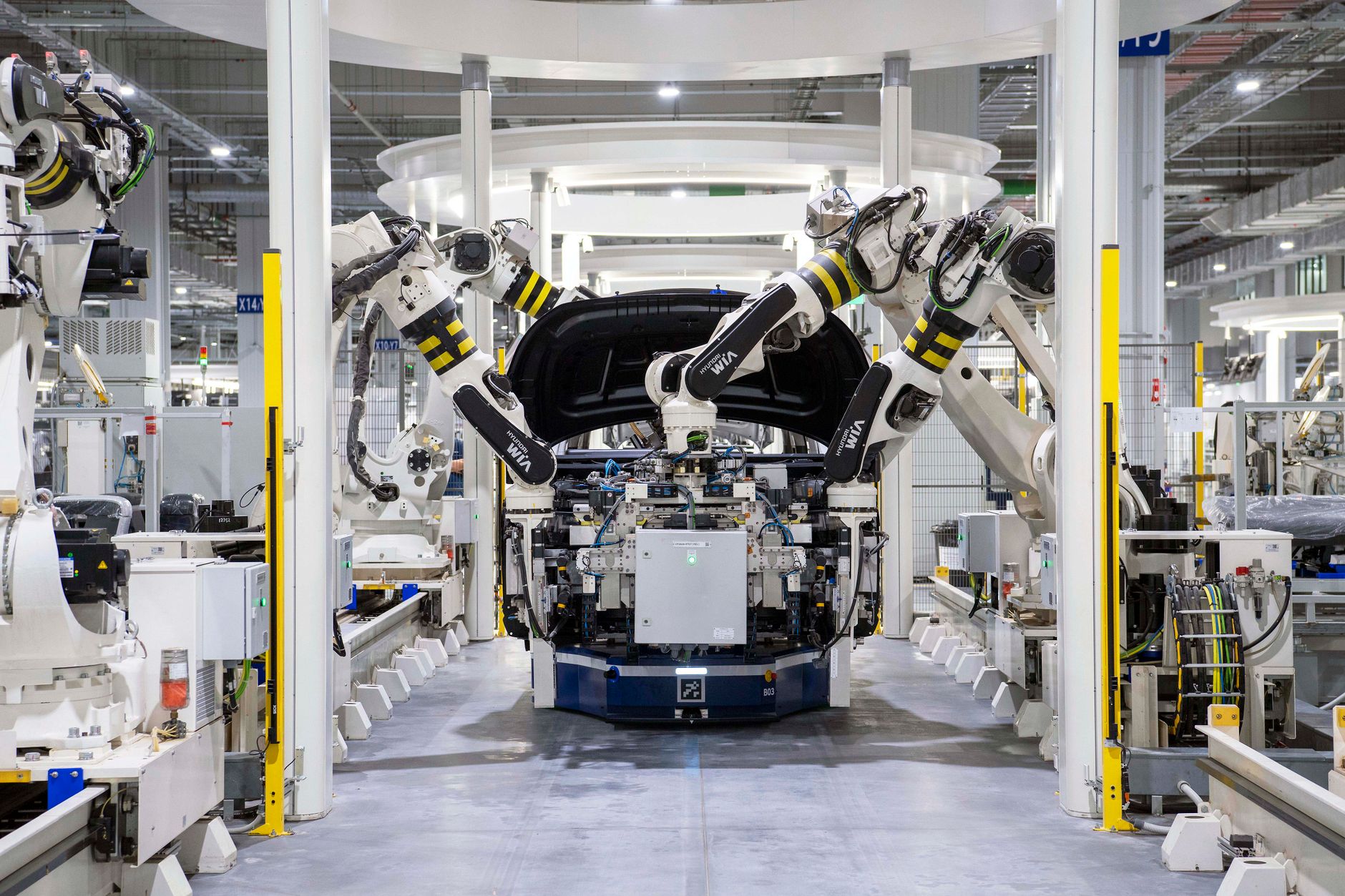
Defense tech startup Hadrian recently secured $1.37 billion in its Series C funding round, pushing its post-money valuation to an $8 billion benchmark. This substantial capital injection, led by Andreessen Horowitz (a16z), signals a critical acceleration in the defense technology sector, demonstrating how founders are attracting significant investment to modernize national security manufacturing. For founders and operators, Hadrian's rapid ascent underscores the strategic shift in capital towards companies addressing critical infrastructure and supply chain challenges within the defense industrial base.
Quick takeaways
- Hadrian secured $1.37 billion in Series C funding, led by Andreessen Horowitz, achieving an $8 billion post-money valuation.
- The funding highlights a broader trend of top-tier venture capital flowing into defense tech, recognizing its strategic importance.
- Hadrian leverages AI, automation, and advanced robotics to produce precision parts for critical defense applications like satellites and hypersonic missiles.
- The company's valuation jumped from $1 billion (Series B, 2023) to $8 billion in less than a year, signaling rapid market validation and growth.
- This deal provides a blueprint for founders on how to attract significant capital by addressing deep-seated supply chain and manufacturing inefficiencies in critical national sectors.
The Funding Blockbuster
Hadrian, the Los Angeles-based defense technology company, closed its Series C funding round with an unprecedented $1.37 billion infusion. This capital raise, announced recently, propelled the company's valuation to $8 billion, establishing it as a decacorn in the defense manufacturing space TechCrunch, 2026. The round was spearheaded by Andreessen Horowitz (a16z), a venture capital firm known for its early and significant bets on disruptive technologies. This lead investor signals a strong endorsement of Hadrian's technological approach and market potential.
The Series C round also saw participation from a consortium of other prominent investors, including Lux Capital, Founders Fund, and RTX Ventures TechCrunch, 2026. The involvement of RTX Ventures, the corporate venture arm of RTX (formerly Raytheon Technologies), is particularly noteworthy. It indicates a strategic alignment between traditional defense industry giants and newer, agile technology startups aiming to modernize the sector. This blend of institutional venture capital and strategic corporate investment highlights the dual appeal of Hadrian's model: high-growth potential and direct industry relevance.
Prior to this latest funding, Hadrian had already demonstrated a significant ability to attract capital. The company raised $90 million in its Series A round in 2022, followed by a $117 million Series B in 2023 TechCrunch, 2026. The Series B round alone had established Hadrian as a unicorn, valuing the company at $1 billion TechCrunch, 2026. The leap from a $1 billion valuation to $8 billion in less than a year underscores an aggressive growth trajectory and intense investor confidence in its capabilities and market execution.
Cumulatively, Hadrian's total funding across all rounds now stands at approximately $1.577 billion TechCrunch, 2026. This substantial capital base positions the company to aggressively expand its operations, invest further in research and development, and scale its advanced manufacturing facilities. For founders watching the capital markets, Hadrian's funding path illustrates that significant capital is available for startups tackling large-scale, critical problems, especially those with national security implications and demonstrable technological innovation. The size of this round is not merely a financial transaction; it is a declaration of intent from top-tier investors regarding the future direction of industrial production for defense.
Hadrian's Mission: Modernizing Defense Manufacturing
Hadrian's core mission centers on bringing advanced manufacturing capabilities to the defense sector, a domain historically characterized by lengthy production cycles, supply chain vulnerabilities, and reliance on traditional, often slower, processes. The company, led by CEO and founder Chris Power, aims to disrupt this paradigm by integrating cutting-edge technologies into the production of critical defense components TechCrunch, 2026. This involves a strategic application of artificial intelligence (AI), automation, and advanced robotics to streamline and accelerate the manufacturing process.
The company's approach is designed to tackle persistent supply chain bottlenecks that have plagued the defense industrial base for decades. By automating and optimizing the production of precision machined parts, Hadrian seeks to reduce lead times, enhance quality, and increase the overall resilience of the defense supply chain. These parts are not commodity items; they are custom-engineered components essential for high-stakes applications. Hadrian manufactures these precision parts for critical defense applications, including components for advanced aircraft, hypersonic missiles, and satellites TechCrunch, 2026. Each of these categories represents a high-priority area for national security, requiring components with exacting specifications and reliable performance under extreme conditions.
The choice of Los Angeles, California, for Hadrian's first advanced manufacturing facility is strategic TechCrunch, 2026. The region is a hub for aerospace and defense innovation, providing access to a skilled talent pool and proximity to key partners and customers. This geographic positioning allows Hadrian to integrate seamlessly with existing defense ecosystems while introducing its disruptive manufacturing methodologies. The facility itself is a testament to Hadrian's vision, designed to showcase how AI-driven automation can transform what was once a manual, time-consuming process into a highly efficient, scalable operation.
For founders in manufacturing or deep tech, Hadrian's model offers several insights. It demonstrates that significant value can be created by applying modern technological solutions to entrenched industrial problems, particularly those with national security implications. The focus on precision and criticality highlights that simply automating existing processes is not enough; the technology must deliver tangible improvements in areas where failure is not an option. By proving that advanced robotics and AI can reliably produce components for the most demanding defense systems, Hadrian is not just building parts; it is building a new blueprint for the future of industrial production, one that prioritizes speed, accuracy, and resilience in an increasingly complex global environment. This approach resonates with investors who recognize the long-term strategic value of reducing reliance on fragile global supply chains and enhancing domestic manufacturing capabilities.
The Defense Tech Boom: A Founder's Opportunity
Hadrian's massive funding round is not an isolated event but a clear indicator of a burgeoning defense tech boom, attracting a new wave of founders and top-tier capital into a sector traditionally dominated by large, established contractors. The strategic importance of national security, coupled with geopolitical shifts and the urgent need for technological modernization, has created a fertile ground for innovation. Investors are increasingly recognizing that the defense industrial base requires agile, tech-forward companies to address systemic inefficiencies and accelerate the deployment of advanced capabilities.
For founders, this boom represents a significant opportunity to build impactful businesses. The problems within defense are vast and complex: aging infrastructure, slow procurement processes, talent gaps, and a persistent need for faster innovation cycles. Companies like Hadrian are stepping into this void by applying commercial-grade technology and startup methodologies to solve these challenges. Instead of incremental improvements, these new defense tech companies are pursuing transformative solutions, from advanced manufacturing to artificial intelligence for intelligence analysis, and from next-generation logistics to resilient communication systems.
The influx of venture capital into defense tech is driven by several factors. Firstly, governments worldwide are increasing defense spending and prioritizing technological superiority, creating a substantial and predictable market for innovative solutions. Secondly, the nature of modern warfare and national security threats demands rapid technological iteration, a hallmark of startup culture that traditional defense contractors often struggle to match due to their size and bureaucratic structures. Thirdly, the dual-use nature of many technologies – developed for commercial markets but adaptable for defense – has lowered the barrier to entry for some tech companies. While Hadrian focuses specifically on defense manufacturing, the broader trend encompasses areas like space, cybersecurity, and advanced materials.
The success of Hadrian, securing $1.37 billion, validates the investment thesis that defense tech can yield significant returns while addressing critical national needs. This validation encourages other founders to consider the sector, demonstrating that it is possible to attract substantial private capital without solely relying on government contracts from day one. However, it also highlights the need for a deep understanding of the unique regulatory, security, and operational requirements of the defense market. Founders entering this space must navigate complex compliance frameworks, long sales cycles, and the imperative of delivering mission-critical reliability.
The defense tech boom is reshaping how national security capabilities are developed and deployed. It fosters a more dynamic and competitive landscape, pushing both new entrants and incumbents to innovate faster. For founders, this means identifying specific, high-impact problems within the defense ecosystem, developing robust technological solutions, and building a team capable of executing in a highly regulated and demanding environment. Hadrian's trajectory serves as a powerful example of how a focused, technology-driven approach to a critical defense problem can unlock immense capital and strategic importance.
From Unicorn to Decacorn: Valuation Trajectory
Hadrian's journey from its initial funding rounds to an $8 billion valuation within a relatively short period is a testament to its rapid growth and market validation. The company's valuation trajectory provides a clear narrative for founders on how quickly deep tech startups addressing critical national needs can scale and attract significant investor confidence.
The first public indication of Hadrian's potential came with its Series A round in 2022, where it secured $90 million TechCrunch, 2026. This initial capital allowed the company to establish its foundational manufacturing capabilities and prove its technological approach. Building on this momentum, Hadrian successfully raised $117 million in its Series B round in 2023 TechCrunch, 2026. It was during this Series B that the company achieved unicorn status, with a valuation of $1 billion TechCrunch, 2026. Reaching the $1 billion valuation mark is a significant milestone for any startup, signaling strong market traction and investor belief in its long-term potential.
The most recent Series C round, securing $1.37 billion, has now catapulted Hadrian into the exclusive club of decacorns, with an $8 billion post-money valuation TechCrunch, 2026. This represents an eight-fold increase in valuation in less than a year, a growth rate rarely seen outside of the most disruptive software or consumer tech companies. For a hardware-heavy, deep tech company operating in the defense sector, this acceleration is particularly remarkable. It indicates that investors are not only betting on Hadrian's technology but also on its ability to execute at scale and capture a significant share of a critical, high-value market.
The rapid escalation in valuation underscores several key points for founders. Firstly, solving a profound, systemic problem can unlock exponential growth. Hadrian's focus on modernizing defense manufacturing addresses a bottleneck that impacts national security directly. Secondly, demonstrating tangible progress and execution is paramount. The successive funding rounds suggest that Hadrian consistently met or exceeded milestones, validating its technological claims and operational capabilities. Thirdly, the involvement of top-tier investors like Andreessen Horowitz from early stages can significantly de-risk a company in the eyes of subsequent investors, facilitating larger rounds at higher valuations.
Hadrian's journey from a Series A startup to an $8 billion decacorn highlights the immense capital available for founders who are building truly disruptive technologies in critical sectors. It also signals a shift in investor appetite, moving beyond purely software-driven models to embrace complex engineering and manufacturing challenges, particularly when those challenges align with strategic national interests. This trajectory provides a powerful case study for founders on how to articulate value, demonstrate progress, and leverage strategic investment to achieve hyper-growth in the deep tech landscape.
Investor Confidence and Strategic Backing
The consortium of investors backing Hadrian's $1.37 billion Series C round reflects a calculated confidence in the company's vision and execution, as well as a strategic understanding of the evolving defense landscape. The lead investor, Andreessen Horowitz (a16z), is a venture capital firm with a history of backing transformative technology companies across various sectors. Their decision to lead such a substantial round in a defense manufacturing startup underscores a belief that Hadrian represents a critical, high-growth opportunity within the deep tech space TechCrunch, 2026. A16z's involvement often signals to the broader market that a company is poised for significant impact and scale, attracting further talent and partnerships.
Beyond a16z, the participation of Lux Capital and Founders Fund further solidifies the institutional backing. Both firms are known for their investments in frontier technology and companies addressing complex, often hardware-intensive, challenges. Their continued support through multiple rounds suggests a sustained belief in Hadrian's ability to deliver on its mission to modernize defense manufacturing. These firms typically seek out companies with proprietary technology, defensible market positions, and the potential for substantial returns, all of which Hadrian appears to embody in the eyes of its investors.
Perhaps the most strategically significant investor in the Series C round is RTX Ventures TechCrunch, 2026. RTX Ventures is the corporate venture capital arm of RTX, formerly Raytheon Technologies, one of the largest aerospace and defense manufacturers globally. The involvement of a corporate VC from a major defense prime offers several critical insights for founders. Firstly, it indicates that established industry players recognize the innovative potential of startups like Hadrian and are willing to invest in new approaches rather than solely relying on internal R&D. This signals a shift towards open innovation within the defense sector.
Secondly, RTX Ventures' investment suggests a potential pathway for Hadrian to integrate its advanced manufacturing capabilities directly into the supply chains of major defense contractors. Such strategic partnerships can provide significant advantages, including access to large-scale contracts, deep industry expertise, and a clearer path to market for its precision machined parts for advanced aircraft, hypersonic missiles, and satellites TechCrunch, 2026. For other founders, this highlights the value of not just attracting financial capital, but also strategic capital that can open doors to industry relationships and accelerate commercialization.
The collective backing from a diverse group of top-tier venture capitalists and a corporate strategic investor underscores a multifaceted confidence in Hadrian. It reflects a belief in the market opportunity, the technological differentiation, the operational execution, and the long-term strategic importance of Hadrian's mission. This blend of financial and strategic capital provides Hadrian with not only the resources but also the credibility and industry connections necessary to scale its operations and reshape the future of national security manufacturing. For founders, it exemplifies the power of aligning with investors who bring more than just money to the table.
What This Means for Founders in Defense Tech
Hadrian's $1.37 billion Series C round and $8 billion valuation send a clear message to founders and operators: the defense tech sector is a rapidly expanding frontier for innovation and capital. This milestone offers several critical takeaways for those building or considering ventures in national security and deep tech.
Firstly, market validation is paramount. Hadrian's journey from a $90 million Series A to an $8 billion decacorn demonstrates that investors are willing to back companies solving fundamental, systemic problems with significant national implications TechCrunch, 2026. For founders, this means identifying truly critical bottlenecks – like supply chain inefficiencies in defense manufacturing – and developing robust, scalable solutions using advanced technologies such as AI, automation, and robotics TechCrunch, 2026. The problem must be large enough to justify substantial investment and offer a clear path to significant impact.
Secondly, capital is available for deep tech and hardware. While software-as-a-service models often dominate venture capital headlines, Hadrian's success underscores a renewed appetite for capital-intensive, hardware-focused ventures, especially those with a deep technological moat. Founders should not shy away from complex engineering challenges if the market need is profound and the technological solution is defensible. The ability to manufacture precision machined parts for critical defense applications like hypersonic missiles and advanced aircraft is a testament to this TechCrunch, 2026.
Thirdly, strategic partnerships are crucial. The involvement of RTX Ventures alongside traditional VCs like Andreessen Horowitz, Lux Capital, and Founders Fund highlights the value of integrating with the existing defense industrial base TechCrunch, 2026. Founders in defense tech should actively seek out partnerships with established players. These collaborations can provide not only capital but also invaluable industry expertise, access to procurement channels, and a pathway to scaling within a highly regulated environment. Understanding how to navigate government contracts and collaborate with prime contractors can be a significant differentiator.
Fourthly, speed and execution matter. Hadrian's rapid valuation growth, moving from unicorn to decacorn status in less than a year, illustrates that rapid development and deployment of capabilities are highly prized by investors and the market TechCrunch, 2026. For founders, this means building agile teams, fostering a culture of rapid iteration, and demonstrating consistent progress against ambitious milestones. The ability to quickly bring advanced manufacturing facilities online, such as Hadrian's Los Angeles site, and demonstrate production capabilities is key TechCrunch, 2026.
Finally, the geopolitical landscape drives opportunity. The increased focus on national security, supply chain resilience, and technological superiority creates a sustained demand for innovative defense solutions. Founders who can align their ventures with these strategic imperatives will find a receptive audience among investors and government customers alike. Hadrian's success is a strong signal that building companies that enhance national security manufacturing capabilities is not only impactful but also highly lucrative. For entrepreneurs, this means looking beyond traditional commercial markets to identify areas where technological innovation can serve critical national interests, potentially unlocking significant capital and long-term growth opportunities.
FAQ
Q: What is Hadrian's primary mission? A: Hadrian's primary mission is to modernize the defense sector's manufacturing capabilities by leveraging advanced technologies such as AI, automation, and advanced robotics. The company focuses on rapidly producing precision machined parts for critical defense applications, addressing supply chain bottlenecks TechCrunch, 2026.
Q: How much funding did Hadrian secure in its latest round, and what is its valuation? A: Hadrian secured $1.37 billion in its Series C funding round, bringing its post-money valuation to $8 billion TechCrunch, 2026.
Q: Who were the lead investors in Hadrian's Series C round? A: The Series C funding round for Hadrian was led by Andreessen Horowitz (a16z). Other significant investors included Lux Capital, Founders Fund, and RTX Ventures TechCrunch, 2026.
Q: What types of products does Hadrian manufacture? A: Hadrian manufactures precision machined parts for critical defense applications, including components for satellites, hypersonic missiles, and advanced aircraft TechCrunch, 2026.
Q: How quickly did Hadrian's valuation grow? A: Hadrian's valuation grew significantly, reaching $1 billion in its Series B round in 2023, and then jumping to $8 billion in its Series C round in 2026. This represents an eight-fold increase in valuation in less than a year TechCrunch, 2026.
Continue reading


The Entrepreneur Story
Is your story worth telling?
We feature founders who are building something real. Apply and we'll be in touch.
Apply to be featured →Stay sharp.
Ideas that move.
Founder stories, emerging ventures, and essays on what's next — straight to your inbox.
Unsubscribe any time.