
Vantora Raises $100M, Pivots to Physical AI Ventures The Future of Industrial AI
Vantora, formerly UP.Labs, secured $100 million to exclusively focus on "physical AI" ventures, accelerating deep tech innovation for industrial corporations through its unique venture studio model.
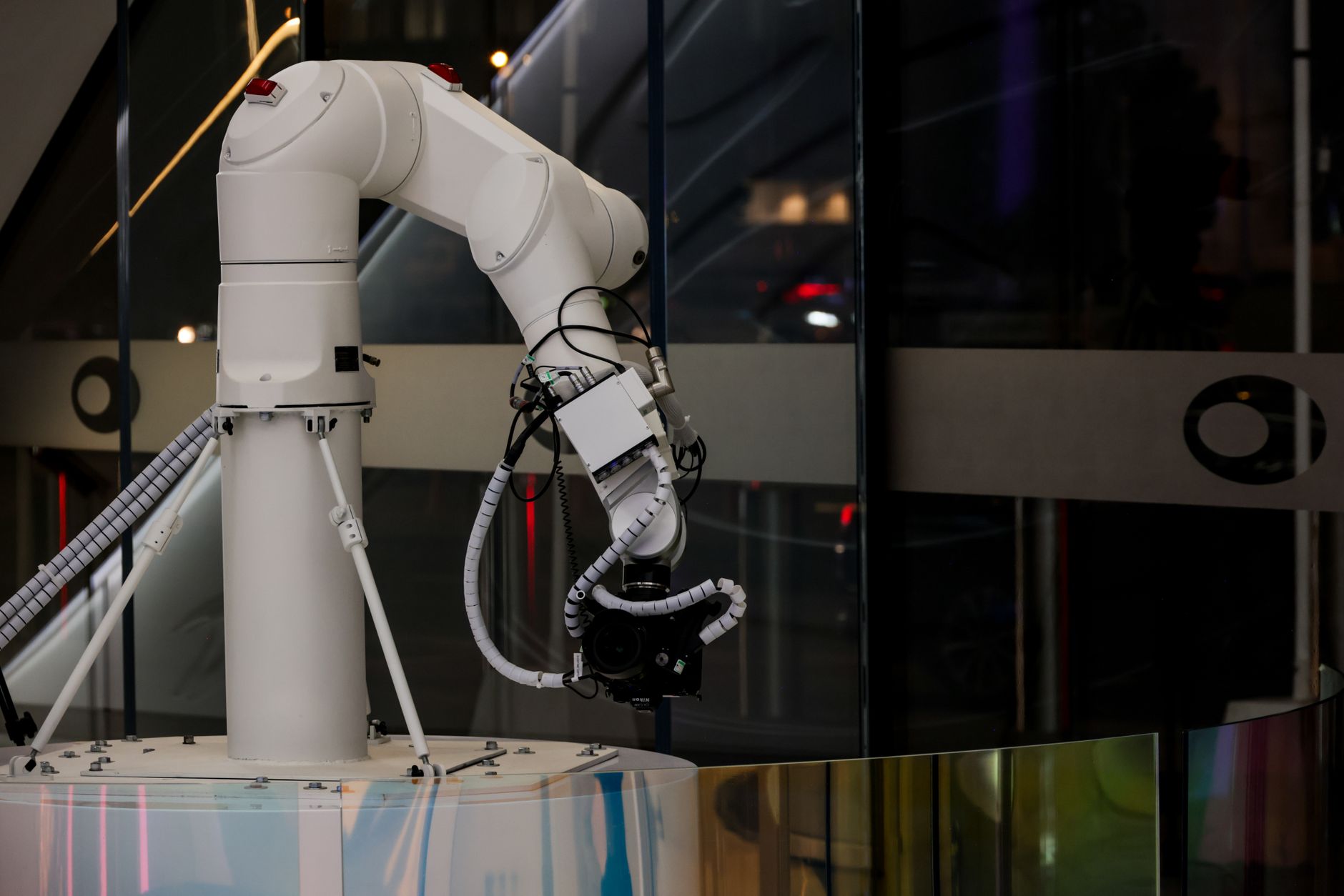
Vantora, formerly known as UP.Labs, secured $100 million in new funding on September 18, 2026, marking a significant capital injection into its unique venture studio model. This raise underscores Vantora's strategic pivot to exclusively focus on "physical AI," signaling an accelerated push into integrating artificial intelligence with real-world physical systems for industrial corporations and presenting a blueprint for how founders can engage with deep tech innovation in established sectors.
Quick takeaways
- Vantora, previously UP.Labs, raised $100 million in new funding on September 18, 2026.
- The company is making a strategic pivot to concentrate entirely on 'physical AI' ventures for industrial corporations.
- This capital infusion will accelerate the creation and scaling of new technology companies within the 'physical AI' domain.
- Vantora operates as a venture studio, building startups from the ground up, distinct from traditional venture capital or accelerators.
- 'Physical AI' integrates artificial intelligence into real-world physical systems, driving efficiency and innovation in industrial sectors.
Vantora's $100M Capital Infusion and Strategic Rebrand
Vantora, operating as "a startup that builds other startups," announced on September 18, 2026, that it has successfully raised $100 million in new funding TechCrunch, 2026. This substantial capital infusion arrives concurrently with the company's rebranding from its previous identity, UP.Labs, to Vantora, a change that signifies its evolution and refined strategic direction. The $100 million is earmarked specifically to push these 'physical AI' ventures, accelerating the process of strategic venture creation TechCrunch, 2026. For founders and operators in the deep tech space, this investment signals a substantial commitment to a specific, high-potential segment of the AI market and indicates a robust funding environment for models that de-risk early-stage company building through corporate partnership. The venture studio model, as deployed by Vantora, positions itself as an integral partner to large industrial corporations, identifying critical market needs and then systematically building technology companies to address them. This approach contrasts with traditional venture capital, which typically invests in existing companies, or corporate venture capital, which often takes minority stakes in external startups. Vantora’s model involves originating concepts, assembling founding teams, providing initial capital, and offering operational support, effectively acting as an entrepreneurial engine for its corporate clients. The scale of this $100 million raise suggests Vantora intends to significantly expand its portfolio of 'physical AI' startups, potentially launching multiple ventures simultaneously or providing more substantial seed funding to its incubated companies. This level of funding also positions Vantora to attract top-tier talent, both in terms of entrepreneurial leadership for its ventures and specialized technical expertise in 'physical AI' domains. The rebranding itself from UP.Labs to Vantora suggests a renewed focus and a desire to establish a distinct identity as a leader in this specialized form of venture creation. The previous name, UP.Labs, was perhaps more generic; Vantora implies a more active, forward-moving, and perhaps vanguard role in the industrial technology landscape. This rebranding is not merely cosmetic; it reflects a sharpened mission and a clear signal to the market about where the company intends to direct its resources and expertise. For founders, such a well-capitalized and focused venture studio represents a potential pathway to building impactful companies with significant corporate backing and reduced initial capital risk, particularly in complex industrial sectors where market entry can be challenging and capital-intensive.
The Venture Studio Model: De-risking Corporate Innovation
Vantora’s operational framework is built upon the venture studio model, a distinct approach to company building that differs from traditional incubators, accelerators, or venture capital firms. Described as "a startup that builds other startups," Vantora focuses on creating and scaling new technology companies specifically for industrial corporations TechCrunch, 2026. This model addresses a fundamental challenge faced by large industrial enterprises: the difficulty of innovating rapidly and effectively within their existing organizational structures. Large corporations often possess deep market knowledge, extensive customer bases, and significant capital, but they can struggle with the agility, risk-taking, and entrepreneurial culture necessary to develop disruptive technologies at startup speed. Internal R&D departments, while valuable for incremental improvements, frequently face bureaucratic hurdles, short-term pressures, and a lack of direct market exposure that can stifle truly transformative innovation. Corporate Venture Capital (CVC) arms, while able to invest in external startups, often face challenges in fully integrating these innovations into the parent company's operations or in truly shaping the startup's direction to align with strategic corporate needs. This is where venture studios like Vantora provide a crucial bridge. They act as an external innovation engine, working closely with industrial partners to identify strategic opportunities and pain points. Instead of merely investing, Vantora actively builds the company from the ground up. This involves everything from ideation and market validation to recruiting a founding team, providing initial seed funding, and offering extensive operational support, including legal, finance, HR, and marketing functions. The core benefit for the industrial corporation is de-risked innovation. By partnering with Vantora, they gain access to new technologies and business models without having to bear the full internal cost and cultural disruption of building a startup themselves. The venture studio model allows for experimentation in a more agile, startup-like environment, while still benefiting from the corporate partner's industry insights and potential customer base. For founders, joining a venture studio-backed startup offers a unique proposition. They gain access to pre-vetted market opportunities, a significant initial capital injection, and the strategic backing of a large industrial partner, which can provide critical early customers and distribution channels. This significantly reduces the initial fundraising burden and market validation risk typically associated with early-stage startups. However, it also means founders operate within a framework that aligns with the corporate partner's strategic objectives, potentially limiting the degree of complete autonomy seen in purely independent ventures. Vantora's $100 million raise strengthens its capacity to offer this comprehensive support, allowing it to incubate more ventures, attract higher-caliber founding teams, and provide longer runways for its startups to achieve product-market fit and scale within the capital-intensive 'physical AI' sector.
Decoding 'Physical AI': Integrating Intelligence into Real-World Systems
Vantora's strategic pivot centers entirely on the emerging category of 'physical AI' TechCrunch, 2026. This term describes technology that integrates artificial intelligence into real-world physical systems TechCrunch, 2026. Unlike purely software-based AI applications that operate in digital environments, 'physical AI' directly interacts with and influences the physical world. This includes systems that perceive their environment through sensors, process information using AI algorithms, and then take actions through actuators or robotic components to achieve specific goals. The essence of 'physical AI' lies in its ability to bridge the gap between digital intelligence and physical execution, enabling machines and systems to operate with greater autonomy, efficiency, and intelligence in tangible settings.
Consider the broad range of applications that fall under this umbrella. In manufacturing, 'physical AI' powers advanced robotics that can perform complex assembly tasks with precision, adapt to variations in materials, and collaborate safely with human workers. Predictive maintenance systems, another key application, use AI to analyze sensor data from industrial machinery—such as vibration, temperature, and pressure—to anticipate equipment failures before they occur. This allows for proactive maintenance, significantly reducing downtime and operational costs. In logistics and supply chain management, 'physical AI' manifests in autonomous vehicles, drones, and warehouse robots that can navigate complex environments, optimize routes, and manage inventory with minimal human intervention. These systems leverage AI for real-time decision-making, object recognition, and path planning.
Beyond these examples, 'physical AI' also extends to areas like smart infrastructure, where AI-powered sensors monitor everything from bridge integrity to traffic flow, enabling intelligent responses to changing conditions. In agriculture, precision farming relies on 'physical AI' to optimize irrigation, fertilization, and pest control by analyzing soil data, crop health, and weather patterns. Energy management systems use AI to dynamically adjust power distribution based on real-time demand and supply, integrating renewable energy sources more efficiently into the grid. The common thread across these diverse applications is the deployment of AI not just for analysis, but for direct, intelligent action within the physical world. This requires robust hardware, reliable sensor networks, sophisticated real-time data processing capabilities, and AI models trained on vast amounts of real-world operational data. The emergence of 'physical AI' as a distinct category is driven by advancements in several interconnected fields: more powerful and energy-efficient edge computing, miniaturized and highly accurate sensors, increasingly capable robotics, and sophisticated machine learning algorithms that can operate in dynamic, unstructured physical environments. For founders, this represents a fertile ground for innovation, demanding a blend of deep technical expertise in AI, robotics, and hardware engineering, coupled with a nuanced understanding of specific industrial challenges. Vantora's focus on this category positions it at the forefront of a technological wave that promises to redefine how industries operate, moving beyond automation to truly intelligent and adaptive physical systems.
Market Opportunity and Challenges in Physical AI
The market opportunity for 'physical AI' is substantial, driven by industrial corporations' perennial pursuit of efficiency, cost reduction, safety improvements, and enhanced productivity. As Vantora’s $100 million raise indicates, investors and corporate partners recognize the immense value proposition in integrating AI into physical systems across sectors like manufacturing, logistics, energy, agriculture, and infrastructure TechCrunch, 2026. The potential for economic impact is vast. For instance, in manufacturing, 'physical AI' can lead to higher quality outputs, reduced waste, and more flexible production lines capable of adapting to changing demands. In logistics, autonomous systems promise faster delivery times, lower labor costs, and optimized resource utilization. The ability of 'physical AI' to automate dangerous or repetitive tasks also contributes to improved worker safety and allows human employees to focus on more complex, value-added activities. Furthermore, the data generated by these intelligent physical systems creates a feedback loop, enabling continuous improvement and optimization of industrial processes. This data can inform better decision-making, predictive analytics, and the development of entirely new services. The competitive landscape for industrial corporations is increasingly defined by their ability to leverage these advanced technologies, making 'physical AI' not just an option, but a strategic imperative for maintaining relevance and market share.
Despite the significant opportunities, the 'physical AI' sector also presents unique challenges for founders and established companies alike. One primary hurdle is the inherent complexity of integrating AI with physical hardware. This requires expertise not only in software and algorithms but also in mechanical engineering, electronics, sensor technology, and real-time control systems. Building and deploying 'physical AI' solutions often involves higher upfront capital expenditure compared to purely software-based ventures, due to the cost of specialized hardware, prototyping, and rigorous testing in real-world environments. Data acquisition and quality are another critical challenge. For AI models to be effective in physical systems, they require vast amounts of relevant, high-quality data from sensors and operational processes. Collecting, cleaning, and labeling this data, especially in industrial settings, can be resource-intensive and technically demanding. Ensuring the safety and reliability of 'physical AI' systems is paramount, particularly in critical industrial applications where failures can have severe consequences, including equipment damage, production halts, or even human injury. This necessitates robust testing, validation, and adherence to stringent regulatory standards, which can lengthen development cycles and increase compliance costs. The interoperability of new 'physical AI' solutions with legacy industrial infrastructure also poses a significant challenge. Many industrial facilities operate with decades-old machinery and proprietary systems, making seamless integration difficult and often requiring custom solutions. Finally, the talent gap in 'physical AI' is pronounced. There is a scarcity of professionals who possess the interdisciplinary skills required to develop and deploy these complex systems, encompassing AI/ML engineering, robotics, control theory, and domain-specific industrial knowledge. Founders entering this space must navigate these multifaceted challenges, often requiring substantial upfront investment, deep technical expertise, and a clear strategy for engaging with the existing industrial ecosystem. Vantora's venture studio model aims to mitigate some of these challenges by providing structured support, access to corporate partners, and capital, thereby de-risking entry into this complex yet promising market.
Strategic Venture Creation: Vantora's Playbook for Industrial Impact
Vantora's approach to strategic venture creation is a structured and systematic playbook designed to address specific needs of industrial corporations while fostering scalable, independent startups. This is not merely an investment strategy; it is a full-lifecycle company building process, from ideation to eventual market independence. The $100 million in new funding directly supports this methodology, enabling Vantora to accelerate the rate and scale of its venture creation activities within the 'physical AI' domain TechCrunch, 2026.
The process typically begins with Vantora collaborating closely with its industrial corporate partners. These partners, often leaders in their respective sectors, bring deep industry knowledge, identified pain points, and a clear understanding of market gaps that 'physical AI' solutions could address. Vantora then leverages its own internal expertise to validate these opportunities, conducting market research, technological feasibility studies, and business model canvas development. This initial phase is critical for ensuring that any venture launched has a clear problem-solution fit and a viable path to commercialization within the industrial landscape.
Once an opportunity is validated, Vantora embarks on building the founding team. Unlike traditional startups where founders often bring the initial idea, Vantora actively recruits entrepreneurial talent—CEOs, CTOs, and other key leaders—who possess a blend of technical prowess, industry experience, and leadership capabilities. These founders are then paired with a pre-vetted concept, a foundational team, and initial capital. This significantly de-risks the early stages for founders, allowing them to focus immediately on product development and market engagement rather than solely on fundraising and idea generation. The venture studio provides comprehensive operational support, acting as a co-founder in many respects. This includes legal services, financial management, human resources, marketing, and strategic guidance. This shared services model allows the nascent startup to operate leanly and efficiently, avoiding the common pitfalls and distractions of early-stage company building. The corporate partner often plays a crucial role as an early customer, providing pilot opportunities, real-world testing environments, and valuable feedback. This direct access to an industrial client accelerates product-market fit and validates the technology in a real operational context, which is invaluable for 'physical AI' solutions that must prove their efficacy in complex environments.
As the venture matures, Vantora guides it through subsequent funding rounds, often bringing in external investors to facilitate growth and further independence. The ultimate goal is for these startups to spin out, become independent entities, and scale their solutions across the broader industrial market, potentially beyond the initial corporate partner. The success metrics for Vantora are therefore not just about launching companies, but about creating sustainable, impactful businesses that deliver tangible value to industrial sectors. This model allows for a higher hit rate than traditional early-stage venture capital because the market need is pre-validated, the founding team is curated, and significant operational support is provided. For founders seeking to make a tangible impact in capital-intensive and complex industrial sectors, Vantora's strategic venture creation playbook offers a compelling alternative to the conventional startup path, providing a structured environment to build and scale 'physical AI' solutions with reduced initial risk and accelerated market access.
Implications for Founders and the Broader Ecosystem
Vantora's $100 million raise and its dedicated focus on 'physical AI' through a venture studio model carries significant implications for founders, operators, and the broader technology ecosystem TechCrunch, 2026. For aspiring founders, particularly those with deep technical expertise in AI, robotics, or industrial engineering, Vantora's move signals a clear and well-funded pathway into complex industrial sectors. It suggests that if a founder is passionate about solving real-world problems in manufacturing, logistics, energy, or agriculture with AI-driven physical systems, a venture studio like Vantora could be a viable alternative to the traditional independent startup route. This model offers a unique proposition: access to pre-vetted market opportunities, significant upfront capital, and the strategic backing of industrial corporations, which can translate into early customer traction and reduced market risk. Founders can focus on building and innovating, leveraging the studio's operational support, rather than dedicating substantial time to fundraising or navigating corporate bureaucracy alone. This could attract a different profile of entrepreneur—one who values impact and structured support alongside innovation.
The broader ecosystem will likely see an increased emphasis on interdisciplinary talent. 'Physical AI' demands engineers and product leaders who bridge the gap between software and hardware, AI algorithms and mechanical systems, data science and industrial operations. Universities and talent development programs may need to adapt to produce graduates with these combined skill sets. Furthermore, Vantora's success could inspire other venture studios or corporate innovation arms to adopt similar focused strategies, leading to a proliferation of specialized venture builders targeting specific deep tech niches. This would further fragment the early-stage funding landscape but also create more tailored support structures for founders working on highly specific, capital-intensive problems.
For corporate venture capital (CVC) arms and traditional VCs, Vantora's model presents both a potential partner and a competitor. CVCs might find Vantora an attractive vehicle for external innovation, allowing them to participate in the creation of new ventures without building the entire studio infrastructure themselves. Traditional VCs, especially those focused on deep tech, might see Vantora as a source of de-risked, pre-validated startups for their Series A and B rounds, as Vantora-backed companies emerge from the studio with proven concepts and initial traction. However, Vantora also competes for the best entrepreneurial talent and the most promising industrial innovation opportunities. This could drive up the valuation of early-stage 'physical AI' ventures and intensify the competition for skilled founders.
Finally, Vantora's pivot underscores a broader trend: the increasing convergence of AI with physical infrastructure and industrial operations. It highlights that the next wave of significant value creation in AI will not solely be in digital services or consumer applications, but increasingly in transforming the foundational industries that underpin the global economy. Founders looking for inspiration should recognize that deep, industry-specific knowledge, combined with cutting-edge AI expertise, is becoming a potent combination. Vantora's strategy suggests that building within an established industrial context, rather than trying to disrupt it from the outside, can be a highly effective path for founders aiming for substantial and sustainable impact. The $100 million investment is not just for Vantora; it's a signal to the entire deep tech community about where significant capital and strategic focus are being deployed.
FAQ
Q1: What is Vantora, and what is its core business model?
A1: Vantora, formerly known as UP.Labs, is a venture studio that specializes in creating and scaling new technology companies for industrial corporations TechCrunch, 2026. Its core business model involves acting as "a startup that builds other startups," partnering with large industrial companies to identify market needs, then building and incubating new ventures from the ground up to address those needs.
Q2: What is 'physical AI' and why is Vantora focusing on it?
A2: 'Physical AI' is an emerging category of technology that integrates artificial intelligence into real-world physical systems TechCrunch, 2026. This includes systems like autonomous robots, predictive maintenance solutions, and intelligent infrastructure that perceive their environment and take action. Vantora is focusing on 'physical AI' because it represents a significant opportunity to drive innovation and efficiency within industrial sectors, leveraging advancements in AI, robotics, and sensors to transform physical operations.
Q3: How much funding did Vantora raise and when?
A3: Vantora successfully raised $100 million in new funding on September 18, 2026 TechCrunch, 2026.
Q4: What will Vantora use the $100 million funding for?
A4: The $100 million raise is intended to push Vantora's 'physical AI' ventures and accelerate strategic venture creation TechCrunch, 2026. This capital will support the ideation, development, and scaling of multiple new startups focused on integrating AI into real-world physical systems for industrial corporations.
Q5: How does Vantora's venture studio model benefit founders?
A5: For founders, Vantora's venture studio model offers several benefits, including access to pre-vetted market opportunities, significant initial capital, and the strategic backing of large industrial corporate partners who can serve as early customers or provide distribution channels. This structure helps de-risk the early stages of company building, allowing founders to focus more directly on product development and market validation with substantial operational support.
Continue reading



The Entrepreneur Story
Is your story worth telling?
We feature founders who are building something real. Apply and we'll be in touch.
Apply to be featured →Stay sharp.
Ideas that move.
Founder stories, emerging ventures, and essays on what's next — straight to your inbox.
Unsubscribe any time.