
Anthropic Files for IPO, Targets $1 Trillion Valuation _AI Market Benchmark_
Anthropic confidentially filed its S-1 for an IPO, aiming for a groundbreaking $1 trillion valuation that will redefine benchmarks for AI companies and intensify competition in the burgeoning AI market.
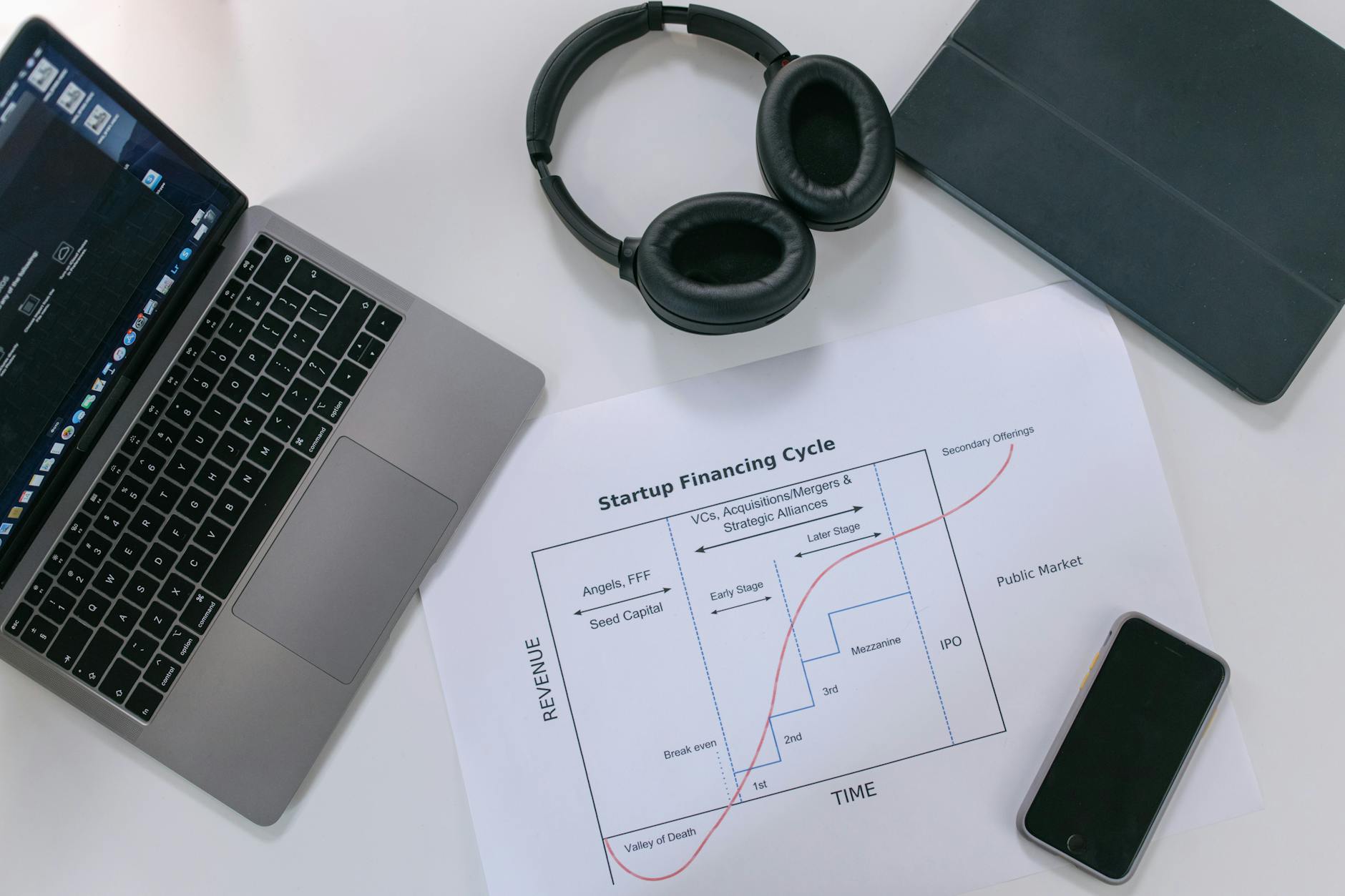
Anthropic confidentially filed its S-1 registration statement for an Initial Public Offering on June 1, 2026, signaling an expected late 2026 public debut with a potential valuation trajectory that could reach $1 trillion [TechCrunch, 2026; Reuters, 2026]. This move establishes a new benchmark for AI company valuations and intensifies the competition among foundational AI developers, directly impacting how other founders will secure capital and position their own ventures in the burgeoning AI market.
Quick Takeaways
- Anthropic filed its confidential S-1 on June 1, 2026, targeting an IPO in late 2026.
- The company is aiming for a potential $1 trillion valuation trajectory, setting a new high for AI startups.
- This IPO intensifies the competitive landscape against rivals like OpenAI and Google DeepMind.
- Anthropic has previously raised approximately $7.3 billion in funding, including $4 billion from Amazon and $2 billion from Google.
- The public offering will test investor appetite for mega-cap AI companies, influencing future venture capital trends.
The IPO Filing and Valuation Ambition
Anthropic's confidential S-1 filing on June 1, 2026, marks a significant milestone in the AI industry's capital markets journey. The company, led by CEO Dario Amodei, is targeting an Initial Public Offering in late 2026 [TechCrunch, 2026]. This confidential filing allows Anthropic to engage with potential investors and refine its prospectus away from immediate public scrutiny, a common strategy for high-profile tech companies approaching a public listing. The lead underwriters for this anticipated offering are reportedly Goldman Sachs and Morgan Stanley, institutions often associated with some of the largest and most complex IPOs [TechCrunch, 2026]. Their involvement underscores the scale and ambition of Anthropic's public market debut.
The most striking aspect of Anthropic's impending IPO is its projected valuation trajectory, which analysts suggest could reach $1 trillion [Reuters, 2026]. This figure positions Anthropic not just as a leading AI company, but as a contender for one of the largest market capitalizations globally, potentially alongside established tech giants. A $1 trillion valuation would represent an unprecedented level of public market confidence in a pure-play AI startup, far exceeding historical IPO valuations for even highly successful technology companies. For context, the global AI market is projected to reach $1.3 trillion by 2030, according to Bloomberg Intelligence [TechCrunch, 2026]. Anthropic's $1 trillion ambition would mean capturing a substantial portion of this projected market value within a few years of its public listing. This valuation target is not merely a financial aspiration; it is a declaration of intent regarding Anthropic's perceived long-term dominance and revenue potential in the foundational AI space.
Achieving such a valuation would necessitate demonstrating not only explosive growth but also a clear path to sustained profitability and market leadership. The S-1 filing, once made public, will provide the first comprehensive look at Anthropic's financial performance, revenue streams, customer base, and operational costs. These disclosures will be critical for investors to assess the viability of a $1 trillion market capitalization. The company's ability to convert its technological advancements into scalable commercial products and services will be under intense scrutiny. A successful IPO at this scale would validate the immense private capital already poured into the AI sector and could catalyze further investment across the entire AI ecosystem, from infrastructure providers to application developers. Conversely, any significant deviation from this target could temper investor enthusiasm for other high-valuation AI companies in the pipeline.
The public market's reception of Anthropic's IPO will set a crucial precedent for other AI startups eyeing similar exits. It will indicate the prevailing sentiment regarding the long-term economic prospects of generative AI, the sustainability of current growth rates, and the perceived risks associated with rapidly evolving AI technologies. Founders across the technology landscape, especially those in AI-adjacent fields, will closely monitor this IPO to gauge investor appetite, understand market expectations for growth and profitability, and refine their own exit strategies. The scale of this IPO suggests that public markets are prepared to absorb significant capital raises for companies deemed foundational to the next wave of technological innovation.
Anthropic's Genesis and Differentiators
Anthropic was founded by a team of former OpenAI researchers, including CEO Dario Amodei, who left the company over disagreements regarding the direction of AI safety and commercialization strategies. This origin story is central to Anthropic's identity and its core differentiators [TechCrunch, 2026]. The company's primary AI product is the Claude family of large language models (LLMs), which directly competes with OpenAI's GPT series and Google's Gemini models. The latest iteration, Claude 3.5 Sonnet, exemplifies Anthropic's approach to developing powerful yet controlled AI systems [TechCrunch, 2026]. Unlike many competitors who prioritize raw performance metrics above all else, Anthropic has consistently emphasized a distinct focus on AI safety and ethical development. This commitment is not merely a marketing slogan; it is embedded in the company's research methodology, product design, and corporate governance [Reuters, 2026].
Anthropic's "Constitutional AI" approach is a tangible manifestation of this safety focus. It involves training AI models to adhere to a set of principles and guidelines, often derived from human feedback and ethical frameworks, reducing the need for extensive human oversight in every interaction. This method aims to produce AI systems that are less prone to generating harmful, biased, or untruthful content, and that are more aligned with human values. For founders, this emphasis on safety serves as a critical case study in differentiation within a crowded technological landscape. While many companies race to deliver the fastest or most capable AI models, Anthropic has carved out a niche by prioritizing trustworthiness and responsibility. This strategy can attract customers, particularly enterprises and governments, who are acutely aware of the reputational and regulatory risks associated with deploying unchecked AI.
The decision to differentiate on safety and ethics carries strategic implications for market positioning. In a rapidly evolving field where public trust is paramount, a reputation for responsible AI development can become a significant competitive advantage. As regulatory frameworks for AI mature globally, companies like Anthropic, which have proactively integrated safety measures, may find themselves better positioned to comply with new standards and gain market access. This approach also resonates with a growing segment of the investor community that prioritizes ESG (Environmental, Social, Governance) factors, potentially broadening Anthropic's appeal beyond traditional tech investors.
However, the focus on safety also presents engineering and commercial challenges. Developing AI systems that are both powerful and inherently safe often requires more complex architectural designs and rigorous testing protocols, which can extend development cycles and increase costs. Balancing the pursuit of cutting-edge performance with robust safety guardrails is a delicate act. Anthropic's ability to achieve a potential $1 trillion valuation while maintaining this core differentiator will demonstrate to other founders that a values-driven approach can indeed lead to market leadership and significant financial success. This provides a blueprint for startups looking to build trust and long-term relationships with customers in sensitive domains, proving that ethical considerations can be a source of strength, not a hindrance, in technological innovation.
The Road to $7.3 Billion: Investor Backing and Strategic Alliances
Prior to its confidential S-1 filing, Anthropic had already amassed approximately $7.3 billion in funding from a roster of prominent investors [TechCrunch, 2026]. This substantial capital infusion underscores the intense private market interest in foundational AI models and the belief in Anthropic's potential to become a dominant force. The scale of this pre-IPO funding is remarkable, signaling that institutional investors are willing to deploy significant capital into companies at the forefront of AI research and development, even before a public listing.
Key among Anthropic's strategic investors are two tech giants: Amazon and Google. Amazon contributed $4 billion, while Google invested $2 billion [Bloomberg, 2026]. These investments are more than just capital injections; they represent strategic alliances that have profoundly influenced Anthropic's development trajectory and market reach. Amazon's investment, for instance, has deepened the integration of Anthropic's Claude models within Amazon Web Services (AWS), providing Anthropic with access to vast computing resources, a massive customer base, and crucial distribution channels. For Amazon, this partnership ensures that AWS remains competitive in the generative AI space, offering cutting-edge LLMs to its enterprise clients. Similarly, Google's investment reflects its strategy to maintain a strong position in the AI ecosystem, leveraging Anthropic's capabilities alongside its own DeepMind division. These alliances provide Anthropic with critical infrastructure, cloud credits, and go-to-market support, which are essential for training and deploying large-scale AI models.
The decision by both Amazon and Google to invest heavily in Anthropic, despite having their own formidable AI research divisions, highlights the perceived value and unique differentiation of Anthropic's technology and its safety-first approach. It also points to a broader industry trend where even large corporations are willing to invest in, and partner with, external AI innovators to accelerate their own capabilities and mitigate competitive risks. For Anthropic, these investments have provided the necessary runway to scale its research, attract top talent, and develop its Claude models without immediate pressure for public market liquidity. The capital has been instrumental in covering the immense computational costs associated with training advanced LLMs, which often run into hundreds of millions of dollars.
For other founders, Anthropic's funding journey offers several insights. Firstly, it demonstrates that building a compelling technological differentiator, such as Anthropic's focus on AI safety, can attract significant strategic investment even in a crowded market. Secondly, securing backing from major tech players can provide invaluable resources beyond just cash, including cloud infrastructure, distribution, and market validation. These strategic partnerships can accelerate product development and market penetration in ways that traditional venture capital alone cannot. Lastly, the sheer volume of capital raised privately before an IPO sets a new precedent for what it takes to compete at the very top tier of foundational AI development. Founders entering this space must recognize the high capital requirements and the importance of strategic alignment with powerful partners. The confidence shown by Amazon and Google in Anthropic's potential has laid the groundwork for its ambitious $1 trillion IPO valuation target, signaling a strong belief in the company's long-term viability and impact.
Intensifying the AI IPO Race: Rivals and Market Dynamics
Anthropic's confidential S-1 filing and its ambitious $1 trillion valuation target directly intensify the burgeoning AI IPO race, positioning the company as a formidable challenger to established giants and well-funded startups alike. The primary competitors in this high-stakes contest are OpenAI, backed by Microsoft, and Google, with its DeepMind AI division [WSJ, 2026]. These three entities represent the leading edge of foundational AI development, particularly in large language models. OpenAI, with its GPT series, has achieved significant market penetration and brand recognition, largely due to its partnership with Microsoft, which has integrated OpenAI's models across its product suite. Google, a pioneer in AI research, leverages DeepMind's scientific prowess and its vast data resources to develop models like Gemini.
Anthropic's move to go public provides a clear signal that the era of private-only AI mega-companies may be drawing to a close. Its IPO is not just a capital-raising event; it is a strategic maneuver designed to solidify its market position, attract broader investor interest, and gain a public currency for future acquisitions or talent retention. This public listing could exert pressure on OpenAI, which has also been subject to speculation about its own public market aspirations. While OpenAI has benefited from Microsoft's substantial investment and cloud infrastructure, a successful Anthropic IPO could highlight the advantages of direct public market access, potentially accelerating OpenAI's timeline for a similar move. The Wall Street Journal has already highlighted the AI IPO frenzy, noting Anthropic's challenge to OpenAI's market dominance [WSJ, 2026].
The market dynamics at play are complex. On one hand, there is immense investor appetite for companies perceived as leaders in the transformative AI sector. The promise of generative AI to reshape industries and drive unprecedented productivity gains is a powerful draw for capital. On the other hand, concerns about market saturation, the high cost of AI development, and the long-term profitability of foundational models persist. Investors will be scrutinizing Anthropic's S-1 for clear evidence of sustainable revenue growth, efficient scaling, and a defensible competitive moat beyond just technological prowess. The ability of the public market to absorb multiple mega-cap AI players, each valued in the hundreds of billions or even trillions, remains an open question. The Economist, for example, has raised questions about whether the stock market can effectively swallow companies like Anthropic, SpaceX, and OpenAI simultaneously [Economist, 2026].
The competition extends beyond just model capabilities. It encompasses ecosystem development, developer adoption, and strategic partnerships. OpenAI has built a robust developer community around its APIs and has forged deep integrations with Microsoft. Google has its own extensive developer tools and cloud platform. Anthropic, through its partnerships with Amazon and Google, is also building out its ecosystem, aiming to make Claude a preferred choice for enterprise customers and developers. The IPO will provide Anthropic with the capital to further invest in these areas, potentially accelerating its pace of innovation and market expansion.
For founders operating in the AI space, this intensified competition means a constantly shifting landscape. Startups building applications on top of these foundational models must carefully consider which platform to align with, based on factors like model performance, API stability, pricing, and the underlying company's long-term viability. Companies developing specialized AI models or infrastructure will face increased pressure to differentiate and demonstrate clear value propositions that complement, rather than directly compete with, these emerging giants. The public market's valuation of Anthropic will serve as a critical indicator of how much premium investors are willing to pay for perceived leadership in this defining technological era.
Implications for Founders: Capital, Competition, and Safety
Anthropic's move towards a public listing, with its ambitious $1 trillion valuation trajectory, carries significant implications for founders across the technology ecosystem, particularly those in the AI sector. This event reshapes expectations around capital, intensifies competitive dynamics, and validates specific strategic differentiators.
Firstly, regarding capital, Anthropic's journey highlights the extraordinary sums required to compete at the forefront of foundational AI. The company raised approximately $7.3 billion in private funding before its IPO, including $4 billion from Amazon and $2 billion from Google [TechCrunch, 2026; Bloomberg, 2026]. This sets a new, exceptionally high benchmark for capital intensity in the core AI infrastructure space. For founders building the next generation of large language models or foundational AI systems, this implies that securing multi-billion-dollar pre-IPO rounds may become the new standard. It also suggests that strategic partnerships with tech giants, offering both capital and access to computing resources and distribution, are increasingly critical for survival and scale. Smaller startups in this domain may find it harder to attract sufficient capital to keep pace, potentially leading to consolidation or a clearer division between foundational model developers and application-layer companies. Founders must strategize how to either raise capital at this scale or find niches that do not require such immense investment.
Secondly, the competition landscape is becoming more defined and aggressive. Anthropic's IPO directly positions it against OpenAI (backed by Microsoft) and Google (with DeepMind), creating a clear triumvirate of leading foundational AI providers [WSJ, 2026]. This intensified rivalry means that founders building AI applications or services must carefully choose their underlying model providers. Deep integrations and dependencies on one platform could offer advantages, but also carry risks if that platform's strategy shifts. Founders need to assess the long-term viability, ethical stance, and technical roadmap of these major players to make informed decisions about their own product development and market strategy. For those developing specialized AI models, the challenge is to demonstrate unique value that complements, rather than directly competes with, the general-purpose capabilities of Claude, GPT, or Gemini. This might involve focusing on highly specialized domains, proprietary data sets, or novel architectural approaches not covered by the giants.
Thirdly, Anthropic's emphasis on AI safety and ethical development as a core differentiator offers a crucial lesson [Reuters, 2026]. In a market often driven by speed and raw performance, Anthropic has consistently prioritized building AI that is reliable, unbiased, and aligned with human values. This approach has not only attracted significant investment but is also expected to resonate with public market investors and enterprise customers increasingly concerned about the responsible deployment of AI. For founders, this signals that integrating ethical considerations and safety protocols from the outset can be a powerful competitive advantage, not just a regulatory burden. Building trust in AI products will become paramount, especially as AI permeates more sensitive applications. Startups that can credibly demonstrate a commitment to safety, transparency, and fairness in their AI systems may find a stronger market position and greater customer loyalty. This could involve developing robust explainability features, implementing rigorous bias detection, or adhering to emerging AI ethics guidelines.
Finally, the public market's reception of Anthropic's IPO will serve as a critical indicator of investor appetite for high-growth, high-valuation AI companies. A successful IPO at a valuation approaching $1 trillion would validate the entire AI sector and could unlock further venture capital funding for a broader range of AI startups. Conversely, any underperformance could temper expectations and lead to a more cautious investment climate. Founders must prepare for potential shifts in investor sentiment based on this and other upcoming AI IPOs, adjusting their fundraising strategies and valuation expectations accordingly. The long lead time between the confidential S-1 filing and the actual IPO also highlights the extensive preparation required for such a significant public offering, providing a roadmap for other late-stage startups.
FAQ
Q: When did Anthropic confidentially file its S-1 for an IPO? A: Anthropic confidentially filed its S-1 registration statement for an Initial Public Offering on June 1, 2026 [TechCrunch, 2026].
Q: What valuation trajectory is Anthropic reportedly targeting with its IPO? A: Anthropic is targeting a potential valuation trajectory that could reach $1 trillion [Reuters, 2026].
Q: Who are Anthropic's primary competitors in the AI market? A: Anthropic's primary competitors include OpenAI, which is backed by Microsoft, and Google, with its DeepMind AI division [WSJ, 2026].
Q: How much capital did Anthropic raise prior to its IPO filing? A: Anthropic had previously raised approximately $7.3 billion in funding from major investors, including $4 billion from Amazon and $2 billion from Google [TechCrunch, 2026; Bloomberg, 2026].
Q: What is Anthropic's key differentiator in the crowded AI market? A: Anthropic emphasizes its focus on AI safety and ethical development as a key differentiator for its Claude family of large language models [Reuters, 2026].
Continue reading


The Entrepreneur Story
Is your story worth telling?
We feature founders who are building something real. Apply and we'll be in touch.
Apply to be featured →Stay sharp.
Ideas that move.
Founder stories, emerging ventures, and essays on what's next — straight to your inbox.
Unsubscribe any time.