
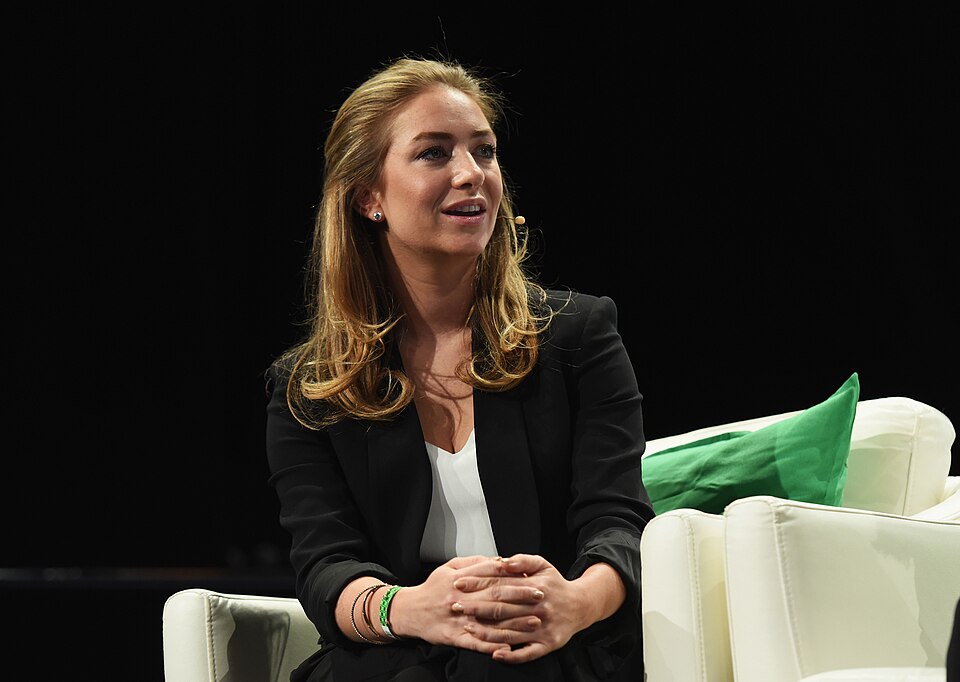
Whitney Wolfe Herd.
Founder and CEO of Bumble — turned a hostile exit from Tinder into a women-first dating platform and became the youngest female founder to take a US company public.
journey
Born in Salt Lake City to Kelly and Michael Wolfe, Whitney grew up in a household where entrepreneurship felt accessible. She attended Judge Memorial Catholic High School and studied international studies at Southern Methodist University. At 20 she launched a bamboo tote-bag business benefiting Gulf oil-spill recovery and later helped design an anti-trafficking clothing line. In 2012 she joined the small team that became Tinder, serving as VP of Marketing. She is widely credited with suggesting the name and with the sorority-by-sorority campus seeding strategy that pushed the app into virality. In April 2014 she left Tinder; two months later she filed a sexual-harassment and discrimination suit. The case settled that September for roughly $1 million plus stock.
struggles
Walking away from a public dispute at the category's dominant player should have been the end of her career in dating tech. Instead, Whitney had to re-enter the same industry while coping with online abuse, death threats and the lingering stigma of the lawsuit. Her first plan was actually a women-only social network called Merci. The pivot came when she met Badoo founder Andrey Andreev in August 2014. He offered $10 million, infrastructure and a 20% stake in exchange for her building a dating app. The structural idea — women must send the first message — was personal: she had lived the dynamic where women were punished for initiating.
success
Bumble spread the way Tinder had — through sororities and college campuses — but with a product philosophy that attracted a different kind of user. On 11 February 2021, Bumble Inc. listed on Nasdaq at $43; the stock opened at $76, valuing the company at $8.6 billion. At 31, Whitney became the youngest female founder to take a US company public. She returned as CEO in March 2025.
lessons
Whitney's story is that lived experience is a genuine product input. The women-first mechanic was a structural answer to a behavioural problem she had observed from inside the industry and inside her own life. The most defensible differentiators are the ones competitors cannot copy without rebuilding themselves. Tinder could not become Bumble without undoing the dynamic that made Tinder work.
Track record
Operating principles
Build the product you needed
The women-first mechanic came from a specific personal observation. Founders who ship from lived experience tend to defend their decisions more coherently.
Structural differentiation beats feature differentiation
A rule that reshapes who speaks first reshapes the entire product. If a competitor copying your feature would require them to break their own product, you have found the right wedge.
Composure is a strategy
Whitney launched Bumble three months after a public harassment settlement, under scrutiny most founders never face. Clear, unapologetic positioning did more for the brand than any ad spend.
Tell your network. Pre-filled text for LinkedIn and X — edit however you like.
Copy and paste this into your site or bio page.
<a href="https://theentrepreneurstory.com/founders/whitney-wolfe-herd" target="_blank" rel="noreferrer" style="display:inline-flex;align-items:center;gap:8px;background:#1a2e1a;color:#f4efe1;font-family:sans-serif;font-size:13px;padding:10px 16px;border-radius:4px;text-decoration:none;">As featured in · The Entrepreneur Story</a>Selected coverage
Want your story here?
Submit your founder profile.
Like Whitney, hundreds of founders have been featured on The Entrepreneur Story. Reviewed weekly — submit yours in under two minutes.
Submit your story →