
Jack Ma.
The English teacher who turned 18 rejections and $60,000 into Alibaba, one of the world's largest e-commerce empires.
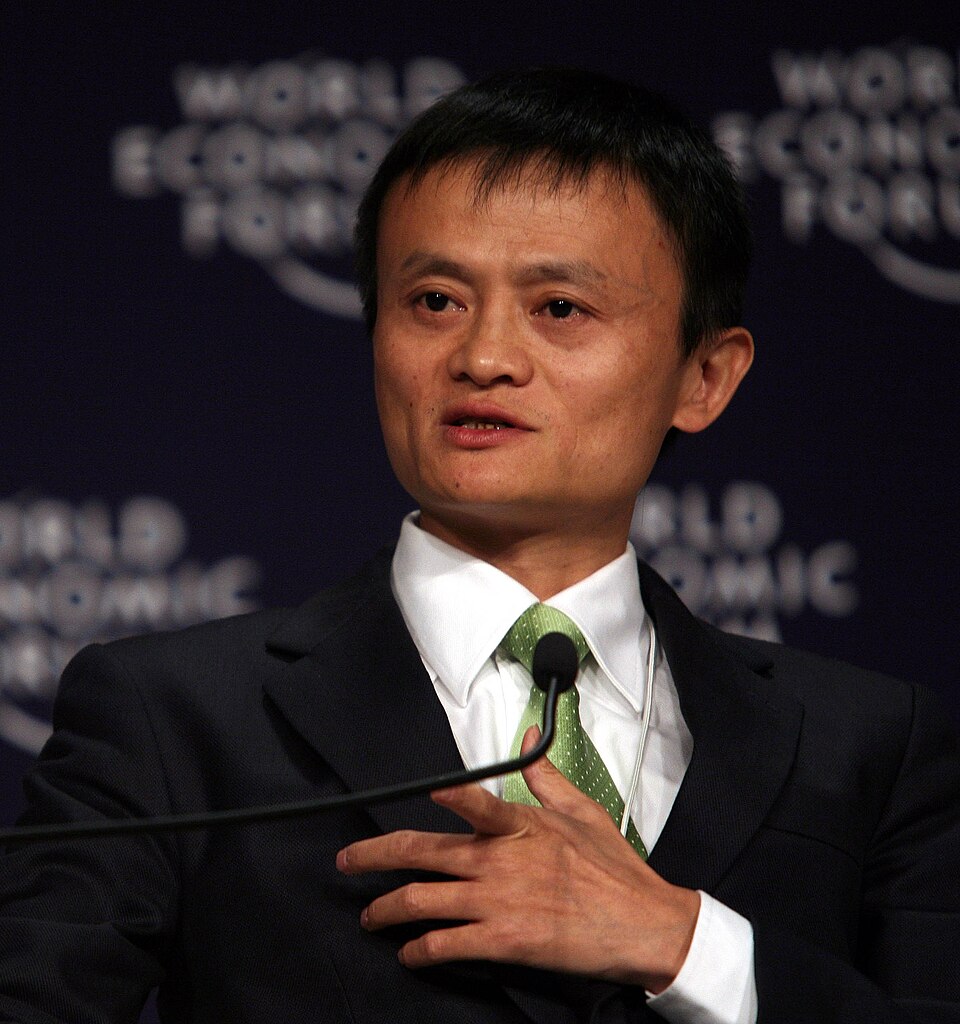
journey
Growing up in Hangzhou during China's Cultural Revolution, Jack Ma learned English by cycling to local hotels and offering free tours to foreign tourists for nine years. He failed the gaokao, China's university entrance exam, twice before passing on the third attempt and enrolling at Hangzhou Teachers Institute, graduating in 1988. He then became an English teacher earning roughly $12 a month. On a 1995 trip to the United States as a translator, Ma used the internet for the first time, searched for the word 'beer,' and noticed no Chinese results. That moment convinced him China needed an internet of its own. He launched China Pages, an early online directory, before founding Alibaba in June 1999 inside his Hangzhou apartment with 17 co-founders, later known as the 'Eighteen Arhats.' They pooled roughly $60,000 to build a marketplace connecting Chinese manufacturers with overseas buyers.
struggles
Rejection defined Ma's early life. He has said he applied to Harvard ten times and was turned down each time, was rejected from 30 jobs after college, and was the only one of 24 applicants not hired when KFC opened in his city. When he pitched Alibaba to his 18 friends, all but one initially called it a bad idea. Early investors in Silicon Valley repeatedly passed, and the dot-com bust nearly killed the company before SoftBank's Masayoshi Son famously invested $20 million after a six-minute meeting in 2000. In 2003 Ma launched Taobao to fend off eBay's entry into China, running at a loss for years. Decades later, his October 2020 Bund Finance Summit speech criticizing Chinese financial regulators triggered the suspension of Ant Group's $37 billion IPO and years of regulatory scrutiny that reshaped his empire.
success
Alibaba's September 19, 2014 debut on the New York Stock Exchange raised about $25 billion, making it the largest IPO in U.S. history at the time and valuing the company at roughly $168 billion on pricing, more than Amazon. Taobao, launched to counter eBay, forced the American giant to exit China by 2006 by offering free listings and local payment trust via Alipay. Alipay evolved into Ant Group, which at peak processed trillions of yuan in payments annually. Alibaba's ecosystem now includes Tmall, Cainiao logistics, Alibaba Cloud, and AliExpress, serving over a billion annual active consumers globally. Ma stepped down as Alibaba chairman on his 55th birthday in September 2019, handing control to Daniel Zhang while remaining a lifetime partner.
lessons
Jack Ma's story is a masterclass in treating rejection as information rather than verdict. His outsider status, no computer science training, no elite pedigree, no Silicon Valley network, became an asset: he built for small Chinese merchants precisely because he was one of them and understood what they needed. He bet on infrastructure others ignored, from third-party escrow in Alipay to cloud computing when few in China took it seriously. His career also illustrates the double edge of operating in emerging markets: a founder can scale faster than anywhere else, but political winds can halt a $37 billion IPO overnight. The lesson is to build genuine customer value that outlives any single regulatory climate, cultivate conviction through adversity, and remember Ma's own refrain: today is hard, tomorrow is harder, but the day after tomorrow is beautiful.
Track record
Operating principles
Treat rejection as data
Harvard said no ten times, KFC passed, and 17 of 18 friends called Alibaba a bad idea. Ma kept iterating instead of internalizing the verdict. Rejection told him what the market did not yet see, not what he was worth.
Serve the customer no one else serves
Alibaba won because it was built for small Chinese merchants and Taobao won because it was built for cost-sensitive Chinese buyers. Ma consistently positioned the company where multinationals refused to invest in local trust, local payments, and local logistics.
Think in decades, act in days
Ma committed publicly to running Alibaba for 102 years so it would span three centuries. That long horizon let him absorb the dot-com bust, Taobao's lossmaking years, and regulatory shocks without abandoning the strategy.
Tell your network. Pre-filled text for LinkedIn and X — edit however you like.
Copy and paste this into your site or bio page.
<a href="https://theentrepreneurstory.com/founders/jack-ma" target="_blank" rel="noreferrer" style="display:inline-flex;align-items:center;gap:8px;background:#1a2e1a;color:#f4efe1;font-family:sans-serif;font-size:13px;padding:10px 16px;border-radius:4px;text-decoration:none;">As featured in · The Entrepreneur Story</a>Selected coverage
Want your story here?
Submit your founder profile.
Like Jack, hundreds of founders have been featured on The Entrepreneur Story. Reviewed weekly — submit yours in under two minutes.
Submit your story →