
Meet the Founders Building Businesses Outside India's Biggest Startup Hubs Outside India's Biggest Startup Hubs
More than half of India's recognised startups now sit outside Bengaluru, Mumbai and Delhi. The map of Indian entrepreneurship has quietly redrawn itself — and the founders doing the redrawing look very different from the metro archetype.
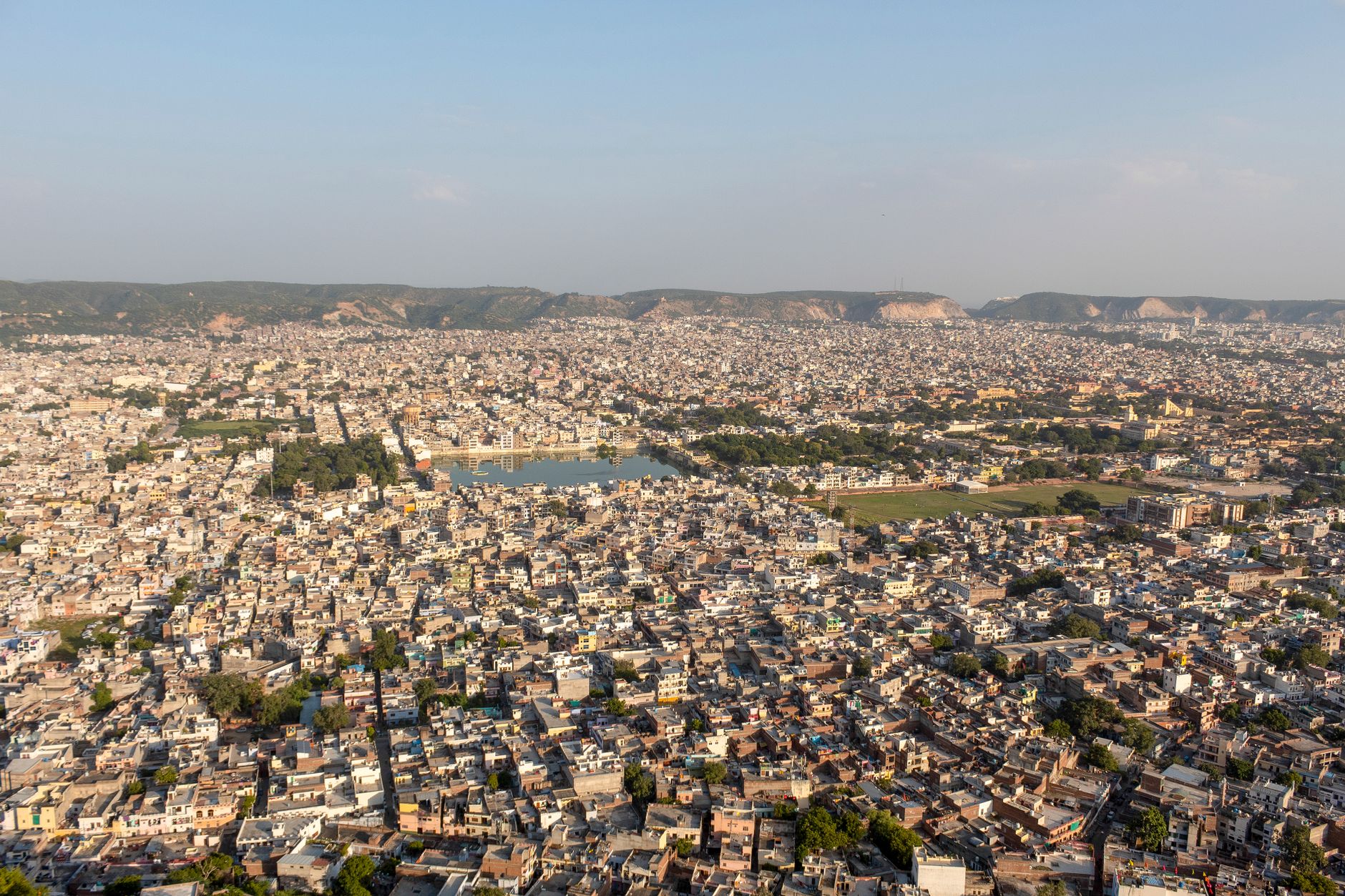
For a decade, the story of Indian entrepreneurship was told through three postcodes. Koramangala in Bengaluru. Powai in Mumbai. Gurugram, just outside Delhi. Everywhere else was a market to sell into, not a market to build from.
That story no longer holds. By mid-2026, more than 2.3 lakh startups were recognised by the Department for Promotion of Industry and Internal Trade (DPIIT), and roughly 51 to 53 per cent of them were headquartered in Tier-2 and Tier-3 cities. For the first time, 48 per cent of all new registrations in the 2025-26 financial year came from beyond the top six metros. The geography of Indian entrepreneurship has shifted, and the Tier-2 startup founders India once overlooked are now the engine of a quieter Bharat startup success story.
The Rise of Bharat's Startup Ecosystem
The numbers tell a plain story. In 2021, roughly 32 per cent of recognised startups came from non-metro India. By 2026, that figure sits closer to half. Jaipur alone now hosts more than 2,300 recognised startups. Surat has roughly 1,300. Indore, Lucknow, Coimbatore and Kochi each clear 900. Over 68,000 Indian startups are now headquartered outside the eight traditional hubs.
Consumer behaviour has moved with them. Tier-2 and Tier-3 cities accounted for roughly two-thirds of new direct-to-consumer orders in the last financial year. In food processing, around 58 per cent of recognised startups are based in these smaller cities. This is no longer the fringe. It is the mainstream of the India startup ecosystem 2026.
The reasons are structural. Rent and salaries in a Tier-2 city run 60 to 70 per cent lower than in Bengaluru. 5G has rolled out across more than 200 cities. UPI handles small-ticket commerce at the same latency in Bhilwara as in Bandra. The infrastructure that once forced founders to migrate has arrived at their doorstep.
Government and Infrastructure Support
The policy scaffolding has caught up with the geography. Startup India, now a decade old, offers DPIIT recognition that unlocks tax holidays, self-certification under labour laws, and preferential access to public procurement. The Fund of Funds for Startups, administered by SIDBI, has deployed roughly ₹27,900 crore through Alternative Investment Funds — and a growing share of those AIFs are mandated to back non-metro founders.
State governments have been less headline-grabbing but often more useful. Kerala Startup Mission in Kochi, iStart Rajasthan in Jaipur, T-Hub extensions in smaller Telangana towns, and MeitY's Software Technology Parks in Bhubaneswar, Mohali and Dehradun give founders credible addresses and capped-cost infrastructure. MSME Udyam registration layers a second set of benefits for founders operating below the startup threshold.
For first-time founders navigating this maze, our guide on how to start a business in India in 2026 walks through the registration mechanics in detail.
Founder Archetypes Emerging Outside the Metros
Naming every founder would miss the point. The pattern matters more. Four archetypes recur across the country.
The agritech founder from Jaipur or Jodhpur. Rajasthan's arid belt produces entrepreneurs solving problems metro teams rarely encounter — soil moisture sensing for low-water crops, cold-chain logistics for perishables moving to Delhi mandis, and crop insurance tooling built on satellite imagery. These are not pitches dressed up for a Bengaluru stage. They are products with paying customers twenty kilometres from the founder's home.
The health-tech founder from Chandigarh or Lucknow. Proximity to PGI Chandigarh, KGMU Lucknow and a dense ring of district hospitals has produced a class of founders building diagnostics, teleradiology and clinic-management software for Tier-2 and Tier-3 healthcare providers. The customer is a 40-bed nursing home, not a corporate hospital chain, and the pricing reflects that.
The vernacular edtech founder from Bhubaneswar or Kota. Odisha's engineering colleges and Kota's coaching ecosystem have incubated vernacular edtech — Odia, Bhojpuri, Marathi and Tamil-first learning products aimed at students whose English is functional but not instinctive. The addressable market is enormous and largely unserved.
The B2B SaaS founder from Coimbatore, Ahmedabad or Indore. Textile, chemicals, auto components and pharma clusters surround these cities. Founders here build ERP overlays, compliance tooling and procurement software for mid-sized manufacturers who have never been sold software in their first language.
The reference point for all four archetypes is Zoho, which runs part of its headquarters out of Tenkasi, a Tamil Nadu town of under a lakh in population — proof that a globally relevant SaaS company can be built from genuinely rural India. DeHaat, founded in Patna and serving millions of farmers across eastern India, shows the same pattern in agritech.
Challenges and Advantages
The advantages are real. Customer acquisition costs fall sharply when your first hundred users live within a two-hour drive. Attrition is lower; a senior engineer in Indore who owns a flat is less inclined to job-hop for a 20 per cent raise than her Bengaluru counterpart. Competition for the same user is thinner, which buys non-metro founders the one commodity Bengaluru rarely offers: time to iterate without being cloned.
Our piece on how to get your first ten customers as a startup covers the CAC advantage in more operational detail.
The disadvantages are also real. Roughly 80 per cent of growth-stage venture capital still flows to companies legally headquartered in Bengaluru, Delhi-NCR or Mumbai, even when operations sit elsewhere. Many founders in Jaipur or Kochi now register a shell entity in Bengaluru purely to be legible to late-stage investors — a workaround, not a solution. Senior design talent, product management depth and corporate development expertise remain thinner outside the metros. The gap narrows every year, but it has not closed.
A Nationwide Growth Narrative
Capital is finally beginning to follow the founders. A visible cohort of Bharat-focused funds now writes cheques that metro-only funds will not. Ankur Capital backs agritech, health and livelihoods startups in small towns. India Quotient has long described its thesis as "unsexy, contrarian Bharat bets". Blume Ventures has backed non-metro startups including Truckle out of Udaipur. SamVed targets the aspirational middle class in Tier-2 and Tier-3 cities. Volt VC was set up specifically to address the Gujarat and Tier-2 founder gap. 100X.VC's micro-VC programme writes early iSAFE cheques across non-metro India.
Between 2016 and 2025, non-metro startups collectively raised roughly $3 billion across a few thousand funding rounds. The rounds are smaller, the valuations more disciplined, but the deal count is no longer trivial.
How Investors and Operators Can Engage
For investors sitting in Mumbai or Singapore, the entry points are specific. State incubators — Kerala Startup Mission, iStart Rajasthan, Startup Odisha, MeitY TIDE 2.0 centres — publish cohort lists openly. College tech fests at IIT Indore, IIT Jodhpur, IIT Bhubaneswar, NIT Rourkela, NIT Warangal and VIT Vellore surface pre-seed founders a year before they appear on metro angel dashboards. Regional chapters of TiE in Jaipur, Chandigarh, Kochi and Nagpur run founder evenings that are substantially easier to access than their Bengaluru equivalents.
For operators thinking about where to build, the calculation has changed. A founder choosing between a Bengaluru lease at ₹120 per square foot and an Indore one at ₹40, with broadly comparable engineering talent at mid-levels, is making a different trade-off than she would have in 2019. Our guide on how to price a SaaS product for the Indian market is especially relevant for founders selling into Tier-2 and Tier-3 buyers whose willingness-to-pay curves look nothing like metro SMBs.
Look Beyond the Usual Hubs
India now has a startup map, not a startup postcode. The founders building from Jaipur, Coimbatore, Kochi, Indore, Bhubaneswar, Chandigarh and dozens of smaller towns are solving problems their metro counterparts cannot see and reaching customers their metro counterparts cannot afford to serve.
The next decade of Bharat startup success will not be written by migration to Bengaluru. It will be written by founders who stayed, built where they lived, and were patient enough to wait for the capital, the talent and the attention to arrive. Most of it already has.
Continue reading

Why Startups Fail After Finding Their First Customers After Finding Their First Customers
From First Sale to ₹1 Crore Revenue: A Founder's Actual Growth Story A Founder's Growth Story

How to Pitch Your Startup to Investors: A Practical Pitch Deck Guide A Practical Pitch Deck Guide
The Entrepreneur Story
Is your story worth telling?
We feature founders who are building something real. Apply and we'll be in touch.
Apply to be featured →Stay sharp.
Ideas that move.
Founder stories, emerging ventures, and essays on what's next — straight to your inbox.
Unsubscribe any time.