
OpenAI Eyes AI Smart Speaker Market: Strategy & Impact Beyond Software: Hardware Future
OpenAI is reportedly developing a dedicated voice assistant device, signaling a strategic pivot from software to controlling the entire AI user experience and intensifying competition with tech giants.
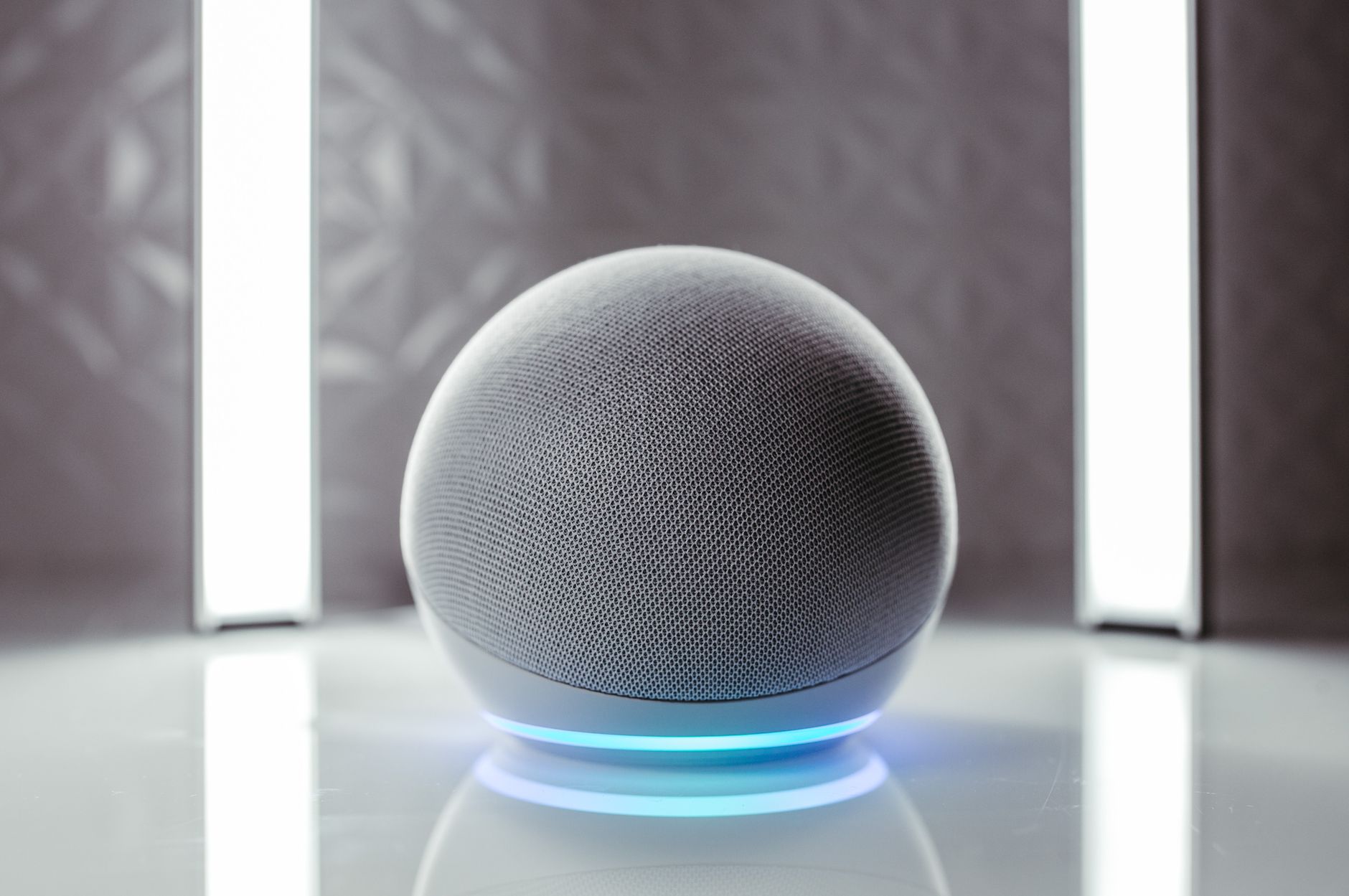
OpenAI is reportedly developing its own dedicated voice assistant hardware device, with a potential launch as early as late 2024 The Information, 2024. This move signifies OpenAI's strategic diversification from primarily software-based AI models to controlling the entire user experience. The hardware push is expected to intensify competition with tech giants and could inspire other AI startups to explore similar strategies for delivering AI directly to consumers.
Quick takeaways
- OpenAI's Hardware Gambit: OpenAI is reportedly developing a dedicated voice assistant device for a late 2024 launch, moving beyond software to control the full user experience.
- Direct AI Access: The new device aims to offer a direct, low-latency conversational AI experience, bypassing existing smart assistants like Amazon Alexa or Google Assistant.
- 'iPhone of AI' Ambition: Separately, OpenAI CEO Sam Altman is collaborating with Jony Ive's firm LoveFrom on a high-end AI device, seeking up to $1 billion in funding.
- Market Intensification: This hardware push will escalate competition with tech giants Amazon, Google, and Apple, challenging their dominance in consumer AI.
- Startup Precedent: OpenAI's diversification into hardware could inspire other AI startups to explore similar vertical integration strategies, delivering their AI directly to consumers.
OpenAI's Hardware Pivot: From Software to Device Control
OpenAI, known for its generative AI models, is reportedly making a strategic shift by developing dedicated hardware. The company is developing a voice assistant hardware device, with a rumored launch as early as late 2024 The Information, 2024. This initiative marks a crucial pivot, signifying OpenAI's intent to diversify from primarily software-based AI models to controlling the entire user experience.
The decision to venture into hardware stems from a desire to offer a direct, low-latency conversational AI experience. Currently, users interact with OpenAI's models through web interfaces, mobile apps, or third-party integrations. These intermediaries, such as smartphones, computers, or smart speakers powered by Amazon Alexa or Google Assistant, can introduce latency. By developing its own hardware, OpenAI aims to remove these layers, providing a seamless and immediate interaction The Information, 2024. This move aligns with OpenAI's goal to make its advanced generative AI more accessible and deeply integrated into daily life through dedicated hardware interfaces.
This strategic diversification aligns with a broader vision articulated by OpenAI CEO Sam Altman, who has expressed a vision for a new type of AI device beyond traditional phones and computers. This ambition is further underscored by OpenAI's separate collaboration with Jony Ive's design firm, LoveFrom, on a distinct, high-end 'AI device' Bloomberg, 2023. While the voice assistant device appears to be a more immediate, potentially mass-market offering, the Ive collaboration points to a long-term strategy to define an entirely new category of AI-centric hardware. OpenAI's expansion into hardware could inspire other AI startups to explore similar strategies for delivering their AI directly to consumers. The move signals that for leading AI companies, the future of AI accessibility might lie not just in better algorithms, but in better, dedicated hardware interfaces.
The Voice Assistant Device: A Direct Line to Conversational AI
OpenAI's rumored voice assistant hardware device represents a direct challenge to the established ecosystem of smart speakers and digital assistants. Unlike existing devices that primarily act as conduits for third-party services, OpenAI's device is being developed to offer a dedicated, low-latency conversational AI experience The Information, 2024. This distinction is critical. Current smart speakers, such as those powered by Amazon Alexa or Google Assistant, often function as sophisticated remote controls for smart home devices, media playback, or basic information retrieval. While they offer voice interaction, their underlying AI is typically designed for task execution rather than fluid, open-ended conversation. OpenAI's device aims to bypass these existing smart assistants, providing a direct interface to its advanced generative AI models.
The market gap OpenAI appears to be targeting is the desire for more natural, intelligent, and context-aware voice interactions. Many users find current smart assistants limited in conversational depth, often requiring precise commands and struggling with nuanced requests or follow-up questions. OpenAI's generative AI, in contrast, excels at understanding context, generating creative text, and maintaining extended dialogues. By embedding this capability directly into a dedicated device, OpenAI seeks to deliver an experience where the AI feels less like a tool and more like an intelligent conversational partner. This could unlock new use cases for voice AI, moving beyond simple commands to complex problem-solving, creative brainstorming, or even personalized learning.
The "low-latency" aspect is paramount to this vision. For a conversational AI to feel natural and responsive, the delay between a user's utterance and the AI's response must be minimal. Existing systems often involve multiple layers of processing, from local device processing to cloud-based AI inference and back, introducing noticeable delays. By designing the hardware and software in tandem, OpenAI can optimize this pipeline, potentially integrating specialized AI acceleration chips or streamlining data transfer to achieve near real-time interactions. This optimization could make the difference between a novel gadget and an indispensable daily companion.
For founders in the AI space, OpenAI's focus on a direct, low-latency conversational experience highlights the increasing importance of experience design in AI product development. It's not enough to have a powerful AI model; the interface through which users interact with it determines its perceived value and utility. Startups developing AI solutions must consider whether their AI is best delivered through existing platforms, or if a custom hardware interface is necessary to unlock its full potential and differentiate it in a crowded market. OpenAI's move suggests that for truly transformative AI, controlling the entire user journey, including the physical touchpoints, might become a competitive imperative. The device could serve as a blueprint for how future AI products are conceived, moving from screen-centric interactions to more ambient, conversational interfaces deeply integrated into users' environments.
The 'iPhone of AI' and Jony Ive Collaboration: Ambition and Funding
Beyond the rumored voice assistant device, OpenAI is engaged in a separate, more ambitious hardware initiative: a collaboration with Jony Ive's design firm, LoveFrom, on a high-end 'AI device' Bloomberg, 2023. This project has garnered significant attention, with some observers dubbing it the 'iPhone of AI,' reflecting aspirations to create a category-defining product with the same transformative impact as Apple's iconic smartphone. The involvement of Jony Ive, renowned for his design leadership at Apple and his meticulous approach to user experience and industrial aesthetics, signals OpenAI's commitment to creating a device that is not only technologically advanced but also exceptionally designed and intuitive. Ive's firm, LoveFrom, is known for its minimalist philosophy and focus on seamless integration of form and function, suggesting that this AI device will prioritize user experience and elegant simplicity.
The financial ambition behind this project is substantial. OpenAI CEO Sam Altman and Jony Ive are reportedly seeking up to $1 billion in funding for this venture, with SoftBank Group Corp. identified as a potential investor Bloomberg, 2023. A funding round of this magnitude underscores the capital-intensive nature of hardware development, especially for a product aiming to redefine a category. It also reflects the high stakes involved, as well as the perceived market potential for a truly novel AI-centric device. SoftBank's potential involvement is notable, given its history of significant investments in technology and its vision for disruptive innovation. Securing such substantial backing would provide the resources necessary for extensive research and development, supply chain establishment, manufacturing, and global distribution.
Sam Altman has publicly articulated a vision for AI devices that move beyond the paradigms of existing smartphones and personal computers. He envisions hardware that is inherently designed around AI capabilities, offering new modes of interaction and utility that current devices cannot provide Bloomberg, 2023. This 'iPhone of AI' project likely embodies that vision, aiming to create a device where AI is not just an application, but the core operating system and user interface. This could involve novel input methods, adaptive interfaces, and deeply personalized experiences that learn and evolve with the user.
For founders, this high-end hardware play illustrates the two distinct approaches to entering the AI hardware market. While the voice assistant device appears to be a more direct, perhaps mass-market entry, the Ive collaboration represents an ambitious bet on creating a completely new product category. It highlights the immense capital required for such ventures and the strategic importance of design leadership in differentiating new hardware. Founders must consider whether their AI solutions warrant such a deep, capital-intensive dive into hardware, or if a more focused approach on specific functionalities, like the voice assistant, is a more viable path. The ultimate success of the 'iPhone of AI' will depend on its ability to offer a compelling value proposition that transcends existing devices, justifying its premium positioning and substantial investment.
Intensifying Competition in the AI Hardware Landscape
OpenAI's foray into consumer hardware signals an imminent escalation of competition within the AI and smart device markets, directly challenging established tech giants. Companies like Amazon, Google, and Apple have long dominated the consumer hardware space, particularly in smart home devices and personal assistants Bloomberg, 2023. Amazon, with its Alexa-powered Echo devices, and Google, with its Assistant-enabled Home and Nest products, have built extensive ecosystems of connected devices and services. Apple, while having a smaller footprint in the smart speaker market with HomePod, integrates Siri deeply across its vast iPhone, iPad, and Mac user base, leveraging its strong brand loyalty and ecosystem lock-in.
OpenAI's reported voice assistant device aims to bypass these existing smart assistants, offering a direct conduit to its advanced conversational AI The Information, 2024. This strategy directly attacks the core value proposition of current smart speakers, which often serve as an interface to a myriad of third-party skills and services, but are perceived as less intelligent in open-ended conversation. If OpenAI can deliver a significantly superior conversational experience—more natural, context-aware, and useful—it could chip away at the market share of Amazon and Google, whose assistants have faced criticism for their limitations in complex dialogue. The differentiator for OpenAI is its generative AI, which has demonstrated capabilities far beyond the rule-based or narrow-domain AI typically found in current smart assistants.
The competition will not be limited to functionality; it will extend to ecosystem control and data. Amazon and Google have leveraged their smart devices to collect vast amounts of user data, which feeds into their advertising models and product development. Apple, while emphasizing privacy, uses its ecosystem to reinforce hardware sales. OpenAI entering this space means a new player vying for direct user interaction and, potentially, valuable real-world usage data to further train and refine its AI models. This could lead to a battle over user trust and data privacy policies.
For founders, this intensified competition means a more dynamic, but also more challenging, market. Startups in the AI hardware space will face increased pressure to differentiate their products, not just on features, but on the fundamental AI experience and how it integrates into daily life. They must anticipate that established players will not stand idly by; Amazon, Google, and Apple are likely to accelerate their own AI advancements, potentially integrating more sophisticated generative AI models into their existing hardware or developing new devices in response. This could manifest as improved conversational capabilities for Alexa and Google Assistant, or a renewed push by Apple into more AI-centric hardware beyond the HomePod. The landscape is shifting from a platform-agnostic AI model provider to a full-stack player, forcing all participants to consider their competitive advantages across both software and hardware. The hardware push is expected to intensify competition with tech giants like Amazon, Google, and Apple in the consumer AI and smart device markets.
Implications for AI Startups: Beyond Software-as-a-Service
OpenAI's reported move into consumer hardware represents a pivotal moment for the broader AI startup ecosystem, challenging the prevailing wisdom that AI companies should primarily focus on software-as-a-service (SaaS) models. Historically, AI startups have leveraged cloud infrastructure and API integrations to deliver their solutions, avoiding the capital-intensive and operationally complex world of hardware manufacturing and distribution. OpenAI's diversification into dedicated voice assistant devices and a high-end 'AI device' with Jony Ive suggests that for some AI applications, controlling the entire stack—from the foundational models to the end-user interface—might become a strategic imperative Bloomberg, 2023. This shift could inspire other AI startups to explore similar vertical integration strategies, delivering their AI directly to consumers through proprietary hardware.
For founders, this presents a complex set of considerations. Developing dedicated hardware allows for an optimized user experience. A custom device can be engineered specifically for the AI's capabilities, ensuring low latency, specialized processing, and unique input/output methods that enhance interaction. This level of control can create a truly differentiated product, fostering deeper user engagement and stronger brand loyalty than a purely software solution running on generic hardware. It also allows for the collection of more specific and high-quality usage data, which can be invaluable for further training and improving proprietary AI models. A startup with a truly novel AI capability might find that only dedicated hardware can fully showcase its potential, rather than being constrained by the limitations of existing platforms.
The challenges of hardware development are substantial. It requires significant upfront capital for research, design, prototyping, tooling, and manufacturing. Supply chain management, quality control, logistics, and customer support for physical products are vastly more complex than for software. The iterative development cycles common in software are difficult to replicate in hardware, where changes are costly and time-consuming. Furthermore, market entry requires not only a compelling product but also robust distribution channels and marketing budgets to compete with established players like Amazon, Google, and Apple. For a startup, these operational complexities can quickly drain resources and divert focus from core AI development.
Therefore, founders must carefully evaluate their specific AI application and market. Is the AI so groundbreaking that it requires custom hardware to deliver its unique value? Or can it thrive as a software solution, perhaps integrated into existing devices or platforms? OpenAI's move suggests that for advanced conversational AI, especially with aspirations for ambient computing and seamless integration into daily life, hardware might be the necessary frontier. Startups entering niche markets with specific AI applications, such as specialized health monitoring, industrial automation, or educational tools, might find a compelling case for dedicated hardware if it provides a superior, safer, or more integrated experience than software alone. This strategic shift from OpenAI compels all AI founders to reconsider the boundaries of their product strategy, weighing the benefits of full vertical integration against the formidable challenges of hardware development. The future of AI delivery might not be solely in the cloud, but also in the palm of a hand, or within a dedicated device designed for intelligent interaction.
FAQ
Q1: What is OpenAI's primary hardware initiative?
OpenAI is reportedly developing a dedicated voice assistant hardware device, with a potential launch as early as late 2024 The Information, 2024. This is separate from a more ambitious, high-end 'AI device' being developed in collaboration with Jony Ive's design firm, LoveFrom.
Q2: How does OpenAI's rumored voice assistant device differ from existing smart speakers?
The rumored device aims to offer a direct, low-latency conversational AI experience, bypassing existing smart assistants like Amazon Alexa or Google Assistant The Information, 2024. Its focus is on providing a seamless interface to OpenAI's advanced generative AI.
Q3: Who is Jony Ive's firm LoveFrom involved with regarding OpenAI's hardware?
Jony Ive's design firm, LoveFrom, is collaborating with OpenAI on a separate, high-end 'AI device' Bloomberg, 2023. This project has been referred to as the 'iPhone of AI' and aims to create a new category of AI-centric hardware.
Q4: What is the funding target for the 'iPhone of AI' project?
OpenAI CEO Sam Altman and Jony Ive are reportedly seeking up to $1 billion in funding for the high-end 'AI device,' with SoftBank reportedly a potential investor Bloomberg, 2023.
Q5: What are the implications of OpenAI's hardware push for other AI startups?
OpenAI's expansion into hardware could inspire other AI startups to explore similar strategies for delivering their AI directly to consumers, moving beyond purely software-based solutions Bloomberg, 2023. It highlights the potential benefits of controlling the entire user experience through vertical integration, but also the significant capital and operational challenges associated with hardware development.
Continue reading


The Entrepreneur Story
Is your story worth telling?
We feature founders who are building something real. Apply and we'll be in touch.
Apply to be featured →Stay sharp.
Ideas that move.
Founder stories, emerging ventures, and essays on what's next — straight to your inbox.
Unsubscribe any time.