
Travis Kalanick's Robotics Company Raises $1.7B, Led by a16z
Travis Kalanick's robotics venture, operating inside CloudKitchens, secures $1.7 billion led by a16z to develop automated industrial and logistics facilities.
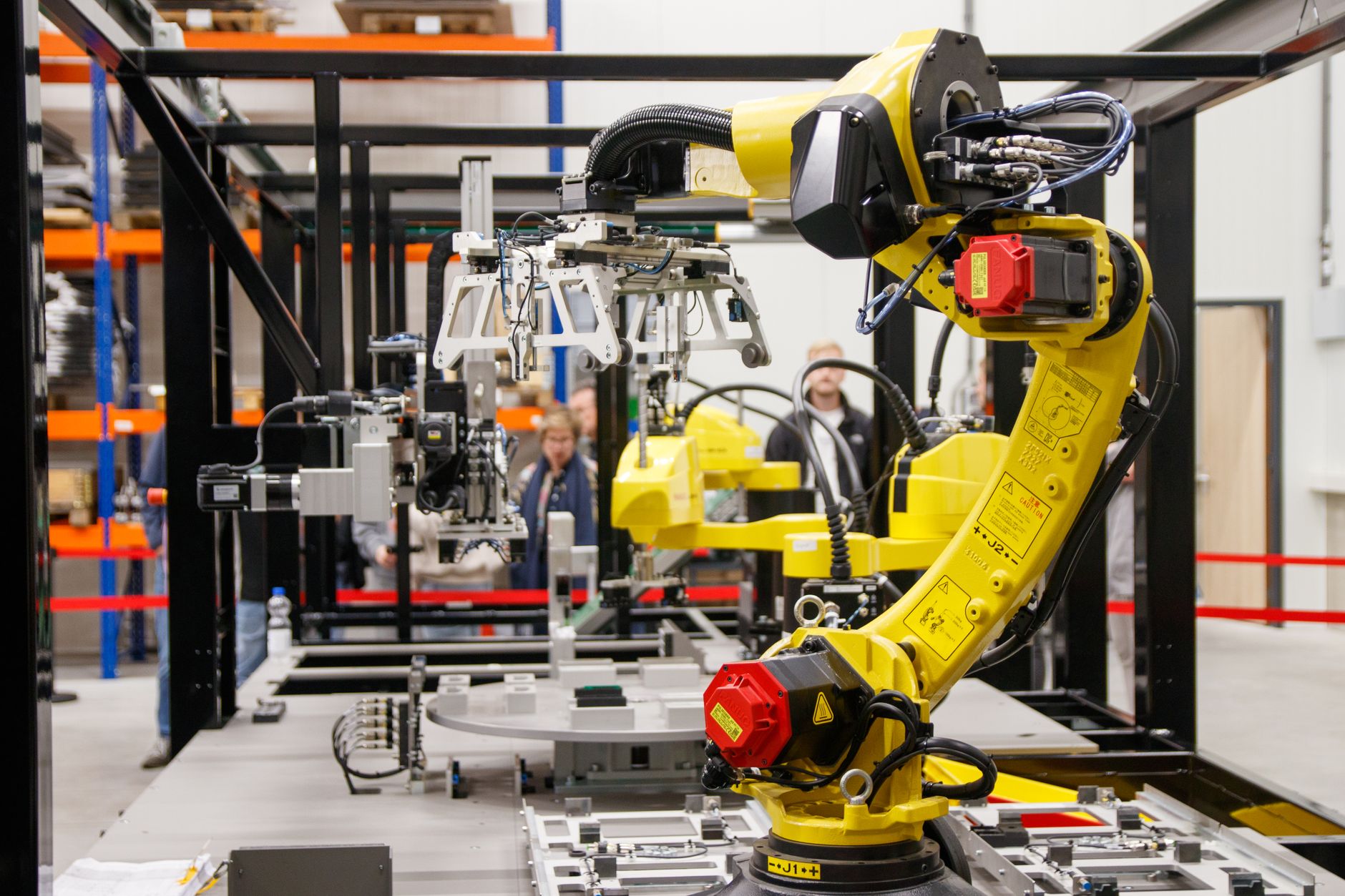
Travis Kalanick's latest robotics initiative, an endeavor operating within his existing ghost kitchen company CloudKitchens, secured a significant $1.7 billion in new funding. The round was led by Andreessen Horowitz (a16z), with additional contributions from G Squared and Saudi Arabia's Public Investment Fund (PIF) The Information, 2024. This substantial capital injection signals aggressive intent in industrial automation and highlights investor willingness to back founders with a track record of scaling, even amidst past controversies, offering a blueprint for founders aiming for moonshot ventures.
Quick takeaways
- Travis Kalanick's new robotics venture raised $1.7 billion in funding.
- The round was led by Andreessen Horowitz (a16z), with participation from G Squared and Saudi Arabia’s Public Investment Fund (PIF).
- The funding targets the development of automated industrial facilities and logistics/fulfillment centers.
- This robotics business is being built inside CloudKitchens, Kalanick's ghost kitchen company, which previously raised over $1.5 billion and reached a $15 billion valuation in 2022.
- The investment underscores strong investor confidence in Kalanick's ability to scale capital-intensive businesses and marks a significant move into the industrial automation sector.
The $1.7 Billion Bet on Automation and Logistics
Travis Kalanick's foray into robotics represents a significant capital commitment to a sector known for its complexity and high investment requirements. The $1.7 billion funding round, announced in May 2024, is earmarked for the development of automated industrial facilities and logistics/fulfillment centers The Information, 2024. This capital infusion is not merely an investment in a new company but a strategic bet on the future of industrial efficiency, leveraging Kalanick's proven ability to scale operations rapidly.
The lead investor, Andreessen Horowitz (a16z), signals a strong endorsement from a venture capital firm known for backing ambitious technology plays. Their involvement, alongside G Squared and Saudi Arabia’s Public Investment Fund (PIF), provides both financial muscle and strategic depth to the nascent robotics initiative TechCrunch, 2024. For founders, the sheer size of this round for a new, largely unannounced venture highlights the premium placed on proven entrepreneurial leadership, particularly when tackling capital-intensive problems. It suggests that for certain founders, the barrier to entry for massive capital raises is significantly lower, driven by their past successes and investor relationships.
The core mission of Kalanick's robotics venture is to automate the backbone of industrial and logistical operations. This involves creating sophisticated systems capable of handling tasks within factories and warehouses that traditionally rely on manual labor. The target areas—industrial facilities and logistics/fulfillment centers—are critical components of the global supply chain, continuously seeking ways to increase speed, reduce costs, and improve accuracy. The demand for automation in these sectors has been driven by rising labor costs, labor shortages, and the accelerating pace of e-commerce, which requires faster and more efficient order fulfillment.
This substantial funding round positions Kalanick's robotics initiative to aggressively pursue research and development, talent acquisition, and infrastructure build-out. The company is actively hiring engineers specializing in computer vision, perception, and factory automation The Information, 2024. These specialized engineering domains are foundational to developing autonomous systems that can navigate complex environments, identify and manipulate objects, and optimize workflows within industrial settings. The ability to attract top-tier talent in these fields will be critical for translating the significant capital into tangible technological advancements and market-ready solutions. For founders in capital-intensive sectors, this signals that access to massive funding can accelerate talent acquisition and technological development, but the underlying technical expertise and vision must be robust. The move into robotics also demonstrates a strategic pivot or expansion from Kalanick's previous ventures, indicating a willingness to tackle diverse, complex, and highly impactful industries.
Kalanick's Comeback and CloudKitchens' Foundation
Travis Kalanick, widely known as the co-founder and former CEO of Uber, has leveraged his entrepreneurial track record and access to capital to launch and scale multiple ventures The Information, 2024. His latest robotics initiative is not a standalone startup but is being built inside CloudKitchens, his existing ghost kitchen company Bloomberg, 2024. This strategic integration provides the new robotics venture with an established operational base, potential infrastructure, and a significant financial foundation. CloudKitchens itself had previously raised over $1.5 billion, achieving a valuation of $15 billion in 2022 Bloomberg, 2024. This prior success demonstrates Kalanick's continued ability to attract substantial investment for large-scale, infrastructure-heavy businesses.
The decision to house the robotics venture within CloudKitchens is notable. CloudKitchens operates a network of shared commercial kitchens designed for delivery-only restaurants. While seemingly disparate from industrial automation, both ventures share commonalities in optimizing physical infrastructure, managing complex logistics, and leveraging technology for operational efficiency. The experience gained in scaling the CloudKitchens model, which involves real estate acquisition, facility build-out, and technology integration for food preparation and delivery, could offer transferable lessons for automating industrial and logistics centers. For founders, this demonstrates how an existing, well-funded platform can serve as a launchpad for new, ambitious projects, providing immediate resources and reducing the initial friction of starting completely from scratch.
Investor confidence in Kalanick remains strong, despite his controversial exit from Uber. Chris Dixon of a16z, a key backer in this latest round, had previously invested in Kalanick during his tenure at Uber The Information, 2024. This continuity of support highlights the "founder-first" investment thesis often adopted by prominent venture capital firms. For VCs, a founder's track record of building and scaling massive companies, even if accompanied by challenges, can outweigh other considerations. This repeat investment signals a belief in Kalanick's vision, his operational capabilities, and his ability to attract and deploy significant capital effectively. It underscores the importance of long-term relationships and demonstrated execution for securing follow-on funding, even across different ventures.
The $1.7 billion for the robotics venture, separate from CloudKitchens' previous funding, indicates a clear strategic focus and dedicated resources for this new direction. While the valuation of this specific robotics venture was not disclosed Bloomberg, 2024, the scale of investment suggests that investors are valuing the long-term potential of industrial automation and Kalanick's capacity to execute on it. This level of funding allows the robotics initiative to pursue ambitious goals without immediate pressure for short-term profitability, enabling a longer runway for R&D and market penetration. Founders can learn from this model of leveraging past successes to secure substantial capital for new, capital-intensive ventures, emphasizing the importance of building a reputation for aggressive growth and execution. The backing by sovereign wealth funds like Saudi Arabia's PIF further indicates the strategic nature of this investment, potentially opening doors for global expansion and large-scale deployments in key markets.
The Robotics Market: Industrial Automation and Logistics
The robotics market, particularly in industrial automation and logistics, is undergoing rapid transformation, driven by technological advancements and pressing economic needs. Kalanick's new venture aims to develop automated industrial facilities and logistics/fulfillment centers The Information, 2024. These facilities are designed to significantly reduce the reliance on human labor in tasks such as material handling, sorting, packaging, and inventory management, improving efficiency, speed, and accuracy across the supply chain. The problems these automated centers address are fundamental: rising labor costs, persistent labor shortages in warehousing and manufacturing, and the increasing complexity and volume of e-commerce orders, which demand rapid fulfillment and precise inventory control.
The technology required for such automation is highly complex, involving a confluence of disciplines. Kalanick's company is actively hiring engineers specializing in computer vision, perception, and factory automation The Information, 2024. Computer vision enables robots to "see" and interpret their surroundings, identifying objects, their locations, and their properties. Perception systems allow robots to understand and interact with the physical world, making decisions based on sensory input. Factory automation encompasses the design and implementation of robotic systems, automated guided vehicles (AGVs), and robotic arms that can perform a wide range of tasks, from assembling products to moving pallets. The integration of these technologies allows for the creation of intelligent, flexible automation solutions that can adapt to changing demands within industrial environments.
The competitive landscape in industrial automation and logistics is robust, featuring established players and a growing number of startups. While the specific competitors for Kalanick's venture were not detailed, companies like Fabric, which builds micro-fulfillment centers, and AutoStore, known for its cube storage automation systems, operate in adjacent spaces [Entities]. Large e-commerce players like Amazon have also made significant internal investments in warehouse automation, deploying thousands of robots in their fulfillment centers to streamline operations and enhance delivery speeds [Entities]. This demonstrates the high stakes and the immense potential for efficiency gains in this sector. Kalanick's venture will need to differentiate itself through technological innovation, scalability, and potentially a unique business model that addresses specific pain points in the market.
For founders in the robotics and automation space, this significant funding round highlights several critical aspects. First, the market is ripe for disruption, but it demands substantial capital. Robotics development, manufacturing, and deployment are inherently expensive. Second, attracting top-tier engineering talent in specialized fields like computer vision and perception is paramount. Companies that can assemble the best technical teams will have a significant advantage. Third, the long-term vision must be clear. Building automated industrial facilities is not a short-term project; it requires sustained investment and a patient approach to R&D and market penetration. Kalanick's ability to secure $1.7 billion underscores that investors are willing to back grand visions in capital-intensive sectors when led by experienced, ambitious founders. The ultimate goal is to create highly efficient, scalable, and adaptable automation solutions that can serve a wide range of industries, from manufacturing to retail and beyond.
The Role of Venture Capital and Strategic Investors
The $1.7 billion funding round for Travis Kalanick's robotics initiative showcases the evolving dynamics of venture capital and the increasing role of strategic investors in large-scale technology plays. Andreessen Horowitz (a16z) leading the round is a significant endorsement The Information, 2024. a16z has a well-documented investment philosophy that often prioritizes founders with a track record of success, even if their previous ventures encountered challenges. Chris Dixon of a16z had previously backed Kalanick during his tenure at Uber, indicating a long-standing relationship and belief in Kalanick's ability to build and scale The Information, 2024. This continuity of support from a top-tier VC firm sends a powerful signal to the market about the credibility and potential of the new venture. For founders, this underlines the critical importance of building strong, enduring relationships with investors who understand and believe in their long-term vision, often transcending individual company cycles.
Beyond traditional venture capital, the participation of G Squared and Saudi Arabia’s Public Investment Fund (PIF) adds another layer of strategic importance to the funding round TechCrunch, 2024. Sovereign wealth funds like PIF are known for their long-term investment horizons and their focus on strategic industries that align with national economic diversification goals. Saudi Arabia, for example, has ambitious plans to develop its industrial and logistics capabilities as part of its Vision 2030, making investments in advanced automation highly relevant. PIF's involvement could provide Kalanick's robotics venture with not just capital, but also potential market access, strategic partnerships, and opportunities for large-scale deployment in the Middle East and beyond. For founders seeking to tackle global, capital-intensive problems, securing investment from sovereign wealth funds or corporate strategic investors can unlock unique advantages beyond mere financial backing.
This $1.7 billion investment for the robotics initiative is distinct from the previous funding rounds for CloudKitchens, which had already raised over $1.5 billion and achieved a $15 billion valuation in 2022 Bloomberg, 2024. This indicates a deliberate separation of capital allocation, allowing the robotics venture to operate with its own dedicated war chest. While the robotics business is being built inside CloudKitchens, the distinct funding round suggests a clear strategic focus on this new domain rather than simply an extension of the ghost kitchen business. The valuation of this specific robotics venture was not disclosed Bloomberg, 2024, but the size of the round itself implies a significant valuation and high expectations for future growth.
For other founders, this funding round offers several key lessons regarding investor engagement. First, a strong personal brand and a demonstrable track record of scaling businesses can attract outsized capital, even for new ventures in complex fields. Second, the ability to articulate a clear, ambitious vision for a large and impactful market (like industrial automation) resonates deeply with top-tier investors. Third, understanding the motivations of different types of investors—from traditional VCs to strategic funds—can help founders assemble a capital stack that provides more than just money, but also strategic support and market access. The combined backing from a leading VC, a growth equity firm, and a sovereign wealth fund positions Kalanick's robotics venture with a formidable financial and strategic foundation for its ambitious goals.
Challenges and Future Outlook
Travis Kalanick's robotics venture, despite its substantial funding, faces significant challenges inherent in building and scaling complex industrial automation solutions. The technical hurdles are considerable, requiring breakthroughs and robust engineering in areas like computer vision, perception, and factory automation The Information, 2024. Developing robots that can reliably operate in dynamic, unstructured industrial environments, perceive subtle changes, and perform intricate tasks with precision and speed is an ongoing challenge for the entire industry. The company must not only innovate technologically but also ensure its solutions are reliable, safe, and cost-effective for widespread adoption across diverse industrial settings.
Operational scaling presents another layer of complexity. Building automated industrial facilities and logistics centers involves significant real estate, infrastructure development, and the integration of highly sophisticated hardware and software systems. The experience gained from scaling CloudKitchens, which involves managing a network of physical locations and optimizing operational workflows for a specific industry, could provide valuable insights. However, the intricacies of industrial robotics—from deployment and maintenance to software updates and system integration with existing client infrastructure—are distinct and demanding. For founders in similar capital-intensive fields, this highlights the need for deep operational expertise alongside technical prowess. The ability to manage large-scale deployments and ensure seamless integration will be as critical as the underlying technology itself.
The competitive landscape in industrial automation is also evolving rapidly. While the specific competitors for Kalanick's venture were not detailed in the available information, the market includes established automation providers, specialized robotics companies (such as Fabric and AutoStore), and internal R&D efforts by large corporations like Amazon [Entities]. Kalanick's venture will need to carve out a distinct value proposition, whether through superior technology, a more efficient business model, or a focus on underserved niches. The $1.7 billion funding provides a significant war chest to compete, allowing for aggressive R&D and market entry strategies, but market adoption and differentiation will ultimately determine long-term success.
The stakes for Travis Kalanick are high. His reputation as a founder capable of building and scaling transformative, albeit controversial, companies is on the line. The sheer scale of capital deployed underscores the ambition and the long-term vision behind this venture. Kalanick is known for his aggressive growth strategies and willingness to disrupt established industries, a pattern that appears to be continuing with this move into industrial automation. The success of this robotics initiative could further solidify his legacy as a serial entrepreneur capable of tackling some of the world's most complex logistical and operational challenges.
For other founders, Kalanick's trajectory offers several key takeaways. First, the ability to attract massive capital for capital-intensive industries is often tied to a founder's proven track record and the perceived market size of the problem being solved. Second, pivoting or expanding into new, complex domains requires not just vision but also the capacity to assemble top-tier technical and operational teams. Third, long-term strategic thinking and patience are crucial for ventures that demand extensive R&D and infrastructure build-out. The future outlook for Kalanick's robotics company hinges on its ability to navigate these technical and operational challenges, deliver innovative solutions, and effectively compete in a rapidly evolving market, ultimately transforming how industrial and logistics operations are conducted globally.
FAQ
Q: What is Travis Kalanick's new robotics company focused on? A: Travis Kalanick's new robotics venture aims to develop automated industrial facilities and logistics/fulfillment centers The Information, 2024. This involves creating systems to automate tasks within factories and warehouses to improve efficiency and reduce reliance on manual labor.
Q: How much funding did the robotics venture raise and who led the round? A: The robotics initiative raised $1.7 billion in a new funding round. Andreessen Horowitz (a16z) led the investment, with additional contributions from G Squared and Saudi Arabia’s Public Investment Fund (PIF) The Information, 2024.
Q: Is this robotics venture a standalone company or part of an existing one? A: This new robotics business is being built inside CloudKitchens, Travis Kalanick's existing ghost kitchen company Bloomberg, 2024. CloudKitchens previously raised over $1.5 billion and reached a $15 billion valuation in 2022 Bloomberg, 2024.
Q: What specific technologies is the company hiring for? A: The company is actively hiring engineers specializing in computer vision, perception, and factory automation. These are critical areas for developing the advanced autonomous systems required for industrial robotics The Information, 2024.
Q: What is the significance of Andreessen Horowitz's involvement? A: Andreessen Horowitz (a16z) leading the round is a significant endorsement, especially since Chris Dixon of a16z had previously backed Kalanick during his tenure at Uber The Information, 2024. This indicates strong, continued investor confidence in Kalanick's ability to build and scale large, impactful businesses.
Continue reading



The Entrepreneur Story
Is your story worth telling?
We feature founders who are building something real. Apply and we'll be in touch.
Apply to be featured →Stay sharp.
Ideas that move.
Founder stories, emerging ventures, and essays on what's next — straight to your inbox.
Unsubscribe any time.