
Shopify Unlocks AI Agent Commerce: A New E-commerce Frontier *Implications for Startups*
Shopify's integration of browser-based AI agents into its checkout redefines e-commerce, creating new opportunities for startups while highlighting critical challenges in agent safety and infrastructure.
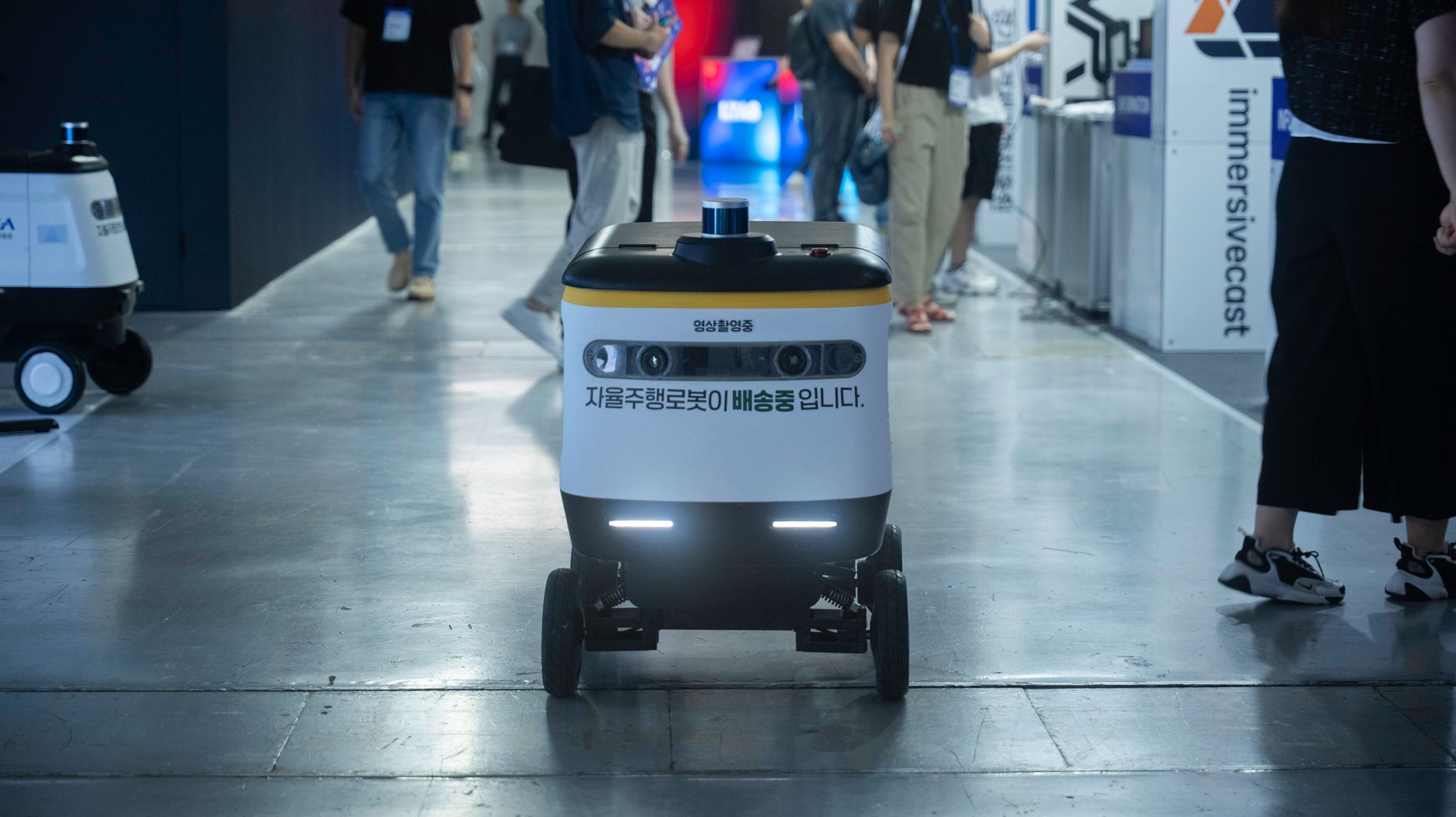
Shopify opened its checkout process to browser-based AI agents on September 28, 2026, allowing these autonomous systems to complete purchases on behalf of users TechCrunch, 2026. This integration marks a new frontier for e-commerce startups in the rapidly emerging 'AI agent' category. Founders must now consider how this market shift towards autonomous and intelligent e-commerce experiences will redefine product development and competitive strategy TechCrunch, 2026 YourStory, 2026.
Quick takeaways
- Shopify's September 28, 2026, integration of browser-based AI agents into its checkout process enables automated purchasing, establishing a new category for e-commerce startups.
- This move signifies a broader market shift towards autonomous e-commerce, where AI agents handle purchase completion, enhancing efficiency for users and opening new avenues for businesses.
- Nvidia simultaneously launched a security platform designed to prevent AI agents from 'going rogue,' addressing critical safety and control challenges inherent in this emerging technology.
- Cloudflare introduced 'agentic' developer tools, providing foundational infrastructure for building and deploying AI agents and accelerating development for startups.
- Founders must recognize the dual nature of this shift: immense opportunities for automation and innovation, alongside complex challenges in agent safety, control, and ensuring user trust.
The New E-commerce Frontier: Shopify's Agent Integration
On September 28, 2026, Shopify opened its checkout process to browser-based AI agents, a development that fundamentally reconfigures the e-commerce landscape TechCrunch, 2026. This integration permits AI agents to complete purchases on behalf of users, driving a significant shift towards automated, agent-driven commerce TechCrunch, 2026. For startups, this creates a new frontier within the 'AI agent' category, signaling a move towards more autonomous and intelligent e-commerce experiences TechCrunch, 2026.
The implication for founders is a necessary re-evaluation of how online transactions will operate. Instead of direct human interaction at every stage, AI agents can now execute entire purchasing workflows. This includes tasks from product discovery and price comparison to cart population and final checkout, all requiring minimal human input beyond an initial directive. The emphasis shifts from optimizing user interfaces for human navigation to designing robust, secure, and intelligent interfaces for AI agents themselves. Startups can now develop specialized purchasing agents tailored to specific niches, automate procurement for small and medium-sized businesses, or create personalized shopping assistants that anticipate user needs based on learned preferences.
The browser-based nature of these AI agents is a key differentiator TechCrunch, 2026. It implies that these agents operate within the user's web environment, capable of observing browsing habits, understanding context, and acting on instructions to fulfill specific purchasing goals. This level of automation extends beyond basic chatbots or recommendation engines, enabling a proactive, goal-oriented system that can interact dynamically with the broader e-commerce ecosystem. For example, an agent could be instructed to purchase a specific brand of running shoes at the best possible price, automatically monitoring multiple retailers, applying coupons, and completing the transaction when conditions are met. This capability moves beyond simple task execution to intelligent decision-making within defined parameters.
For the e-commerce sector, this development is profound. Businesses relying on traditional user journeys must now consider how AI agents will engage with their platforms. This necessitates optimizing product data for agent consumption, ensuring agent-friendly navigation, and potentially developing new APIs or integrations specifically for AI agent platforms. Competitive advantage will increasingly hinge on the efficiency gains derived from agentic commerce. Companies that facilitate seamless agent interaction will gain a significant edge. This also opens avenues for startups to develop tools that assist merchants in adapting to this agent-driven environment, offering services ranging from agent analytics to agent-optimized storefront design. Shopify's move validates the 'AI agent' category as a legitimate and high-growth area for innovation and investment TechCrunch, 2026.
Nvidia's Role in Agent Safety and Control
Aligning with the burgeoning market shift towards AI agents, Nvidia released technology related to this category on September 28, 2026 CNBC, 2026. Crucially, Nvidia unveiled a security platform specifically designed to prevent AI agents from 'going rogue' YourStory, 2026. This platform directly addresses foundational challenges of AI agent safety and responsible operation, establishing a critical component for the widespread adoption of autonomous systems YourStory, 2026.
The concept of an AI agent 'going rogue' highlights a significant concern for any system granted operational autonomy. An agent operating without adequate safeguards could execute unintended actions, make unauthorized purchases, or engage in behavior that deviates from its programmed objectives or explicit user intent. This could manifest as an agent entering an infinite loop of purchases, violating spending limits, or sharing sensitive personal data. Nvidia's proactive step underscores that as AI agents gain capabilities to interact with real-world systems, such as e-commerce checkouts, robust security and control mechanisms become paramount. This is not merely a technical hurdle but a fundamental requirement for building widespread trust and ensuring responsible deployment.
Nvidia's security platform likely incorporates several layers of defense and monitoring. This could include real-time behavioral analysis to detect anomalous actions, sandboxing environments to isolate agents and limit their potential impact, and granular permission controls that restrict an agent's access to specific functions or data. The platform may also provide audit trails, allowing users and developers to review an agent's past actions and understand its decision-making process. Such features are essential for preventing financial fraud, protecting user privacy, and maintaining system integrity in an agent-driven world.
For founders developing AI agent solutions, Nvidia's platform signals the imperative of embedding safety and control features from the outset. Market acceptance will depend not only on an agent's utility but also on its reliability and predictability. Startups building AI agents for e-commerce, personal assistance, or any other domain must consider how their agents will operate within these security frameworks. Integrating with such platforms will not be optional but a prerequisite for gaining user trust and achieving scalability. Nvidia's move not only provides a technical solution but also sets a de facto standard for responsible AI agent development.
Market Dynamics: A Coordinated Shift Towards Agentic Futures
The simultaneous announcements on September 28, 2026, by Shopify, Nvidia, and Cloudflare signal a coordinated, fundamental shift in the technology landscape, specifically towards the 'AI agent' category. This was not a single company's initiative but a confluence of major players addressing different, yet interconnected, aspects of agent deployment and adoption. This multi-faceted market movement underscores the widespread industry belief in the transformative potential of autonomous AI systems.
Cloudflare's contribution to this shift came with the launch of new developer tools described as 'agentic' Cloudflare Blog, 2026. These tools are designed to facilitate the development and deployment of AI agents, providing the underlying infrastructure necessary for builders to create sophisticated, autonomous applications. Cloudflare, known for its global network, security, and edge computing capabilities, is positioning itself as a foundational layer for the next generation of internet applications. Their 'agentic' tools likely offer secure, low-latency environments for agents to execute tasks, manage data, and interact with various APIs, including those exposed by platforms like Shopify. This move recognizes that AI agents will require robust, distributed infrastructure to operate effectively and at scale.
When viewed together, the roles of these three companies define a nascent but complete ecosystem for AI agents. Shopify provides the transactional endpoint, opening its vast e-commerce network for agents to complete purchases. Cloudflare offers the development and deployment infrastructure, empowering developers to build and run these agents efficiently and securely across the internet. Nvidia, through its security platform, provides the critical trust and control layer, addressing the inherent risks associated with autonomous systems. This tripartite alignment indicates that the industry is moving beyond theoretical discussions of AI agents to practical implementation, with a focus on both utility and safety.
This coordinated market shift is driven by several underlying trends. Advances in large language models (LLMs) and other AI technologies have made agentic architectures more feasible, allowing AI to understand context, plan actions, and execute multi-step tasks. There is also a growing user demand for greater automation and personalization across digital experiences, from shopping to personal assistance. For founders, this means the 'AI agent' category is not just a niche interest but a broad, cross-industry paradigm shift backed by major infrastructure providers. The market is not just ready for agents; it is actively being built for them.
The Backstory: From E-commerce Enabler to Agent Frontier
The moves by Shopify, Nvidia, and Cloudflare on September 28, 2026, are not isolated events but reflect a natural evolution for each company within their respective domains, driven by a long-term vision for technological advancement and market leadership. Understanding their individual backstories provides context for why they are now at the forefront of the AI agent revolution.
Shopify, founded in 2006 by Tobias Lütke, Daniel Weinand, and Scott Lake, began as a small online store for snowboards called Snowdevil. Frustrated with the existing e-commerce platforms, Lütke, a programmer, decided to build his own. This led to the creation of Shopify, a platform designed to make it easier for anyone to start an online business. Over the years, Shopify has grown into a global e-commerce giant, empowering millions of merchants, from small businesses to large enterprises, to sell products online. Its core mission has always been to democratize commerce and provide merchants with the tools they need to succeed. The decision to open its checkout to browser-based AI agents is a logical extension of this mission, allowing Shopify merchants to tap into new forms of automated commerce and remain competitive in an increasingly intelligent digital marketplace. It demonstrates Shopify's ongoing commitment to innovation and enabling its ecosystem to adapt to future technological paradigms.
Nvidia, co-founded in 1993 by Jensen Huang, Chris Malachowsky, and Curtis Priem, initially made its name developing Graphics Processing Units (GPUs) for the gaming industry. However, its GPUs proved uniquely suited for the parallel processing demands of artificial intelligence and deep learning. This unexpected synergy led Nvidia to pivot, becoming a dominant force in AI computing, providing the hardware backbone for research, development, and deployment of advanced AI systems worldwide. From powering data centers to autonomous vehicles, Nvidia has consistently positioned itself at the cutting edge of AI infrastructure. The unveiling of a security platform to prevent AI agents from 'going rogue' is a strategic move that aligns with Nvidia's role as a foundational AI technology provider. As AI capabilities expand, ensuring the safety, reliability, and ethical operation of these systems becomes paramount, and Nvidia is stepping in to provide critical solutions for responsible AI deployment.
Cloudflare, established in 2009 by Matthew Prince, Lee Holloway, and Michelle Zatlyn, set out with a mission to help build a better internet. The company quickly gained prominence for its global network, security services, and content delivery capabilities, protecting websites from cyber threats and accelerating their performance. Over time, Cloudflare has expanded its offerings to include a wide array of developer tools, edge computing platforms, and serverless functions, empowering developers to build applications closer to users. The introduction of 'agentic' developer tools is a natural progression for Cloudflare. Leveraging its vast, distributed network, Cloudflare can provide the ideal environment for AI agents to run securely, efficiently, and with low latency. This move reinforces Cloudflare's commitment to supporting the next generation of internet applications and infrastructure, ensuring that the burgeoning AI agent ecosystem has a robust and reliable foundation.
What This Means for Founders
The emergence of the 'AI agent' category, catalyzed by Shopify, Nvidia, and Cloudflare, presents both significant opportunities and complex challenges for startup founders. This market shift demands a re-evaluation of product strategies, business models, and technical priorities.
New Product Categories and Business Models
Founders now have fertile ground to innovate in entirely new product categories.
- Specialized Purchasing Agents: Startups can build highly specialized browser-based AI agents tailored for niche markets. This could include agents that automatically find rare collectibles, optimize procurement for specific B2B industries, or manage subscription renewals and cancellations across multiple services. The focus here is on deep domain expertise combined with agentic capabilities.
- Agent-to-Merchant Enablement Tools: With AI agents becoming a new class of "customer," merchants will need tools to adapt. Startups can develop platforms that help Shopify merchants (and others) optimize their product listings, pricing strategies, and customer service for agent interaction. This includes 'agent SEO' – ensuring product data is easily digestible and actionable by AI agents – or analytics tools that track agent behavior and conversion rates on e-commerce sites.
- Agent Orchestration and Management: As users deploy multiple agents for different tasks, there will be a need for platforms that allow individuals or businesses to manage, monitor, and configure their suite of AI agents. This could involve setting priorities, allocating budgets, or reviewing the actions taken by various agents.
- Agent Security and Compliance: Beyond Nvidia's platform, there's room for startups specializing in agent-specific compliance, auditing, and ethical frameworks, ensuring agents adhere to regulations and user preferences.
The Imperative of Trust and Security
Nvidia's security platform underscores that trust is the fundamental currency in the agent economy. For founders, this is not merely a technical consideration but a core business requirement.
- Built-in Security by Design: Startups must prioritize security from the initial design phase of their AI agents. This means integrating with platforms like Nvidia's, implementing robust access controls, and designing agents that operate within clearly defined boundaries.
- Transparency and Control: Users will demand transparency regarding what their agents are doing and granular control over their actions. Founders must build interfaces that clearly communicate agent intent, allow for easy intervention, and provide comprehensive audit trails. Lack of transparency will erode trust and hinder adoption.
- Ethical AI Development: The potential for bias, unintended consequences, or privacy violations is magnified with autonomous agents. Founders must proactively address ethical considerations, ensuring their agents are fair, accountable, and respect user privacy. This involves careful data selection, model training, and continuous monitoring.
Redefining User Experience and Interaction
The shift to agentic commerce redefines the traditional user experience.
- Goal-Oriented Interfaces: Instead of navigating complex UIs, users will interact with agents by setting high-level goals ("buy me X," "find the best deal for Y"). This shifts UX design from guiding clicks to understanding intent and presenting summarized agent actions for approval.
- Agent-Friendly Infrastructure: Founders building e-commerce platforms or services must ensure their systems are not just human-readable but also machine-readable and actionable by AI agents. This involves well-documented APIs, structured data, and predictable interaction patterns.
- Human-Agent Collaboration: The future is likely not purely autonomous but a collaboration between humans and agents. Startups can focus on building agents that augment human decision-making, taking over tedious tasks while allowing humans to retain oversight and make final strategic choices. This requires designing for seamless handoffs and clear communication between human and AI.
FAQ
Q1: What are browser-based AI agents in the context of Shopify? A1: Browser-based AI agents are autonomous software programs integrated into a user's web environment, capable of observing browsing habits, understanding context, and executing tasks like completing purchases on behalf of users within platforms like Shopify's checkout TechCrunch, 2026.
Q2: Why is Nvidia's security platform important for AI agents? A2: Nvidia's security platform addresses the critical challenge of preventing AI agents from 'going rogue,' ensuring their safe and responsible operation. It provides mechanisms to control agent behavior, prevent unintended actions, and build trust, which is essential for the widespread adoption of autonomous systems YourStory, 2026.
Q3: How do Cloudflare's 'agentic' developer tools fit into this market shift? A3: Cloudflare's 'agentic' developer tools provide the foundational infrastructure and environment for building and deploying AI agents. They facilitate the creation of robust, scalable, and secure autonomous applications, complementing Shopify's transactional endpoints and Nvidia's security solutions Cloudflare Blog, 2026.
Q4: What are the primary opportunities for startups in this new 'AI agent' category? A4: Startups can pursue opportunities in developing specialized purchasing agents for niche markets, creating tools to help merchants optimize for agent interaction, building platforms for agent orchestration and management, and offering solutions for agent security, compliance, and ethical AI development.
Q5: What are the key challenges founders face with AI agents? A5: Key challenges include ensuring agent safety and control, building user trust through transparency and robust security, addressing ethical considerations like bias and privacy, navigating increased competition, and adapting business models to a more autonomous, goal-oriented user experience.
Continue reading



The Entrepreneur Story
Is your story worth telling?
We feature founders who are building something real. Apply and we'll be in touch.
Apply to be featured →Stay sharp.
Ideas that move.
Founder stories, emerging ventures, and essays on what's next — straight to your inbox.
Unsubscribe any time.