
NASA Picks Schmidt-Backed Relativity for Mars, Ignites SpaceX Race *A New Space Race Begins*
NASA awards a critical Mars mission contract to Relativity Space, backed by Eric Schmidt, setting up a direct competition with Elon Musk's SpaceX for deep-space exploration.
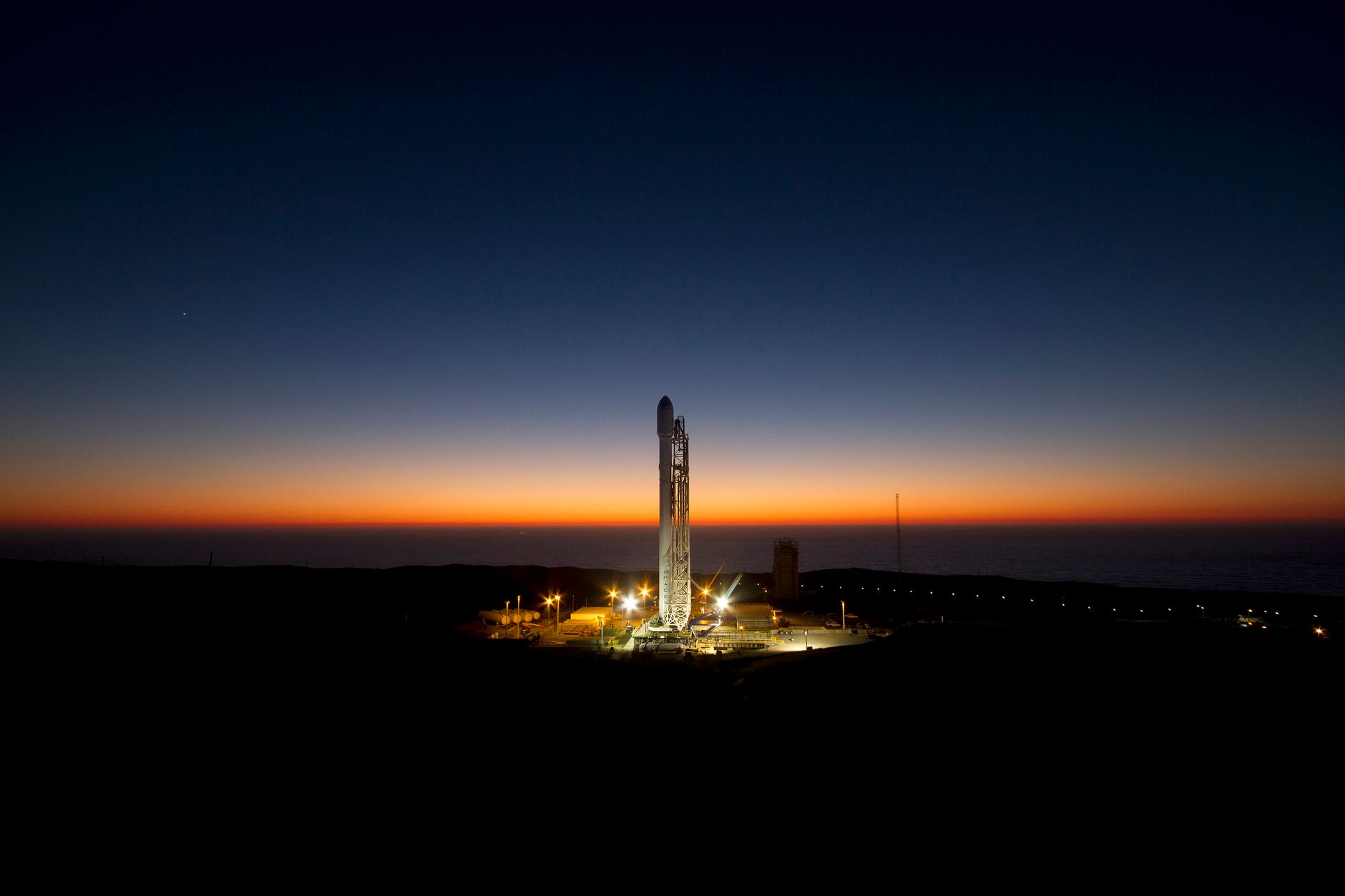
NASA has awarded a contract to Relativity Space, a company significantly backed by former Google CEO Eric Schmidt, for an upcoming Mars mission using its heavy-lift, reusable Terran R rocket TechCrunch, 2026. This partnership marks Schmidt's strategic re-entry into the space industry and positions Relativity Space in direct competition with Elon Musk's SpaceX for deep-space endeavors, particularly those targeting Mars TechCrunch, 2026. The move signals a strategic shift in the commercial space launch market, fostering innovation and intensifying the competition for future interplanetary missions among private players.
Quick takeaways
- NASA has selected Relativity Space for a Mars mission, diversifying its deep-space launch partners.
- Eric Schmidt, former Google CEO, is a prominent investor and board member, marking his strategic re-entry into the space industry.
- The contract directly positions Relativity Space against Elon Musk's SpaceX in the race for Mars missions.
- Relativity's proprietary 3D-printing technology and reusable Terran R rocket are central to its strategy and differentiation.
- This development underscores the importance of government contracts and technological innovation in high-stakes space endeavors for founders.
The New Mars Contender: Relativity Space Secures NASA Contract
NASA has formally awarded a contract to Relativity Space to carry out an upcoming Mars mission TechCrunch, 2026. This agreement signifies a pivotal moment for the commercial space sector, as the agency broadens its reliance on private industry for ambitious deep-space exploration. Relativity Space, co-founded by Tim Ellis and Jordan Noone, will deploy its heavy-lift, reusable Terran R rocket for this critical interplanetary endeavor TechCrunch, 2026. The company has distinguished itself through its proprietary 3D-printing technology, which it utilizes to construct its rockets TechCrunch, 2026. This manufacturing approach aims to streamline production, reduce component count, and enable rapid iteration, though the direct impact on mission success for Mars remains to be fully demonstrated at this scale.
The NASA contract serves as a substantial validation for Relativity Space. Government contracts, especially from an agency with NASA's pedigree, provide not only significant financial backing but also immense credibility and technical oversight. For a startup in the capital-intensive space industry, such an anchor client can be transformative, unlocking further investment and attracting top-tier talent. The decision by NASA to partner with Relativity Space aligns with its stated strategy to diversify its commercial launch partners for deep-space exploration TechCrunch, 2026. This diversification is intended to foster greater competition and innovation across the sector, ensuring redundancy and pushing technological boundaries. By engaging multiple private entities, NASA aims to cultivate a robust ecosystem capable of supporting its long-term goals for human and robotic exploration beyond Earth orbit.
Eric Schmidt, former Google CEO, is a prominent investor and board member in Relativity Space, and his involvement marks a significant re-entry into the space industry for him TechCrunch, 2026. His strategic backing provides Relativity Space with not only capital but also invaluable experience in scaling complex technological ventures. The Terran R rocket itself is designed to be fully reusable, a critical feature aligning with the trend set by companies like SpaceX with its Falcon 9 and Starship vehicles TechCrunch, 2026. Reusability is paramount for reducing launch costs, enabling higher flight cadences, and making ambitious missions like Mars exploration economically viable. This contract signifies that NASA is not just looking for a ride to Mars, but for a partner capable of advancing the underlying technologies that will make future interplanetary travel more accessible and sustainable.
Schmidt's Strategic Return: A New Chapter in Space
Eric Schmidt's re-entry into the space industry through his prominent investment and board membership in Relativity Space is a calculated move that signals a broader shift in the strategic interests of tech titans TechCrunch, 2026. As the former CEO of Google, Schmidt possesses a track record of scaling one of the world's most influential technology companies from a nascent search engine into a global conglomerate. His involvement brings more than just capital; it lends a formidable layer of credibility and strategic oversight to Relativity Space. This is particularly crucial in the space industry, where long development cycles, high capital expenditure, and stringent technical requirements often deter conventional investors. Schmidt's backing suggests a belief in Relativity's unique technological approach and its potential to disrupt established aerospace paradigms.
Schmidt's history at Google involved navigating complex technological landscapes, fostering innovation, and building robust, scalable platforms. While Google's primary ventures were in software and internet services, Schmidt's strategic acumen in identifying and nurturing disruptive technologies is well-documented. His move into commercial space with Relativity Space indicates a recognition that the sector has reached an inflection point, transitioning from predominantly government-led initiatives to a vibrant commercial market ripe for innovation and private investment. This re-entry is not merely a passive investment; his role as a board member implies active engagement, potentially guiding Relativity's strategic direction, market positioning, and scaling efforts. Such high-profile involvement can significantly influence investor confidence, attracting further funding rounds and top-tier talent to the company.
The decision by a figure of Schmidt's stature to commit to Relativity Space highlights the increasing convergence of traditional tech investment with deep-tech sectors like aerospace. This trend reflects a growing understanding that the next generation of transformative technologies may lie beyond software and consumer electronics, extending into areas that demand significant hardware innovation and long-term vision. For Relativity Space, Schmidt’s presence on the board provides a formidable asset in a competitive landscape dominated by well-capitalized players. His experience in building and managing a global enterprise could prove invaluable in navigating the regulatory complexities, supply chain challenges, and engineering hurdles inherent in developing and operating next-generation rockets for interplanetary missions. His strategic insights could help Relativity Space not only compete effectively but also define its long-term trajectory as a key player in the future of space exploration.
The Mars Race: SpaceX vs. Relativity
NASA's contract with Relativity Space for a Mars mission directly positions the 3D-printing rocket company against Elon Musk's SpaceX in the burgeoning race for deep-space exploration TechCrunch, 2026. SpaceX has long dominated the commercial space sector, securing numerous major NASA contracts, including the highly coveted Human Landing System (HLS) for the Artemis program with its Starship vehicle TechCrunch, 2026. Elon Musk has publicly and consistently articulated his ambition for SpaceX to colonize Mars, making it a cornerstone of the company's long-term vision TechCrunch, 2026. This new contract signals that NASA is actively cultivating a competitive environment, not merely relying on a single provider for its most ambitious interplanetary goals.
The competition between Relativity's Terran R and SpaceX's Starship and Falcon 9 vehicles will focus on several key areas. Both the Terran R and SpaceX's Falcon 9 and Starship are designed to be fully reusable, a fundamental requirement for making deep-space missions economically feasible and scalable TechCrunch, 2026. Reusability drives down the per-launch cost, allowing for more frequent missions and larger payload capacities. However, Relativity's differentiation lies in its proprietary 3D-printing technology, which it uses to construct its rockets TechCrunch, 2026. This manufacturing approach could offer advantages in terms of rapid prototyping, design flexibility, and supply chain simplification, potentially leading to faster development cycles or more robust designs adapted for the harsh interplanetary environment.
For NASA, this competition is highly beneficial. By having multiple credible commercial partners vying for deep-space contracts, the agency can foster greater innovation, encourage cost efficiencies, and reduce its reliance on a single entity. The challenges of a Mars mission are immense, encompassing launch vehicle reliability, payload capacity, in-space propulsion, communication over vast distances, and entry, descent, and landing on the Martian surface. Each company will bring its unique engineering philosophies and technological solutions to these problems. SpaceX, with its iterative development and vast launch experience, offers one pathway. Relativity, with its novel manufacturing methods and strategic backing, presents another. This dynamic ensures that both companies are pushed to excel, ultimately accelerating progress towards human and robotic exploration of Mars. The stakes are high: the ability to reliably and affordably transport significant payloads to Mars is a prerequisite for any long-term colonization efforts, and this direct competition will likely be a primary driver in achieving that objective.
Innovation and Market Dynamics: Beyond the Duopoly
NASA's decision to award a Mars mission contract to Relativity Space is a strategic move that extends beyond merely adding a second major player to the deep-space launch market. It fundamentally reshapes market dynamics by actively fostering greater competition and innovation in the commercial space sector TechCrunch, 2026. This approach signals a shift from an environment where a few established players might dominate to one that rewards technological differentiation and robust execution from new entrants. Relativity Space’s core differentiator, its proprietary 3D-printing technology used to build its rockets, is central to this evolving landscape TechCrunch, 2026. This method promises not only efficiency in manufacturing but also the potential for novel designs and rapid iteration, which are critical for the demanding requirements of interplanetary travel.
The shift in the commercial space launch market is profound. Historically, government agencies like NASA were the primary drivers and operators of space missions, often relying on a limited number of large aerospace contractors. The emergence of companies like SpaceX and now Relativity Space has commercialized access to space, turning launch services into a competitive market. NASA's strategy to diversify its commercial launch partners for deep-space exploration is a direct response to this evolution TechCrunch, 2026. By supporting multiple innovative companies, NASA aims to build resilience into its future mission planning, reduce costs through competition, and accelerate the development of advanced technologies. This approach not only benefits NASA but also creates a more dynamic and accessible market for other commercial ventures looking to leverage space for various applications, from satellite deployment to resource extraction.
The emphasis on reusable heavy-lift rockets, as embodied by Relativity's Terran R and SpaceX's Starship and Falcon 9, is another key market trend TechCrunch, 2026. Reusability is not merely an engineering feat; it is an economic imperative that underpins the viability of ambitious long-term space goals, including Mars colonization. The competition between Relativity and SpaceX in this domain will likely drive further advancements in reusability, pushing the boundaries of material science, propulsion systems, and autonomous landing technologies. For other founders in the space sector, this dynamic illustrates the importance of not only having a compelling technological solution but also aligning with the strategic needs of anchor clients like NASA. The market is increasingly valuing innovation that directly contributes to cost reduction, increased mission frequency, and enhanced capabilities for deep-space exploration, moving beyond simple launch capacity to comprehensive solutions for interplanetary logistics.
Lessons for Founders: Navigating High-Stakes Markets
The trajectory of Relativity Space, culminating in a NASA contract for a Mars mission and direct competition with SpaceX, offers several critical lessons for founders operating in high-stakes, deep-tech markets. The first is the undeniable power of strategic investors. Eric Schmidt's involvement as a prominent investor and board member not only provided capital but also significant credibility and strategic guidance TechCrunch, 2026. For startups in capital-intensive sectors like space, attracting investors with deep industry knowledge and a proven track record can be as valuable as the funding itself, opening doors to partnerships, talent, and strategic insights that accelerate growth and mitigate risk. Founders should actively seek out investors who bring more than just money to the table, aligning their cap table with individuals who can offer mentorship and leverage their networks.
Second, technological differentiation is paramount. Relativity Space's proprietary 3D-printing technology, used to build its rockets, provides a distinct competitive edge TechCrunch, 2026. In markets dominated by established players or well-funded disruptors, a unique technological approach can carve out a niche and attract attention from key customers. Founders must invest heavily in R&D to develop intellectual property that is defensible and offers a clear advantage in terms of cost, performance, or manufacturing efficiency. This differentiation is what enables a startup to compete with giants like SpaceX, which has already set high benchmarks for reusability and launch frequency. The ability to demonstrate a genuinely novel and effective way of solving complex problems is crucial for gaining traction.
Third, securing anchor clients, especially government agencies, can be transformative. The NASA contract not only provides significant revenue but also acts as a powerful validation of Relativity's technology and capabilities. For founders in deep tech, particularly aerospace, government contracts often represent long-term commitments and can serve as a springboard for further commercial opportunities. Navigating the procurement processes of such agencies requires patience, technical excellence, and a deep understanding of their strategic needs. This strategy is not about chasing every available contract, but identifying those that align with the company's long-term vision and can provide the necessary runway and credibility to scale.
Finally, the emphasis on reusability, evident in Relativity's Terran R rocket and SpaceX's vehicles, highlights a fundamental shift in market expectations TechCrunch, 2026. Founders in any hardware-intensive sector should consider how their products can deliver long-term value through efficiency and sustainability. The space industry's move towards reusability demonstrates that initial product cost is becoming less important than operational economics over the product's lifecycle. Building a company capable of competing in a market with such high stakes requires not only technical prowess and strategic financing but also a long-term vision that anticipates and shapes future industry trends, pushing the boundaries of what is currently possible.
FAQ
Q1: What is Relativity Space's core technology? A1: Relativity Space is known for its proprietary 3D-printing technology, which it uses to build its rockets TechCrunch, 2026.
Q2: Who are the co-founders of Relativity Space? A2: Relativity Space was co-founded by Tim Ellis and Jordan Noone TechCrunch, 2026.
Q3: How does Eric Schmidt's involvement impact Relativity Space? A3: Eric Schmidt, former Google CEO, is a prominent investor and board member in Relativity Space, marking his significant re-entry into the space industry and lending the company strategic guidance and credibility TechCrunch, 2026.
Q4: What makes the Terran R rocket significant? A4: The Terran R rocket is a heavy-lift, reusable vehicle designed for deep-space missions, including Mars, and is built using Relativity's proprietary 3D-printing technology TechCrunch, 2026.
Q5: Why is NASA partnering with Relativity Space for a Mars mission? A5: NASA's partnership with Relativity Space is part of its strategy to diversify its commercial launch partners for deep-space exploration, fostering greater competition and innovation in the sector TechCrunch, 2026.
Continue reading


Are you building something worth writing about? Submit your founder story →