
Japan's Go IPO: Robotaxis & Strategic Asia Acquisitions
Japan's leading mobility company, Go, secured $2.5 billion in its 2026 record-breaking IPO, signaling aggressive expansion into robotaxi services and strategic M&A across Asia, intensifying competition.
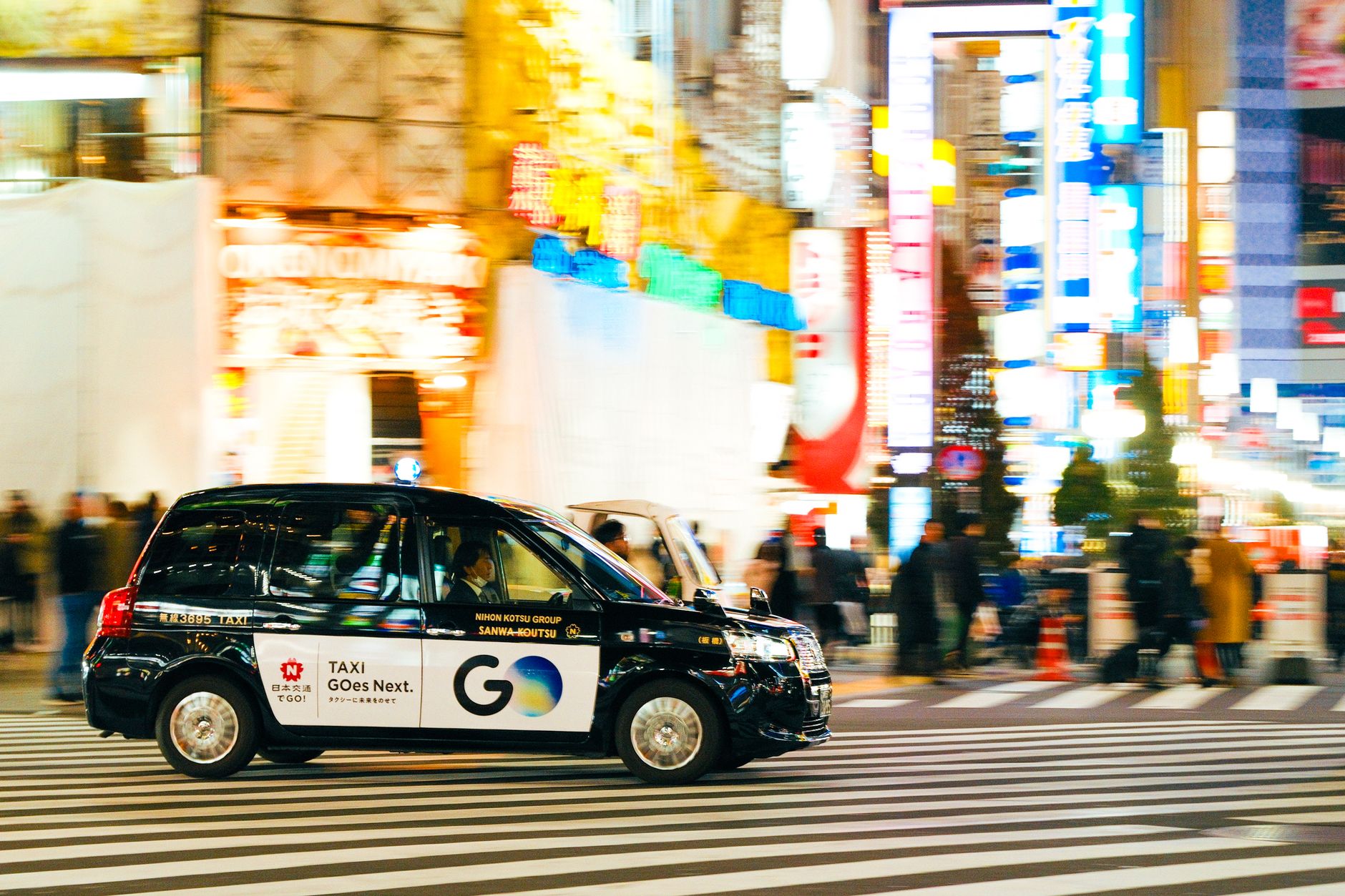
Go, Japan's leading mobility company, completed the nation's largest Initial Public Offering (IPO) of 2026, raising approximately $2.5 billion for aggressive expansion into robotaxi services and strategic mergers and acquisitions (M&A) across Asia. This significant capital injection and strategic pivot signal a major disruption in Asia's transportation sector, intensifying competition and setting a new benchmark for how established players can leverage public markets to drive technological transformation. Founders across the mobility and deep tech sectors should observe Go's trajectory closely, as its moves will redefine market expectations for capital deployment, innovation timelines, and regional consolidation.
Quick Takeaways
- Go's $2.5 billion IPO in 2026 was Japan's largest of the year, providing substantial capital.
- The company's post-IPO strategy centers on accelerated robotaxi deployment, with a Tokyo launch aimed for late 2027.
- A significant portion of the capital is earmarked for strategic M&A within the Asian mobility market.
- CEO Kenji Tanaka emphasizes technological leadership and market consolidation as core objectives.
- This move intensifies competition with global giants like Uber and Didi, redefining Asia's mobility landscape.
The Record-Breaking Capital Infusion
Go's Initial Public Offering in 2026 was not merely a significant financial event; it was a definitive statement of intent. The company secured approximately $2.5 billion, marking it as Japan's largest IPO of the year TechCrunch, 2026. This capital infusion positions Go with unparalleled financial muscle to execute an ambitious post-IPO strategy focused on two primary pillars: the accelerated deployment of robotaxi services and strategic mergers and acquisitions across the Asian mobility sector TechCrunch, 2026.
For founders, the scale of this capital raise underscores the increasing financial demands of competing in mature, yet technologically evolving, industries. Go, which already commands a dominant position with over 70% market share in major Japanese cities for its ride-hailing and taxi dispatch service, has demonstrated how an established market leader can leverage public markets not just for liquidity, but as a strategic weapon TechCrunch, 2026. CEO Kenji Tanaka articulated this vision clearly, stating that the IPO proceeds would enable Go to "aggressively pursue technological leadership and market consolidation" TechCrunch, 2026. This declaration signals a shift from incremental growth to transformative expansion, driven by a deep war chest. The $2.5 billion allows Go to make long-term, capital-intensive bets, particularly in the complex and costly realm of autonomous driving, where sustained investment in R&D, infrastructure, and regulatory navigation is paramount. This financial firepower also provides a significant advantage in M&A, enabling Go to acquire promising technologies, talent, or market access points without diluting its core business or relying on further external funding rounds. The IPO serves as a blueprint for founders building companies with significant market traction and ambitious future plans: a strong operational foundation can translate into public market confidence and the capital necessary to lead next-generation technological shifts.
The Robotaxi Play: Tokyo by 2027
Go's primary strategic objective following its record-setting IPO is the accelerated deployment and scaling of robotaxi services TechCrunch, 2026. The company has set an ambitious target: to launch its first fully autonomous commercial robotaxi service in Tokyo by late 2027 TechCrunch, 2026. This move positions Go at the forefront of the autonomous vehicle race in Asia, directly challenging global players and local innovators alike. The timeline is aggressive, but Go's existing operational footprint and deep understanding of the Japanese urban environment provide a unique advantage. The company already operates a leading ride-hailing and taxi dispatch service, giving it access to valuable real-world driving data, established customer bases, and relationships with local authorities — all critical components for scaling autonomous operations TechCrunch, 2026.
To facilitate this rapid deployment, Go has already forged partnerships with several major automotive manufacturers for its autonomous vehicle fleet TechCrunch, 2026. These alliances are crucial for hardware integration, vehicle supply, and potentially co-development of autonomous driving systems. The shift to robotaxis represents a fundamental change in the economics of ride-hailing, moving from a driver-dependent model to one driven by technology and capital expenditure. Go anticipates generating initial revenue from its robotaxi services starting in 2028, with significant scaling expected by 2030 TechCrunch, 2026. This phased approach acknowledges the complexities of commercializing autonomous technology, from navigating regulatory frameworks and ensuring safety to building public trust and optimizing operational efficiency. For founders in deep tech, Go's strategy offers several lessons. Firstly, the long lead times and substantial capital required for true innovation. Secondly, the necessity of strategic partnerships to bridge expertise gaps and accelerate market entry. Thirdly, the importance of a clear, staged commercialization roadmap, recognizing that initial revenue generation precedes widespread profitability. Go's established brand and operational density in Japan could allow it to gather critical data and refine its autonomous stack faster than competitors entering a new market from scratch. This localized advantage, combined with significant capital, could allow Go to carve out a defensible position in the nascent robotaxi market, even against globally recognized autonomous vehicle developers.
Strategic Acquisitions to Consolidate Asian Mobility
Beyond its ambitious robotaxi plans, Go intends to allocate a substantial portion of its $2.5 billion IPO proceeds towards strategic mergers and acquisitions (M&A) within the Asian mobility sector TechCrunch, 2026. This M&A strategy is a clear signal of Go's intent to not only innovate organically but also to consolidate market share and capabilities across the diverse and rapidly growing Asian landscape. CEO Kenji Tanaka's statement about "market consolidation" directly points to this aggressive growth vector TechCrunch, 2026.
The rationale behind such a strategy is multi-faceted. Acquisitions can provide immediate access to new geographical markets without the lengthy process of organic expansion, allowing Go to bypass local regulatory hurdles, establish local operational teams, and gain existing customer bases. Furthermore, M&A can be a fast track to acquiring critical technologies, such as advanced mapping solutions, AI-driven routing algorithms, fleet management software, or specialized sensor technologies, that complement Go's autonomous driving efforts. Talent acquisition is another key driver; purchasing smaller, innovative startups often brings in skilled engineers, data scientists, and product managers who possess niche expertise that would otherwise be difficult to recruit. For founders operating in the Asian mobility space, this signals both a potential opportunity and a significant threat. Companies with strong technology, defensible market niches, or significant traction in specific Asian cities could become attractive acquisition targets for Go. Conversely, those without clear differentiation or a strong financial position might find themselves outcompeted or pressured by Go's consolidating force. The Asian mobility market is highly fragmented, with numerous local players alongside global giants. Go's M&A strategy is designed to streamline this landscape, creating a more centralized and powerful entity. This could involve acquiring smaller ride-hailing platforms in Southeast Asia, logistics technology providers in emerging markets, or even data analytics firms that enhance Go's understanding of urban mobility patterns. The sheer volume of capital available to Go means it can pursue multiple targets simultaneously, accelerating its regional footprint and technological integration at a pace few other companies can match. This will fundamentally reshape the competitive dynamics, forcing other regional players to either scale up, specialize, or consider their exit options.
Competing in a Global Arena: Uber, Didi, and Beyond
Go's aggressive post-IPO strategy, particularly its push into robotaxis and regional M&A, is set to intensify competition with global ride-hailing giants like Uber and Didi in the Asian market TechCrunch, 2026. While Go already holds a dominant 70%+ market share in Japan's ride-hailing and taxi dispatch sector, its expansion ambitions extend beyond its home turf, directly into territories where Uber and Didi have established or are attempting to establish a presence TechCrunch, 2026. This creates a multi-front competitive battle that encompasses traditional ride-hailing, the nascent robotaxi market, and broader mobility services.
Uber, with its extensive global reach and significant investments in autonomous driving technology through various partnerships and internal initiatives, is a formidable competitor. Similarly, Didi Chuxing, a powerhouse in China, has also been actively exploring autonomous driving and expanding its services across Asia and other international markets. Go's strategy of leveraging its local dominance and fresh capital to leapfrog into autonomous services gives it a unique competitive angle. Unlike global players who often face challenges adapting to diverse local regulations and consumer preferences across Asia, Go's deep experience in Japan provides a template for navigating complex urban environments and regulatory landscapes. Its strategic M&A approach will allow it to quickly gain local market knowledge and operational capabilities in new territories, rather than building from scratch. The shift to robotaxis is a critical differentiator. If Go can successfully deploy commercial autonomous services by late 2027 and scale significantly by 2030, it could fundamentally alter the cost structure and service quality of mobility in its target markets TechCrunch, 2026. This could give it a substantial competitive edge over rivals still heavily reliant on human drivers, particularly in regions where labor costs are rising or driver supply is constrained. For other mobility startups in Asia, Go's aggressive stance means increased pressure. They will need to either align with a larger player, differentiate strongly with niche services, or develop highly defensible technology to avoid being consolidated or outmaneuvered. The stakes are high, as the future of urban transportation in Asia is being shaped by these capital-intensive, technology-driven battles.
The Founder's Lens: Lessons from Go's Trajectory
Go's post-IPO strategy offers several critical lessons for founders navigating the complex world of startup growth, funding, and market leadership. The trajectory of Go, from its foundational success in ride-hailing to its audacious pivot towards robotaxis and regional consolidation, exemplifies a strategic playbook for scaling in competitive industries.
First, market dominance provides a powerful launchpad. Go's existing 70%+ market share in Japan's ride-hailing sector was not just a revenue stream; it was a strategic asset TechCrunch, 2026. This dominance allowed it to command a $2.5 billion IPO, an amount that now fuels its high-risk, high-reward ventures into autonomous driving and M&A TechCrunch, 2026. Founders should focus on achieving deep market penetration and defensible positions in their initial segments, as this traction can unlock future capital and strategic flexibility.
Second, capital is a strategic weapon, not just fuel. Go's CEO Kenji Tanaka explicitly stated the IPO proceeds would enable the company to "aggressively pursue technological leadership and market consolidation" TechCrunch, 2026. This highlights that significant capital allows for long-term bets in deep technology, where profitability may be years away. It also enables proactive M&A, allowing a company to acquire competitors or synergistic technologies rather than being acquired. Founders must consider not just how much capital they need, but what strategic moves that capital will unlock.
Third, the long game in deep tech requires patience and partnerships. The development and deployment of robotaxis is a multi-year, multi-billion-dollar endeavor. Go's plan to launch in Tokyo by late 2027, with initial revenue in 2028 and significant scaling by 2030, illustrates this extended timeline TechCrunch, 2026. Furthermore, the company has already formed partnerships with major automotive manufacturers TechCrunch, 2026. For founders in deep tech, this underscores the importance of building robust alliances, understanding the capital intensity of their vision, and planning for a multi-year path to widespread commercialization.
Finally, proactive M&A can redefine competitive landscapes. Go's commitment to M&A in the Asian mobility sector signals a new phase of consolidation. For smaller startups in this space, this means evaluating their unique value proposition and considering whether their path involves becoming a strategic acquisition target or building sufficient scale to compete directly. Founders should understand the M&A appetite of larger players in their industry and position their companies accordingly, either for strong independent growth or as an attractive asset. Go's example provides a blueprint for leveraging financial success to drive transformative industry shifts rather than merely maintaining the status quo.
FAQ
Q: What was the size of Go's IPO and when did it occur? A: Go completed Japan's largest Initial Public Offering (IPO) of 2026, raising approximately $2.5 billion TechCrunch, 2026.
Q: What are Go's main strategic priorities post-IPO? A: Go's primary strategic focus post-IPO is the accelerated deployment and scaling of robotaxi services, alongside using a substantial portion of its capital for strategic mergers and acquisitions (M&A) in the Asian mobility sector TechCrunch, 2026.
Q: When does Go plan to launch its first robotaxi service? A: Go aims to launch its first fully autonomous commercial robotaxi service in Tokyo by late 2027, with initial revenue anticipated in 2028 and significant scaling by 2030 TechCrunch, 2026.
Q: How does Go's strategy impact the competitive landscape? A: Go's strategy is expected to intensify competition with global ride-hailing giants like Uber and Didi in the Asian market, leveraging its existing 70%+ market share in major Japanese cities and its new capital to pursue technological leadership and market consolidation TechCrunch, 2026.
Q: Who is Kenji Tanaka? A: Kenji Tanaka is the CEO of Go, who stated that the IPO proceeds will enable the company to "aggressively pursue technological leadership and market consolidation" TechCrunch, 2026.
Continue reading


Are you building something worth writing about? Submit your founder story →