
OpenAI Leads $153M Funding for AI Drug Discovery Startup Biossil
OpenAI's $153M investment in AI drug discovery startup Biossil signals a pivotal expansion of AI into biotech, validating generative AI's capacity to accelerate novel therapeutic development.
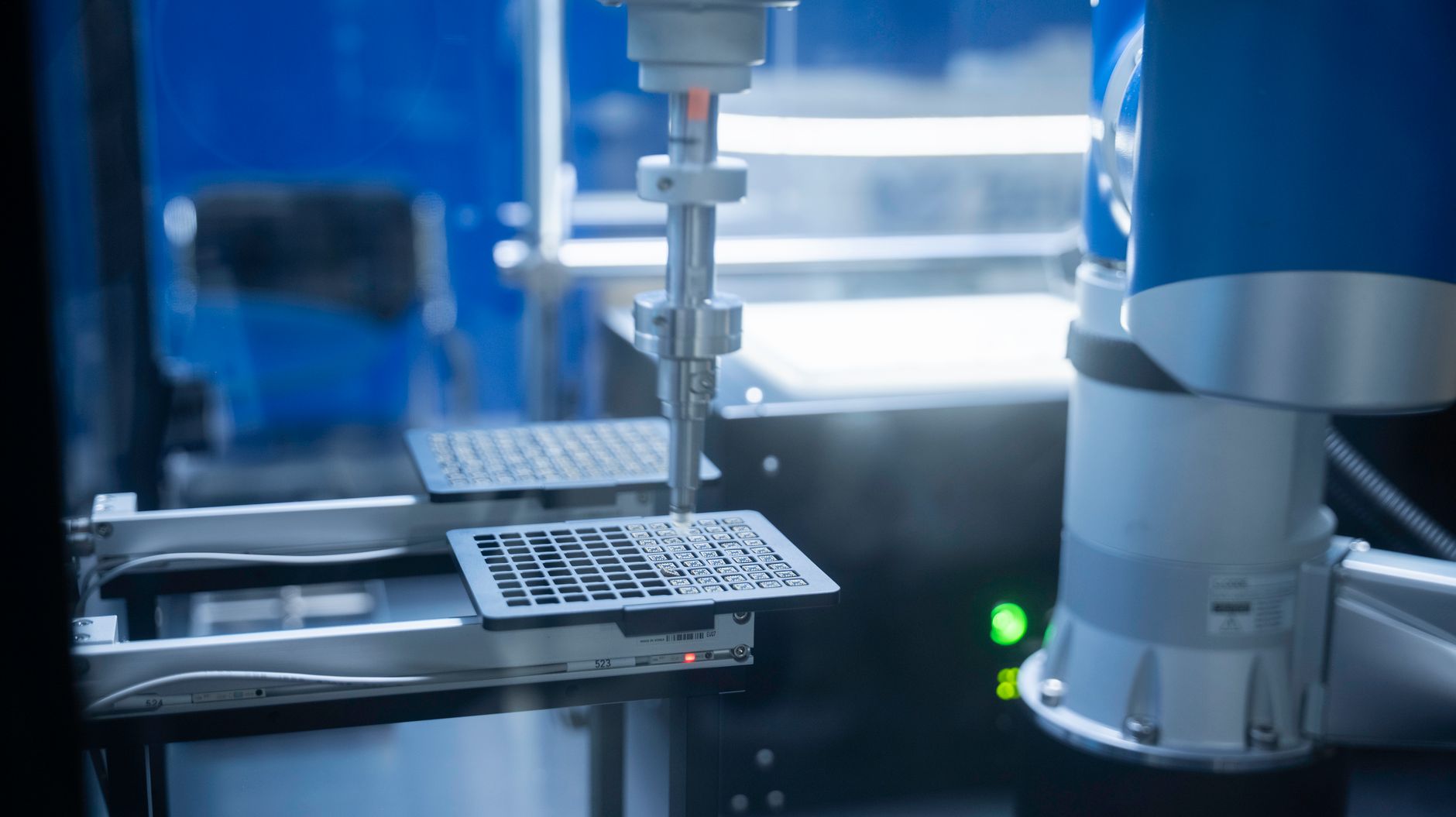
OpenAI led a $153 million Series A funding round for AI drug discovery startup Biossil. This significant investment, made through the OpenAI Startup Fund, signals a pivotal expansion of AI's application into the biotech sector VentureBeat, 2024. The move validates generative AI's capacity to accelerate the identification of novel therapeutic molecules, providing a clear signal for entrepreneurs focused on applying advanced AI models to critical fields like healthcare.
Quick Takeaways
- OpenAI's $153 million Series A lead in Biossil marks a direct, substantial investment by a major AI player into the biotech sector.
- The funding validates generative AI's potential to significantly reduce the typical 10-15 year timeframe and billions of dollars in costs associated with bringing new drugs to market.
- Biossil’s founder, Ben O'Brien, brings deep AI expertise from Google's DeepMind, highlighting the increasing value of top-tier AI talent in specialized deep-tech ventures.
- This investment diversifies OpenAI's strategic interests beyond its core large language model (LLM) business, extending its impact to critical fields such as healthcare.
- The round underscores a broader trend of top-tier venture capital, including a16z Bio + Health, GV, and Nvidia, backing AI applications that tackle complex scientific challenges.
The Deal: OpenAI's Strategic Bet on Biotech
OpenAI's leadership in Biossil's $153 million Series A funding round represents a strategic declaration. The investment, channeled through the OpenAI Startup Fund, positions OpenAI as a direct participant in applying foundational AI models to complex problems. This move signals a deliberate expansion beyond its core large language model (LLM) business into critical sectors like healthcare TechCrunch, 2024. For founders, this means AI investment is shifting towards deep-tech applications where AI drives tangible, high-impact outcomes in scientific discovery.
The Series A round saw participation from a syndicate of prominent investors, including Andreessen Horowitz Bio + Health (a16z), GV (Google Ventures), Nvidia, and SV Angel VentureBeat, 2024. This diverse group of backers underscores widespread conviction in Biossil's approach and AI's broader potential in drug discovery. The involvement of a16z Bio + Health highlights growing specialization within venture capital, with funds dedicated to health and life sciences actively seeking AI-native solutions. Nvidia's participation further emphasizes the critical role of high-performance computing infrastructure in powering these advanced machine learning models, aligning with Biossil's need for large-scale computing.
This substantial Series A round, particularly with OpenAI at the helm, offers a clear signal to deep-tech founders. It indicates significant capital is available for ventures demonstrating a concrete pathway to applying advanced AI to solve intractable scientific and engineering challenges. The investment targets a fundamental reimagining of the drug discovery process, aiming to disrupt an industry historically characterized by long timelines and high costs. OpenAI's involvement aligns with its mission to ensure AI benefits humanity, extending its impact to critical fields such as healthcare where potential for positive societal change is immense VentureBeat, 2024. This strategic alignment between a deep-tech company's mission and a lead investor's broader mandate can powerfully accelerate securing funding and market validation.
For founders navigating the current capital landscape, this deal illustrates several key shifts. First, the bar for deep-tech funding, especially at Series A, is high, often requiring established technical leadership and a clear, differentiated approach. Second, the convergence of AI expertise with domain-specific knowledge (e.g., biology, chemistry) is paramount. Investors seek teams that can bridge these traditionally separate disciplines. Finally, the willingness of major AI developers to invest directly in application-layer companies suggests a future where lines between foundational AI research and real-world implementation blur, creating new avenues for partnership and investment.
Biossil's Generative AI Approach to Drug Discovery
Biossil, headquartered in San Francisco, leverages generative AI to fundamentally rethink the drug discovery process TechCrunch, 2024. The startup specializes in 'de novo' drug discovery, a method focused on designing entirely new molecules rather than modifying existing ones. This approach is complex and resource-intensive, but it holds the promise of creating truly novel therapies with potentially superior efficacy and safety profiles. Biossil's platform utilizes generative AI to predict novel therapeutic molecules and their properties, allowing for faster identification of promising drug candidates with a higher probability of success than traditional methods VentureBeat, 2024.
Biossil aims to solve the staggering inefficiency and cost associated with bringing new drugs to market. The typical timeframe for drug development currently spans 10 to 15 years, often incurring billions of dollars in costs VentureBeat, 2024. These figures represent significant barriers to innovation and patient access. By accelerating initial stages of drug identification and optimization, Biossil seeks to compress these timelines and reduce the financial burden, potentially unlocking treatments for diseases previously too costly or complex to pursue. This promise of efficiency and cost reduction drives substantial investor interest.
Biossil's technical infrastructure integrates large-scale computing capabilities with sophisticated machine learning models. This combination allows the company to develop multiple drug candidates simultaneously, a significant departure from sequential, hypothesis-driven traditional research TechCrunch, 2024. The ability to explore a vast chemical space and predict molecular interactions at an unprecedented scale is where generative AI provides its unique advantage. Biossil's AI can rapidly iterate through millions or even billions of potential molecular structures, evaluating their potential efficacy, toxicity, and manufacturability in silico. This computational screening process dramatically narrows the pool of candidates before expensive and time-consuming physical synthesis and biological testing begin.
Biossil's approach targets the frontier of 'de novo' drug discovery, aiming to deliver not just faster drug discovery, but potentially better drugs designed with specific therapeutic goals in mind from inception. This deep technical ambition, coupled with a clear market problem, forms the basis of its appeal to top-tier investors.
The DeepMind Pedigree and Founder's Edge
Biossil founder Ben O'Brien brings a critical advantage to the deeply technical and competitive field of AI drug discovery: a background rooted in Google's elite AI division, DeepMind. O'Brien previously worked on projects like Euphonia during his tenure at DeepMind TechCrunch, 2024. This pedigree signifies a deep understanding of advanced machine learning, large-scale computing infrastructure, and the rigorous scientific methodology required to push AI research boundaries. For founders seeking to attract significant capital in deep-tech, a background from institutions like DeepMind or OpenAI often provides an immediate signal of technical capability and execution potential.
DeepMind is renowned for its groundbreaking work in areas like reinforcement learning, neural networks, and developing AI systems that solve complex problems. Working on projects like Euphonia would have exposed O'Brien to the intricacies of building and deploying complex AI models that process vast amounts of data and generate novel outputs. This experience is directly transferable to Biossil's mission of generating novel drug molecules.
This founder's edge translates directly into Biossil's platform. O'Brien's experience in integrating large-scale computing infrastructure with sophisticated machine learning models would be instrumental in building Biossil's system, which develops multiple drug candidates simultaneously TechCrunch, 2024. The ability to manage massive computational resources and develop highly efficient algorithms is a prerequisite for any AI drug discovery company aiming for significant impact. This domain demands specialized expertise in architecting and optimizing AI for scientific discovery.
For other founders, O'Brien's trajectory offers several lessons. First, deep technical expertise, especially from leading AI research labs, significantly differentiates early-stage funding for deep-tech ventures. Investors increasingly seek founders with practical experience in building and scaling complex AI systems. Second, the decision to leave a prestigious institution like DeepMind to found a startup demonstrates conviction in a specific problem space and a willingness to take on significant risk. This entrepreneurial drive, combined with a strong technical foundation, is a powerful combination. Finally, it underscores the increasing migration of top AI talent from foundational research into specialized application areas, particularly those with high societal impact and significant market potential, creating a new wave of deep-tech startups. This talent flow actively shapes the landscape of venture capital investment in AI.
Market Implications: AI's Expansion into Biotech
OpenAI's substantial investment in Biossil is a bellwether for the broader market, signaling a robust expansion of AI into biotechnology. This transaction highlights a growing trend of major AI players backing ventures that apply advanced AI models to complex scientific challenges like biotechnology and drug development TechCrunch, 2024. The rationale is clear: biotech and drug discovery offer immense potential for both financial returns and societal impact. The inefficiencies inherent in traditional drug development—the 10-15 year timelines and billions of dollars in costs—present fertile ground for disruption by AI VentureBeat, 2024.
The shift in capital allocation is particularly notable for founders. The participation of Andreessen Horowitz Bio + Health, GV, Nvidia, and SV Angel alongside OpenAI indicates this is a mainstream trend among top-tier venture capitalists. These investors are increasingly comfortable with the long development cycles and regulatory hurdles inherent in biotech, provided the AI solution offers a truly transformative advantage. This comfort stems from a growing understanding of AI's capabilities and a belief that deep-tech approaches can de-risk traditionally high-risk ventures by providing more accurate predictions and faster iterations. For founders, presenting a compelling vision for how AI can fundamentally alter industry economics and timelines is critical to attracting significant funding.
Second-order effects for founders across deep-tech are considerable. Firstly, this investment provides further validation for applying AI in scientific discovery beyond traditional software domains. It underscores that AI's true potential lies in augmenting human intelligence to solve problems previously intractable. Secondly, it suggests a potential increase in funding thresholds for deep-tech startups, as the perceived value and impact of these solutions grow. Companies demonstrating a clear path to commercialization and impact, even with long development cycles, now attract larger checks earlier.
Thirdly, the demand for interdisciplinary talent—individuals possessing both advanced AI skills and deep domain expertise in biology, chemistry, or medicine—will escalate. Founders will need to prioritize building teams that bridge these gaps effectively. Fourthly, robust data strategies become paramount. AI models in drug discovery are only as good as the data they are trained on, necessitating access to high-quality, large-scale biological and chemical datasets. Sourcing, cleaning, and managing this data can be a significant undertaking, often complicated by privacy concerns and intellectual property rights. Finally, the investment signals that the market is ready to embrace AI as a core component of future healthcare innovation, creating new opportunities for startups to partner with or even challenge established players by demonstrating superior discovery capabilities.
Challenges and Opportunities for Deep-Tech Founders
The landscape for deep-tech founders, particularly at the intersection of AI and biotech, presents both significant opportunities and formidable challenges. OpenAI's investment in Biossil highlights immense potential, but also the high bar for entry and success.
Opportunities
The primary opportunity lies in access to significant capital from top-tier investors. The $153 million Series A secured by Biossil demonstrates that funds are available for deep-tech ventures that can articulate a clear, differentiated vision for leveraging AI in complex scientific domains VentureBeat, 2024. This validation from investors like OpenAI, a16z Bio + Health, GV, and Nvidia provides a strong signal to other founders that deep-tech is a viable and attractive investment category.
Furthermore, the potential for massive societal impact in healthcare is a powerful draw. By aiming to reduce the 10-15 year timeframe and billions of dollars in costs for drug development, Biossil exemplifies how AI can accelerate the discovery of treatments for diseases, ultimately improving human health VentureBeat, 2024. For mission-driven founders, this offers a compelling reason to pursue deep-tech. The ability to disrupt established industries that have historically been slow to innovate, particularly through the application of advanced AI, presents a significant competitive advantage. This disruption can lead to new market creation and the redefinition of existing value chains.
Challenges
Despite the opportunities, deep-tech founders face substantial hurdles. Capital requirements are exceptionally high. Developing and deploying sophisticated AI models for drug discovery demands significant investment in R&D, high-performance computing infrastructure, and specialized talent. Unlike many software-as-a-service (SaaS) businesses, deep-tech often requires substantial upfront investment before generating revenue or even reaching key validation milestones.
Long development cycles are another inherent challenge. While AI aims to accelerate drug discovery, the overall process from initial molecule identification to market approval still spans many years, including extensive preclinical and clinical trials. This requires founders and investors to have a long-term perspective and patience. Regulatory hurdles in healthcare are also stringent, necessitating rigorous validation, adherence to complex guidelines, and significant investment in regulatory affairs. Navigating these requirements can be a slow and costly process.
The need for deep domain expertise alongside AI expertise creates a talent scarcity issue. Finding individuals who possess both advanced machine learning skills and a profound understanding of biology, chemistry, or pharmacology is difficult. Building effective interdisciplinary teams that can communicate and collaborate across these domains is crucial. Data challenges are also prevalent; AI models require access to vast amounts of high-quality, curated, and often proprietary biological and chemical data. Sourcing, cleaning, and managing this data can be a significant undertaking, often complicated by privacy concerns and intellectual property rights.
Lessons for Founders
To navigate these challenges and capitalize on opportunities, founders should prioritize building strong interdisciplinary teams from inception. Attracting and retaining talent that combines deep AI expertise with domain-specific scientific knowledge is non-negotiable. Focusing on specific, high-impact problems within a larger industry can help narrow the scope and demonstrate early traction. Clear differentiation and scientific rigor are paramount; investors in deep-tech seek defensible technology and a credible scientific basis for claims. Finally, strategic partnerships with academic institutions, pharmaceutical companies, or even other tech giants can provide access to data, resources, and validation critical for long-term success.
The Future of AI in Healthcare and Beyond
OpenAI's foray into biotech through its investment in Biossil signals a broader trajectory for artificial intelligence: its evolution from a general-purpose technology to a specialized engine for scientific discovery across critical domains. This move aligns with OpenAI's overarching mission to ensure AI benefits humanity VentureBeat, 2024. By applying advanced AI models to healthcare, a field with direct and profound impact on human well-being, OpenAI demonstrates a commitment to addressing real-world challenges that extend beyond its core large language model (LLM) business. This strategic diversification underscores a belief that AI's most transformative applications may lie in accelerating scientific progress in areas like medicine, materials science, and climate change.
The investment in Biossil serves as a strong indicator for other sectors. If generative AI can successfully design novel drug molecules and significantly reduce the time and cost of drug development, its capabilities are transferable to other complex scientific and engineering problems. The trend of applying AI to complex scientific or industrial domains is gaining momentum, attracting significant capital and top-tier talent.
The long-term vision is clear: AI is poised to become a fundamental accelerator for scientific progress. It will not replace human scientists, but rather empower them with tools to explore vast hypothesis spaces, generate novel insights, and conduct experiments (both in silico and in vitro) at unprecedented speeds and scales. This shift will likely enable breakthroughs that were previously considered impossible or too resource-intensive. For founders, this means identifying sectors where traditional R&D processes are bottlenecked by human cognitive limitations or experimental throughput, and then designing AI solutions that can overcome these constraints.
The impact on the broader venture ecosystem will also be significant. We can expect to see the emergence of more specialized funds dedicated to AI in specific scientific domains, following the lead of entities like Andreessen Horowitz Bio + Health. Corporate venture arms of major tech companies, particularly those involved in AI and computing infrastructure like Nvidia, will likely increase their direct investments in application-layer AI startups. This increased flow of capital, coupled with the rising availability of sophisticated AI models and computing power, will foster a more dynamic and competitive environment for deep-tech innovation. Founders who can demonstrate a clear understanding of both advanced AI and a chosen scientific domain will be best positioned to capitalize on this evolving landscape.
FAQ
Q: What is Biossil's core technology? A: Biossil utilizes generative AI to accelerate 'de novo' drug discovery, predicting novel therapeutic molecules and their properties to identify promising candidates faster and with a higher probability of success VentureBeat, 2024.
Q: Who founded Biossil? A: Biossil was founded by Ben O'Brien, who previously worked in Google's AI division, DeepMind, on projects such as Euphonia TechCrunch, 2024.
Q: Why did OpenAI invest in Biossil? A: OpenAI led the investment through its Startup Fund as part of a strategic expansion beyond its core large language model (LLM) business into healthcare, aligning with its broader mission to ensure AI benefits humanity by extending its impact to critical fields VentureBeat, 2024.
Q: What is the typical timeframe and cost for bringing new drugs to market that Biossil aims to reduce? A: Biossil aims to significantly reduce the typical 10-15 year timeframe and billions of dollars in costs associated with bringing new drugs to market VentureBeat, 2024.
Continue reading



The Entrepreneur Story
Is your story worth telling?
We feature founders who are building something real. Apply and we'll be in touch.
Apply to be featured →Stay sharp.
Ideas that move.
Founder stories, emerging ventures, and essays on what's next — straight to your inbox.
Unsubscribe any time.