
Nvidia-Backed AI Startups Rush to Public Markets & Mega Rounds _A New Phase of AI Funding_
Nvidia-backed AI companies are pursuing multi-billion dollar IPOs and funding rounds, signaling market maturation and intense capital allocation in the AI sector.
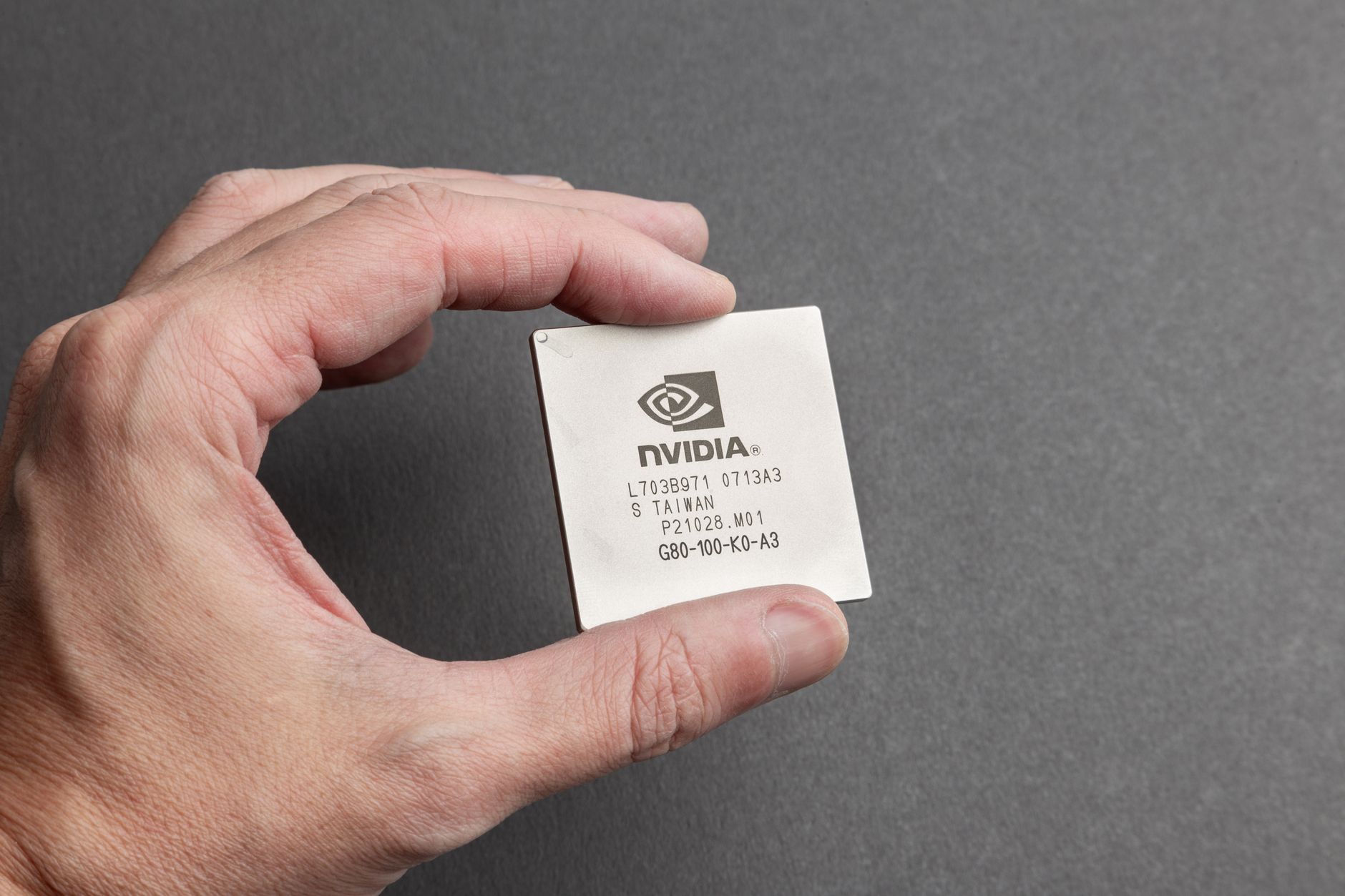
Several Nvidia-backed AI companies are now seeking multi-billion dollar IPOs or significant pre-IPO funding rounds, signaling a new phase of market maturation and intense capital allocation within the artificial intelligence sector. This accelerated push for capital redefines the benchmarks for AI startup growth and market entry, directly impacting how founders must strategize for future funding, competitive positioning, and eventual exit opportunities.
Quick takeaways
- Nvidia-backed AI startups like Mistral AI, Cohere, and Anthropic are pursuing multi-billion dollar funding rounds or IPOs.
- Mistral AI recently closed a $600 million round at a $2 billion valuation, while Cohere is reportedly targeting a $5 billion valuation.
- Nvidia's strategic investments in foundational AI model companies are designed to drive demand for its dominant AI chips, such as the H100 GPU.
- The high valuations reflect a 'fever pitch' in investor appetite for AI, driven by the critical need for advanced foundational models.
- Founders must understand this capital-intensive landscape, where access to compute power and significant funding are becoming prerequisites for scale and competition.
The Rush to Public Markets and Mega Rounds
The AI market is witnessing a rapid escalation in capital raises, with several Nvidia-backed companies moving towards substantial pre-IPO funding rounds or public listings. This trend indicates a shift from early-stage venture funding to late-stage, multi-billion dollar capital events, reflecting a maturing yet intensely competitive environment. The companies at the forefront of this movement are primarily foundational AI model developers, whose technologies underpin a vast array of AI applications.
Mistral AI, a French AI startup, recently secured over $600 million in a funding round. This capital infusion valued the company at more than $2 billion Business Insider, 2024. This significant jump in valuation and capital within a relatively young company highlights the aggressive investor appetite for European AI players capable of challenging established American giants. Mistral AI's ability to attract such substantial investment underscores the global reach of the current AI funding boom. Their strategy of developing open-source models, alongside commercial offerings, has resonated with investors seeking alternatives in a market often dominated by proprietary systems. The $2 billion valuation for a company based in France indicates that geographical boundaries are becoming less relevant in the pursuit of high-impact AI innovation, provided the technology and team are compelling.
Cohere, another prominent AI foundational model company, is reportedly seeking a new funding round that could push its valuation to $5 billion Financial Times, 2024. This represents a substantial increase from its previous $3 billion valuation. Such an aggressive valuation target signals Cohere's confidence in its technology and market position, as well as the intense competition among investors to secure stakes in leading foundational AI companies. The jump from $3 billion to $5 billion in a relatively short period reflects the rapid growth trajectory and the perceived future value of companies capable of building and deploying enterprise-grade large language models. For founders observing Cohere's trajectory, the message is clear: demonstrated progress in foundational AI can unlock significant capital at increasingly rapid intervals, but it requires a clear path to commercialization and differentiation.
Anthropic, another key player in the foundational AI space, has already raised approximately $7.3 billion across multiple funding rounds, achieving an $18 billion valuation Financial Times, 2024. This massive capital inflow positions Anthropic as one of the most highly valued private AI companies globally, demonstrating the scale of investment required and attracted by companies operating at the cutting edge of AI research and development. The $18 billion valuation is a testament to the perceived market potential of its Claude models and its safety-focused approach to AI development. For founders, Anthropic's funding journey illustrates the immense capital demands of building truly competitive foundational models, requiring continuous, large-scale investment in compute resources, talent, and R&D. The sheer volume of capital raised by these companies sets a new benchmark for what constitutes a "mega-round" in the AI sector, pushing the boundaries of traditional venture capital funding cycles.
Nvidia's Strategic Hand in the AI Gold Rush
Nvidia's role extends beyond simply supplying the hardware; the company has become a strategic investor in several key AI foundational model companies. Nvidia has made direct investments in Cohere, Mistral AI, and Inflection AI Financial Times, 2024. This strategy is not merely about financial returns; it is a calculated move to solidify Nvidia's market dominance in AI hardware. By investing in these foundational model developers, Nvidia directly fuels the demand for its powerful AI chips, which are indispensable for training and deploying large language models.
The surge in funding for AI startups is directly linked to the high demand for powerful AI chips, a market where Nvidia holds a dominant position Benzinga, 2024. Training advanced AI models requires immense computational power, primarily provided by Graphics Processing Units (GPUs). Nvidia's H100 GPUs have become the industry standard for this task. These chips are not only essential but also notoriously difficult to acquire, with individual units costing between $30,000 and $40,000 each PCWorld, 2024.
Nvidia's investment strategy creates a symbiotic relationship. As foundational AI companies raise more capital, they allocate a significant portion of it towards acquiring the necessary hardware to train and scale their models. This hardware, almost invariably, comes from Nvidia. By investing in these startups, Nvidia ensures a pipeline of customers for its high-margin GPUs. This strategy effectively turns venture capital deployed into AI startups into direct revenue for Nvidia, creating a powerful flywheel effect. The more successful these AI startups become, the more demand there is for Nvidia's chips, further cementing its position as the foundational technology provider for the AI era.
This tight integration between hardware supplier and software innovator has broader implications for the AI ecosystem. It means that access to capital for AI startups is indirectly tied to their ability to consume and utilize Nvidia's hardware effectively. Companies that can demonstrate a clear need for, and ability to leverage, large quantities of H100 GPUs are more likely to attract both direct investment from Nvidia and indirect investment from other VCs who understand the critical role of compute power. This dynamic also puts pressure on competitors in the AI chip space, such as Cerebras Systems or SambaNova Systems, who must contend with Nvidia's entrenched position and strategic financial relationships within the AI startup community. For founders, understanding this hardware-software interdependence is crucial; securing access to compute resources is as vital as securing initial capital.
Soaring Valuations and Market Dynamics
The current appetite for AI startups is described as reaching a 'fever pitch' Financial Times, 2024. This intense investor interest is driving valuations of leading AI firms into the multi-billion dollar range, often before these companies have achieved widespread profitability or even significant revenue. The market believes that the foundational AI models being developed will become critical infrastructure across industries, justifying these high valuations based on future potential rather than current metrics.
The sheer scale of capital being deployed is unprecedented. Anthropic's $18 billion valuation, based on approximately $7.3 billion in funding, exemplifies this trend Financial Times, 2024. Similarly, Cohere's ambition to reach a $5 billion valuation, up from $3 billion, highlights the rapid re-rating of these assets Financial Times, 2024. This valuation surge is fueled by several factors: the perceived winner-take-most dynamics of platform technologies, the high cost and scarcity of essential compute resources (Nvidia GPUs), and the widespread belief that AI will fundamentally transform every industry.
The M&A market also reflects this heightened valuation environment. In 2023, Databricks acquired generative AI startup MosaicML for $1.3 billion Financial Times, 2024. This acquisition demonstrated that even established tech companies are willing to pay significant premiums for promising AI technology and talent, further validating the high valuations seen in the private market. The Databricks-MosaicML deal set a benchmark for exits in the generative AI space, signaling to founders that successful development in this area could lead to substantial acquisition offers.
However, the rapid escalation of valuations also raises questions about sustainability and potential market corrections. Some market observers express concerns about a potential bubble, echoing previous tech booms. The 'fever pitch' implies a high degree of speculation, where future growth is heavily discounted into current valuations. For founders, navigating this environment means balancing the opportunity for rapid capital infusion with the need for sustainable business models and clear paths to profitability. The pressure to justify these valuations will intensify as these companies mature and approach public markets, demanding robust revenue streams and defensible competitive advantages beyond just technological innovation. Venture capital firms are holding significant positions in these leading AI firms Financial Times, 2024, indicating a concentrated bet by institutional investors on the continued growth and profitability of foundational AI.
The Foundational Model Battleground
The companies attracting these mega-rounds — Anthropic, Cohere, Mistral AI, and Inflection AI — are all primarily focused on developing foundational AI models. These models, often large language models (LLMs), serve as the underlying intelligence layer for a wide range of AI applications, from chatbots and content generation to complex data analysis and code development. The battle for dominance in this space is intense, as these models require massive computational resources and top-tier talent to develop and maintain.
Anthropic, with its $18 billion valuation and $7.3 billion in funding, is a leading player, known for its Claude family of models and its emphasis on AI safety and constitutional AI Financial Times, 2024. Their differentiation lies in a commitment to developing beneficial and harmless AI, which resonates with enterprise clients concerned about ethical AI deployment. This focus has attracted significant investment from major tech companies and VCs alike, positioning them as a key competitor to other leading model developers.
Cohere, seeking a $5 billion valuation, targets enterprise customers with its powerful language models designed for businesses. Their strategy focuses on providing customizable and deployable AI solutions for various corporate use cases, from customer service automation to sophisticated data insights. Nvidia's investment in Cohere Financial Times, 2024 further validates its approach and ensures access to the critical compute resources needed for further model development and scaling. The competition in the enterprise AI space is fierce, with established cloud providers like Google, AWS, and Azure also offering their own foundational models and services. Cohere's ability to secure significant funding demonstrates investor confidence in its specialized enterprise focus.
Mistral AI, the French startup with a $2 billion valuation from its recent $600 million round, differentiates itself with a focus on open-source models alongside its commercial offerings Business Insider, 2024. This dual strategy appeals to a segment of the market that values transparency and customization, allowing developers to build upon and fine-tune their models. Nvidia's investment in Mistral AI Financial Times, 2024 suggests a recognition of the importance of fostering a diverse ecosystem of foundational model providers, including those with an open-source ethos. This further intensifies the competition for talent and market share, as each player seeks to carve out its niche and attract a developer community.
Inflection AI is another Nvidia-backed company in this foundational model race Financial Times, 2024. While specific new funding details were not provided, its inclusion in Nvidia's investment portfolio highlights its strategic importance in the broader foundational model landscape. The competition extends beyond just these direct players to include tech giants like Google with its Gemini models and OpenAI with its GPT series. These companies are not only competing for market share but also for the top AI talent and access to the increasingly scarce and expensive compute resources. The foundational model battleground dictates the future direction of AI applications and sets the stage for who will control the underlying intelligence of the next generation of software.
Implications for Founders: Capital, Competition, and Strategy
The trend of Nvidia-backed AI startups pursuing multi-billion dollar funding and IPOs carries significant implications for founders across the AI ecosystem, regardless of their current stage or specific niche. The sheer scale of capital being allocated to foundational model companies redefines the competitive landscape and sets new benchmarks for what it takes to succeed in AI.
First, access to capital is becoming increasingly concentrated at the top tier of foundational AI. For founders developing deep-tech AI, particularly those working on core model architectures or large-scale data processing, the capital requirements are now astronomical. Raising hundreds of millions, or even billions, of dollars is becoming a prerequisite to compete with the likes of Anthropic or Cohere. This means that founders must present exceptionally strong technical teams, clear differentiation, and a credible path to market leadership to attract such significant investment. Venture capital firms are making concentrated bets on a few perceived winners, making it harder for early-stage companies to secure funding without a clear and compelling value proposition that stands out amidst the noise.
Second, competition for resources is intensifying. The demand for Nvidia H100 GPUs, costing $30,000 to $40,000 each and being extremely difficult to acquire, highlights a critical bottleneck [PCWorld, 202
Continue reading



The Entrepreneur Story
Is your story worth telling?
We feature founders who are building something real. Apply and we'll be in touch.
Apply to be featured →Stay sharp.
Ideas that move.
Founder stories, emerging ventures, and essays on what's next — straight to your inbox.
Unsubscribe any time.