
General Intuition: $6B Valuation Fuels Robotics AI Future *The Future of Embodied AI*
General Intuition, a robotics AI startup, secured $300 million in Series C funding, reaching a $6 billion valuation and signaling a significant acceleration in venture capital's bet on general-purpose AI for robotics.
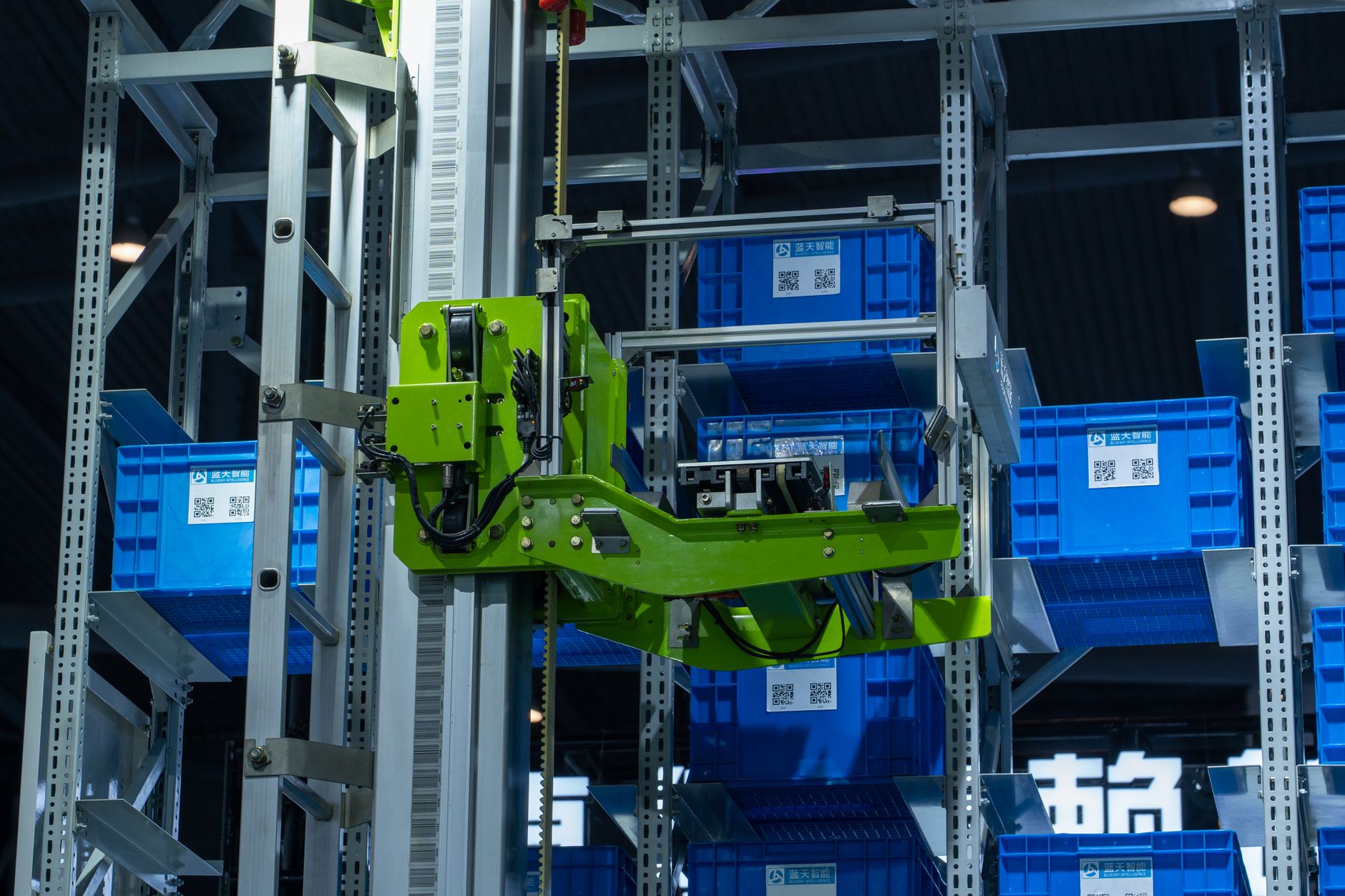
General Intuition, a robotics AI startup founded in 2022, secured $300 million in its Series C funding round, reaching a $6 billion valuation. This substantial investment, co-led by Valor Equity Partners and Point72 Ventures, signals a significant acceleration in venture capital's bet on general-purpose AI for robotics, reshaping the landscape for founders building in embodied intelligence. For founders, this trajectory underscores the escalating premium placed on deep technical expertise and a clear vision for foundational AI in high-stakes physical domains.
Quick takeaways
- Rapid Scale: General Intuition achieved a $6 billion valuation and raised $610.5 million in capital in less than two years, highlighting the speed at which venture capital is deploying into foundational AI for robotics.
- Embodied AI Focus: The investment validates the market's belief in a universal 'operating system for robotics,' capable of controlling diverse hardware for various tasks, moving beyond task-specific automation.
- Pedigree Matters: The leadership team's background from Google Brain and Waymo demonstrates the critical importance of deep technical expertise and proven track records in attracting significant early-stage capital.
- Broad Investor Confidence: Participation from a wide array of top-tier VCs, including Nvidia's NVentures, signals widespread institutional conviction in the long-term potential of general-purpose robotics AI.
- Market Opportunity: The bet on General Intuition positions the company to address a projected global robotics market valued at $218 billion by 2030, indicating significant room for disruption and growth.
The $6 Billion Bet: General Intuition's Rapid Ascent
General Intuition, a robotics AI startup, has rapidly ascended to a $6 billion valuation following its recent $300 million Series C funding round TechCrunch, 2024. This capital injection marks a significant milestone for the company, founded in 2022, demonstrating an aggressive growth trajectory in a nascent but strategically critical sector. The Series C round was co-led by two prominent investment firms, Valor Equity Partners and Point72 Ventures, signaling strong institutional confidence in General Intuition's foundational technology and market approach TechCrunch, 2024.
Beyond the co-leads, the funding round attracted a diverse and high-caliber group of investors. NVentures, the venture arm of Nvidia, participated, underscoring the strategic alignment with a major player in AI hardware and computing. Other notable participants included Lux Capital, Thrive Capital, Sequoia Capital, Lightspeed Venture Partners, NEA, SV Angel, Paradigm, as well as individual investors Nat Friedman and Daniel Gross TechCrunch, 2024. This broad syndicate of investors, spanning traditional venture capital, strategic corporate funds, and prominent angel investors, reflects a widespread belief in General Intuition's potential to become a defining company in the robotics AI space.
The $300 million Series C brings General Intuition's total capital raised to $610.5 million across multiple funding rounds since its inception. This sum includes a $10.5 million Seed round, a $100 million Series A, and a $200 million Series B, culminating in the latest Series C TechCrunch, 2024. The rapid succession and increasing scale of these rounds highlight the urgency and competitive intensity surrounding foundational AI development. Achieving a $6 billion valuation in less than two years suggests that investors are front-loading capital into companies perceived as having the potential to establish early dominance in critical emerging markets. For founders, this signals that the window for securing significant capital for deep tech, particularly in AI, remains open, provided the team, technology, and market vision are compelling. It also indicates a market where valuation multiples can expand rapidly for companies addressing large, untapped opportunities with high-barrier-to-entry technology.
Foundational AI for Robotics: The 'Operating System' Vision
General Intuition's core mission centers on building foundational AI models designed to serve as a universal 'operating system for robotics' [TechCrunch, 2024](https://techcrunch.com/2024/07/31/robotics-ai-startup-general-intuition-reaches-6-billion-valuation-backed by-valor-point72/). This ambition positions the company at the forefront of embodied AI, aiming to develop general-purpose intelligence capable of controlling a diverse range of robotic hardware for varied tasks. Unlike traditional robotics, which often relies on highly specialized programming for specific functions, General Intuition is pursuing a more generalized approach. This strategy mirrors the development of large language models (LLMs) in the software domain, which provide a versatile foundation for numerous text-based applications, but extends it into the physical world.
The concept of an 'operating system' for robotics implies a standardized, adaptable layer of intelligence that can interpret commands, understand environments, and execute actions across different robot platforms. This could range from industrial manipulators and logistics robots to autonomous vehicles and humanoid systems. Such a foundational model would abstract away the complexities of specific hardware, allowing developers and operators to focus on higher-level tasks and applications. For instance, instead of programming each robot for individual actions like "pick up box A" or "navigate to station B," a foundational AI could interpret broader instructions such as "organize warehouse" or "assist in assembly," dynamically generating the necessary robot behaviors.
The market gap General Intuition aims to fill is significant. Currently, the robotics industry is fragmented, with many specialized solutions that lack interoperability and generalizability. This fragmentation creates inefficiencies in development, deployment, and scalability. A universal operating system could accelerate the adoption of robotics by lowering the barrier to entry for new applications and reducing the cost and complexity of integrating robotic systems. By developing AI models that can perceive, reason, and act in the physical world with a high degree of adaptability, General Intuition seeks to unlock new capabilities for automation and intelligent systems. This approach could allow existing robotic hardware to perform a wider array of tasks without extensive reprogramming, and enable the rapid deployment of new robotic systems into diverse environments. The investment in General Intuition reflects a bet that generalized intelligence, rather than narrow specialization, will define the next era of robotics. This vision resonates with founders who recognize the power of platform-level technologies to create expansive ecosystems and capture significant market share.
The Architects of Embodied AI: Leadership from Google Brain and Waymo
The leadership team at General Intuition comprises individuals with deep expertise in artificial intelligence and autonomous systems, primarily stemming from their tenures at Google Brain and Waymo TechCrunch, 2024. CEO Peter Chen, CTO Josh Davison, and VP of Engineering Jason Cho all bring a track record of working at the forefront of AI research and its practical application within two of Google's most advanced divisions. This pedigree is a critical factor in attracting the substantial venture capital investment General Intuition has secured.
Google Brain, known for its pioneering work in deep learning and neural networks, has been instrumental in many of the breakthroughs that underpin modern AI. Executives and researchers from Google Brain possess an intimate understanding of foundational AI model development, including areas like large-scale data processing, model architectures, and training methodologies. Their experience in pushing the boundaries of what AI can achieve provides General Intuition with a distinct advantage in developing sophisticated general-purpose models for robotics. This background suggests a deep theoretical understanding coupled with practical experience in building and deploying complex AI systems.
Waymo, Google's autonomous driving technology company, offers an equally relevant set of experiences. Developing self-driving cars requires navigating the intricate challenges of embodied AI in real-world, dynamic environments. This includes robust perception (understanding sensor data), sophisticated decision-making under uncertainty, and precise control of physical systems. Leaders from Waymo have firsthand experience with the rigorous engineering, safety protocols, and real-world deployment challenges inherent in bringing AI into the physical domain. Their background equips them with insights into the nuances of real-time performance, reliability, and the sheer complexity of making autonomous systems operate effectively and safely.
The combination of expertise from Google Brain's pure AI research and Waymo's practical application in autonomous robotics creates a powerful synergy for General Intuition. Peter Chen, Josh Davison, and Jason Cho bring not only theoretical knowledge but also the hard-won lessons from scaling AI systems in high-stakes environments. This blend of capabilities positions General Intuition to tackle the ambitious goal of creating a universal operating system for robotics. For other founders, the General Intuition story underscores the immense value placed by investors on a leadership team with a proven track record in relevant deep tech fields. It highlights that in complex, capital-intensive areas like embodied AI, the credibility and specific experience of the founding team can be as crucial as the initial idea itself, providing a strong signal of execution capability and resilience.
Venture Capital's New Frontier: The Embodied AI Gold Rush
The substantial investment in General Intuition exemplifies venture capital's aggressive pivot towards embodied AI, marking a new frontier in the ongoing AI gold rush. The $300 million Series C round, co-led by Valor Equity Partners and Point72 Ventures, with participation from a broad coalition of top-tier investors including Nvidia's NVentures, Lux Capital, Thrive Capital, Sequoia Capital, Lightspeed Venture Partners, NEA, SV Angel, Paradigm, Nat Friedman, and Daniel Gross, indicates a widespread and deep-pocketed belief in the sector's potential TechCrunch, 2024. This collective investment signifies that the focus of AI funding is expanding beyond purely digital applications like large language models to encompass the physical world, where AI can interact with and manipulate its environment.
Investors are now betting that the next wave of AI innovation will involve systems that can perceive, understand, and act within physical space. This shift is driven by several factors. Firstly, advancements in core AI capabilities, such as computer vision, reinforcement learning, and generalizable control, have reached a point where they can be effectively applied to complex robotic tasks. Secondly, the increasing demand for automation across industries—from manufacturing and logistics to healthcare and consumer services—creates a massive market opportunity for intelligent robotic solutions. Companies that can provide foundational AI to power these diverse applications stand to capture significant value.
The participation of NVentures, Nvidia's venture arm, is particularly noteworthy. Nvidia is a key enabler of AI innovation through its GPU technology, which powers much of the world's AI computing. Their investment in General Intuition suggests a strategic belief that General Intuition's foundational robotics AI aligns with the broader ecosystem Nvidia is cultivating. This kind of strategic investment from a hardware giant can provide not only capital but also critical partnerships, technical resources, and market validation.
For founders, this "embodied AI gold rush" presents both immense opportunities and significant challenges. The capital available for startups with compelling visions and strong technical teams is substantial, as evidenced by General Intuition's rapid $6 billion valuation. However, the technical barriers to entry are high, requiring deep expertise in areas like robotics, AI model development, and real-world system deployment. The competitive landscape is also heating up, with established tech giants and other well-funded startups vying for market leadership. Founders entering this space must articulate a clear path to developing generalizable, robust, and safe AI systems that can operate effectively in complex physical environments, demonstrating how their technology can scale across different hardware and applications to truly deliver on the promise of foundational robotics AI.
Market Opportunity and Competitive Landscape
The global robotics market is projected to reach an estimated $218 billion by 2030, according to Statista TechCrunch, 2024. This substantial market forecast underscores the immense opportunity that General Intuition is positioned to address with its foundational AI models for robotics. This projected growth is driven by increasing demand for automation across industries, labor shortages, and technological advancements that make robots more capable and cost-effective. Within this expansive market, General Intuition's strategy to build a universal 'operating system for robotics' aims to capture a significant share by providing a scalable, adaptable intelligence layer that can power a wide array of robotic applications.
The market segments that could benefit from General Intuition's technology are diverse. Industrial automation, which currently constitutes a large portion of the robotics market, could see increased flexibility and efficiency as robots become more intelligent and adaptable to changing production needs. Logistics and warehousing, characterized by repetitive tasks and dynamic environments, are ripe for advanced robotic solutions that can handle complex sorting, picking, and transportation tasks. Beyond these traditional sectors, new applications in service robotics (e.g., hospitality, healthcare), agricultural robotics, and even consumer robotics could emerge and scale rapidly with a generalized AI foundation. The ability to control various robot hardware for diverse tasks, as General Intuition aims to do, could unlock significant value across these verticals by reducing the need for specialized, siloed robotic systems.
In terms of the competitive landscape, General Intuition operates in an increasingly crowded but also rapidly expanding space. While the research does not specify direct competitors with similar foundational 'operating system' ambitions or their funding, it is clear that many players are active in the broader robotics and AI sectors. Established robotics companies continue to develop and refine their hardware and software. AI research labs, including those at Google DeepMind and OpenAI, are pushing the boundaries of general AI, though their primary focus has historically been on digital domains rather than direct physical embodiment. Various startups are also emerging, specializing in specific types of robots (e.g., humanoid robots, logistics robots) or particular AI capabilities for robotics (e.g., advanced manipulation, navigation).
General Intuition's differentiation lies in its explicit focus on foundational, general-purpose AI for all robotics, aiming to be the underlying intelligence layer rather than a hardware provider or a solution for a narrow application. This strategy, if successful, could allow them to become an indispensable component across the entire robotics ecosystem. However, competition will likely come from multiple angles: other AI companies attempting to generalize their models for the physical world, traditional robotics firms integrating more advanced AI into their offerings, and even open-source initiatives seeking to democratize robotics AI. The company's current employment of approximately 100 people suggests a focused, high-talent team dedicated to this ambitious technological undertaking, highlighting the scale of talent and resources required to compete effectively in this high-stakes market TechCrunch, 2024.
Implications for Founders: What General Intuition's Trajectory Signals
General Intuition's rapid ascent to a $6 billion valuation and its substantial capital raise offer several key signals for founders operating across the AI, robotics, and deep tech landscapes. The company's trajectory underscores the current venture capital appetite for ambitious, foundational technologies, particularly those addressing large, untapped markets with high-barrier-to-entry solutions.
Firstly, the story highlights the accelerating pace of innovation and investment in embodied AI. For founders working on AI applications, this suggests a broadening of focus beyond purely software-centric solutions. Investors are increasingly looking for AI that can interact with the physical world, automate complex tasks, and create tangible value in industries currently constrained by manual labor or limited automation. This means that startups developing AI for hardware, physical manipulation, perception, and real-world decision-making are likely to find a receptive audience among VCs. Founders should consider how their AI solutions can extend beyond screens and into physical environments, addressing challenges where intelligent robots can make a significant impact.
Secondly, the background of General Intuition's leadership team—comprising former Google Brain and Waymo experts—reinforces the paramount importance of deep technical expertise and a proven track record. For founders, this signals that in highly technical and capital-intensive domains like foundational robotics AI, a team with specific, high-level experience from leading research labs or successful ventures in adjacent fields is a significant advantage. It demonstrates credibility, an understanding of the complex challenges involved, and the ability to execute on an ambitious vision. Founders without such a direct pedigree may need to compensate by building an exceptionally strong advisory board, demonstrating early technical breakthroughs, or forming strategic partnerships that validate their capabilities.
Thirdly, the 'operating system for robotics' vision illustrates the power of platform plays in deep tech. General Intuition is not building a single robot for a single task; it is aiming to create a universal intelligence layer. For founders, this suggests that solutions designed to be broadly applicable, interoperable, and foundational for an entire ecosystem often attract greater investor interest and achieve higher valuations. Thinking about how a technology can become a standard or an enabling platform for many different applications, rather than a niche product, can unlock significantly larger market opportunities. This requires a long-term vision and the ability to articulate how a core technology can scale horizontally across diverse use cases and hardware.
Finally, the sheer scale of the funding rounds—$610.5 million in total capital raised within two years—indicates that investors are willing to deploy massive amounts of capital into companies they believe can achieve market dominance in critical emerging sectors. This signifies a land-grab mentality in foundational AI. Founders should recognize that securing significant capital early can be crucial for attracting top talent, accelerating R&D, and establishing a lead in competitive markets. However, it also places immense pressure on execution and rapid growth. General Intuition's journey serves as a case study for how a compelling vision, backed by a strong team and addressing a massive market opportunity, can attract the capital necessary to pursue ambitious technological frontiers.
FAQ
Q: What is General Intuition's core mission? A: General Intuition aims to build foundational AI models that serve as a universal 'operating system for robotics,' capable of controlling various robot hardware for diverse tasks TechCrunch, 2024. This involves developing general-purpose intelligence for embodied AI systems.
Q: How much capital has General Intuition raised in total? A: General Intuition has raised a total of $610.5 million across its Seed ($10.5M), Series A ($100M), Series B ($200M), and Series C ($300M) rounds TechCrunch, 2024.
Q: Who are the key investors in General Intuition's Series C round? A: Valor Equity Partners and Point72 Ventures co-led the Series C round. Other notable investors include NVentures (Nvidia's venture arm), Lux Capital, Thrive Capital, Sequoia Capital, Lightspeed Venture Partners, NEA, SV Angel, Paradigm, Nat Friedman, and Daniel Gross TechCrunch, 2024.
Q: What is the background of General Intuition's leadership team? A: General Intuition's leadership team, including CEO Peter Chen, CTO Josh Davison, and VP of Engineering Jason Cho, previously worked at Google Brain and Waymo TechCrunch, 2024.
Q: What is the projected size of the global robotics market? A: The global robotics market is projected to reach $218 billion by 2030, according to Statista TechCrunch, 2024.
Continue reading



The Entrepreneur Story
Is your story worth telling?
We feature founders who are building something real. Apply and we'll be in touch.
Apply to be featured →Stay sharp.
Ideas that move.
Founder stories, emerging ventures, and essays on what's next — straight to your inbox.
Unsubscribe any time.