
Etched.ai Raises $120M to Challenge Nvidia's AI Chip Dominance *The $1.55 Billion Bet*
Etched.ai secures $120M from tech leaders like Bezos and Gates at a $1.55B valuation, aiming to challenge Nvidia's AI chip dominance with specialized ASICs for LLM inference.
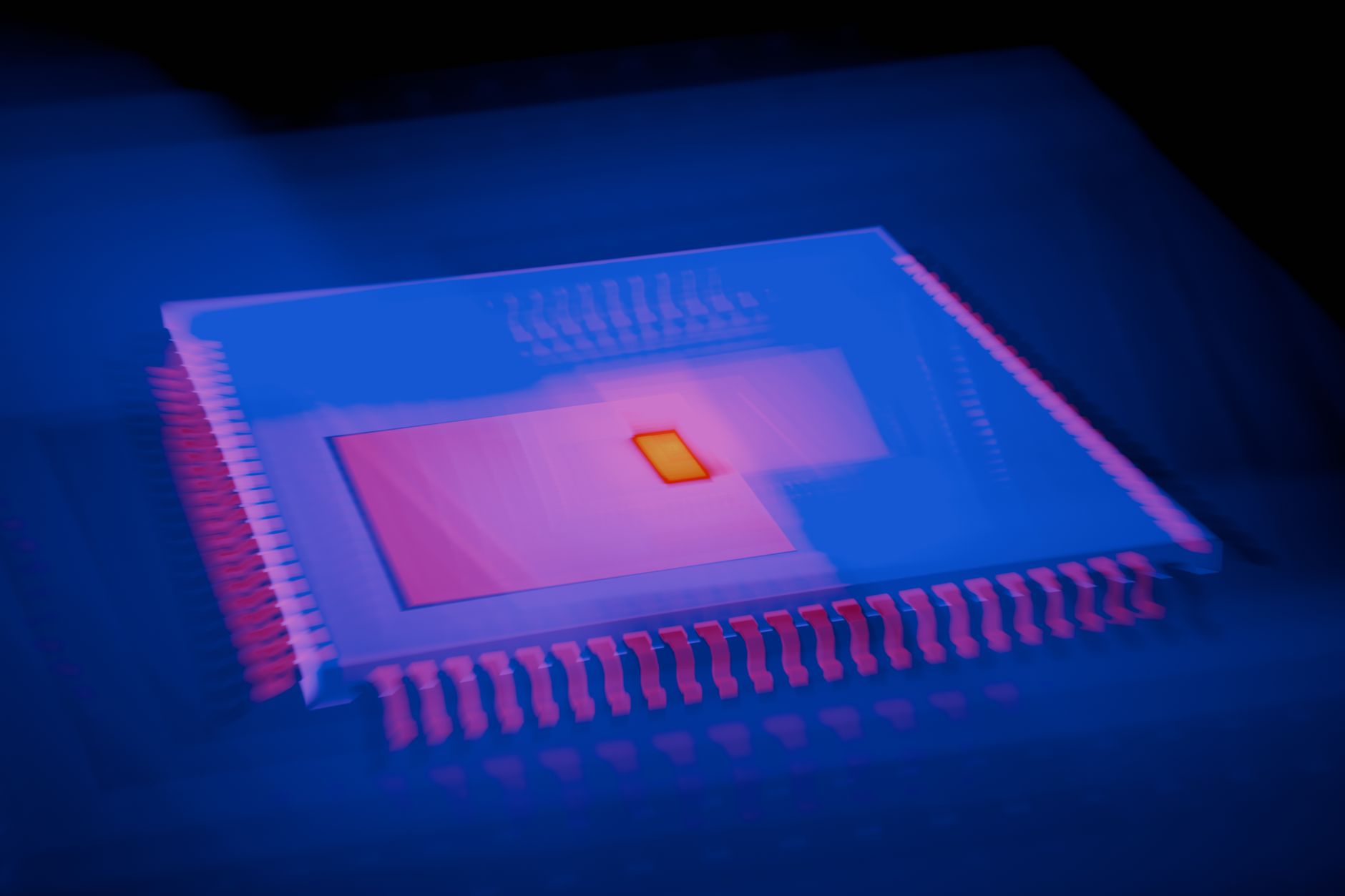
Austin-based startup Etched.ai has raised $120 million in a funding round backed by prominent tech leaders including Amazon founder Jeff Bezos, Microsoft co-founder Bill Gates, Dell Technologies founder Michael Dell, and former Google CEO Eric Schmidt, valuing the company at $1.55 billion. This significant capital injection signals a burgeoning market appetite for specialized hardware solutions capable of disrupting Nvidia's near-monopoly in AI infrastructure. For founders, this investment underscores the immense potential for focused innovation in highly capital-intensive sectors, even when challenging entrenched giants.
Quick takeaways
- Mega-Funding for Specialization: Etched.ai secured $120 million from high-profile investors, achieving a $1.55 billion valuation, demonstrating investor confidence in highly specialized AI hardware.
- ASIC Strategy for LLM Inference: The company develops custom Application Specific Integrated Circuits (ASICs) optimized exclusively for single large language models, starting with Meta Platforms' Llama 70B.
- Cost and Efficiency Advantage: Etched.ai claims its chips offer 10 times better performance per watt compared to Nvidia's H100 GPUs for Llama 70B inference, with an anticipated initial cost of $25,000 per chip, undercutting H100 prices.
- Addressing GPU Shortages: The startup aims to alleviate the "GPU shortage crisis" by providing a more cost-effective and efficient solution for large data centers and hyperscalers.
- Challenging Incumbency: Etched.ai's emergence highlights a strategic push to carve out market share from Nvidia's dominant position in AI compute, focusing on the specific demands of LLM inference.
The $1.55 Billion Bet Against Nvidia
Etched.ai, an Austin-based startup founded in late 2023 by Chris Nicol, Robert Ni, and Gavin Ni, has secured $120 million in funding, pushing its valuation to $1.55 billion Bloomberg, 2024. This substantial investment round was led by some of the most influential figures in technology: Jeff Bezos, Bill Gates, Michael Dell, and Eric Schmidt Bloomberg, 2024. Additional seed investors included Founders Fund, Positive Sum, Capital Factory, and Hydrazine, the fund associated with OpenAI CEO Sam Altman VentureBeat, 2024. The capital infusion, occurring just months after the company's inception, underscores a significant belief in Etched.ai's potential to disrupt the AI hardware market.
The valuation of $1.55 billion for a company less than a year old, operating in the capital-intensive semiconductor space, signals a bullish outlook on specialized AI silicon. This financial backing is not merely a vote of confidence in Etched.ai's technology; it reflects a broader market sentiment that the current AI infrastructure, largely dominated by Nvidia's general-purpose GPUs, is ripe for disruption. Nvidia's H100 GPUs, critical for both AI training and inference, currently sell for $30,000 to $40,000 each, and their scarcity has become a bottleneck for many AI initiatives Bloomberg, 2024. The sheer scale of investment in Etched.ai suggests that investors are willing to back ventures that promise to alleviate this bottleneck through fundamentally different architectural approaches.
The involvement of individuals like Jeff Bezos and Bill Gates, who have shaped the trajectory of global technology companies, brings not only capital but also invaluable strategic oversight and market credibility. Michael Dell's participation further highlights the potential for Etched.ai's chips to integrate into enterprise data center solutions, given Dell Technologies' extensive reach in this domain. Eric Schmidt's background at Google, a company that has also invested heavily in custom AI silicon (TPUs), lends further weight to the strategic importance of Etched.ai's mission. For founders, this demonstrates that securing backing from industry titans can rapidly accelerate market validation and access to resources, even in nascent stages. The scale of this funding round also indicates that the AI hardware race is not just about incremental improvements but about fundamental shifts in design and economic models, attracting significant early-stage capital.
Etched.ai's ASIC Strategy: Precision Over Generalization
Etched.ai's core technological strategy revolves around the development of custom Application Specific Integrated Circuits (ASICs). Unlike general-purpose GPUs, which are designed to handle a wide range of computational tasks, ASICs are purpose-built for a very specific function. In Etched.ai's case, this function is the efficient inference of single large language models (LLMs) Bloomberg, 2024. The company's first ASIC is specifically optimized to run Meta Platforms' Llama 70B model, a widely used open-source LLM Bloomberg, 2024. This focused approach aims to extract maximum performance and efficiency for a dedicated task, rather than attempting to be a jack-of-all-trades.
The primary claim from Etched.ai is that its custom chip can deliver 10 times better performance per watt compared to Nvidia's H100 GPU when performing Llama 70B inference Bloomberg, 2024. Performance per watt is a critical metric for data centers, directly impacting operational costs related to electricity consumption and cooling. As AI models scale and usage intensifies, energy efficiency translates into substantial savings for large data center operators and hyperscalers. An improvement of 10x in this metric represents a significant leap, potentially redefining the economic calculus of deploying and running LLMs at scale.
Beyond efficiency, Etched.ai also aims to offer a more cost-effective solution. While Nvidia's H100 GPUs are priced between $30,000 and $40,000, Etched.ai anticipates an initial cost of approximately $25,000 for its custom inference chip Bloomberg, 2024. This lower upfront cost, combined with superior operational efficiency, presents a compelling value proposition for organizations heavily invested in deploying specific LLMs. For founders developing AI applications, this shift could mean lower infrastructure costs, enabling more aggressive scaling or more competitive pricing for their services.
The trade-off of an ASIC-based strategy is typically flexibility. A chip designed exclusively for Llama 70B inference will not be as adaptable to other LLMs, new model architectures, or different AI workloads like training, computer vision, or scientific simulations. However, Etched.ai's bet is that the market for stable, widely adopted LLMs like Llama 70B is large enough and sufficiently standardized to justify this specialization. The cost and performance benefits for that specific use case outweigh the lack of generality. This strategy reflects a broader trend in the semiconductor industry where increasing complexity and power demands of AI are pushing towards more tailored hardware solutions, moving beyond the general-purpose computing paradigm that GPUs have long represented. Founders in AI should observe this trend: as AI applications mature, the opportunity for highly specialized, efficient hardware solutions grows.
The Founder's Playbook: Building a Hardware Challenger
Etched.ai was founded in late 2023 by Chris Nicol, Robert Ni, and Gavin Ni Bloomberg, 2024. Launching a hardware company, particularly one challenging a dominant incumbent like Nvidia in the highly competitive and capital-intensive semiconductor industry, represents a significant undertaking. The decision to enter this market suggests a confluence of factors: a perceived critical market gap, confidence in a novel technological approach, and the ability to attract substantial early-stage investment.
Building a custom chip requires immense upfront capital for design, fabrication, and testing, often running into hundreds of millions of dollars before a product even reaches market. The $120 million initial funding round, valuing the company at $1.55 billion, provides the necessary runway for Etched.ai to execute its ambitious roadmap. For other founders, Etched.ai's rapid ascent highlights that deep technological differentiation, especially in high-demand, constrained markets, can unlock extraordinary investor interest, even for young companies. It also underscores the importance of a compelling narrative and a clear problem-solution fit when pitching to top-tier investors. The "GPU shortage crisis" provided a clear, urgent problem that Etched.ai positioned itself to solve Bloomberg, 2024.
The stakes for Etched.ai's founders are substantial. Success would mean carving out a significant niche in the multi-billion dollar AI infrastructure market, potentially reshaping how LLMs are deployed globally. Failure, however, could mean burning through significant capital with little to show, a common risk in hardware startups where product cycles are long and development costs are high. Their strategy of focusing on a single, popular LLM (Llama 70B) for inference is a calculated risk. It allows for extreme optimization, but also ties the company's fortunes to the continued relevance and adoption of that specific model. This level of specialization requires founders to have a deep understanding of market trends and model evolution.
The ability to attract investors like Jeff Bezos, Bill Gates, Michael Dell, and Eric Schmidt points to the founders' credibility and the strength of their vision. While specific backgrounds of Chris Nicol, Robert Ni, and Gavin Ni are not detailed in the provided facts, their success in securing such funding implies significant prior experience in chip design, AI, or scaling technology ventures. Founders looking to enter similarly challenging markets should analyze this case for lessons in strategic positioning, securing early "smart money," and articulating a vision that addresses a critical, high-value problem with a differentiated technological approach. The narrative of challenging an incumbent giant with a superior, specialized solution is a powerful one for attracting both capital and talent.
Market Dynamics: The GPU Shortage and Hyperscaler Demand
The emergence of Etched.ai and its substantial funding round are directly tied to the current market dynamics in AI infrastructure, particularly the pervasive "GPU shortage crisis" Bloomberg, 2024. The explosion of generative AI, fueled by large language models, has created unprecedented demand for high-performance computing hardware. Nvidia's GPUs, especially the H100 series, have become the de facto standard for both training and inference of these models. However, supply has struggled to keep pace with demand, leading to long lead times and elevated prices for these critical components. Nvidia's H100 GPUs are priced between $30,000 and $40,000, reflecting this scarcity and high demand Bloomberg, 2024.
This shortage creates a significant bottleneck for large data centers and hyperscalers—companies like Amazon, Microsoft, and Google—which are at the forefront of AI deployment. These entities require thousands, if not tens of thousands, of AI accelerators to power their cloud services, internal AI initiatives, and customer-facing applications. The inability to acquire sufficient GPUs directly impacts their ability to scale AI offerings, innovate, and meet customer demand. This environment makes solutions that promise to alleviate the GPU crunch highly attractive.
Etched.ai's strategy directly targets this pain point. By offering a custom ASIC that is optimized for LLM inference, particularly for a popular model like Llama 70B, the company aims to provide a more efficient and cost-effective alternative for a specific, high-volume workload Bloomberg, 2024. Their claim of 10 times better performance per watt compared to Nvidia's H100 GPU for Llama 70B inference, combined with an anticipated initial cost of $25,000 per chip, directly addresses the concerns of hyperscalers facing escalating operational costs and procurement challenges Bloomberg, 2024.
For founders, this situation illustrates the power of market timing and identifying critical supply chain constraints. When a fundamental resource becomes scarce and expensive, opportunities arise for innovative solutions that can circumvent or directly address the bottleneck. The demand for AI compute is not merely high; it is an existential requirement for many businesses, making solutions like Etched.ai's strategically vital. This also highlights a broader trend: as AI becomes more pervasive, the infrastructure layer beneath it becomes increasingly critical and a lucrative area for specialized innovation. Companies that can offer tangible improvements in cost, performance, or availability in this layer stand to capture significant market share.
The Competitive Landscape: Beyond Nvidia's Shadow
Nvidia has established a dominant position in the AI infrastructure market, largely due to its CUDA software platform and its powerful GPU architectures, which have become the industry standard for AI training and inference. This dominance has created a near-monopoly, with many AI developers and data centers heavily reliant on Nvidia's ecosystem. However, this very dominance has also spurred a competitive landscape where various players are seeking to offer alternatives.
Etched.ai's strategy is distinct in its extreme specialization. Rather than attempting to build a general-purpose AI accelerator that competes directly with Nvidia across all workloads, Etched.ai focuses exclusively on inference for specific large language models, starting with Meta Platforms' Llama 70B Bloomberg, 2024. This ASIC-centric approach allows for unparalleled efficiency and performance for that precise task, claiming 10 times better performance per watt than Nvidia's H100 GPUs for Llama 70B inference Bloomberg, 2024. This contrasts with other types of challengers. Some companies might pursue different general-purpose accelerator architectures, while large cloud providers like Amazon (with Graviton and Trainium/Inferentia), Microsoft, and Google (with TPUs) are developing their own in-house silicon to reduce reliance on external vendors and optimize for their specific cloud environments.
The challenge for Etched.ai and similar specialized chip makers lies in market adoption and the evolving nature of AI models. While extreme optimization for Llama 70B offers immediate benefits, the AI landscape is dynamic. New models, architectures, and inference techniques emerge regularly. A highly specialized ASIC designed for one model might become less relevant if that model's popularity wanes or if new, incompatible models gain traction. Etched.ai will need a strategy to adapt its ASIC designs or expand its product line to support other critical LLMs or evolving model versions. This requires significant ongoing R&D investment and a robust understanding of future AI trends.
However, the current market context, marked by the "GPU shortage crisis" and the massive, sustained demand for LLM inference, provides a strong tailwind for Etched.ai Bloomberg, 2024. Hyperscalers and large enterprises are actively seeking alternatives to Nvidia's ecosystem to diversify their supply chains, reduce costs, and improve efficiency. The anticipated initial cost of $25,000 for Etched.ai's chip, compared to Nvidia H100 prices of $30,000 to $40,000, makes it a financially attractive option for dedicated inference farms Bloomberg, 2024. The competitive landscape is therefore not just about raw compute power, but also about cost-effectiveness, energy efficiency, and strategic supply chain diversification. Etched.ai's success will depend on its ability to deliver on its performance promises and to convince large customers that the benefits of specialization outweigh the risks of reduced flexibility.
Implications for Founders: Specialization, Capital, and Market Timing
Etched.ai's rapid rise and substantial funding offer several critical lessons for founders across all sectors, particularly those in deep tech and infrastructure. The first implication is the power of extreme specialization in a crowded or bottlenecked market. While many startups aim for broad applicability, Etched.ai demonstrates that focusing on a single, high-demand problem—efficient inference for a specific, popular LLM like Llama 70B—can unlock significant value and investor interest Bloomberg, 2024. For founders, this suggests evaluating whether a narrow, deeply optimized solution for a critical pain point can be more impactful than a generalized offering, especially when competing against established giants. Identifying a specific, underserved niche within a booming market can provide a defensible wedge.
Secondly, the Etched.ai case highlights the necessity and availability of mega-funding for capital-intensive ventures, particularly in hardware. Building custom ASICs requires enormous investment in R&D, design tools, manufacturing partnerships, and talent. The $120 million funding round at a $1.55 billion valuation, secured within months of founding, indicates that investors are willing to deploy significant capital into companies that promise fundamental shifts in foundational technology Bloomberg, 2024. Founders contemplating hardware or other deep tech ventures must recognize the scale of capital required and build a compelling case that justifies such an investment, often by demonstrating a clear path to disrupting a multi-billion dollar market. Attracting high-profile investors like Jeff Bezos and Bill Gates also signals strong validation and can open doors to strategic partnerships and future funding rounds.
Thirdly, market timing proved crucial for Etched.ai. The company launched amid a "GPU shortage crisis" and surging demand for AI compute, particularly for LLM inference Bloomberg, 2024. This created an urgent need for alternatives to Nvidia's offerings. Founders should actively monitor market bottlenecks, supply chain constraints, and unmet demands within their target industries. A solution that alleviates a critical, widespread pain point can gain traction rapidly, even from a standing start. Identifying these market pressures allows startups to position themselves as essential problem-solvers rather than merely incremental innovators.
Finally, the challenge of competing with incumbents is a central theme. Nvidia's dominance is formidable, built on robust hardware, a mature software ecosystem (CUDA), and strong customer relationships. Etched.ai's strategy is not to directly replace Nvidia across the board, but to offer a superior solution for a specific, high-volume workload. This approach of strategic competition—identifying areas where an incumbent is less optimized or constrained—can be a viable path for challengers. Founders should assess where incumbents are vulnerable due to their broad focus, legacy systems, or supply limitations, and then craft a precise, differentiated offering that leverages those weaknesses. The ability to articulate a clear value proposition, such as 10 times better performance per watt for a specific LLM, is essential for gaining traction against established players Bloomberg, 2024.
FAQ
Q: What exactly does Etched.ai do? A: Etched.ai specializes in developing custom Application Specific Integrated Circuits (ASICs) designed exclusively for running single large language models (LLMs). Their initial focus is on optimizing inference for Meta Platforms' Llama 70B model Bloomberg, 2024.
Q: Who are the key investors in Etched.ai? A: Prominent investors include Amazon founder Jeff Bezos, Microsoft co-founder Bill Gates, Dell Technologies founder Michael Dell, and former Google CEO Eric Schmidt. Other seed investors include Founders Fund, Positive Sum, Capital Factory, and Hydrazine (Sam Altman's fund) Bloomberg, 2024; VentureBeat, 2024.
Q: How does Etched.ai's chip compare to Nvidia's H100 GPU? A: Etched.ai claims its custom chip can deliver 10 times better performance per watt compared to Nvidia's H100 GPU for Llama 70B inference. Additionally, Etched.ai anticipates an initial cost of approximately $25,000 for its chip, which is lower than the $30,000 to $40,000 price range for Nvidia's H100 GPUs Bloomberg, 2024.
Q: What problem is Etched.ai trying to solve in the AI market? A: The startup aims to address the "GPU shortage crisis" and the increasing cost of AI compute by offering a more cost-effective and energy-efficient solution for large data centers and hyperscalers that run specific LLMs Bloomberg, 2024.
Q: What is the main risk of Etched.ai's specialized ASIC strategy? A: The main risk is the lack of flexibility. A chip designed exclusively for a single LLM like Llama 70B might become less relevant if new models or architectures emerge that are incompatible or if the popularity of the target LLM declines. This requires continuous adaptation and investment in R&D.
Continue reading



The Entrepreneur Story
Is your story worth telling?
We feature founders who are building something real. Apply and we'll be in touch.
Apply to be featured →Stay sharp.
Ideas that move.
Founder stories, emerging ventures, and essays on what's next — straight to your inbox.
Unsubscribe any time.