
Crusoe Energy Systems Eyes $3B AI Data Center Funding Powering AI with wasted gas
Crusoe Energy Systems is poised for a $3 billion valuation, securing new funding to power AI data centers by converting wasted energy into high-performance computing.
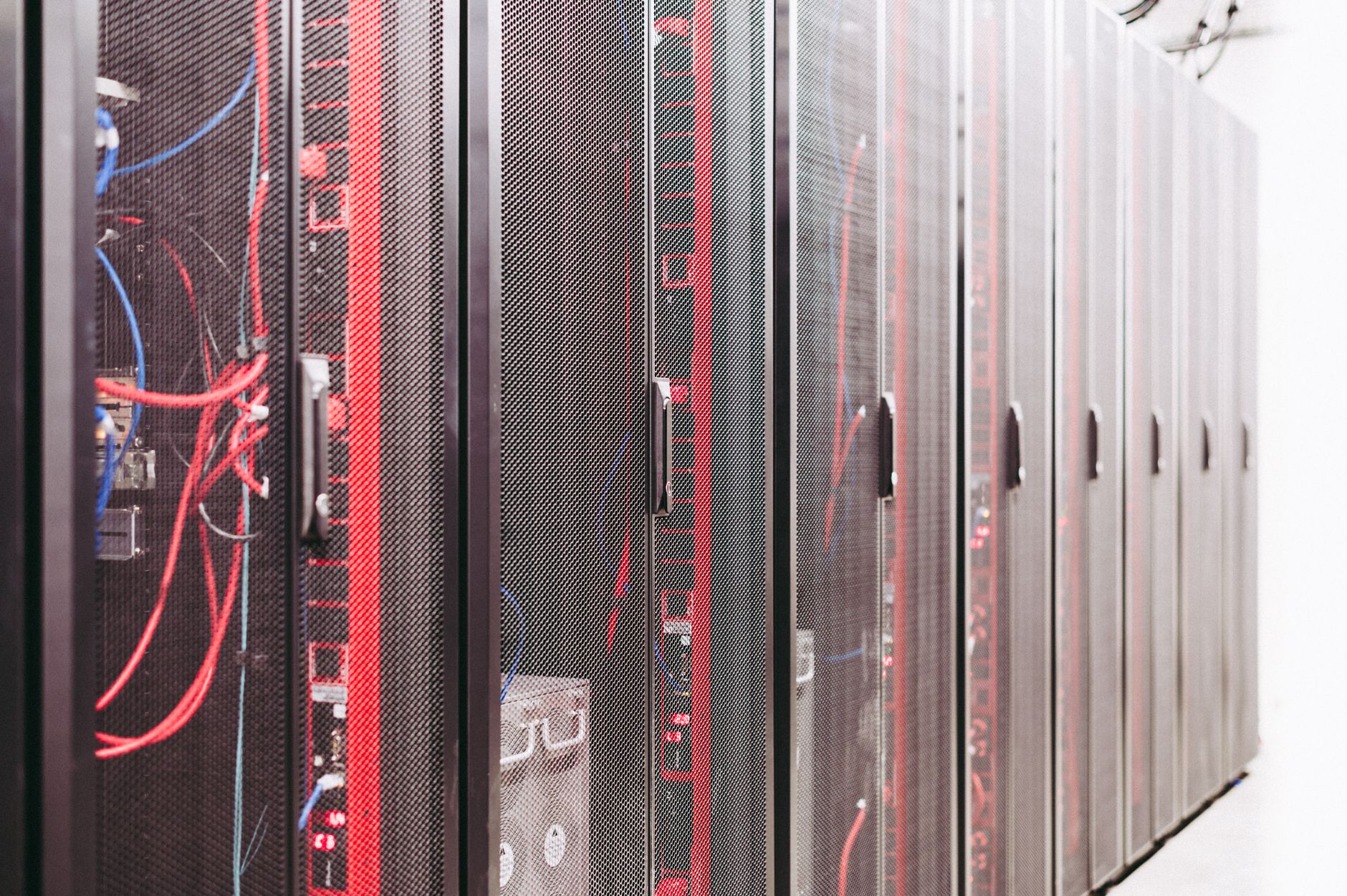
Quick takeaways
- Crusoe Energy Systems Inc. is negotiating a new funding round of $300 million to $500 million.
- This potential infusion could value the AI data center company at approximately $3 billion.
- The company, co-founded by brothers Chase Wright and Cullen Wright, is pivoting from bitcoin mining to AI infrastructure, deploying Nvidia H100 GPUs.
- Crusoe's strategy centers on converting wasted energy, such as flared natural gas, into computing power to meet intense AI demands.
- The significant capital raise underscores the escalating investment and infrastructure requirements for the burgeoning AI market.
Crusoe Energy Systems Inc., the AI data center startup co-founded by brothers Chase Wright and Cullen Wright, is reportedly in discussions to secure a new funding round of $300 million to $500 million, potentially valuing the company at $3 billion Bloomberg, 2024. This capital infusion underscores the aggressive scaling required for AI infrastructure, setting a benchmark for the immense investment needed to power the next generation of computing. Founders building in the AI space must contend with these escalating capital demands and the strategic imperative of securing energy resources.
The $3 Billion Bet: Scaling AI Infrastructure
Crusoe Energy Systems Inc. is working with Guggenheim Partners LLC to facilitate its latest capital raise Bloomberg, 2024. The proposed funding round, targeting between $300 million and $500 million, would elevate Crusoe's valuation to roughly $3 billion, a substantial leap that reflects investor confidence in the critical role of AI infrastructure Bloomberg, 2024. This valuation places Crusoe among the rapidly growing cohort of companies deemed essential to the AI revolution, specifically those addressing the foundational hardware and energy needs.
The company is not new to significant capital commitments. In 2022, Crusoe raised $350 million in Series C equity funding, supplemented by an additional $155 million in project financing Bloomberg, 2024. These prior rounds attracted established investors such as Valor Equity Partners, Lowercarbon Capital, and Castle Island Ventures, all of whom are existing stakeholders Bloomberg, 2024. The consistent flow of substantial capital into Crusoe highlights a broader market trend: the willingness of investors to back infrastructure plays that can support the exponential growth of AI.
Crusoe's current focus is on providing cloud computing services that offer access to Nvidia Corp.'s H100 GPUs Bloomberg, 2024. These specialized graphics processing units are foundational for training and running large language models and other complex AI workloads. The transition to AI compute from its bitcoin mining origins marks a strategic pivot designed to capitalize on the burgeoning demand for high-performance computing. Goldman Sachs projects the market for AI infrastructure to reach $300 billion annually by 2030, underscoring the vast opportunity Crusoe aims to address Bloomberg, 2024.
For founders, Crusoe's trajectory offers several insights. The first is the sheer scale of capital required to build foundational AI infrastructure. A $3 billion valuation for a company focused on data centers and energy signifies that the market expects massive scale and operational capability. Founders in adjacent or dependent sectors must understand that their growth will often be tied to the ability of companies like Crusoe to deploy and maintain this infrastructure. Secondly, the repeated, large funding rounds demonstrate investor appetite for capital-intensive ventures that promise to be bottlenecks in a rapidly expanding market. This signals that traditional venture capital models are adapting to accommodate the infrastructure demands of AI. Startups that can solve fundamental, high-cost problems in the AI value chain, particularly those related to compute and energy, are attracting significant attention and investment. This also means increased competition for resources, from capital to specialized hardware and skilled personnel.
Energy Strategy: Wasted Resources to Computing Power
At the core of Crusoe Energy Systems Inc.'s strategy is its innovative approach to power generation: capturing wasted energy and converting it into computing power Bloomberg, 2024. Specifically, the company targets flared natural gas, a byproduct of oil extraction that is typically burned off into the atmosphere. By utilizing this otherwise wasted resource, Crusoe addresses two critical challenges simultaneously: the immense power demands of energy-intensive AI workloads and the environmental concerns associated with methane emissions from flaring. This dual benefit positions Crusoe as a provider of both essential compute capacity and a more sustainable energy solution within the data center landscape.
The energy consumption of modern AI models is staggering. Training a single large language model can consume as much electricity as thousands of homes in a year. The deployment of Nvidia H100 GPUs, which Crusoe provides access to, further intensifies this demand, as these powerful processors require substantial and consistent power. Crusoe's model of deploying modular data centers directly at energy sources, such as oil fields, bypasses the traditional grid infrastructure challenges and offers a more direct, potentially lower-cost power supply. The company aims to achieve "several hundred megawatts" of data center capacity by 2028, a target that underscores the scale of its ambition and the perceived market need for its unique energy solution Bloomberg, 2024.
This strategy has significant implications for founders across various sectors. For those building AI applications, the availability of reliable, energy-efficient compute power is paramount. Crusoe's approach suggests that innovative energy sourcing can become a key differentiator in the competitive AI cloud market. Founders developing AI solutions might find themselves choosing infrastructure providers not just on cost or performance, but also on their energy sustainability credentials. This could lead to a preference for providers like Crusoe that demonstrate a commitment to reducing the environmental footprint of AI.
Furthermore, Crusoe's model highlights the strategic advantage of controlling or innovating around energy supply. In a world where data centers are increasingly constrained by grid capacity and energy costs, companies that can secure independent, cost-effective, and sustainable power sources will hold a significant competitive edge. This extends beyond flared gas to other forms of waste energy or novel generation methods. Founders in energy tech or adjacent hardware sectors should consider how their innovations could integrate with or support such distributed, high-demand computing infrastructure. The pursuit of "several hundred megawatts" of capacity by 2028 indicates a long-term vision that intertwines energy infrastructure development with the future of AI. The success of companies like Crusoe could inspire other startups to explore similar models, turning environmental liabilities into computational assets. This integrated approach to energy and compute is setting a new standard for how AI infrastructure can and should be built, directly impacting the operational realities and strategic choices of founders across the AI ecosystem.
From Bitcoin to AI: A Strategic Pivot
Crusoe Energy Systems Inc.'s journey began with a focus on bitcoin mining, leveraging its expertise in capturing wasted energy to power cryptocurrency operations. The company's original model involved deploying modular data centers at oil and gas sites to convert flared natural gas into electricity for bitcoin mining rigs. This early focus allowed Crusoe to develop significant capabilities in distributed power generation and data center operations in remote, energy-rich locations. However, as the cryptocurrency market evolved and the demand for AI compute surged, Crusoe recognized an opportunity to pivot its core business model.
The decision to transition from bitcoin mining to AI infrastructure represents a strategic shift driven by market dynamics and the inherent similarities in energy demands. Both bitcoin mining and AI training are "power-hungry" activities, requiring massive, consistent electricity supplies. Crusoe's existing infrastructure and operational know-how in managing power-intensive computing loads positioned it uniquely to address the burgeoning needs of the AI sector. Instead of powering specialized bitcoin ASICs, the company now focuses on providing access to Nvidia Corp.'s H100 GPUs, which are the industry standard for advanced AI workloads Bloomberg, 2024. This pivot allows Crusoe to tap into a market with broader applicability and a potentially more stable, long-term growth trajectory compared to the volatile cryptocurrency space.
Cullen Wright, Crusoe's CEO, has stated that the company is "moving very aggressively to build out this infrastructure at an incredible rate," underscoring the urgency and strategic importance of this transition Bloomberg, 2024. This aggressive expansion into AI compute positions Crusoe directly in the path of the projected $300 billion annual AI infrastructure market by 2030, according to Goldman Sachs Bloomberg, 2024. The pivot demonstrates an acute awareness of market shifts and the ability to repurpose existing assets and expertise for new, high-growth opportunities.
For founders, Crusoe's pivot offers valuable lessons in adaptability and market timing. First, it illustrates the importance of identifying transferable assets and skills. Crusoe did not discard its energy infrastructure or operational expertise; instead, it reoriented them towards a new, more lucrative market. Second, it highlights the courage required to make a significant strategic shift, especially for a company that had achieved considerable success in its initial domain. Founders often face the challenge of sticking to an original vision versus adapting to new market realities. Crusoe's move suggests that a well-executed pivot, leveraging core strengths, can unlock substantial new growth and investor interest. This case also emphasizes that "infrastructure plays" in rapidly expanding technological fields often retain value even if the specific application changes. The underlying need for compute power and efficient energy remains constant, irrespective of whether it's powering blockchain or neural networks. Founders should continually evaluate their core capabilities and how they can be applied to emerging, high-demand sectors.
The Competitive Landscape of AI Compute
Crusoe Energy Systems Inc. operates within an increasingly competitive landscape, where the demand for high-performance AI compute infrastructure is met by both established technology giants and specialized startups. Crusoe's offering of cloud computing services with access to Nvidia Corp.'s H100 GPUs places it in direct competition for customers seeking the processing power necessary for advanced AI development and deployment Bloomberg, 2024.
The most formidable competitors in this space are the hyperscale cloud providers: Amazon Web Services (AWS), Microsoft Azure, and Google Cloud Platform (GCP). These companies possess vast global data center networks, immense capital resources, and established customer bases. They are rapidly expanding their AI infrastructure, acquiring massive quantities of Nvidia GPUs, and offering comprehensive AI-as-a-service platforms. Their scale allows for significant economies of scale and the ability to bundle AI compute with a wide array of other cloud services, making them attractive to large enterprises.
Beyond the hyperscalers, a new generation of specialized AI cloud providers has emerged. These companies focus exclusively on offering GPU-accelerated compute, often boasting faster access to the latest hardware and more flexible deployment options for AI-centric workloads. Their value proposition often lies in their agility, deep technical expertise in AI infrastructure, and potentially lower costs for raw compute compared to the bundled services of hyperscalers.
Crusoe differentiates itself primarily through its unique energy strategy. By capturing wasted energy, such as flared natural gas, and converting it into computing power, Crusoe positions itself as a more sustainable and potentially more cost-effective provider of AI compute Bloomberg, 2024. This approach not only addresses the energy intensity of AI but also offers a potential hedge against fluctuating energy prices and grid constraints that burden traditional data centers. The company’s goal of achieving "several hundred megawatts" of data center capacity by 2028 indicates a commitment to scaling this differentiated model Bloomberg, 2024.
For founders navigating this competitive landscape, Crusoe's strategy highlights the importance of finding a defensible niche. Competing directly with hyperscalers on scale or breadth of services is challenging. Instead, startups like Crusoe are demonstrating that innovation in fundamental areas like energy sourcing can create a significant competitive advantage. Founders building AI platforms or applications must consider not just the cost and performance of their compute infrastructure, but also its reliability, scalability, and sustainability. The availability of specialized providers like Crusoe means that founders have more options beyond the traditional cloud giants, enabling them to choose infrastructure partners that align with their specific technical needs, cost structures, and environmental values. The increasing demand for Nvidia H100 GPUs means that access to these critical components is a bottleneck, and providers who can secure and deploy them efficiently, especially with an innovative power solution, will capture significant market share.
Capital Commitment and Founder Lessons
The reported $300 million to $500 million funding round for Crusoe Energy Systems Inc., which could value the company at $3 billion, is a stark indicator of the escalating capital commitment required to build foundational infrastructure in the AI era Bloomberg, 2024. This follows prior significant raises, including $350 million in Series C equity funding and an additional $155 million in project financing in 2022 Bloomberg, 2024. Such figures are becoming commonplace for companies operating at the fundamental layers of the AI stack, reflecting the sheer scale of hardware, energy, and real estate needed to power advanced models and applications.
For founders, Crusoe's journey offers several critical lessons:
Capital Intensity of Foundational AI
Building the infrastructure for AI is inherently capital-intensive. Unlike software-only startups, companies dealing with physical assets like data centers, GPUs, and power generation units require hundreds of millions, if not billions, of dollars to achieve scale. This means founders in the AI infrastructure space must be prepared for extended fundraising cycles and a different class of investors, often including growth equity firms and project finance lenders, in addition to traditional venture capitalists. The ability to articulate a clear path to generating "several hundred megawatts" of capacity by 2028 is crucial for attracting this level of investment Bloomberg, 2024.
Energy as a Strategic Moat
Crusoe's core strategy of converting wasted energy, such as flared natural gas, into computing power underscores the increasing importance of energy as a strategic asset Bloomberg, 2024. As AI workloads become more demanding, access to reliable, cost-effective, and sustainable power sources will become a significant differentiator and a potential moat. Founders should view energy not just as an operational cost, but as a critical component of their business model, exploring innovative solutions to power their operations. This could involve partnerships with energy companies, investments in renewable sources, or developing proprietary energy solutions.
The Power of Strategic Pivots
The company's transition from bitcoin mining to AI infrastructure demonstrates the value of strategic agility. While both activities are energy-intensive, the pivot allowed Crusoe to align with a rapidly growing and broadly applicable market. Founders must constantly evaluate their market position, identify emerging opportunities, and be willing to reorient their core capabilities towards higher-growth sectors. This requires a deep understanding of underlying technological trends and the courage to adapt, leveraging existing assets and expertise for new applications. Cullen Wright's commitment to "moving very aggressively" on this infrastructure build-out highlights the decisiveness required for such a pivot Bloomberg, 2024.
Long-Term Vision and Execution
Building infrastructure is a multi-year, multi-billion dollar endeavor. The journey of brothers Chase Wright and Cullen Wright in co-founding and scaling Crusoe reflects a long-term vision that extends beyond typical startup timelines. Founders entering capital-intensive markets must cultivate patience, resilience, and a meticulous approach to execution. Investors are backing companies like Crusoe not just for their immediate traction, but for their ability to deliver on ambitious, multi-year roadmaps that will shape future technological landscapes. The projected $300 billion annual AI infrastructure market by 2030, as forecasted by Goldman Sachs, provides the long-term context that justifies such substantial, sustained investment Bloomberg, 2024.
FAQ
Q: What is Crusoe Energy Systems Inc. seeking in its new funding round? A: Crusoe Energy Systems Inc. is reportedly in talks to raise a new funding round of between $300 million and $500 million Bloomberg, 2024.
Q: What is the potential valuation of Crusoe Energy Systems Inc. after this round? A: The new funding round could potentially value Crusoe Energy Systems Inc. at approximately $3 billion Bloomberg, 2024.
Q: How does Crusoe address the energy demands of AI workloads? A: Crusoe's core strategy involves capturing wasted energy, such as flared natural gas, and converting it into computing power for its data centers, which provide access to Nvidia Corp.'s H100 GPUs Bloomberg, 2024.
Q: What was Crusoe's prior business focus? A: Crusoe Energy Systems Inc. originated with a focus on bitcoin mining before pivoting to providing infrastructure for energy-intensive AI workloads Bloomberg, 2024.
Q: What is the projected market size for AI infrastructure? A: According to Goldman Sachs, the market for AI infrastructure is projected to reach $300 billion annually by 2030 Bloomberg, 2024.
Continue reading



The Entrepreneur Story
Is your story worth telling?
We feature founders who are building something real. Apply and we'll be in touch.
Apply to be featured →Stay sharp.
Ideas that move.
Founder stories, emerging ventures, and essays on what's next — straight to your inbox.
Unsubscribe any time.