
Bezos' Industrial AI Startup Prometheus Hits $41B Valuation
Jeff Bezos's industrial AI startup Prometheus secured a $12 billion funding round, pushing its valuation to $41 billion and signaling a new frontier in capital-intensive AI ventures.
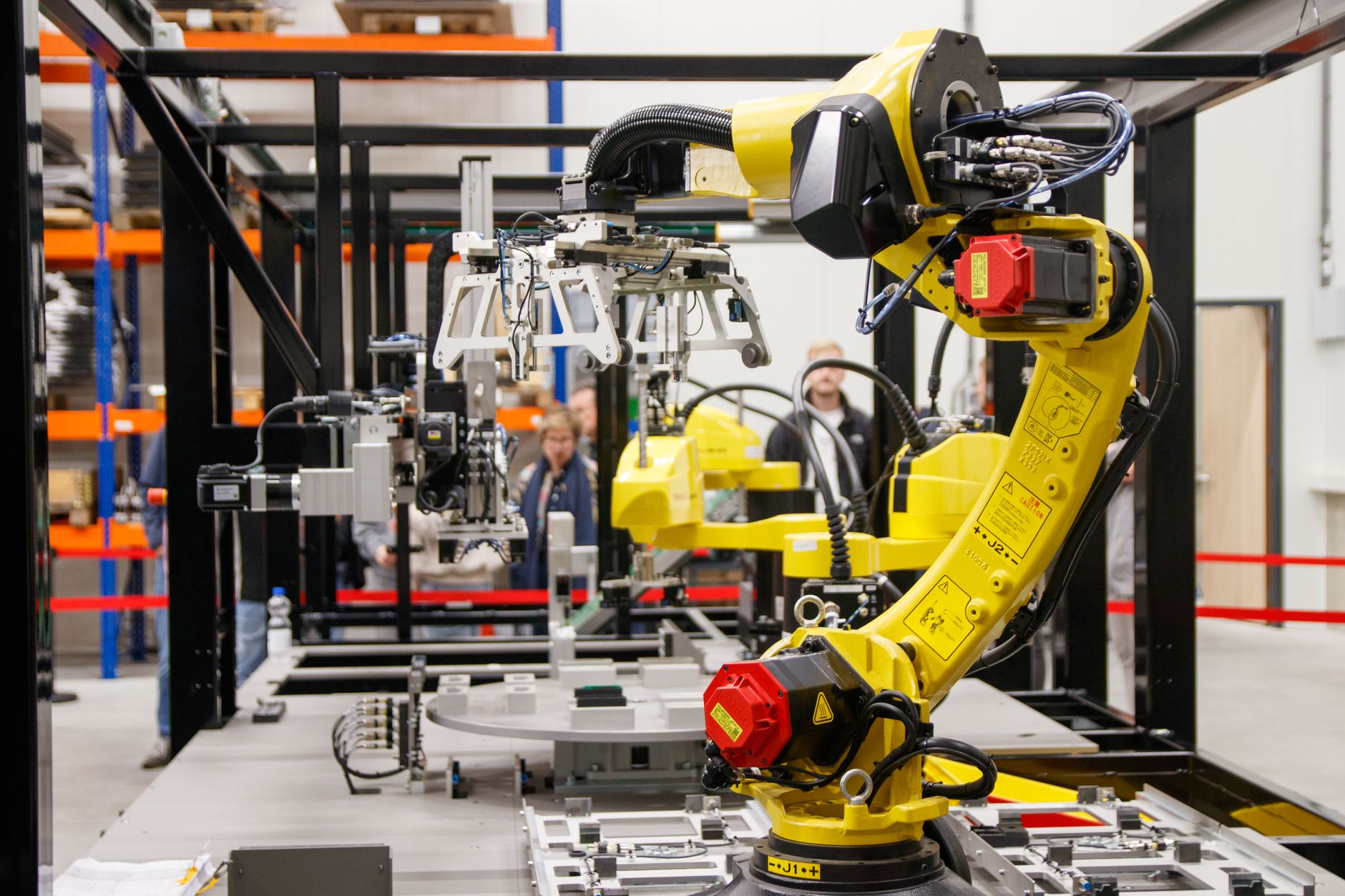
Prometheus, an industrial AI startup backed by Amazon founder Jeff Bezos, secured a $12 billion funding round around June 7, 2024, pushing its valuation to $41 billion BizTech Magazine, 2024. This monumental investment signals a new frontier in capital-intensive AI ventures and underscores the market's appetite for high-impact solutions from proven founders. For startup founders, this deal highlights the escalating scale of capital required for ambitious AI projects and the strategic advantage that a legendary founder's backing can provide.
Quick Takeaways
- Massive Capital Infusion: Prometheus raised $12 billion, valuing the industrial AI startup at $41 billion. This reflects a significant commitment to capital-intensive, high-impact ventures.
- Strategic Investor Syndicate: The round included tech giants Google, Microsoft, NVIDIA, and Oracle, alongside strategic partners Saudi Aramco and OpenAI, indicating broad industry belief in Prometheus's vision.
- Industrial AI Focus: Prometheus aims to enhance efficiency, safety, and productivity across critical sectors like manufacturing, energy, and logistics using advanced AI solutions.
- Bezos' Influence: Amazon founder Jeff Bezos's backing has been instrumental in propelling Prometheus's early development and attracting this scale of investment.
- Raising the Bar: The deal sets a new precedent for early-stage funding in specialized AI, emphasizing the need for robust technology, deep market understanding, and substantial financial runway for ambitious projects.
The Funding Round: A $12 Billion Bet on Industrial AI
Around June 7, 2024, Prometheus, an industrial AI startup, closed a $12 billion funding round, catapulting its valuation to $41 billion BizTech Magazine, 2024. This substantial capital injection positions Prometheus as a major player in the evolving landscape of artificial intelligence, particularly within heavy industry. The round's size is notable, reflecting a growing trend of significant early-stage investments into ventures perceived to have transformative potential, especially when a high-profile founder is involved.
The investor syndicate behind this round is equally significant, comprising a mix of technology behemoths and strategic industrial partners. Google, Microsoft, NVIDIA, and Oracle were among the key tech investors BizTech Magazine, 2024. Their participation provides more than just capital; it suggests potential strategic alliances, access to cloud infrastructure, specialized AI hardware, and enterprise software expertise. NVIDIA's involvement, for instance, underscores the computational demands of advanced AI models, while Google and Microsoft bring extensive cloud AI capabilities. Oracle's presence indicates a potential synergy with its deep enterprise software and database solutions, crucial for managing the vast datasets industrial AI requires.
Beyond the tech giants, the inclusion of Saudi Aramco and OpenAI as strategic partners highlights the multifaceted nature of Prometheus's ambitions BizTech Magazine, 2024. Saudi Aramco, a global energy and chemicals company, represents the deep industrial domain expertise and potential for real-world application in the energy sector that Prometheus targets. This partnership could provide Prometheus with invaluable access to operational data, testing environments, and a direct pathway for deployment within a large-scale industrial enterprise. OpenAI, a leader in general-purpose AI research and development, suggests a collaborative approach to foundational AI models or leveraging advanced AI capabilities for industrial specific applications. This combination of capital, technology, and strategic industry partnerships provides Prometheus with a formidable foundation to pursue its goals.
The $41 billion valuation, achieved with a $12 billion funding round, underscores the market's aggressive pricing of ventures with significant AI intellectual property and the backing of influential figures like Jeff Bezos. This valuation places Prometheus among the most highly valued private AI companies globally, even at what appears to be an early stage of development, based on the public information available. The investment round is considered monumental, reflecting a growing appetite for capital-intensive, high-impact ventures BizTech Magazine, 2024. This trend suggests that investors are increasingly willing to commit substantial capital upfront to companies that promise to tackle large, complex problems with disruptive technology, particularly in sectors that have historically been slower to adopt advanced digital solutions. For founders, this signals a market where bold visions, coupled with credible backing and a clear path to high impact, can command unprecedented levels of investment.
What is Industrial AI? Prometheus's Core Mission
Prometheus focuses on developing advanced AI solutions specifically designed for industrial applications TechStory, 2024. The startup's core mission is to enhance efficiency, safety, and productivity across critical sectors such as manufacturing, energy, logistics, and supply chain management StartupTalky, 2024. This specialized approach distinguishes industrial AI from general-purpose AI, as it tackles unique challenges inherent to operational technology environments, physical assets, and complex processes.
Industrial environments present distinct hurdles for AI deployment. These include integrating with legacy systems, handling proprietary data formats, operating in harsh physical conditions, and adhering to stringent safety and regulatory standards. Unlike consumer-facing AI, where the stakes might involve user experience or recommendation accuracy, industrial AI often directly impacts physical safety, environmental compliance, and billions of dollars in operational costs. Downtime in a manufacturing plant, a malfunction in an energy grid, or inefficiencies in a global supply chain can lead to catastrophic financial losses and even human casualties. Prometheus aims to mitigate these risks and optimize operations by embedding intelligence directly into these critical processes.
The competitive edge for Prometheus stems from its ability to leverage AI models trained on vast industrial datasets, real-time data processing, and predictive analytics StartupTalky, 2024. Industrial datasets are often immense, granular, and complex, encompassing sensor readings from machinery, operational logs, maintenance records, environmental data, and supply chain movements. Training AI models on such specialized data allows Prometheus to develop highly accurate and context-aware predictions and optimizations that generic AI models cannot achieve. For example, predictive maintenance, a key application, uses AI to analyze sensor data from industrial equipment to forecast potential failures before they occur, enabling proactive repairs and minimizing costly unplanned downtime. This not only saves money but also enhances worker safety by preventing equipment malfunctions.
In the energy sector, Prometheus's AI solutions could optimize resource allocation, predict demand fluctuations, and manage complex grid operations more efficiently, leading to reduced waste and improved reliability. For logistics and supply chain management, AI can optimize routing, inventory levels, warehouse operations, and demand forecasting, leading to faster deliveries, lower costs, and increased resilience against disruptions. These applications require robust, reliable, and scalable AI infrastructure, capable of processing massive streams of data in real-time and delivering actionable insights that can be integrated directly into operational workflows. The focus on concrete, measurable improvements in efficiency, safety, and productivity underscores the practical, problem-solving nature of industrial AI and Prometheus's value proposition.
Bezos' Influence and the Capital-Intensive Playbook
Jeff Bezos's backing has been credited with propelling Prometheus's early development StartupTalky, 2024. The Amazon founder's involvement in a startup, even in an advisory or foundational capacity, acts as a powerful magnet for talent, capital, and credibility. Bezos's track record with Amazon, transforming it from an online bookseller into a global e-commerce and cloud computing giant, provides a blueprint for ambitious, long-term vision and execution. His subsequent ventures, like Blue Origin, further demonstrate a willingness to invest heavily in complex, capital-intensive projects with distant horizons for profitability.
This approach aligns with a "capital-intensive playbook" increasingly seen in sectors like advanced AI, space exploration, and biotechnology. These fields often require massive upfront investments in research and development, specialized infrastructure, and top-tier scientific and engineering talent before any significant revenue can be generated. For Prometheus, developing sophisticated AI models trained on proprietary industrial datasets and building robust deployment platforms demands substantial financial resources. The $12 billion funding round is not merely an investment; it is an endorsement of this capital-intensive strategy, suggesting that investors believe Prometheus needs a significant war chest to execute its vision without premature pressure for short-term returns.
The presence of a legendary founder like Bezos also de-risks the investment for other major players. Investors often look for strong leadership and a proven ability to scale complex organizations. Bezos's association signals that the venture has access to unparalleled strategic insight and a network of high-caliber professionals. This allows Prometheus to attract not only financial capital but also intellectual capital, drawing in leading AI researchers, industrial engineers, and operational experts who might otherwise be hesitant to join an unproven startup. The credibility conferred by Bezos's name can also facilitate partnerships with large industrial corporations, which are typically risk-averse when adopting new technologies.
This playbook stands in contrast to the lean startup model often advocated for early-stage ventures. While many founders are encouraged to bootstrap or raise modest seed rounds to validate their ideas, Prometheus's trajectory demonstrates that for certain types of moonshot projects, particularly those backed by influential figures, a different path is viable and perhaps necessary. The scale of the problem Prometheus aims to solve – enhancing efficiency and safety across global manufacturing, energy, and logistics – is immense. Tackling such challenges requires not just innovative technology but also the financial muscle to withstand long development cycles, navigate complex regulatory environments, and penetrate deeply entrenched industrial ecosystems. Bezos's involvement signals a strategic intent to play the long game, leveraging significant capital to build a dominant position in a high-value market.
Market Landscape and Competition
The industrial AI market, which Prometheus aims to penetrate, is characterized by its vast potential and unique complexities. It encompasses a wide array of applications, from predictive maintenance and quality control in manufacturing to energy grid optimization and intelligent logistics. This sector has traditionally been dominated by large industrial automation companies and enterprise software providers, many of whom have been integrating AI capabilities into their existing platforms for years. However, the rapid advancements in AI, particularly in machine learning and data analytics, have opened doors for specialized startups to offer more targeted and advanced solutions.
The market for industrial AI is fragmented, with various players addressing specific verticals or use cases. Some companies focus on optimizing specific machinery, others on entire factory operations, and still others on supply chain visibility. While the research available on Prometheus does not explicitly name competitors, the industrial AI landscape includes a range of entities. Large industrial conglomerates, such as Siemens, General Electric, and Rockwell Automation, have been active in developing their own industrial IoT (Internet of Things) and AI platforms. These companies leverage their deep domain expertise, extensive customer bases, and existing hardware infrastructure to offer integrated solutions. Their competitive advantage lies in their installed base and long-standing relationships with industrial clients.
In addition to these incumbents, a growing number of specialized AI startups are emerging, often focusing on niche problems within industrial sectors. These startups typically bring cutting-edge AI research and agile development methodologies to address specific pain points. For instance, some focus on computer vision for quality inspection, others on natural language processing for operational manuals, or advanced analytics for energy consumption optimization. Their differentiation often comes from superior algorithms, more flexible deployment models, or a deeper understanding of a particular industry's data challenges.
Prometheus's strategy, leveraging AI models trained on vast industrial datasets, real-time data processing, and predictive analytics StartupTalky, 2024, positions it to compete on the basis of advanced technological capabilities and a comprehensive approach. The involvement of tech giants like Google, Microsoft, and NVIDIA as investors further suggests an intent to build a highly scalable and computationally intensive platform, potentially offering a more unified and powerful solution than many niche players. The strategic partnership with Saudi Aramco also points to a focus on high-impact, capital-intensive industries where the returns on efficiency and safety improvements are substantial.
The challenge for any player in this market, including Prometheus, lies in navigating the inherent complexities of industrial environments. This includes integrating with diverse legacy systems, ensuring data security and privacy, and building trust with clients who prioritize reliability and safety above all else. The long sales cycles, the need for customized solutions, and the high cost of deployment are also significant barriers to entry. However, the potential for efficiency gains, cost reductions, and improved safety across sectors like manufacturing, energy, and logistics provides a compelling incentive for continued investment and innovation in industrial AI. The $12 billion investment in Prometheus signals a belief that a comprehensive, well-funded approach can overcome these challenges and capture a significant share of this high-value market.
Implications for Founders: Lessons from Prometheus
The Prometheus funding round offers several critical lessons for startup founders, regardless of their industry or stage. The sheer scale of the $12 billion investment and the $41 billion valuation underscores a shift in how venture capital views certain types of ventures, particularly those backed by legendary founders and targeting immense, complex problems.
First, the power of founder brand and credibility is undeniable. Jeff Bezos's backing has been credited with propelling Prometheus's early development StartupTalky, 2024. For most founders, replicating Bezos's stature is impossible. However, the lesson is that a founder's track record, reputation, and network significantly influence investor confidence and the ability to attract capital. Founders with prior successful exits, deep industry expertise, or strong technical backgrounds can leverage their personal brand to de-risk their new ventures in the eyes of investors. Building this credibility takes time, but it is an investment that pays dividends in fundraising and talent acquisition.
Second, Prometheus exemplifies the "capital-intensive playbook" for tackling grand challenges. While lean startups are often celebrated, some problems, particularly in foundational AI or heavy industry, simply cannot be solved without significant upfront investment in R&D, infrastructure, and talent. Founders should honestly assess the true capital requirements of their vision. If a problem genuinely requires billions to solve, attempting to bootstrap or raise small rounds might be a disservice to the ambition. For founders with truly disruptive, high-impact visions that necessitate deep pockets, Prometheus demonstrates that the capital is available if the vision is compelling and the team is credible.
Third, the strategic composition of the investor syndicate is a major takeaway. Prometheus secured investments from tech giants (Google, Microsoft, NVIDIA, Oracle) and strategic industrial partners (Saudi Aramco, OpenAI) BizTech Magazine, 2024. This blend provides not just capital but also crucial strategic advantages: access to cloud infrastructure, hardware, enterprise customers, and cutting-edge AI research. Founders should look beyond just the dollar amount of investment and consider the strategic value of each investor. What expertise, partnerships, or market access can an investor bring beyond cash? A diverse cap table with strategic partners can accelerate product development, market penetration, and overall growth.
Fourth, Prometheus's focus on deep, specialized AI for industrial applications highlights the value of vertical-specific expertise. The startup aims to enhance efficiency, safety, and productivity in sectors like manufacturing, energy, and logistics [StartupTalky, 2024](https://www.startuptalky.com/jeff-bezos-backed-prometheus-reaches-a-whopping-41-billion-valuation-with /12-billion-funding/). This is not general-purpose AI; it is AI tailored to the unique data, operational constraints, and regulatory requirements of heavy industry. Founders should consider whether their AI solutions are truly differentiated by their understanding of a specific domain. The ability to leverage AI models trained on vast industrial datasets, real-time data processing, and predictive analytics StartupTalky, 2024 demonstrates a commitment to solving specific, high-value industrial problems. This focus can lead to more impactful solutions and a stronger competitive moat than broader, less specialized applications.
Finally, the Prometheus deal raises the bar for ambitious AI ventures. While the average seed round remains in the low millions, this transaction indicates that for certain high-potential, high-cost projects, investors are prepared to write much larger checks much earlier. This could create a bifurcated market, where highly credible, capital-intensive AI ventures command unprecedented valuations, while others continue to follow more traditional funding paths. Founders should be aware of this evolving landscape and position their startups accordingly, either by embracing a lean, capital-efficient model or by articulating a compelling, large-scale vision that justifies significant early investment.
Future Outlook and Challenges
Prometheus's monumental funding round positions it to be a significant force in industrial AI, but the path ahead is not without challenges. The future outlook for Prometheus hinges on its ability to translate its substantial capital and advanced AI capabilities into tangible, scalable solutions that integrate seamlessly into complex industrial environments. The company's mission to enhance efficiency, safety, and productivity in sectors like manufacturing, energy, and logistics is ambitious, requiring deep technological innovation alongside practical deployment expertise StartupTalky, 2024.
One primary challenge will be integration with legacy infrastructure. Many industrial facilities operate with decades-old operational technology (OT) systems that were not designed for modern data collection or AI integration. Prometheus will need to develop robust, adaptable solutions that can interface with a heterogeneous mix of hardware and software, often without disrupting ongoing critical operations. This requires not only technical ingenuity but also a nuanced understanding of industrial workflows and a collaborative approach with client engineers. The success of industrial AI often depends less on the AI model itself and more on the ability to deploy and maintain it effectively within a challenging physical environment.
Another significant hurdle is data acquisition and governance. While Prometheus leverages AI models trained on vast industrial datasets StartupTalky, 2024, acquiring and standardizing these datasets from diverse industrial partners can be complex. Data quality, consistency, and security are paramount. Industrial data often contains proprietary information, and clients will demand stringent privacy and cybersecurity measures. Prometheus must build trust and demonstrate ironclad data governance practices to secure access to the necessary operational data that fuels its AI models. The strategic partnership with Saudi Aramco, an industrial giant, could provide a crucial advantage in this area, offering a direct pipeline to real-world industrial data and deployment environments.
Talent acquisition and retention will also be critical. The demand for highly skilled AI researchers, data scientists, and industrial engineers is intense. Prometheus will need to attract and retain top talent capable of developing advanced AI models, building scalable software platforms, and understanding the intricacies of various industrial sectors. The backing of Jeff Bezos and the significant funding round will undoubtedly help, but the competition for such talent is global and fierce, with other well-funded AI ventures and tech giants vying for the same expertise.
Furthermore, regulatory compliance and safety standards are non-negotiable in industrial settings. AI solutions deployed in manufacturing plants or energy grids must meet stringent safety certifications and regulatory requirements. Errors in industrial AI can have severe consequences, from equipment damage to environmental incidents or human injury. Prometheus will need to demonstrate the reliability, explainability, and safety of its AI systems to gain regulatory approval and client confidence, which often involves rigorous testing and validation processes.
Despite these challenges, the growth prospects for industrial AI are substantial. The global push for digital transformation, sustainability, and operational resilience is driving demand for advanced solutions. Industries are increasingly recognizing the potential of AI to unlock efficiencies, reduce waste, and enhance safety in ways traditional automation cannot. If Prometheus can successfully navigate these complexities, its focus on leveraging AI models trained on vast industrial datasets, real-time data processing, and predictive analytics StartupTalky, 2024 could position it as a leader in transforming global industrial operations. The sheer scale of its funding suggests a long-term vision, allowing the company to invest heavily in overcoming these hurdles and capturing a significant share of this high-value market.
FAQ
What is Prometheus?
Prometheus is an industrial AI startup backed by Amazon founder Jeff Bezos. It focuses on developing advanced AI solutions specifically designed for industrial applications TechStory, 2024.
How much funding did Prometheus recently secure?
Prometheus recently secured a $12 billion funding round BizTech Magazine, 2024.
What is Prometheus's current valuation?
The recent funding round valued Prometheus at $41 billion BizTech Magazine, 2024.
Who are the key investors in Prometheus's latest round?
Key investors in the $12 billion round include Google, Microsoft, NVIDIA, Oracle, Saudi Aramco, and OpenAI BizTech Magazine, 2024.
What sectors does Prometheus aim to impact?
Prometheus aims to enhance efficiency, safety, and productivity in sectors like manufacturing, energy, logistics, and supply chain management through its advanced AI solutions StartupTalky, 2024.
Continue reading



The Entrepreneur Story
Is your story worth telling?
We feature founders who are building something real. Apply and we'll be in touch.
Apply to be featured →Stay sharp.
Ideas that move.
Founder stories, emerging ventures, and essays on what's next — straight to your inbox.
Unsubscribe any time.