
Anthropic IPO Filing: What It Means for AI Startups *A New AI Benchmark*
Anthropic's reported IPO filing, targeting over $30 billion, sets a new benchmark for generative AI, providing founders crucial insights into market appetite and public exits.
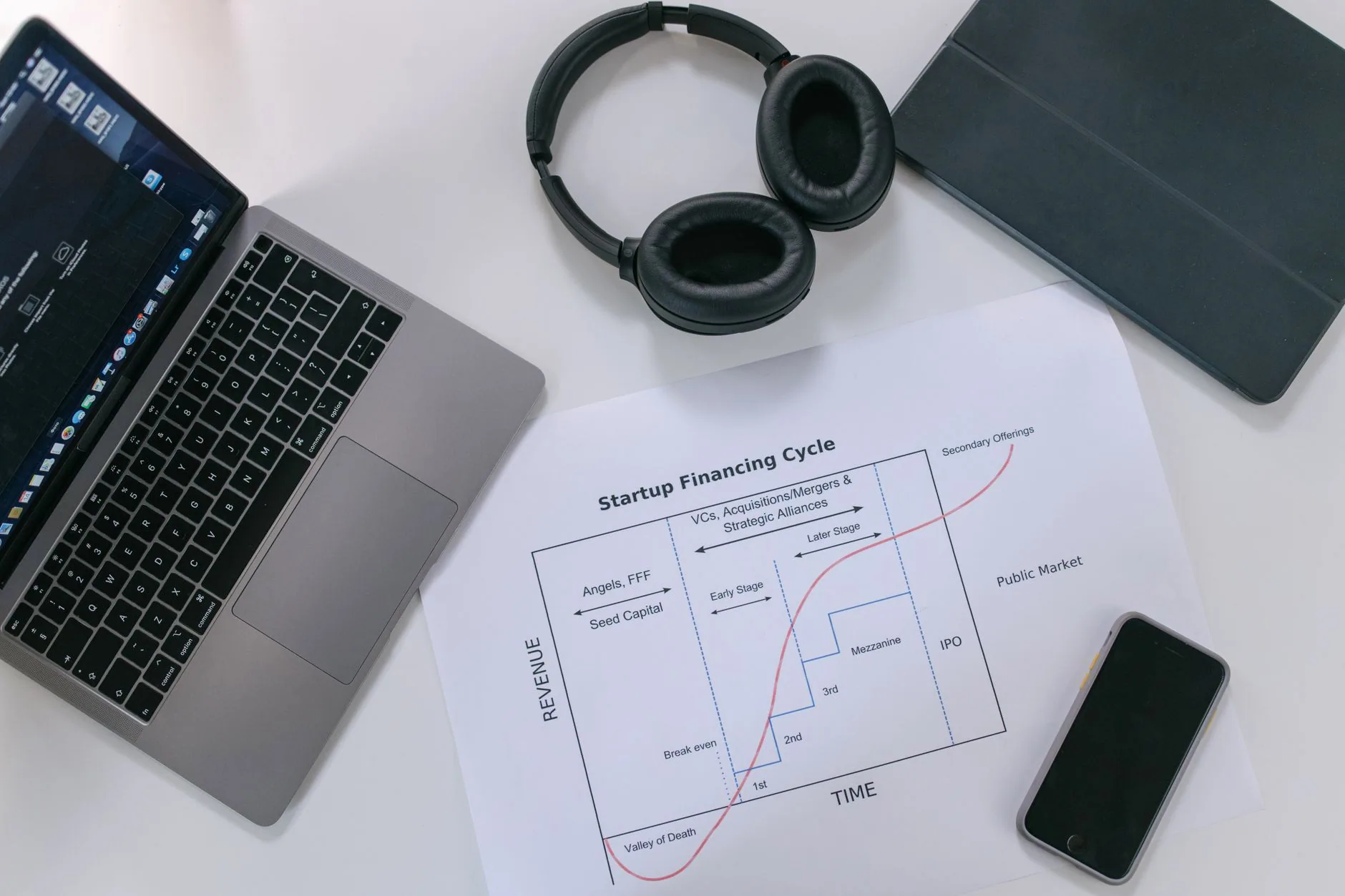
Anthropic, the AI startup behind the Claude large language models, has reportedly filed for an initial public offering (IPO) targeting a valuation exceeding $30 billion, with Morgan Stanley and Goldman Sachs leading the process. This potential public market debut offers AI founders a direct look at the financial expectations and growth drivers for a frontier AI company, setting a new benchmark for future startup exits in the generative AI space.
Quick Takeaways
- Anthropic has reportedly filed for an IPO, aiming for a valuation over $30 billion, led by Morgan Stanley and Goldman Sachs.
- The move signals a pivotal moment for the generative AI market, potentially reviving the tech IPO landscape.
- Anthropic's last private valuation was $18.4 billion in March 2024, reflecting rapid growth since its 2021 founding.
- The IPO will offer unprecedented transparency into the financials and operational costs of a leading foundation model developer.
- Founders should watch for insights into market appetite for AI, valuation metrics, and the viability of public exits for capital-intensive AI ventures.
The IPO Filing: A New Benchmark for Frontier AI
Anthropic has reportedly initiated the process for an initial public offering, a move set to test public market appetite for frontier artificial intelligence companies. The filing, which could see the company debut on public exchanges as early as late 2024 or in early 2025, targets an ambitious valuation exceeding $30 billion TechCrunch, 2024. This valuation stands as a significant leap from its last private funding round, which pegged the company at $18.4 billion in March 2024 TechCrunch, 2024.
The decision to go public positions Anthropic as one of the first major generative AI players to seek liquidity in the public markets, following a period of intense private funding and rapid technological advancement within the sector. Morgan Stanley and Goldman Sachs, two of the industry's most prominent investment banks, have been selected to spearhead the IPO, signaling the scale and strategic importance of the offering Reuters, 2024. Their involvement underscores the complexity and high stakes associated with bringing a company of Anthropic's profile to market, particularly given the nascent stage of the generative AI industry and the substantial capital requirements for developing and deploying large language models.
For founders across the technology landscape, and particularly within AI, Anthropic's IPO filing serves as a critical bellwether. It provides a rare opportunity to observe how public investors evaluate the financial health, growth prospects, and competitive advantages of a company operating at the cutting edge of AI development. The S-1 filing, once made public, will offer an unprecedented look into the operational costs, revenue streams, customer acquisition strategies, and research and development expenditures that define a leading foundation model company. These details are typically guarded closely in the private market, making the forthcoming disclosures invaluable for founders strategizing their own growth, fundraising, and eventual exit paths.
The tech IPO market has experienced a relative lull in recent years, with fewer high-profile debuts compared to the boom of the late 2010s and early 2020s. A successful IPO from Anthropic could inject new vitality into this market, potentially encouraging other venture-backed companies, both within and outside AI, to consider public offerings. This could signal a broader thaw in investor sentiment and a renewed appetite for growth-oriented technology stocks, particularly those demonstrating significant innovation and market traction. However, the success of this IPO will hinge on public market investors' willingness to embrace the long-term growth story of AI, balancing high R&D costs and intense competition with the transformative potential of the technology. The market's reception will dictate not only Anthropic's trajectory but also the broader viability of public exits for other capital-intensive AI startups.
Anthropic's Journey: From Founding to Frontier AI
Anthropic's rapid ascent from a 2021 startup to a company reportedly filing for a $30 billion-plus IPO is a testament to the intense pace of innovation and capital infusion within the generative AI sector. The company was founded by siblings Dario Amodei, who serves as CEO, and Daniela Amodei TechCrunch, 2024. Their background, stemming from key roles at OpenAI, provided a foundational understanding of large language models and the strategic direction required to compete in this nascent field. The Amodei siblings, alongside other former OpenAI researchers, aimed to build a company with a strong focus on AI safety and alignment, distinguishing their approach in a rapidly evolving market.
The core of Anthropic's offering is the Claude series of large language models TechCrunch, 2024. These models are designed to compete directly with offerings from OpenAI, Google, and other major players, providing capabilities for complex reasoning, content generation, summarization, and conversational AI. The development of such frontier models requires immense computational resources, highly specialized talent, and substantial research and development investment. Anthropic's ability to attract significant capital has been crucial in sustaining this demanding development cycle and scaling its operations.
Since its inception, Anthropic has raised a total of $7.3 billion in private funding TechCrunch, 2024. This substantial capital base has come from a diverse group of prominent investors, including Google, Amazon, Salesforce, Spark Capital, and Menlo Ventures TechCrunch, 2024. These funding rounds were not merely financial injections but strategic alliances, particularly with tech giants Google and Amazon, which provided not only capital but also access to critical cloud infrastructure and potential distribution channels.
Valuation Trajectory and Growth Drivers
Anthropic's valuation trajectory illustrates the explosive growth and investor confidence in the generative AI market. Its last private valuation stood at $18.4 billion in March 2024 TechCrunch, 2024. This valuation followed a significant $2.75 billion funding round led by Amazon, highlighting the intense competition and strategic importance of securing stakes in leading AI model developers TechCrunch, 2024. The reported IPO target of over $30 billion represents a near doubling of its private valuation in a relatively short period, underscoring the market's anticipation of continued rapid expansion and monetization of its AI models.
The primary growth drivers for Anthropic, and other foundation model companies, include expanding the capabilities of their models, improving efficiency and cost-effectiveness, and securing enterprise customers. As businesses increasingly seek to integrate advanced AI into their operations, demand for powerful and reliable large language models continues to grow. Anthropic's focus on safety and constitutional AI, a method for training models to follow specific principles, has also served as a differentiator, appealing to enterprises concerned with ethical AI deployment and responsible innovation. The ability to demonstrate a clear path to profitability, beyond just technological prowess, will be paramount as the company transitions to the public market. Its journey from a nascent startup to a potential multi-billion dollar public entity offers a compelling case study for founders on the power of specialized expertise, strategic fundraising, and relentless execution in a rapidly evolving technological frontier.
Valuation Benchmarks and Market Context
Anthropic's reported IPO target valuation exceeding $30 billion sets a significant benchmark for the nascent generative AI industry and provides critical context for founders navigating this space. This valuation marks a substantial increase from its last private valuation of $18.4 billion in March 2024, which itself was established after a $2.75 billion funding round led by Amazon TechCrunch, 2024. Such rapid appreciation in value reflects the intense investor belief in the long-term potential and market dominance of foundational AI models.
To put Anthropic's potential public valuation into perspective, its primary competitor, OpenAI, commanded a private valuation of $86 billion in February 2024 TechCrunch, 2024. While OpenAI's valuation is notably higher, reflecting its earlier market entry, broader consumer recognition, and strategic partnerships, Anthropic's $30 billion-plus target still places it firmly among the elite tier of AI companies globally. This comparison highlights the scale of capital and market expectation concentrated at the very top of the generative AI stack. For other AI founders, these figures underscore the magnitude of investment required and the potential rewards for companies that can develop and commercialize state-of-the-art models.
The broader tech IPO market provides additional context. After a period of reduced activity in 2022 and 2023, there have been some signs of a potential revival. Companies like Databricks and Reddit have been subjects of IPO speculation, with Reddit successfully going public in March 2024. A successful Anthropic IPO could signal a more robust opening for other technology companies, particularly those with strong growth narratives and disruptive technologies. However, public markets are typically more scrutinizing than private investors, demanding clear paths to profitability, sustainable revenue growth, and transparent governance.
Public Market Scrutiny for AI Companies
Public investors will likely scrutinize Anthropic's S-1 filing for several key metrics that private investors might have been more lenient on. These include:
- Revenue Growth and Profitability: While private markets often prioritize user growth and market share, public investors will demand a clear trajectory towards profitability, especially given the high operational costs associated with training and running large language models.
- Compute Costs: The enormous computational resources required for AI development are a significant expenditure. Public markets will want to understand the efficiency of Anthropic's compute infrastructure and its strategy for cost optimization.
- Customer Acquisition and Retention: Demonstrating a growing and sticky customer base, particularly enterprise clients, will be crucial.
- Talent Acquisition and Retention: The war for top AI talent is fierce. How Anthropic manages its talent pool and compensation will be a key factor.
- Competitive Landscape: Investors will evaluate Anthropic's differentiation against giants like Google and Amazon (who are also investors), as well as OpenAI, and a growing number of open-source models.
- AI Safety and Regulation: Given the increasing focus on ethical AI and potential regulatory frameworks, Anthropic's commitment to safety, a stated core value, will be under public examination.
The successful navigation of these public market expectations by Anthropic will set a precedent for how other AI startups are valued and received should they pursue an IPO. Founders should view the impending S-1 as a masterclass in how to present a capital-intensive, frontier technology company to a broader, more conservative investor base, providing invaluable insights into what metrics and narratives resonate beyond the venture capital ecosystem.
Strategic Investments and Partnerships
Anthropic's journey to a potential IPO has been significantly shaped by strategic investments from two of the world's largest technology companies: Google and Amazon. These investments, totaling $6 billion, represent more than just capital; they signify deep strategic alliances that have provided Anthropic with critical resources, market validation, and a competitive edge in the fiercely contested AI landscape.
Google's investment in Anthropic amounts to $2 billion TechCrunch, 2024. This capital injection has likely facilitated Anthropic's access to Google Cloud's advanced AI infrastructure, including Tensor Processing Units (TPUs), which are custom-designed chips optimized for machine learning workloads. For an AI company focused on training and deploying large language models like Claude, access to such high-performance compute resources is paramount. It allows for faster model iteration, larger model sizes, and more efficient research and development. Beyond compute, Google's investment signals a strategic alignment in the broader AI ecosystem, potentially opening doors for integration with Google's vast array of products and services, or at least providing a strong signal of confidence to other potential partners and customers.
Amazon's commitment to Anthropic is even larger, with a strategic investment of $4 billion TechCrunch, 2024. This partnership has positioned Anthropic's Claude models prominently within Amazon Web Services (AWS), the leading cloud provider. As part of this alliance, Anthropic has committed to making AWS its primary cloud provider for critical workloads, including safety research and future model development. This deep integration means that AWS customers can readily access Claude models through Amazon Bedrock, AWS's fully managed service that makes foundation models available via an API. For Anthropic, this provides a massive distribution channel, allowing its models to reach a vast enterprise customer base already reliant on AWS for their cloud infrastructure. For Amazon, the investment secures access to a leading-edge AI model developer, allowing it to offer competitive generative AI capabilities to its customers without having to build every foundational model in-house.
Implications for Founders and the AI Ecosystem
These strategic investments carry significant implications for other AI founders:
- Validation and Competition: The willingness of tech giants like Google and Amazon to invest billions in a startup like Anthropic validates the market opportunity for specialized AI model developers. However, it also highlights the intense competition for these strategic partnerships. Startups looking for similar backing must demonstrate unique technological advantages or a highly differentiated approach.
- Resource Access: For many AI startups, the cost of compute is a major barrier. These partnerships show one path to securing critical infrastructure. Founders might consider how to align with cloud providers or hardware manufacturers early in their development to gain a competitive edge.
- Independence vs. Alliance: While these investments provide immense resources, they also raise questions about the long-term independence of the AI startup. Founders must weigh the benefits of strategic capital against potential constraints or influence from their investors, especially when those investors are also competitors or potential customers. Anthropic's ability to pursue an IPO while maintaining these alliances will be a key watchpoint.
- Ecosystem Formation: These partnerships are forming the backbone of the generative AI ecosystem. Cloud providers are vying to host the best models, and model developers are seeking the broadest distribution. Founders building applications on top of these foundation models need to understand these alliances to choose their underlying infrastructure and model providers wisely.
- Benchmarking Investment Levels: The sheer scale of these investments—billions of dollars—sets a new benchmark for what it takes to compete at the frontier of AI. This suggests that future capital rounds for leading foundation model companies will continue to be enormous, potentially consolidating power among a few well-funded players.
The strategic investments from Google and Amazon have been instrumental in fueling Anthropic's growth and preparing it for a public market debut. They exemplify how deep-pocketed tech incumbents are shaping the competitive landscape of generative AI, offering both immense opportunities and significant challenges for the broader ecosystem of AI startups.
Implications for AI Founders
Anthropic's reported IPO filing is more than just a corporate event; it's a profound signal for every founder operating in the artificial intelligence space. This move will reshape expectations around fundraising, exit strategies, and the operational realities of scaling a frontier AI company. Founders should pay close attention to the details that emerge from Anthropic's S-1 filing, as they will provide a rare, unvarnished look into the economics of a leading generative AI player.
Fundraising and Valuation
For AI founders currently seeking capital, Anthropic's IPO could have a dual impact. On one hand, a successful public debut at a valuation exceeding $30 billion could further validate the entire AI sector, potentially driving increased venture capital interest and higher valuations for promising private companies. Investors might see a clearer path to liquidity and be more willing to commit significant funds to early-stage AI ventures. The success of a large-scale AI IPO could create a "halo effect," encouraging more aggressive funding rounds across the board.
On the other hand, the IPO will reveal the actual financials of a major AI company—its revenue, profit margins, and, critically, its immense compute costs and R&D expenditures. If public market investors scrutinize these metrics more harshly than private VCs, it could lead to a tempering of expectations for private valuations. Founders might face increased pressure from VCs to demonstrate clear monetization strategies, operational efficiency, and a path to profitability earlier in their lifecycle, rather than solely focusing on technological breakthroughs and user growth. The public market's reception will serve as a reality check, distinguishing between hype and sustainable business models in AI.
Exit Strategies
Anthropic's IPO offers a tangible, high-profile example of a public market exit for an AI company. For many AI founders, acquisition by a larger tech company or a strategic player has been the primary exit path. While M&A will remain a crucial option, Anthropic's move opens the door to the possibility of independent public offerings for other leading AI startups. This is particularly relevant for companies that have achieved significant scale and market traction but wish to maintain their independence rather than be absorbed into a larger entity.
However, the IPO also underscores the sheer scale required for such an exit. Anthropic has raised $7.3 billion in private funding and is targeting a valuation exceeding $30 billion. This suggests that only a handful of truly foundational AI companies, those with massive capital, significant technological differentiation, and a global customer base, might realistically pursue an IPO. For the vast majority of AI startups, particularly those building applications on top of foundation models, M&A will likely remain the more common exit. Founders should evaluate whether their company's trajectory and capital intensity align with the demanding requirements for a public offering.
Operational Benchmarks and Market Expectations
The S-1 filing will provide unprecedented transparency into the operational realities of a frontier AI company. Founders can learn about:
- Cost Structures: How much does it really cost to train, deploy, and maintain large language models at scale? Details on compute spend, talent acquisition, and infrastructure will be crucial.
- Revenue Models: How does Anthropic monetize its Claude models? What are the pricing strategies, and what is the mix of API access, enterprise solutions, and custom deployments?
- Growth Metrics: What key performance indicators (KPIs) does Anthropic highlight to demonstrate growth and market adoption? These could include API usage, enterprise customer count, or recurring revenue.
- Talent Strategy: How does Anthropic attract and retain top AI researchers and engineers in a highly competitive market? Details on compensation, R&D spend, and organizational structure will be illuminating.
- AI Safety and Governance: Given Anthropic's stated commitment to AI safety, the S-1 will likely detail its approach to responsible AI development, which could become a benchmark for others.
By studying these details, founders can benchmark their own operations, refine their business models, and better understand the expectations of both private and public investors for AI companies. This transparency will help founders make more informed decisions about their own capital allocation, strategic partnerships, and long-term vision, ultimately shaping the competitive dynamics of the entire AI industry.
The Road Ahead: Challenges and Opportunities
Anthropic's potential IPO marks a significant milestone, but the path to sustained public market success is fraught with both challenges and opportunities unique to the generative AI sector. For founders watching this unfold, understanding these dynamics is crucial for anticipating the future landscape.
Challenges for Anthropic
One of the foremost challenges for Anthropic will be sustaining innovation while under public market scrutiny. The generative AI field is characterized by rapid advancements, with new models and capabilities emerging constantly. Public companies face pressure for consistent quarterly performance, which can sometimes conflict with the long-term, capital-intensive R&D cycles required for breakthrough AI. Maintaining a lead against well-funded competitors like OpenAI, Google, and Amazon's own AI initiatives will demand continuous, significant investment in research and compute.
Compute costs represent another substantial hurdle. Training and running large language models consume enormous computational resources, translating into high operational expenses. While strategic investments from Google and Amazon have provided access to infrastructure, managing these costs efficiently and demonstrating a clear path to improved unit economics will be critical for public investors. The S-1 filing will reveal the true scale of these expenses, setting a benchmark for the industry.
Competition is relentless. Beyond OpenAI, which has a higher private valuation, major tech players are pouring resources into developing their own foundation models. Google's Gemini, Amazon's Titan, and Meta's Llama are all formidable competitors. Anthropic must continue to differentiate Claude through superior performance, unique safety features, or specific enterprise applications to maintain market share. The emergence of powerful open-source models also presents a challenge, offering enterprises more flexible and potentially lower-cost alternatives.
Regulatory scrutiny is also on the rise. Governments worldwide are beginning to grapple with the implications of advanced AI, from data privacy and intellectual property to ethical concerns and potential misuse. As a public company, Anthropic will face heightened expectations regarding transparency, accountability, and compliance with evolving AI regulations, which could impact its product development and deployment strategies.
Opportunities for Anthropic
Despite these challenges, going public offers Anthropic significant opportunities. The most immediate is access to a broader capital pool. An IPO allows Anthropic to raise substantial capital from public investors, providing liquidity for early investors and employees, and funding future R&D, infrastructure expansion, and potential acquisitions. This access to public markets can fuel long-term growth and solidify its position as a leading AI company.
The IPO will also significantly enhance Anthropic's brand visibility and credibility. Becoming a publicly traded company lends a level of prestige and trust that can be invaluable in securing large enterprise contracts and attracting top-tier talent. Public company status often signals stability and maturity, which can be particularly appealing to risk-averse corporate clients looking to integrate AI into their core operations.
Furthermore, the public market will provide market validation and a clear valuation benchmark for its technology. A successful IPO at a high valuation can reinforce investor confidence in its strategic direction and technological prowess. This public validation can also make it easier to forge new partnerships and expand into new markets.
For the broader AI ecosystem, Anthropic's IPO is an opportunity to establish a clear path to liquidity for other well-capitalized AI startups. If successful, it could signal a thawing of the tech IPO market and demonstrate that public investors are ready to embrace the long-term potential of generative AI. This could encourage more venture capital investment in the sector, knowing that a viable exit strategy exists beyond M&A. Founders across the AI spectrum will be watching closely, gleaning insights into how public markets value innovation, growth, and the future promise of artificial intelligence.
FAQ
Q: What is Anthropic's target valuation for its IPO? A: Anthropic is reportedly aiming for a target valuation exceeding $30 billion for its initial public offering TechCrunch, 2024.
Q: Who are the lead banks for Anthropic's IPO? A: Morgan Stanley and Goldman Sachs have been selected to lead Anthropic's IPO process Reuters, 2024.
Q: How much private funding has Anthropic raised to date? A: Anthropic has raised a total of $7.3 billion in private funding from various investors TechCrunch, 2024.
Q: Who are Anthropic's major investors? A: Major investors in Anthropic include Google, Amazon, Salesforce, Spark Capital, and Menlo Ventures TechCrunch, 2024. Google invested $2 billion, and Amazon made a strategic investment of $4 billion TechCrunch, 2024.
Q: When was Anthropic founded and by whom? A: Anthropic was founded in 2021 by siblings Dario Amodei (CEO) and Daniela Amodei TechCrunch, 2024.
Continue reading

Gothic Meets Glam: Why Crosses, Fonts and Sparkle Are Back in Women's Fashion Back in Women's Fashion

He Started Filming Horror in a Small Kentucky Town. Blumhouse Called It a Cult Hit. Blumhouse Called It a Cult Hit.

US Execs Quit SAF Startup Over Undisclosed Russian Funding A Founder's Transparency Lesson
The Entrepreneur Story
Is your story worth telling?
We feature founders who are building something real. Apply and we'll be in touch.
Apply to be featured →Stay sharp.
Ideas that move.
Founder stories, emerging ventures, and essays on what's next — straight to your inbox.
Unsubscribe any time.